
Summary: Iranian President Masoud Pezeshkian visited Islamabad as technical teams refine a U.S.–Iran framework designed to end the Middle East war. High-level talks in Switzerland produced plans for an IAEA inspection and a de‑confliction cell focused on Lebanon and the Strait of Hormuz, but Tehran disputes aspects of Washington's account. Renewed shootings in southern Lebanon that killed two people threaten the fragile ceasefire, and Israel and Hezbollah remain outside the U.S.–Iran arrangement.
Iranian President Visits Pakistan As U.S.–Iran Teams Near Deal To End Middle East War
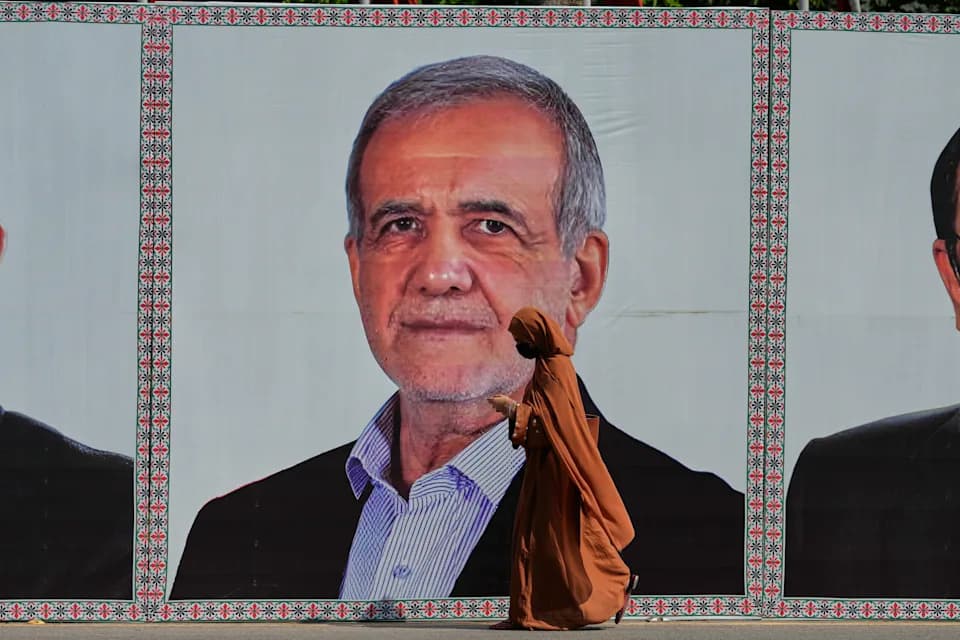
A woman walks past a welcoming billboard featuring Iranian President Masoud Pezeshkian along a roadside in Islamabad, Pakistan, Tuesday, June 23, 2026. (AP Photo/Anjum Naveed)(AP Photo/Anjum Naveed)
Iranian President Masoud Pezeshkian arrived in Islamabad on Tuesday for talks with Pakistani leaders as technical delegations continued to refine a U.S.–Iran framework intended to secure a permanent end to the war in the Middle East.
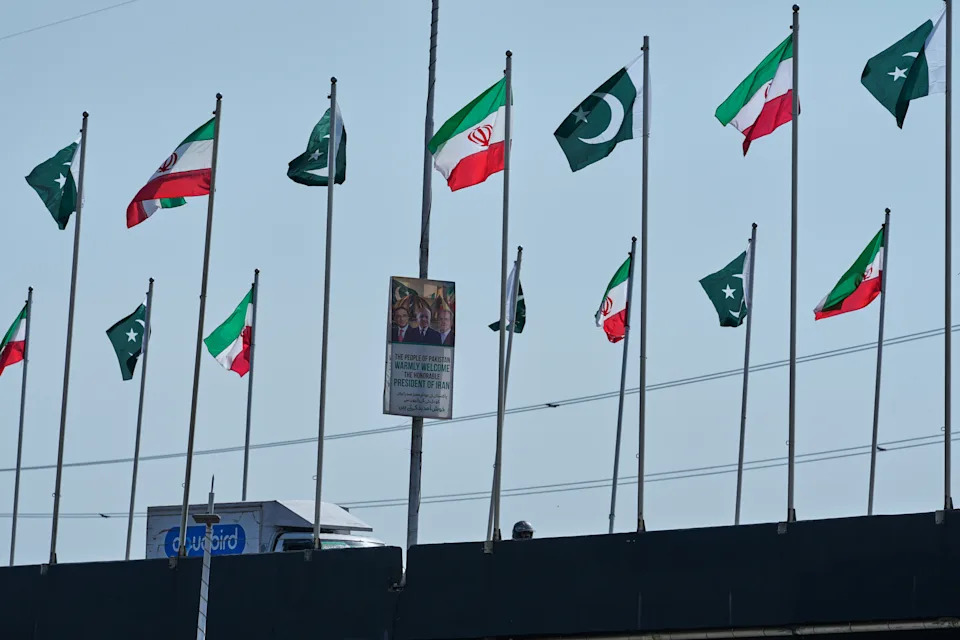
The welcoming billboard, featuring Iranian President Masoud Pezeshkian, right, with Pakistan President Asif Ali Zardari, center, and Prime Minister Shehbaz Sharif, is displayed alongside of an overhead bridge, in Islamabad, Pakistan, Tuesday, June 23, 2026. (AP Photo/Anjum Naveed)(AP Photo/Anjum Naveed)
High-Level and Technical Talks
The visit came after senior-level discussions in Switzerland led by U.S. Vice President J.D. Vance and Iran's parliamentary speaker Mohammad Bagher Qalibaf. Delegations have launched a 60-day diplomatic effort and set up specialized negotiation tracks covering sanctions relief, nuclear issues, reconstruction and monitoring, according to Iranian state media.
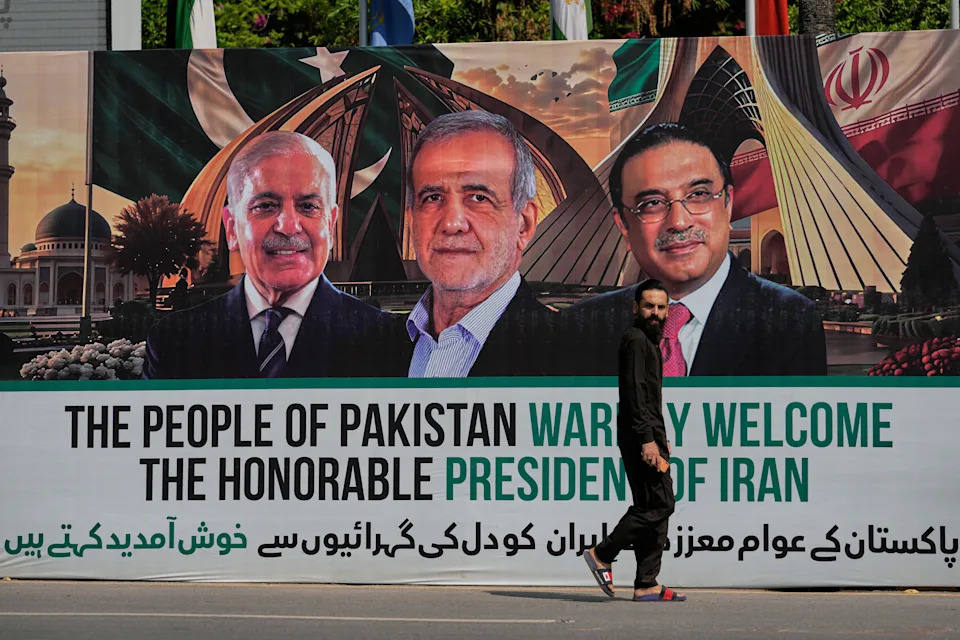
A man walks past a welcoming billboard featuring Iranian President Masoud Pezeshkian, center, with Pakistan President Asif Ali Zardari, right, and Shehbaz Sharif along a roadside in Islamabad, Pakistan, Tuesday, June 23, 2026. (AP Photo/Anjum Naveed)(AP Photo/Anjum Naveed)
IAEA Access Dispute
Tehran and Washington offered differing accounts of whether the International Atomic Energy Agency (IAEA) will be granted access to enrichment sites struck by the United States last year. In Tehran, Foreign Ministry spokesman Esmail Baghaei said no inspections have been scheduled, contradicting U.S. statements that inspectors would examine the damaged facilities. The IAEA has operated intermittently in Iran since Israel's 12-day war in 2025, but access to the U.S.-hit enrichment sites remains unresolved.
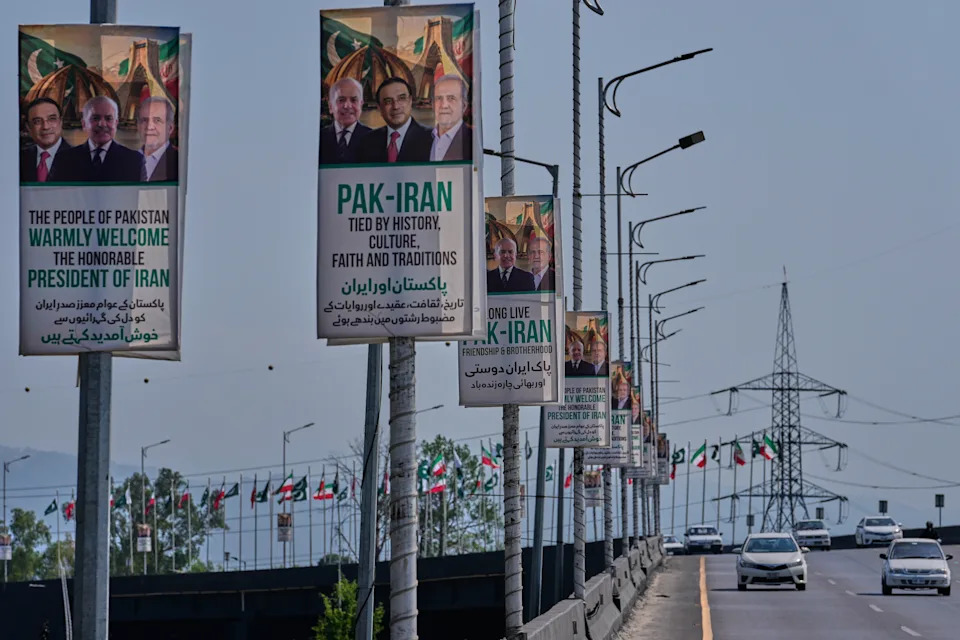
Vehicles drives past welcoming billboards featuring Iranian President Masoud Pezeshkian, right, with Pakistan President Asif Ali Zardari, center, and Shehbaz Sharif alongside an overhead bridge in Islamabad, Pakistan, Tuesday, June 23, 2026. (AP Photo/Anjum Naveed)(AP Photo/Anjum Naveed)
De-Confliction, Hormuz And Lebanon
As part of the initial agreement, negotiators proposed a "de-confliction cell" to help curb fighting in southern Lebanon between Israel and the Iranian-backed Hezbollah and to maintain security for shipping through the Strait of Hormuz — a vital oil transit route that Iran has effectively closed during the conflict. Pakistan and Qatar, acting as mediators, said the mechanism would include the Lebanese government.
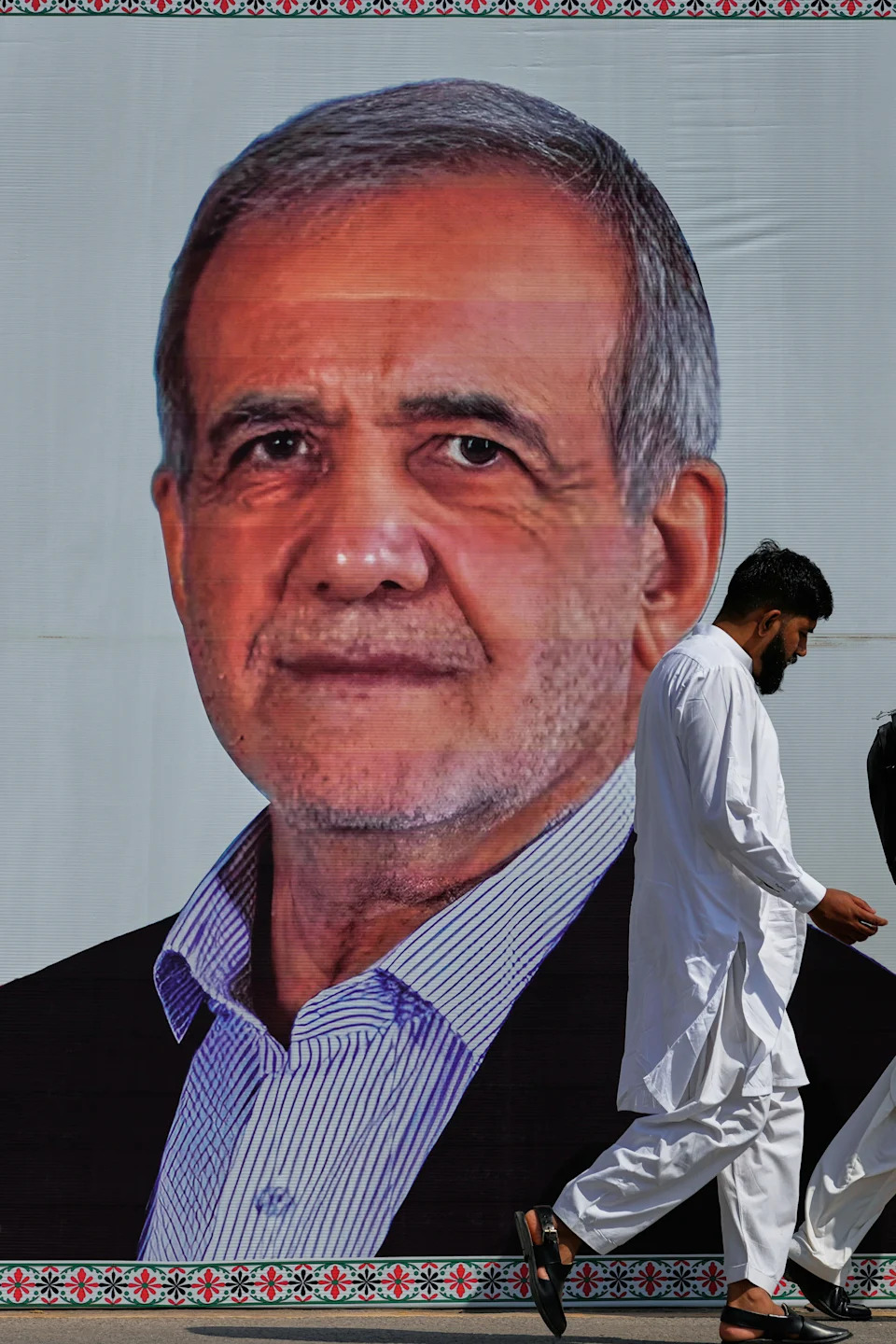
A man walks past a welcoming billboard featuring Iranian President Masoud Pezeshkian along a roadside in Islamabad, Pakistan, Tuesday, June 23, 2026. (AP Photo/Anjum Naveed)(AP Photo/Anjum Naveed)
President Pezeshkian warned on X that “the effectiveness of the talks depends on full commitment to the agreed obligations and their precise implementation,” adding that public statements beyond agreed texts do not help progress.
Violence Threatens Progress
Renewed shootings in southern Lebanon on Tuesday — which Lebanon’s state news agency reported killed two men in Nabatiyeh al-Fawqa — risk undermining the fragile pause in hostilities. The deaths occurred after a two-day lull following a ceasefire brokered on Saturday. Israel and Hezbollah are not parties to the U.S.–Iran framework; Israeli Prime Minister Benjamin Netanyahu has said his forces retain "full freedom of action" to confront threats, while Hezbollah has said it will not stop attacks until Israeli troops withdraw.
Money, Food And Sovereignty
Vance said that if some Iranian assets were unfrozen, they could be used to purchase U.S. agricultural products — with oversight by the U.S. and Qatar — naming soy, corn and wheat as likely purchases. Iranian officials pushed back, stressing Tehran controls how any thawed funds would be used. Ambassador Ali Bahreini in Geneva said, “Iran is the only country who decides what to do with those assets,” and Baghaei noted Iran would base purchases on price and quality.
Next Steps
Pezeshkian met President Asif Ali Zardari and Prime Minister Shehbaz Sharif under tight security and was expected to hold a joint news conference with Sharif. Lebanon and Israel were scheduled for further direct talks in Washington aimed at working out an Israeli withdrawal plan. Negotiators face the challenge of translating high-level political agreements into precise, enforceable technical arrangements while preventing renewed fighting from derailing the process.
Reporting: Associated Press correspondents and regional reporters contributed to coverage from Islamabad, Geneva, Tehran, Beirut, Bangkok and Dubai.
Help us improve.





















