
After talks in Switzerland, Iran and US officials agreed to a phased release of $12bn in frozen assets, with two $6bn tranches confirmed, and Washington has waived sanctions on Iranian oil and petrochemical sales for 60 days until August 21. Tehran has pledged to readmit international nuclear inspectors as part of broader negotiations to reduce regional tensions. Despite a fragile ceasefire and planned US-mediated talks between Israel and Lebanon, Israeli troops fired in Nabatieh al-Fawqa, killing two people, while Hezbollah warned it would respond to any violations.
Iran, US Agree To Phased Release Of $12Bn; US Waives Oil Sanctions For 60 Days — Two Killed In Lebanon
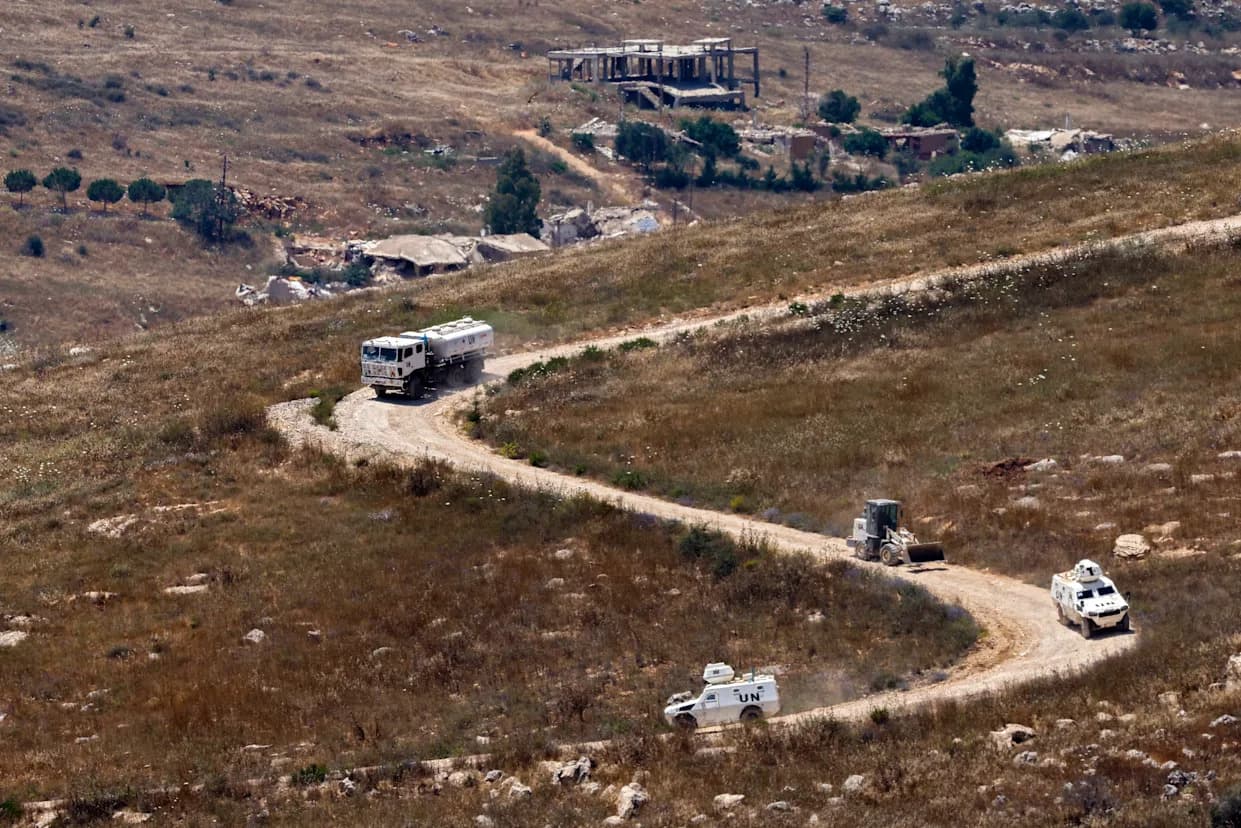
This picture taken from a position in northern Israel, near the border with Lebanon shows a United Nations Interim Force in Lebanon (UNIFIL) convoy driving past destroyed buildings in southern Lebanon on June 22, 2026 [AFP]
Iran and the United States have reached a deal to release $12 billion in frozen Iranian assets in phased tranches, while Washington has temporarily waived sanctions on Iranian oil and petrochemical sales. The developments come amid efforts to de-escalate tensions in the region and ahead of US-mediated talks between Israel and Lebanon.
Deal, Sanctions Waiver and Nuclear Inspectors
Iran's lead negotiator, Mohammad Bagher Ghalibaf, said talks in Switzerland produced an agreement to free $12bn in frozen funds, to be released in two tranches of $6bn. The US Treasury issued a waiver on sanctions covering the sale of Iranian crude oil, petrochemicals and petroleum products for a 60-day period, effective until August 21.
Tehran has pledged to readmit international nuclear inspectors as part of this package, a move described by Iranian officials as a confidence-building measure tied to a larger negotiation process aimed at reducing regional tensions.
Next Steps and Oversight
Iranian Deputy Foreign Minister Kazem Gharibabadi said technical talks with US officials have concluded and that the next phase will proceed under the supervision of a high-level committee named by Tehran, which includes Ghalibaf and Foreign Minister Abbas Araghchi alongside US administration representatives. Iranian President Masoud Pezeshkian urged strict compliance with all agreed commitments and precise implementation for the talks to be effective.
Central Bank Governor Abdolnaser Hemmati rejected assertions attributed to US President Donald Trump that the released funds must be used to buy US agricultural products. Hemmati told Tasnim News Agency the agreement allows the first $6bn to be used for basic goods and medicine and that Iran has no obligation to purchase US farm produce.
Regional Diplomacy and Security
Oman reiterated its commitment to maintaining toll-free passage through the Strait of Hormuz after talks in Muscat with Iranian diplomats. Former US diplomat Henry Ensher commented that the combination of released assets and resumed maritime traffic suggests both Washington and Tehran see benefits from the arrangement.
Violence in Southern Lebanon and Ceasefire Fragility
Despite signs that a ceasefire in Lebanon was holding, Israeli troops opened fire in the town of Nabatieh al-Fawqa, killing two people and wounding another. The United Nations noted this week marked the first day its peacekeepers detected no air strikes in Lebanon since March 2, but ground incidents persist.
Hezbollah accused Israeli forces of firing on civilians and warned it would respond to any ceasefire violation. Israeli leaders — including Prime Minister Benjamin Netanyahu, Defence Minister Israel Katz and Chief of the General Staff Eyal Zamir — said troops will continue operations in southern Lebanon, maintain a security zone and target infrastructure they associate with Hezbollah. The article reports claims that buildings have been razed and roughly one million people displaced from the area.
Political Responses
Democrats on the US House Foreign Affairs Committee criticized the administration for granting sanctions relief before resolving broader issues under negotiation, including concerns about Iran's nuclear program and proxy activity. The debate underscores the political sensitivity in Washington over the terms and sequencing of any agreement with Tehran.
Outlook: Israel and Lebanon are scheduled to begin a new round of direct talks in Washington, D.C., as diplomats seek to stabilize the situation. The deal to free frozen funds and the temporary sanctions waiver mark a potentially significant step toward de-escalation, but the situation on the ground in Lebanon remains fragile and closely watched by regional and international actors.
Help us improve.





















