
In Gaza, following the World Cup has become a struggle for many displaced residents due to frequent power cuts, internet outages and security fears. Fans such as Sameeh Totah and Yousef al-Nuaizi rely on delayed broadcasts or short highlights, while stadiums and sports facilities have been repurposed as shelters. Makeshift cafes and community efforts offer fleeting moments of normalcy, though the tournament’s usual excitement has been significantly dimmed.
Football Offers a Brief Escape in Gaza as World Cup Spirit Is Dimmed
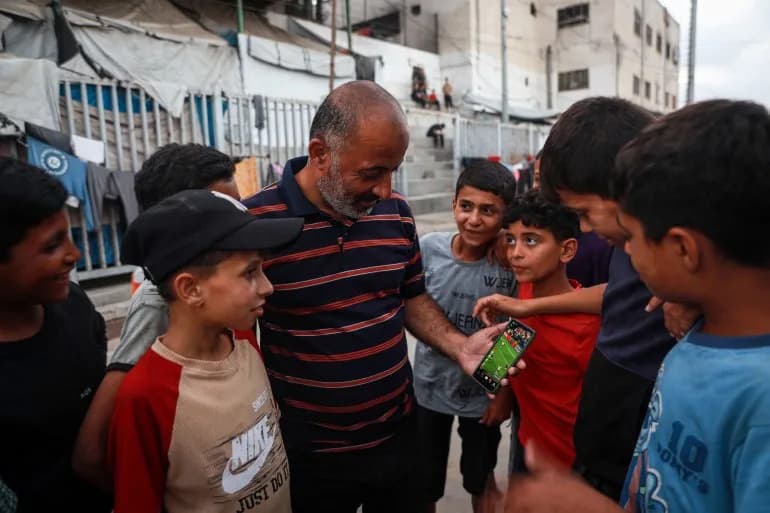
Sameeh Totah, 43, is unable to follow matches live due to harsh living conditions and instead relies on match highlights [Abdelhakim Abu Riash/Al Jazeera]
Gaza City — Sitting outside his makeshift tent near Yarmouk Stadium, 43-year-old Sameeh Totah scrolls through his phone to watch a World Cup match recorded the night before. Frequent power cuts and unreliable internet mean many fans here miss live action and must rely on delayed broadcasts or short highlights.
Displacement, Power Cuts and Lost Rituals
Sameeh, a father of six, remembers the 2022 World Cup in Qatar as a rare moment of collective normalcy when friends and relatives gathered to watch matches. He no longer lives in his Zeitoun neighbourhood; he was displaced by the war — which has killed more than 73,000 Palestinians since October 2023 — and now lives in a tent close to Yarmouk Stadium.
“The situation is bad, especially the internet networks. They keep cutting out… Sometimes you get the chance to watch a full match, but power cuts ruin the experience. It’s nothing like before the war,” Sameeh said.
For many, the sport still provides brief relief from the pressures of displacement and conflict: “Sometimes I pick up my phone and watch a match just to ease some of the stress and forget, even for a little while, about the suffering we’re living through,” he added.
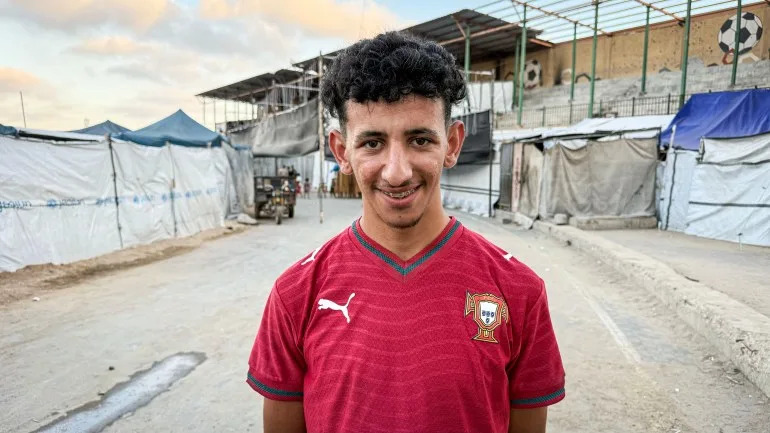
Yousef al-Nuaizi says he has lost his passion for following World Cup matches due to the difficult conditions surrounding him [Abdelhakim Abu Riash/Al Jazeera]
How Daily Life Has Changed
Young fans like 21-year-old Yousef al-Nuaizi say that following this World Cup has become an exhausting effort. A long walk to find a cafe showing a match ended in disappointment when the venue had no electricity; when they eventually found power, fatigue allowed only 40 minutes of viewing. Everyday routines — privacy, access to basic facilities and simple comforts — have all been disrupted by displacement.
“At home I could do whatever I wanted freely. Now we’re living in tents with no privacy,” Yousef said. He recalls Yarmouk Stadium as a place of pleasant memories and local matches; today many stadiums and sports facilities across the Gaza Strip have been repurposed as shelters or have been damaged in the fighting.
Community Efforts and Persistent Challenges
Despite hardships, small initiatives try to recreate a World Cup atmosphere. In narrow alleys of temporary camps, makeshift cafes built of tarpaulins and wood hang flags and football artwork. One owner, 26-year-old Tariq al-Jadba, works long hours to offer displaced residents a place to watch together.
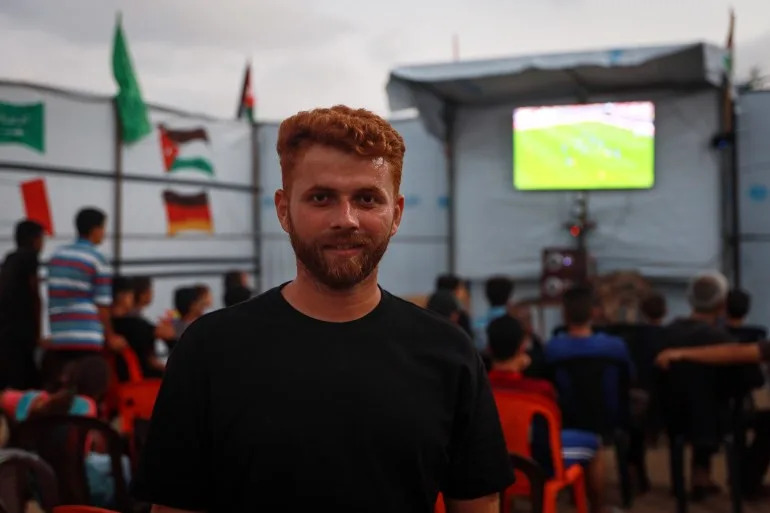
Tareq al-Jadba set up a makeshift café inside the camp where he lives, allowing displaced residents around him to watch World Cup matches [Abdelhakim Abu Riash/Al Jazeera]
“People come to watch football, but we watch while we’re afraid,” Tariq said, noting the constant worry of nearby bombardment during late-night or predawn matches.
Keeping screens on is another struggle: chronic shortages of electricity and fuel — which locals attribute to movement and supply restrictions — mean many places depend on small neighbourhood generators or limited solar power. Fuel scarcity prevents generators from running through the night, and coordination with generator owners is often difficult.
What Football Means Now
For some, the passion remains. When Arab teams play, the atmosphere briefly revives and communities seize those moments to reclaim a sense of normal life. For others, the joy has been muted by loss, displacement and fatigue: “The real passion is gone. Almost all the passion in Gaza has disappeared after everything we’ve seen,” Yousef said.
Still, the game endures as a cultural touchstone — a small, fragile outlet for connection and escape amid a difficult and dangerous environment.
Help us improve.





















