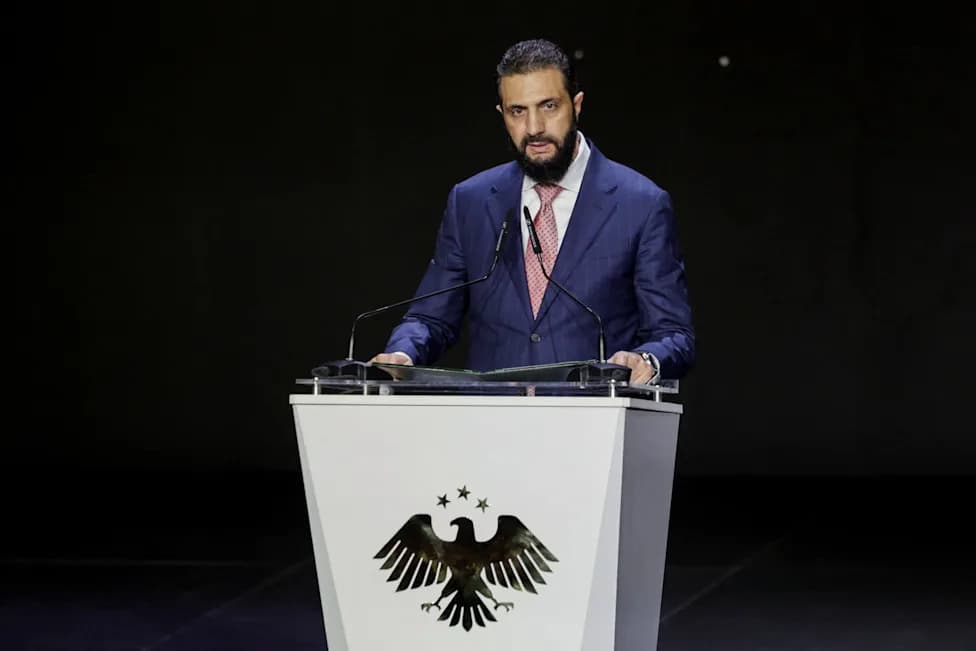
Syrian President Ahmed al-Sharaa denied that Damascus plans a military intervention in Lebanon, saying Syria favors restoring economic ties rather than escalating the conflict. His comments follow US President Donald Trump's suggestion that Syria could step in if Israel cannot defeat Hezbollah. Sharaa urged a ceasefire and a mix of economic, political and security measures that respect Lebanese, Syrian and Israeli concerns. He also said Syria could engage constructively in Lebanon if Beirut agrees.
Syria Denies Plans To Intervene Militarily In Lebanon After Trump's Remarks
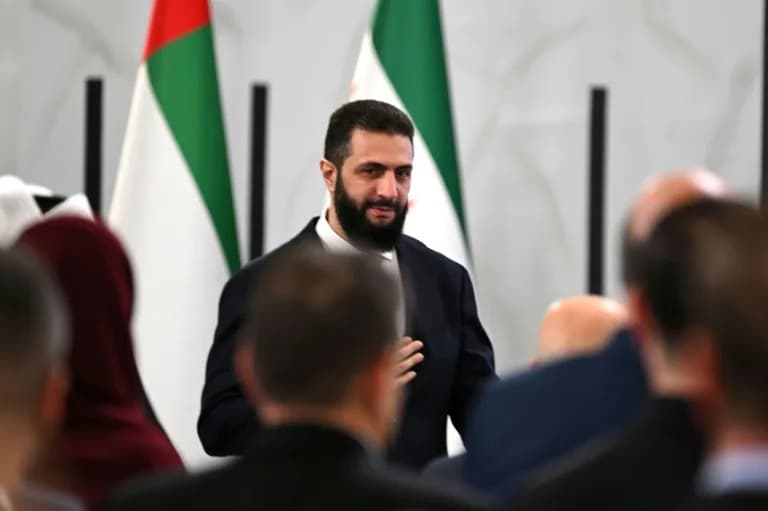
'We are looking for economic channels between Lebanon and Syria, not military ones,' Sharaa said (LOUAI BESHARA)(LOUAI BESHARA/AFP/AFP)
Syrian President Ahmed al-Sharaa on Sunday rejected suggestions that Damascus intends to intervene militarily in Lebanon amid the Israel–Hezbollah fighting, saying Syria seeks to restore economic ties with its neighbor rather than escalate the conflict.
In an interview broadcast on Al Mashhad, Sharaa said: "We are looking for economic channels between Lebanon and Syria, not military ones." His comments followed repeated remarks by US President Donald Trump suggesting Syria could become involved if Israel failed to neutralize Hezbollah.
Trump told Fox News he was "disappointed Israel can't put Hezbollah away," adding he was "close to giving it over to Syria." At the G7 summit, Trump also said: "If Israel can't do the job (against Hezbollah) without killing everyone else, then he (Sharaa) will do the job. Syria will do the job."
Syria Seeks Ceasefire And Political Solutions
Sharaa said Syria has proposed to the United States that the war must stop and urged a combination of economic, political and social measures to address the crisis. "There must be various solutions, including economic, political and social, and the re-establishment of relations and the vital economic lifeline between Syria and Lebanon," he said.
He added that any approach should include security arrangements that address Syrian, Lebanese and Israeli concerns, and that Syria has "many tools for having a positive impact within Lebanon," while stressing such actions would depend on agreement with Lebanese authorities.
Context And Regional Sensitivities
The conflict widened on March 2 when Hezbollah fired rockets at Israel in retaliation for strikes that killed its backer — identified in this report as Iran's supreme leader — prompting Israeli airstrikes and a ground incursion. An Iran-US agreement signed this week aims to curb regional hostilities and includes provisions relevant to Lebanon; fighting in parts of Lebanon had paused since Saturday evening.
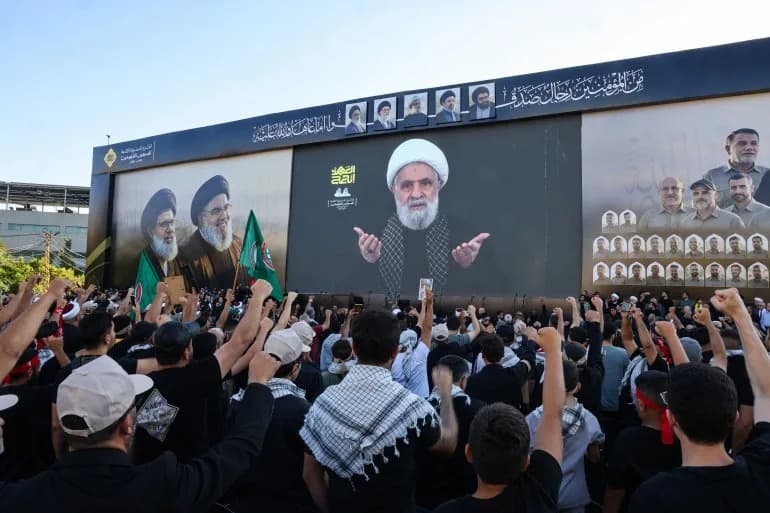
Syria and Hezbollah have a complex history: Hezbollah fought alongside Bashar al-Assad during Syria's civil war, while the current Syrian leadership that took power in 2024 is hostile to the group. Syria also exercised heavy influence over Lebanon after its intervention in Lebanon’s 1975–1990 civil war and only withdrew in 2005, making any renewed military involvement politically and regionally sensitive.
When asked whether he would meet with Hezbollah leaders, Sharaa replied: "If this serves Lebanon's interests and safeguards Syria's interests, why not?"
Key quotes: "We are looking for economic channels between Lebanon and Syria, not military ones," and "We proposed with the United States that the war must stop."
Help us improve.