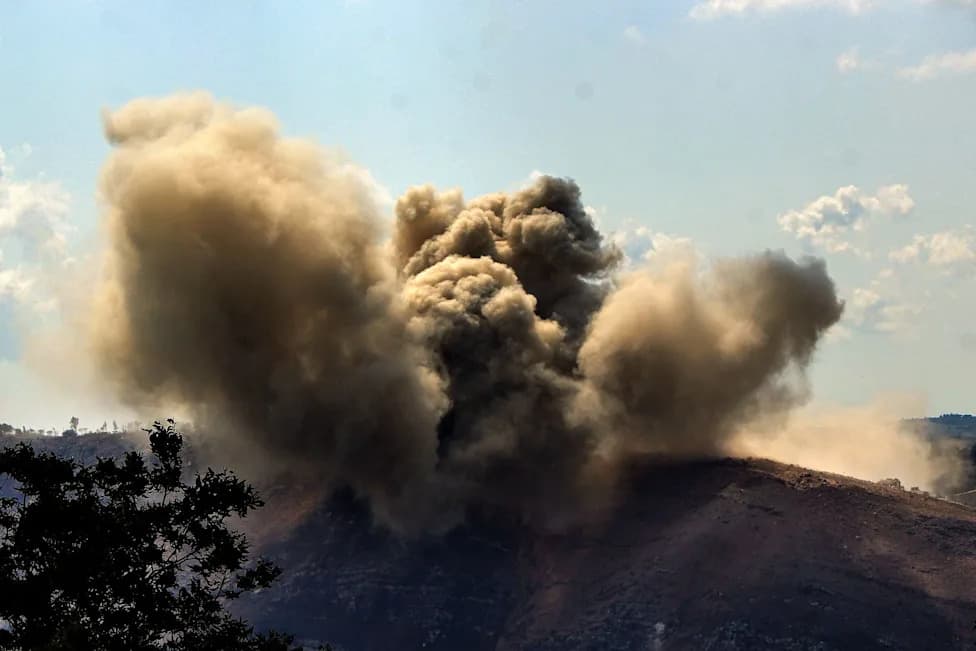
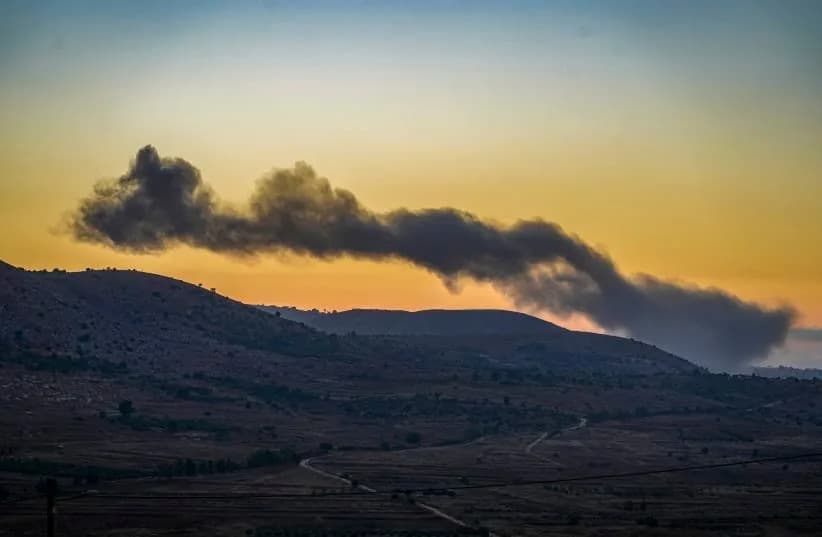
The discovery of a reinforced underground Hezbollah complex under Majdal Zoun — about 170m long and 20m deep — highlights how southern Lebanese villages could determine the success or failure of a proposed US-Iran ceasefire. The MoU discussed in Versailles calls for an immediate halt to military operations and includes Lebanon in 60 days of follow-up talks, but Israel resists terms it sees as requiring withdrawal. The conflict has displaced over a million people, caused thousands of deaths, and remains vulnerable to escalation amid strong domestic political pressures and disputed claims on both sides.
Inside Hezbollah’s Deep Tunnels: How Southern Lebanese Villages Could Make Or Break A Ceasefire
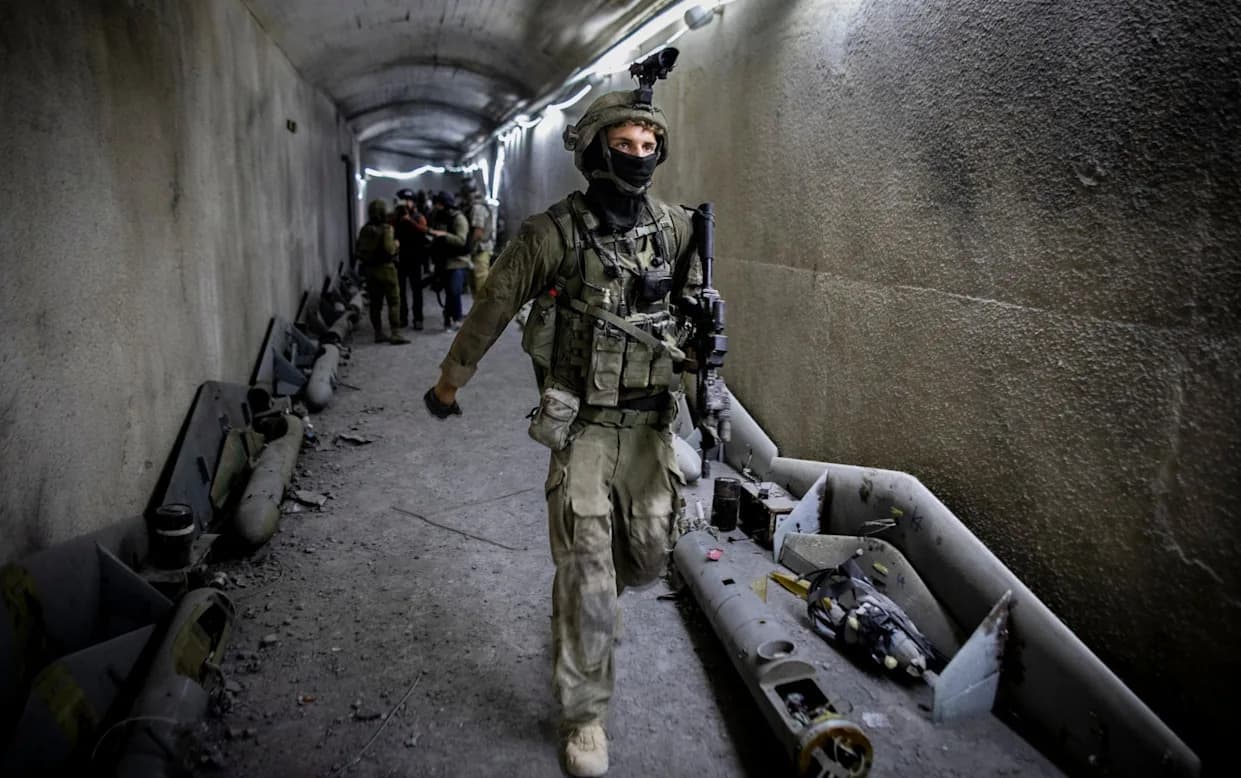
The tunnel under the southern Lebanese town benefited from Iranian engineering, Israel says - Eyal Warshavsky for The Telegraph
The reinforced Hezbollah tunnel beneath the hilltop town of Majdal Zoun in southern Lebanon bears little resemblance to the hand-dug passages seen under Gaza. Stretching roughly 170 metres and running about 20 metres below the shattered Shia village, the hardened complex appears to reflect sophisticated engineering reportedly influenced by Iran.
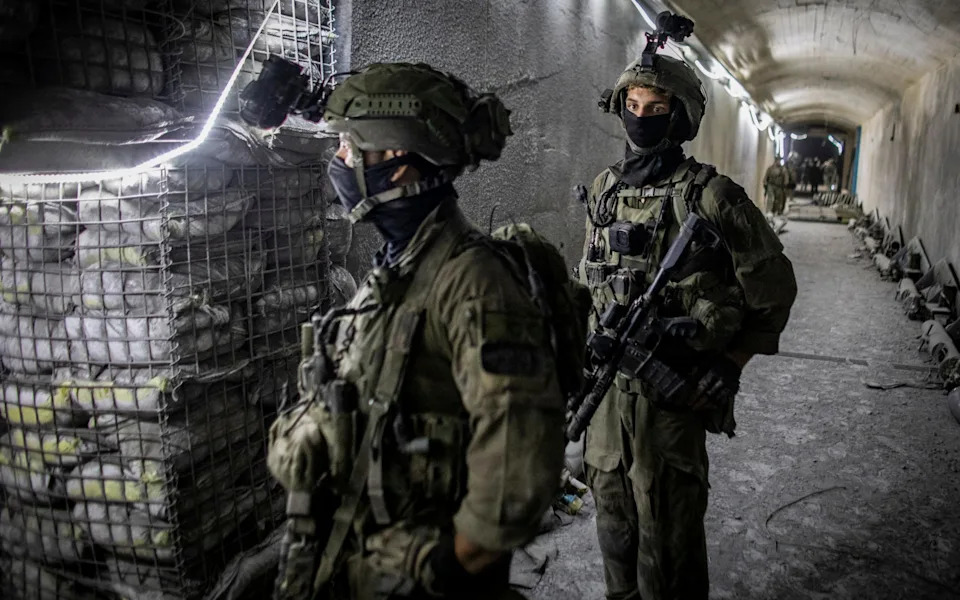
IDF soldiers in the tunnels under Majad Zoun - Eyal Warshavsky for The Telegraph
When Israeli Defence Forces (IDF) troops escorted The Telegraph into the tunnel complex in the early hours of Friday, using night-vision equipment, the main concrete corridor resembled a municipal underpass from an earlier era rather than a makeshift combat trench.
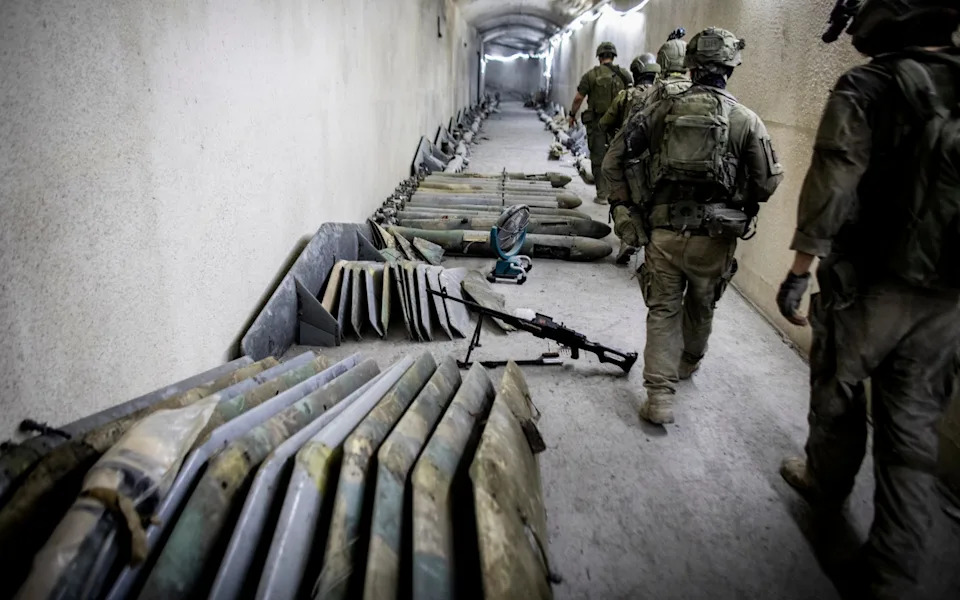
The tunnels were littered with drone parts - Eyal Warshavsky for The Telegraph
Weapons, explosives and drone components
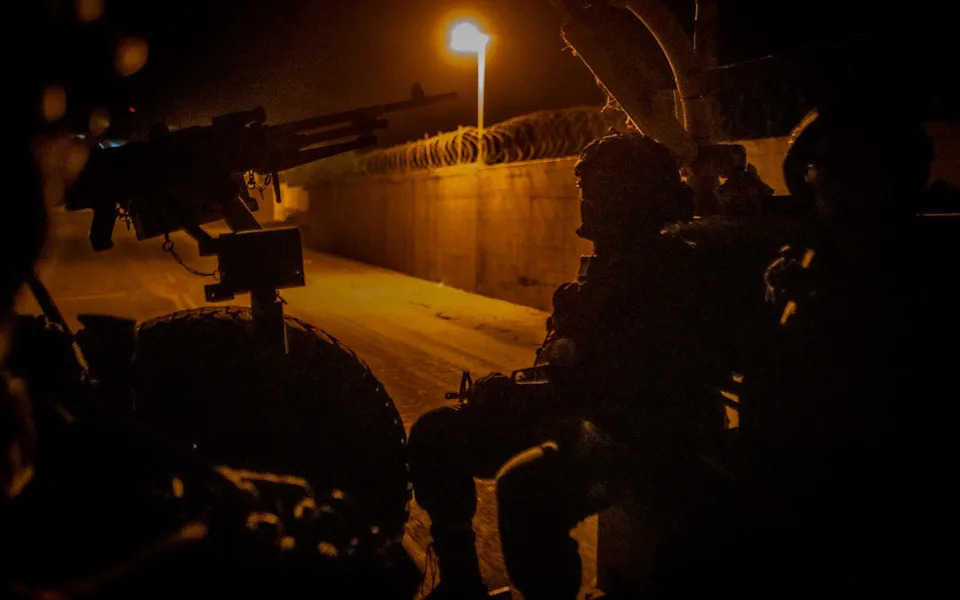
IDF soldiers in Majdal Zoun. The US-Iran peace deal implicitly demands that Israel withdraw from southern Lebanon - Eyal Warshavsky for The Telegraph
According to the IDF, heavy blast doors opened into several anterooms described as weapons and ammunition storage. Branching galleries reportedly provided observation points toward Israel and were used to launch munitions until the shafts were damaged by strikes. A brigade commander pointed to a chamber the military said contained about eight tonnes of explosives. Dozens of drone components were also found; the IDF said some were parts for one-way, GPS-guided unmanned aerial vehicles with ranges claimed in excess of 200 km.

‘This is a gift to Hezbollah’ warned Levina Florintino in northern Israel - Eyal Warshavsky for The Telegraph
“A village the size of Majdal Zoun would have no need for such a large underground structure,” Nicholas Blanford, a non-resident senior fellow at the Atlantic Council, told The Telegraph. “It’s definitely Hezbollah.”
Why these villages matter to the ceasefire
Villages like Majdal Zoun — perched on high ground only three miles north of the Israeli border and left in ruins by recent fighting — are central to a wider diplomatic push to halt the regional war. A memorandum of understanding (MoU) reached in Versailles and reported by international outlets includes Lebanon in an effort to end hostilities across the region. The MoU’s first clause calls for an “immediate and permanent termination of military operations on all fronts, including in Lebanon,” and urges respect for Lebanon’s territorial integrity and sovereignty.

Vladi, a logistics manager in northern Israel, was sceptical about the peace deal - Eyal Warshavsky for The Telegraph
Negotiators from the United States and Iran began what parties described as 60 days of talks in Switzerland, with Lebanon listed among the matters to be addressed. US officials involved in the delegation included senior envoys and representatives. Delegates said the agenda includes both nuclear and Lebanon-related ceasefire issues, though details and implementation remain highly contested.
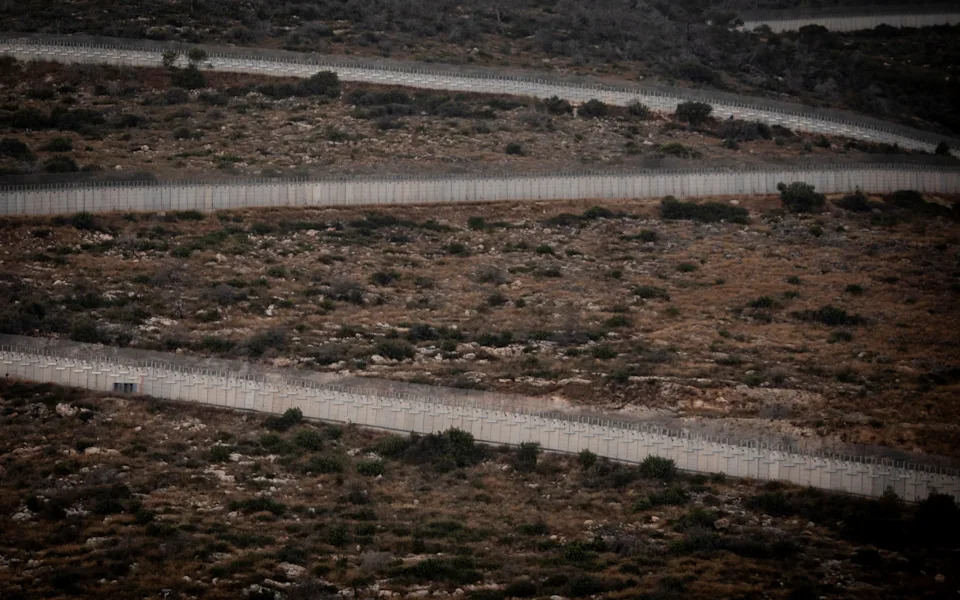
The Israel-Lebanon border in Shlomi, where residents were sceptical about the US-Iran peace deal - Eyal Warshavsky for The Telegraph
On-the-ground consequences and political pressure
Israel has resisted terms that it interprets as implicitly requiring withdrawal from captured positions, arguing it needs a buffer to protect northern communities and to prevent Hezbollah from re-entrenching. Lebanese civilians and officials view Israeli operations as aggressive and blame the wider impasse on unresolved regional conflicts. The recent fighting has displaced more than one million people and, by some counts, involved the occupation of roughly 6% of Lebanese territory.
Violence and casualties continue to mount. Official tallies cited in reporting place the Israeli military deaths at more than 100 IDF soldiers and nearly 50 Israeli civilians since Oct. 7, 2023; Lebanese fatalities since the escalation on March 2 of this year are reported in the thousands. Such losses have fuelled hardline rhetoric in Israel and deepened popular support for resistance among some Lebanese communities.
Domestic politics and regional diplomacy
Israel’s governing coalition, facing an October election, has used renewed clashes to justify a hardline posture. Some Israeli ministers have urged severe retaliatory measures, language that analysts warn could deepen the conflict. Meanwhile, Lebanese state institutions — already weakened — have been squeezed by both Israeli and Iranian influence, complicating any prospect of a credible, independent plan to disarm or reintegrate armed groups.
Analysts note one possible diplomatic opening: by tying Lebanon into the broader US-Iran negotiations, Washington may gain leverage to raise the issue of Hezbollah’s weapons as part of a phased, regional approach to disarmament. Regional initiatives involving states such as Egypt, Saudi Arabia, Turkey, Qatar and Pakistan have been floated as frameworks for an organised, gradual transition rather than immediate forced disarmament.
Humanitarian agencies warn that without a durable political settlement, recovery and reconstruction will be out of reach. Abdinasir Abubakar, head of the World Health Organization in Lebanon, said: “Without a peaceful resolution, affected communities will be unable to rebuild their lives, restore livelihoods, and regain dignity.”
Note on sources and contested claims: This article relays descriptions and figures attributed to military sources, regional officials and commentators cited in the reporting. Some assertions — including accounts about command structures, specific leadership incidents and precise weapon capabilities — remain contested or unverified by independent observers. Where possible, claims have been attributed to the reporting parties.
Help us improve.