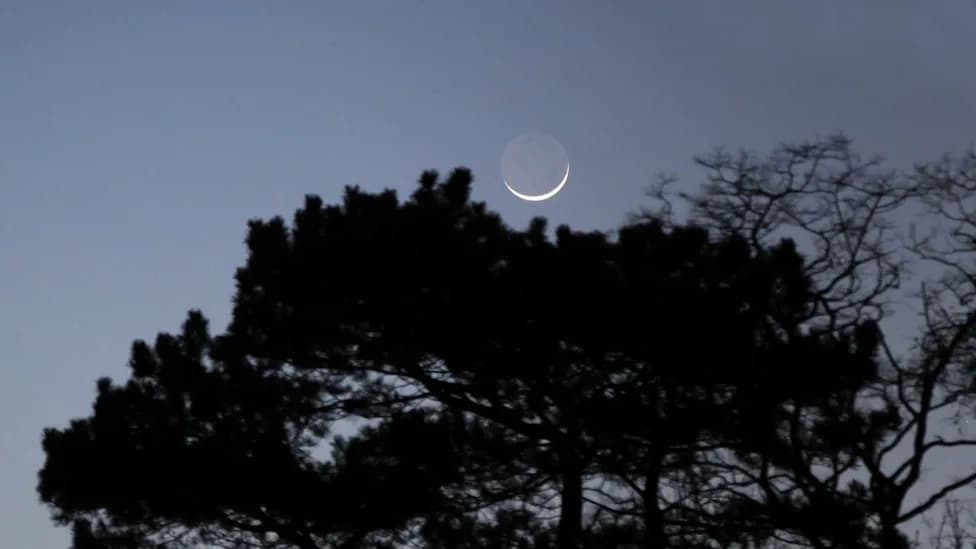
The thin crescent moon will appear near Venus, Jupiter and Mercury across three nights from Tuesday through Thursday, about an hour after sunset. Mercury will be the hardest to spot because it sits lowest and is faint, though it should be visible under clear skies. Choose a dark viewing site, allow 20–30 minutes for your eyes to adjust, and use binoculars if needed. This event follows the June 8–9 Venus–Jupiter conjunction.
Crescent Moon Lines Up With Venus, Jupiter and Mercury This Week — Three Nights to Watch the Sky
Look up: Skywatchers could see the crescent moon align with these 3 planets this week
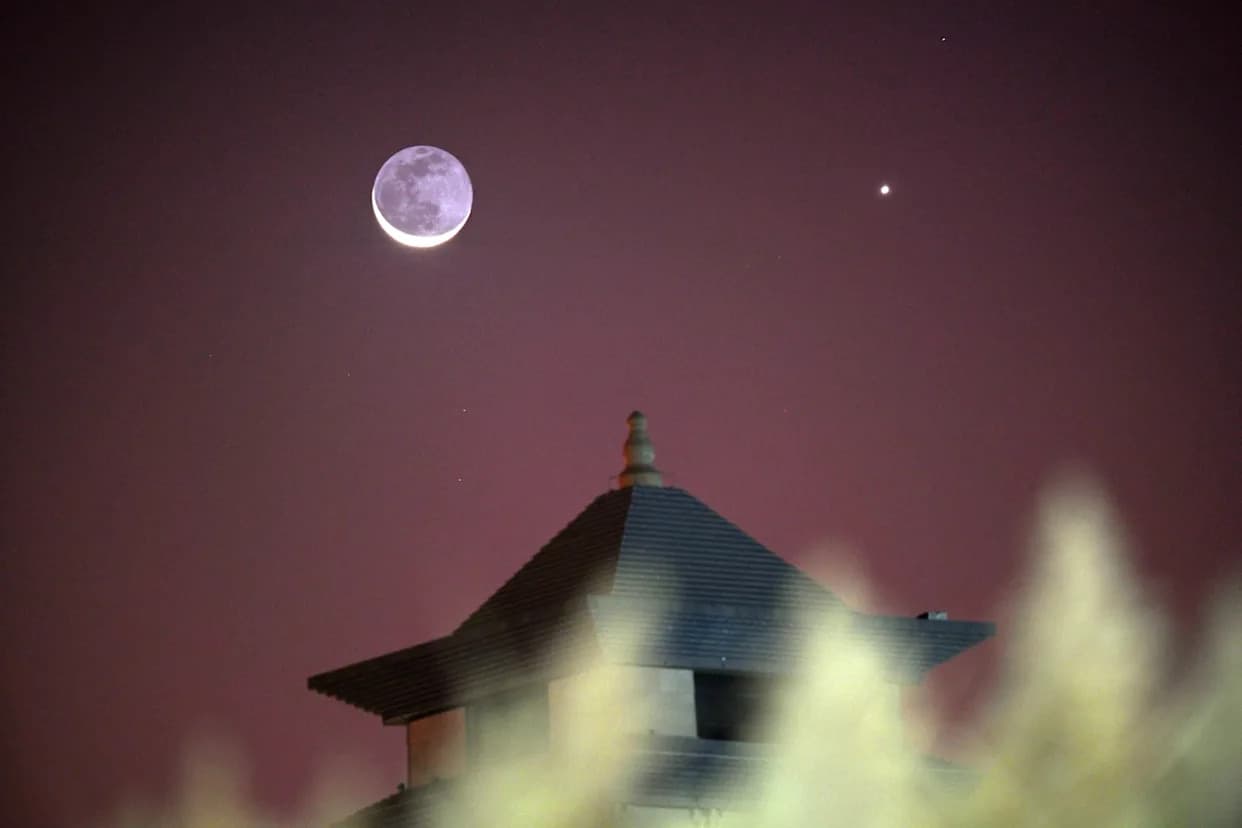
Skywatchers should get ready: one of June's most photogenic sky shows begins Tuesday evening, just days before the summer solstice. A thin crescent moon will appear to align with the bright planets Venus, Jupiter and Mercury over a three-night span.
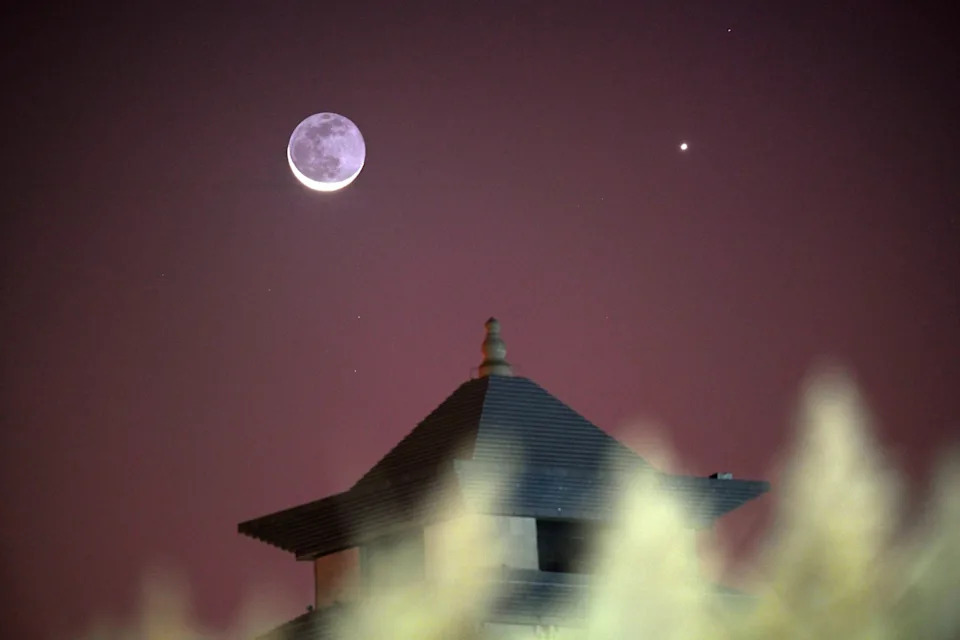
Venus appears in the night sky near a crescent moon on November 13, 2020 in Korla, Xinjiang Uygur Autonomous Region of China.(Getty Images)
When to look: The display runs from Tuesday after sunset through Thursday night. The best viewing window is about an hour after sunset, when all four objects sit low in the western sky.
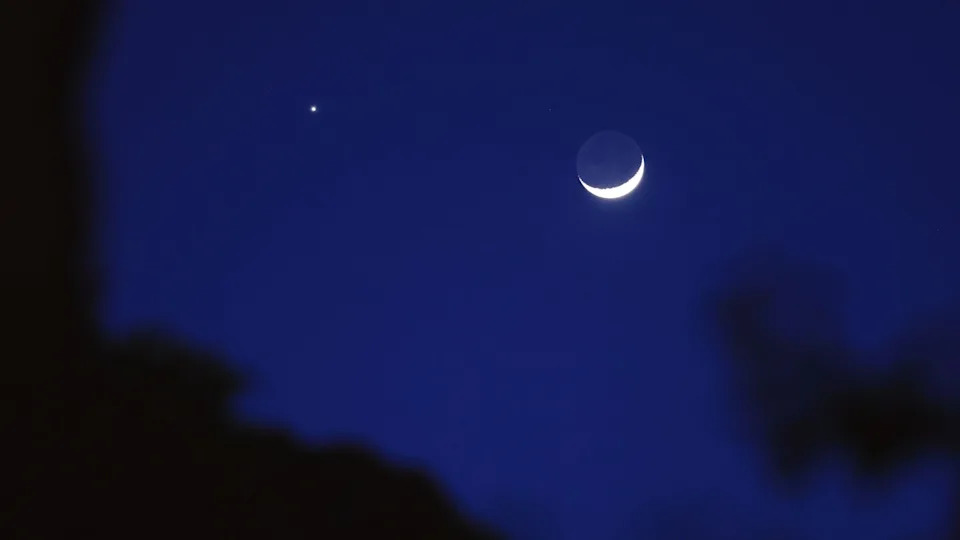
A crescent moon and Venus are in close conjunction in the night sky on May 23, 2023 in Jinhua, Zhejiang Province of China.
What you'll see: The crescent moon will hang low above the western horizon and appear close to the trio of planets, creating an attractive, easy-to-spot grouping for many observers. The alignment should be visible from both hemispheres, though exact timing and elevation depend on your location.
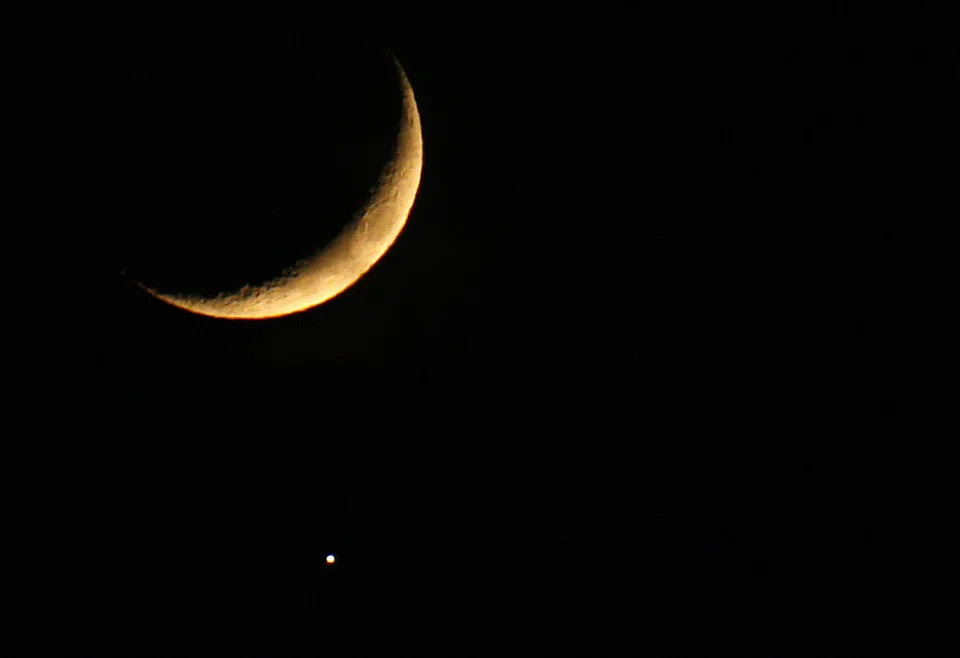
A crescent moon is pictured on December 1, 2008 in Nice, in a rare alignment with the planets Venus and Jupiter.
Spotting Mercury: Mercury is the faintest and lowest of the three planets in this arrangement, so it may be the trickiest to find. Under clear skies it should still be visible to the unaided eye, but binoculars can help locate it if you're having trouble.
Viewing tips:
- Pick a dark site away from streetlights and city glow for the best contrast.
- Allow 20–30 minutes for your eyes to adjust to the dark so dimmer objects are easier to see.
- Use binoculars to help frame the scene, especially to pick out Mercury near the horizon.
- Check local sunset times and look roughly an hour after sunset for peak visibility.
Why this matters: This three-night gathering follows a close June 8–9 conjunction of Venus and Jupiter, an event sometimes called the "kissing planets" because of their apparent proximity. The current alignment gives observers another chance to enjoy a memorable planetary grouping.
Because the event lasts several nights, skywatchers have multiple opportunities to catch clear-sky conditions. Enjoy the show, and consider photographing the scene with a wide-angle lens and a tripod to capture the low western horizon and the delicate crescent moon.
Help us improve.