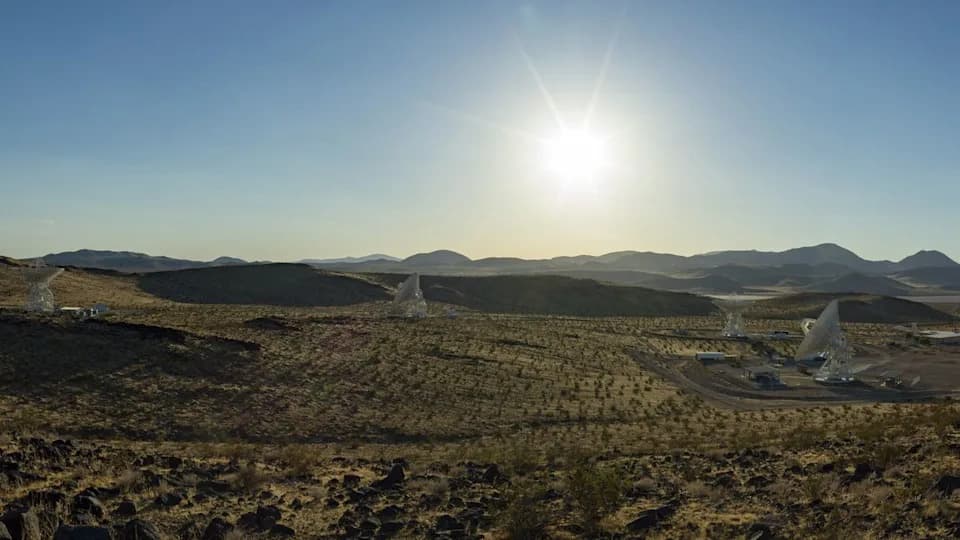
Caltech’s Deep Synoptic Array (DSA) is a planned 1,650‑dish radio observatory in Spring Valley, Nevada, designed to map the sky about 100× faster than current radio telescopes. Using an on‑site GPU "radio camera", the DSA will process and synthesize raw signals in real time—cutting raw archival needs from roughly 100 exabytes to tens of petabytes per year. The array aims to catalog over one billion new radio sources during a five‑year survey, with construction and science operations targeted by 2029.
Caltech’s DSA: 1,650‑Dish Array To Map The Sky 100× Faster Using A Real‑Time GPU “Radio Camera”
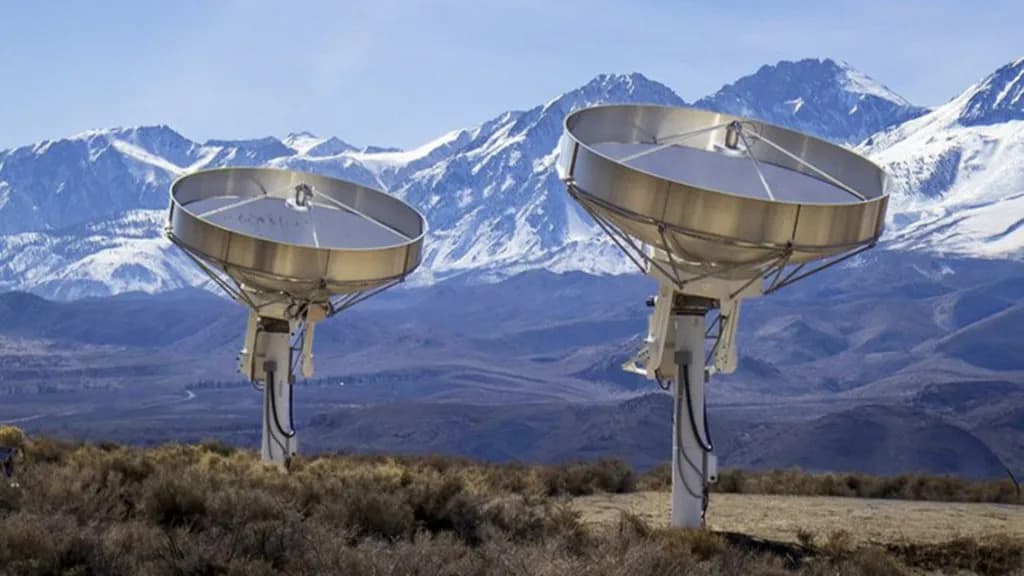
The California Institute of Technology (Caltech) has approved final design plans for the Deep Synoptic Array (DSA), a 1,650‑dish radio observatory to be built on a radio‑quiet valley floor in Spring Valley, Nevada. Described by its team as the most sensitive radio telescope ever conceived at this scale, the DSA is engineered to survey the sky roughly 100 times faster than existing radio facilities.
How the DSA Solves a Long‑Standing Trade‑off
Radio astronomy traditionally forces a trade‑off between raw sensitivity and angular resolution: very large single dishes see extremely faint signals but with poor spatial detail, while conventional interferometric arrays produce finer images but need far more time to cover wide fields. The DSA bridges that gap by deploying 1,650 steerable dishes, each about 6.1 meters in diameter, arranged across a geometric grid roughly 20 kilometers by 16 kilometers (about 12.5 miles by 10 miles).
Data Challenge—and the GPU Radio Camera
An array of this size creates a staggering data flow. Combined, the antennas will produce raw electronic output comparable to the current internet traffic of the United States—far too large for conventional archival methods. Storing every unprocessed stream would require an impractical multi‑billion‑dollar archival campus (on the order of 100 exabytes and millions of drives).
To avoid that outcome, Caltech engineers designed a "radio camera" architecture: an on‑site cluster of graphics processing units (GPUs) that automatically flag radio‑frequency interference, clean and calibrate signals, and synthesize incoming streams into finished, high‑fidelity images and data products in real time. That pipeline lets the project discard redundant raw samples immediately and reduces long‑term storage needs to a few tens of petabytes per year.
Stable, Sensitive Electronics
The DSA’s front‑end electronics use specialized indium phosphide transistors that deliver very high sensitivity while operating at room temperature, removing the need for complex cryogenic cooling. This simplifies maintenance and lowers operational complexity across the large array.
Science Returns and Timeline
With its throughput, the DSA will rapidly expand the radio‑source census. To date, all global radio telescopes combined have cataloged roughly 20 million unique radio sources; Caltech projects that the DSA could reach that historical total on its first day of on‑sky testing and discover more than one billion previously unrecorded radio sources during a five‑year all‑sky survey.
Led by Principal Investigator Gregg Hallinan and supported by a final design review funded by Schmidt Sciences, the project aims to begin construction in Spring Valley and has targeted completion of construction with science operations commencing by 2029.
Key science goals: open data streams and catalogs for Fast Radio Bursts (FRBs), moving pulsars, transient black‑hole activity, and a broad range of time‑domain and survey astronomy.
Help us improve.