The White House poured a 12% hydrogen peroxide solution into the Lincoln Memorial Reflecting Pool to combat algae that reappeared days after a renovation. Photographers also spotted buckets of Induclor, a chlorine compound, at the site. Records show the renovation cost at least $14.8 million, far above an earlier $1.8 million estimate. Structural leaks and the pool’s shallow depth — which requires replacing roughly 16 million gallons of water per year — help drive recurring algal blooms.
White House Crews Pour 12% Hydrogen Peroxide Into Lincoln Memorial Reflecting Pool After $14.8M Renovation
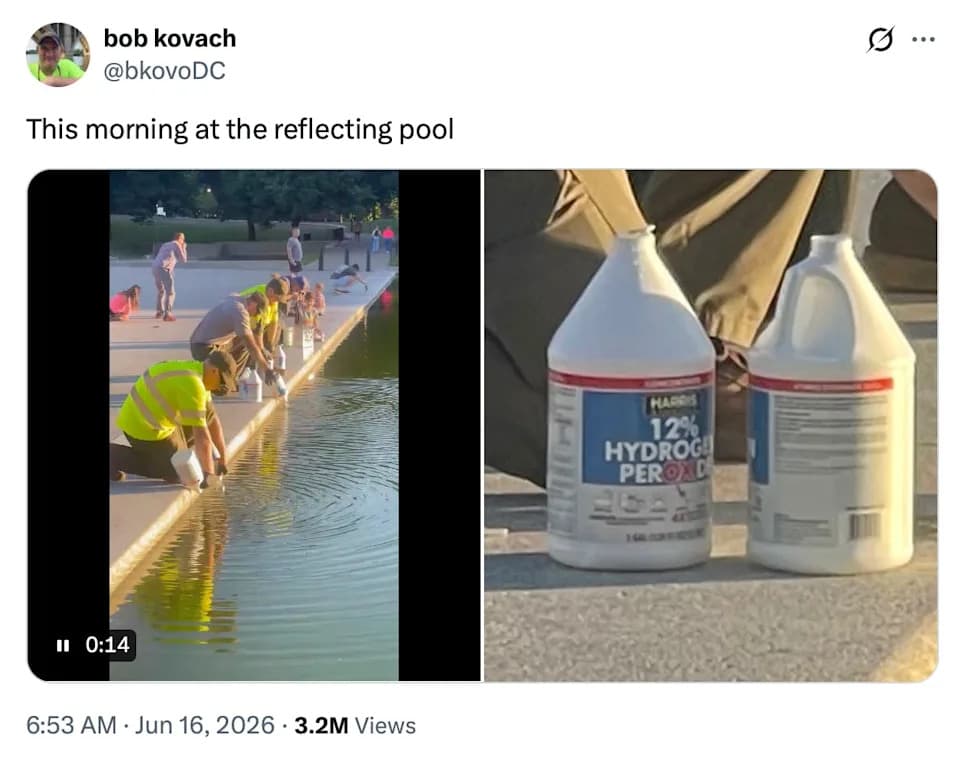
Screenshot of a tweet(Screenshot)
The White House has applied a concentrated hydrogen peroxide solution to the Lincoln Memorial Reflecting Pool in a new effort to control persistent algal blooms that returned days after an expensive renovation.
Park workers in high-visibility vests were photographed pouring gallons of a 12% hydrogen peroxide concentrate into the pool. According to the Centers for Disease Control and Prevention, solutions at that concentration can irritate or damage the respiratory system if inhaled and can burn skin on contact. While hydrogen peroxide breaks down into water and oxygen and is generally considered less persistent in the environment than some other chemicals, the relatively high concentration may still pose risks to wildlife such as ducks and other birds that frequent the pool.
What Was Seen At The Site
Photographers also documented buckets labeled "Induclor" near the memorial — a chlorine compound commonly used to control bacteria, algae, slime, and fungi in water — indicating multiple treatments were being deployed. Officials have not released a detailed public health or environmental assessment tied to the treatment observed.
Renovation, Cost, And Rapid Return Of Algae
Public records show the Trump administration spent at least $14.8 million on the Reflecting Pool renovation, far above an earlier $1.8 million estimate. The work, completed earlier this month, included painting the pool bottom a shade the president dubbed "American-flag blue." President Trump praised the result as "beautiful, clean water," but within days hot, humid weather in Washington produced new algal growth that coated parts of the pool and floated to the surface.
Why The Pool Is Hard To Keep Clear
The Reflecting Pool’s design contributes to recurring problems. Its long basin is formed from multiple large concrete slabs that are prone to structural leaks, forcing managers to replace roughly 16 million gallons of water annually. The pool’s shallow depth, which creates the mirror-like surface visitors expect, also creates conditions that favor algal blooms during warm, humid weather.
Bottom line: Despite a costly renovation and cosmetic improvements, the pool’s fundamental design and local climate make algae control an ongoing operational challenge. The recent use of potent chemical treatments highlights the difficulty of balancing rapid remediation with environmental and public-safety concerns.
Help us improve.