
The bright streaks seen at night are usually meteors — small pieces of rock or ice vaporizing in Earth’s atmosphere. Asteroids formed from rocky planetesimals in the warm inner solar system, while comets formed from icy planetesimals in the cold outer regions; both can produce meteors. If Earth passes through a comet’s debris trail, we see annual meteor showers. Fragments that survive entry and land are meteorites, which are rare and scientifically valuable.
Asteroid or Comet? How to Tell Meteors from Meteorites and Where They Come From
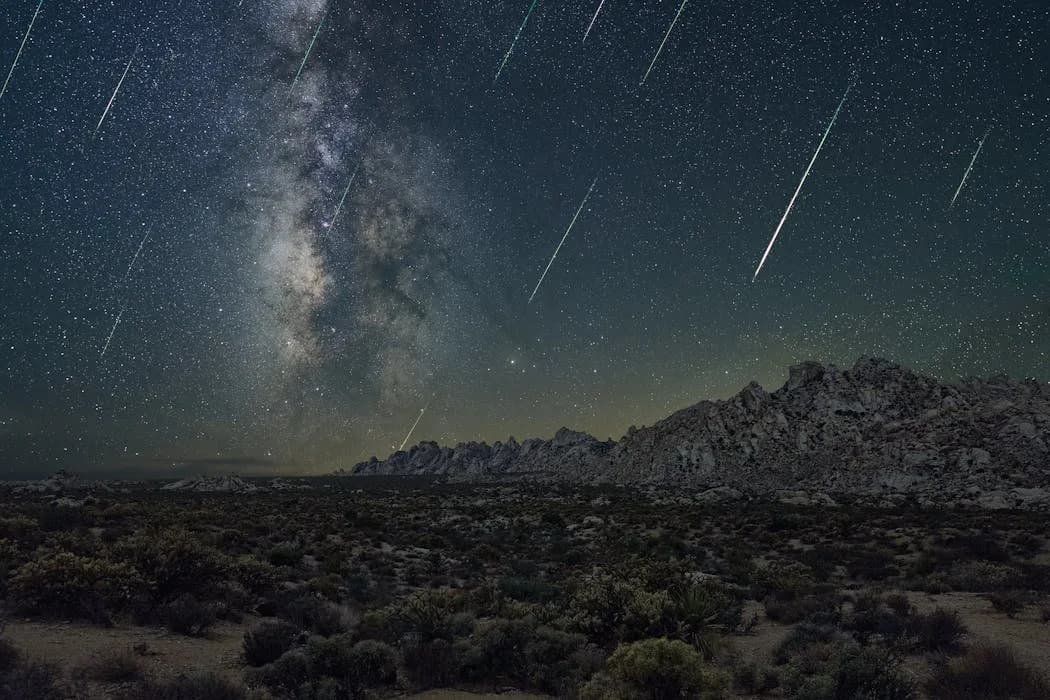
Meteor showers happen every year and are a spectacular sight.Jim Vajda/Flickr,CC BY
Have you ever been outside at night and watched a bright streak blaze across the sky and vanish? That flash isn’t a star — it’s the dramatic finale of a small body’s multi-billion-year journey through the solar system.
Where Asteroids and Comets Come From
About 4.6 billion years ago the solar system formed from a collapsing cloud of gas and dust. Small clumps of material, called planetesimals, accreted into larger bodies. In the warm, inner regions near the young Sun, planetesimals were dominated by rock and metal and grew into asteroids and, ultimately, the terrestrial planets (Mercury, Venus, Earth and Mars). Farther out, where it was cold enough for water and other volatiles to freeze, planetesimals incorporated ice and dust and became comets.
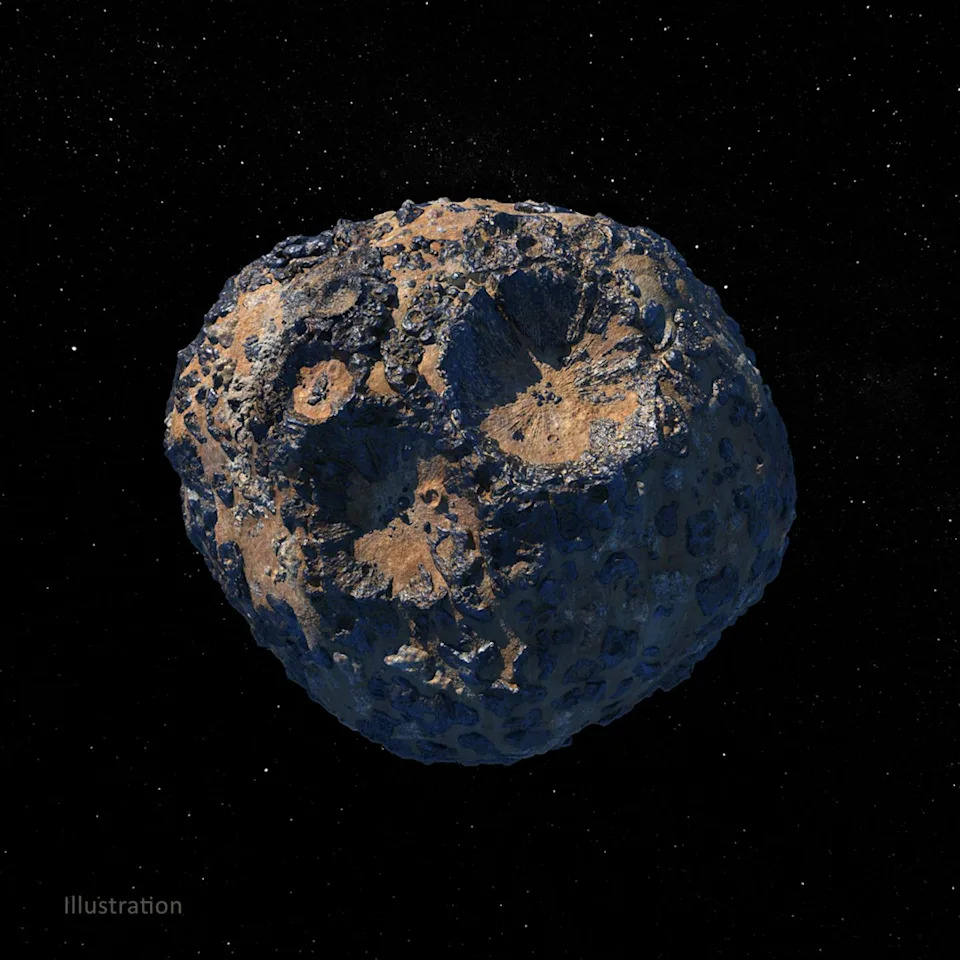
Asteroids such as Psyche, shown in this illustration, are planetary remnants typically made of metal and rock.NASA
Giant Planets and Leftover Bodies
Some planetesimals grew massive quickly and captured thick envelopes of hydrogen and helium, becoming the giant (Jovian) planets — Jupiter, Saturn, Uranus and Neptune. Those that did not become planets remained as smaller rocky or icy bodies: asteroids in the inner system and comets in the outer system.
From Space Rock To Shooting Star
When a chunk of rock or ice enters Earth’s atmosphere it typically travels at several to tens of kilometers per second (a few to a few dozen miles per second). At these speeds the object compresses and heats the air in front of it, producing intense heat and sometimes a thunderlike sonic boom if it is supersonic. Friction and pressure strip material from the object and vaporize it; the glowing trail of vaporized material and debris is what we see as a meteor — the phenomenon commonly called a shooting star.
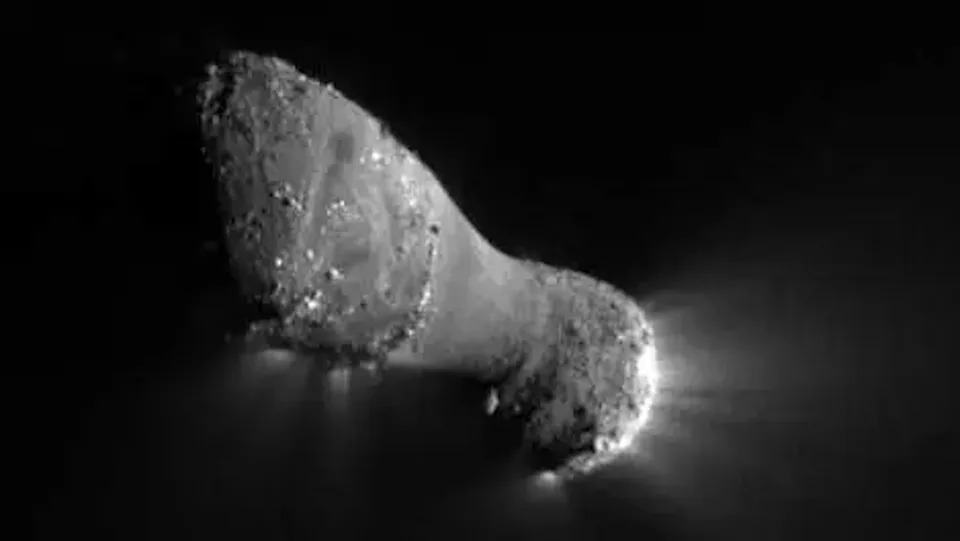
A comet named Hartley is shown in this image from NASA’s EPOXI mission. It has a thin trail of dust particles coming off its back side.NASA/JPL-Caltech/UMD
Meteor Showers: Earth's Annual Encounters
Comets often leave long streams of dust and debris along their orbits as ices sublimate near the Sun. If Earth’s orbit intersects one of those debris streams, our planet collides with many small particles at once, producing a meteor shower. Because the intersection occurs at the same point in Earth’s orbit, many showers recur annually; under dark skies you can sometimes see dozens of meteors per hour during a strong shower (for example, the Perseids and Geminids).
Meteorites: The Survivors
Most meteors burn up before reaching the ground. The fragments that survive atmospheric entry and land on Earth are meteorites. Many meteorites originate from asteroids — often from parent bodies originally larger than a football field. Meteorites can be composed of stone, metal (nickel-iron), or a mixture, and many show a dark, smooth fusion crust from heating during entry. They are often magnetic due to their metal content.
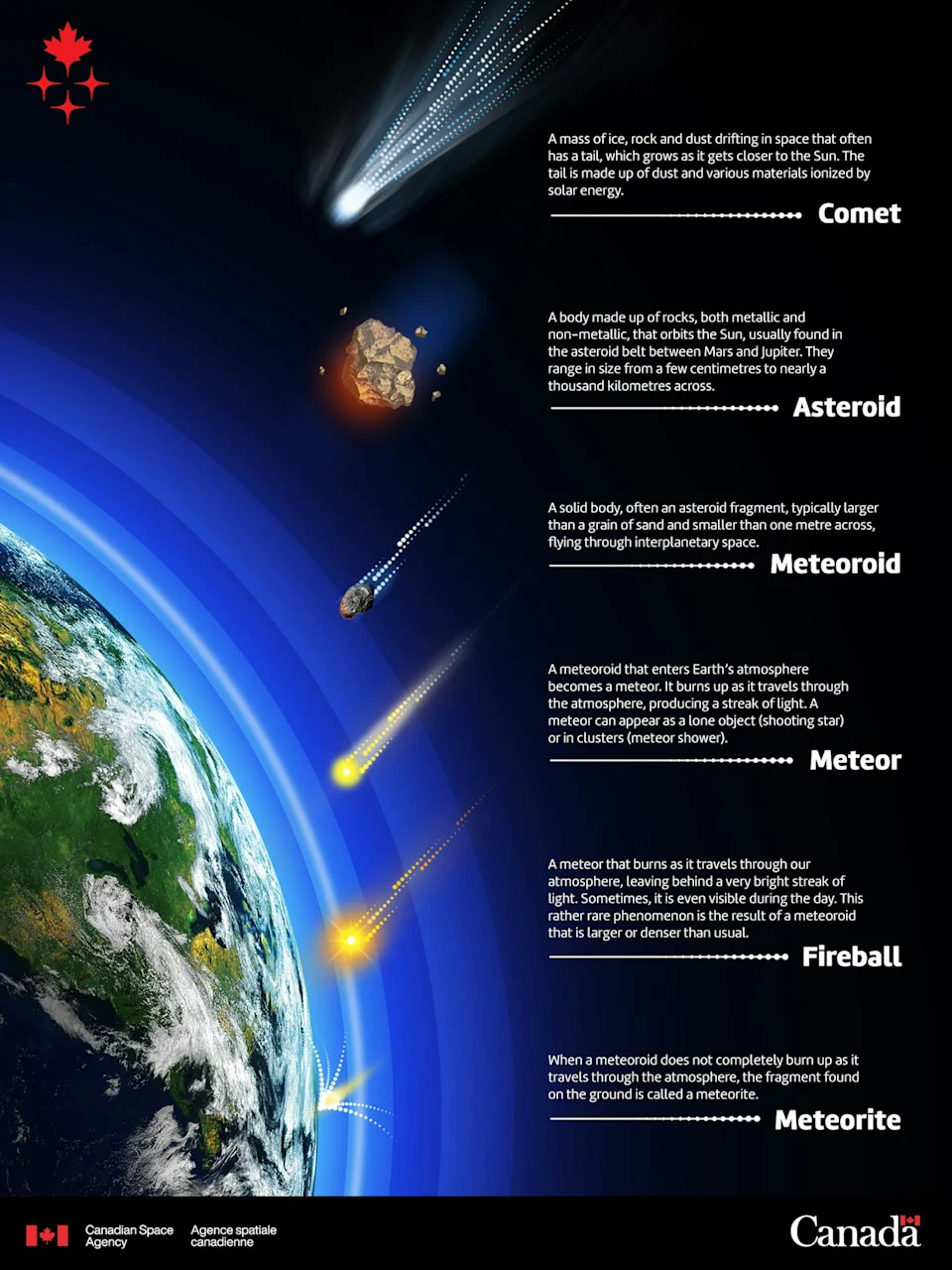
Lots of different terms are used to classify meteors and other rocks in the solar system.Canadian Space Agency
How To Recognize A Meteorite
Identifying meteorites can be tricky because some Earth rocks may look similar. Meteorites are most often recovered in stable landscapes such as deserts or ice fields, where they stand out against the background. Typical clues include a dense, heavy feel for size, a magnetic response, a dark fusion crust, and interior features like metal flecks or a homogeneous, fine-grained texture. If you suspect you’ve found a meteorite, avoid cleaning or altering it and contact local geologists, museums, or universities for verification.
Next time you watch a meteor streak across the night sky, remember: you’re witnessing the final moments of an object that formed billions of years ago and has been traveling the solar system ever since.
This article is adapted from a piece originally published by The Conversation. Author: Adam Lark, Peters Observatory, Hamilton College.
Help us improve.





















