
Iran and the United States are expected to begin final negotiations this week after a memorandum of understanding was reached to halt months of fighting. A 60-day window will open after the MoU is physically signed in Switzerland, where Iran's lead negotiator Mohammad Bagher Ghalibaf and U.S. Vice President JD Vance are expected to attend. The framework addresses Iran's enriched uranium stockpile, inspections by the IAEA and Western agencies, and potential sanctions relief, though regional tensions — especially in Lebanon — remain a major risk.
Iran, US Set To Begin Final-Deal Talks This Week After MoU; Signing Expected In Switzerland
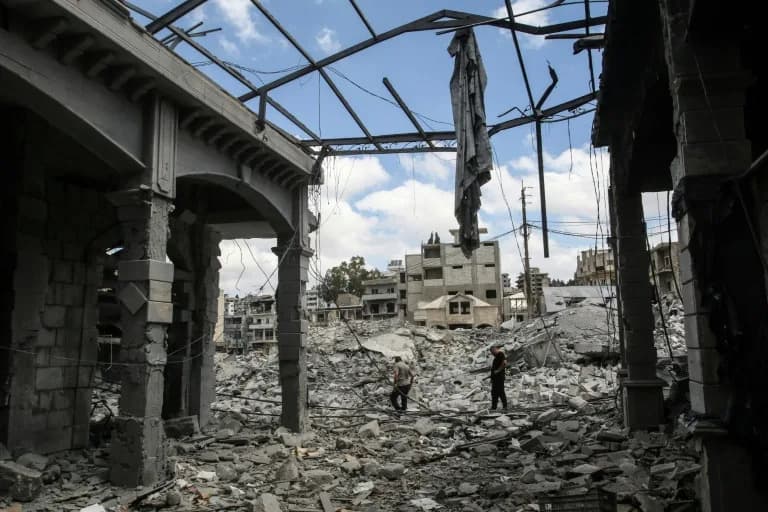
Experts have warned that the parallel conflict in Lebanon between Israel and Hezbollah presents the biggest threat to the diplomatic thaw (Mahmoud ZAYYAT)(Mahmoud ZAYYAT/AFP/AFP)
Iran announced on Tuesday that formal negotiations with the United States over a final nuclear and sanctions agreement are likely to begin later this week, following a memorandum of understanding (MoU) intended to halt months of deadly conflict.
What Happened
Iranian officials said a final round of talks will take place within a 60-day window after the MoU is physically signed. Iranian Foreign Minister Abbas Araghchi said negotiations could "likely" begin on Friday at a location to be determined. Iran's chief negotiator, Mohammad Bagher Ghalibaf, is expected to attend the signing in Switzerland, while the U.S. will be represented by Vice President JD Vance; President Donald Trump may also attend.
Key Provisions And Verification
The framework agreed so far is described as a roadmap to address Iran's nuclear programme and sanctions relief. U.S. officials say the International Atomic Energy Agency (IAEA) and U.S. and U.N. inspectors would be allowed into Iran to verify compliance. Vice President Vance has said the MoU spells out cooperation to dismantle or destroy Iran's stockpile of highly enriched uranium — a central sticking point in talks with Washington and its allies.
"One of the core parts of the agreement is that the IAEA and the United States are going to help Iran destroy the highly enriched stockpile," Vance said in media interviews promoting the deal.
Money, Sanctions And Strategic Routes
U.S. officials insist no direct U.S. taxpayer funds will be transferred to Iran, while Iranian media have reported that roughly $12 billion in frozen assets could be released as part of the package. President Trump also said the Strait of Hormuz — a vital oil and gas corridor — would "completely open" once the rivals sign the agreement; he later noted he did not "think we will need much help" keeping the waterway secure.
Risks And Regional Implications
Despite momentum from indirect talks mediated by Pakistan and Qatar, analysts warn that violence on other fronts could derail progress. The conflict in Lebanon — where Iran-backed Hezbollah fought Israeli forces following the killing of Iran's supreme leader — is identified as a particular risk. Ross Harrison, a senior fellow at the Middle East Institute, called that theatre a likely "ultimate spoiler." Israeli leaders have condemned the deal, and Prime Minister Benjamin Netanyahu said Israel would keep its forces in Gaza, Lebanon and Syria "for as long as necessary."
Next Steps And Uncertainties
Officials say the MoU must be physically signed before the 60-day window opens for final negotiations. Iranian officials have voiced caution, noting a history of broken commitments. Senior U.S. officials say key participants have already signed the text electronically, and both sides will now aim to resolve outstanding issues including the duration and scope of any enrichment suspension.
Bottom line: An agreed framework has created a path to direct talks on the most sensitive issues — enrichment limits, the fate of Iran's enriched-uranium stockpile, and sanctions relief — but a number of political and security risks remain that could delay or derail a final accord.
Help us improve.





















