The District Court of The Hague sentenced a Syrian national identified as Rafiq al Q. to 26 years for torture and rape of detainees during Syria’s civil war, finding he served as an interrogator for the pro‑Assad National Defense Force in 2013–2014. The defendant, who sought asylum in the Netherlands in 2021 and was arrested in 2023, denies the charges; both prosecution and defense have 14 days to appeal. The case forms part of broader international prosecutions of alleged Assad‑era abuses, alongside recent convictions in Germany and France and trials inside Syria.
Dutch Court Sentences Syrian Suspect to 26 Years for Crimes Against Humanity
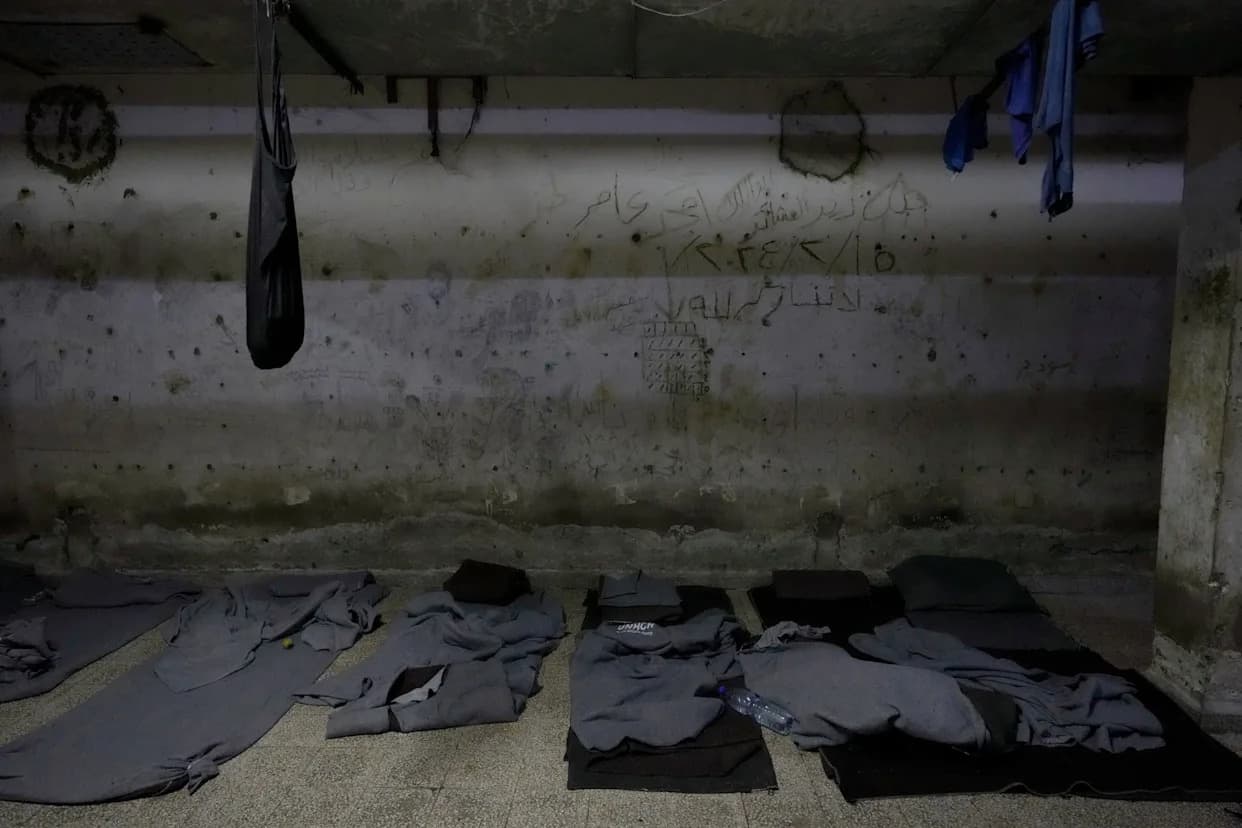
FILE - Blankets used by prisoners as mattresses are seen at a detention facility run by military intelligence during former Syrian President Bashar Assad's regime, in Damascus, Syria, on Dec. 17, 2024. (AP Photo/Hussein Malla, File)(AP Photo/Hussein Malla)
THE HAGUE, Netherlands — A Dutch court on Monday sentenced a Syrian national identified in court records as Rafiq al Q. to 26 years in prison after finding him guilty of crimes against humanity, including torture and rape, committed during Syria’s civil war.
The 58-year-old defendant, who denied the charges and alleged a conspiracy by victims and police, stood trial beginning in April on counts that included torture, sexual abuse and rape. The District Court of The Hague concluded that the evidence established his role as an interrogator for the pro‑Assad National Defense Force between 2013 and 2014.
According to the court, witnesses and evidence connected Rafiq al Q. to abuse at detention facilities in Salamiyah, where detainees were reportedly beaten, suspended upside down and subjected to electric shocks. The judges also found he sexually abused multiple victims and raped one.
“The defendant repeatedly subjected the victims to conditions of extreme fear, threats, pain, hopelessness, and powerlessness,”
the court said in a summary of its verdict, noting that victims gave compelling testimony about lasting physical and psychological harm.
Rafiq al Q., who applied for asylum in the Netherlands in 2021 and was living in the eastern town of Druten, was arrested in 2023. He was acquitted on several other charges where judges found evidence insufficient.
The trial proceeded under the principle of universal jurisdiction, which allows national courts to prosecute serious international crimes such as war crimes and crimes against humanity even when the crimes occurred abroad. Prosecutors and the defense each have 14 days to file an appeal.
Broader Context
This case is part of a wider wave of international prosecutions related to alleged abuses under the Assad era. In Germany, a court last year sentenced a Syrian doctor to life imprisonment for murders and torture committed in Syria between 2011 and 2012. In 2024, a Paris court sentenced three senior Syrian officials in absentia to life terms for complicity in war crimes.
Meanwhile, Syria has also begun domestic legal proceedings. State media reported in April that Atef Najib, a former brigadier general and cousin of Bashar al‑Assad who led the Political Security Branch in Daraa, appeared in a public trial on charges the government described as crimes against the Syrian people.
The case underscores continuing international efforts to hold individuals accountable for alleged atrocities committed during Syria’s long conflict and highlights the use of national courts to pursue justice where events took place elsewhere.
Help us improve.