
The initial count in Peru's presidential runoff ended with a margin of just over 1,000 votes between the candidates, but more than 1,600 polling stations (about 400,000 votes) remain under review by the National Electoral Jury (JNE). Special Electoral Juries (JEE) examine disputed tally sheets and, when needed, hold public hearings streamed online. The JNE aims to name an official winner by July 15, though a clear victor could emerge earlier. Separately, Roberto Sánchez has requested annulments for roughly 2,400 stations; the JNE has three days to rule.
Peru Runoff: How Contested Ballots Could Decide the Presidency
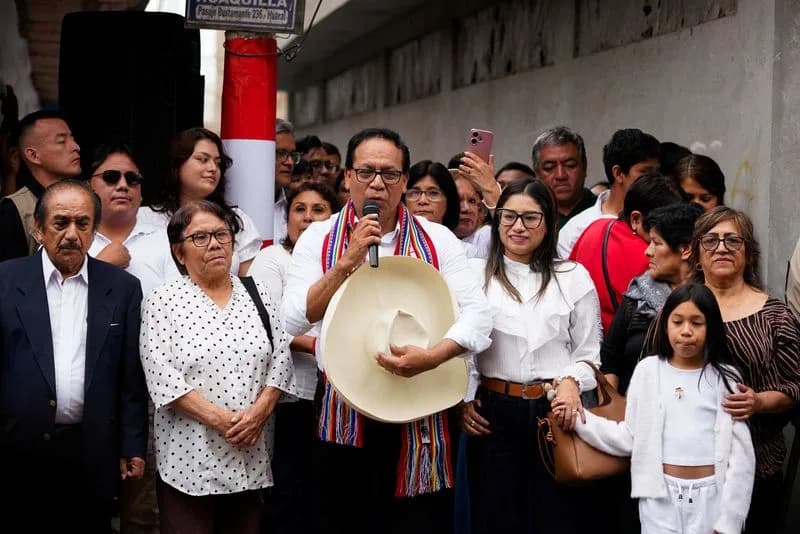
Left-wing presidential candidate Roberto Sanchez speaks to supporters next to his family members before casting his vote in a runoff election against conservative candidate Keiko Fujimori, in Huaral, Peru, June 7, 2026. REUTERS/Leslie Moreno
The initial count in Peru's presidential runoff has concluded, but the National Electoral Jury (JNE) is conducting a detailed review of contested ballots that could still change the outcome.
Why the Review Matters
The two candidates are separated by just over 1,000 votes out of roughly 18 million ballots cast. Results from more than 1,600 polling stations — representing about 400,000 votes — remain under review and have not been included in the official tally. Conservative Keiko Fujimori finished the preliminary count with 9,036,046 votes (50.004%), while leftist Roberto Sánchez had 9,034,743 votes (49.996%). Most flagged ballots come from the Lima region, which voted strongly for Fujimori; as a result, the review is likely to benefit her campaign.
What Triggers a Review
At each polling station, officials complete a tally sheet recording the final vote numbers for each candidate. Any discrepancy between the tally sheet and other records — arithmetic errors, mismatched totals, or formal challenges by party observers — can send a station's results to a Special Electoral Jury for review. Observers from both campaigns, including those at overseas polling stations, have the right to challenge results.
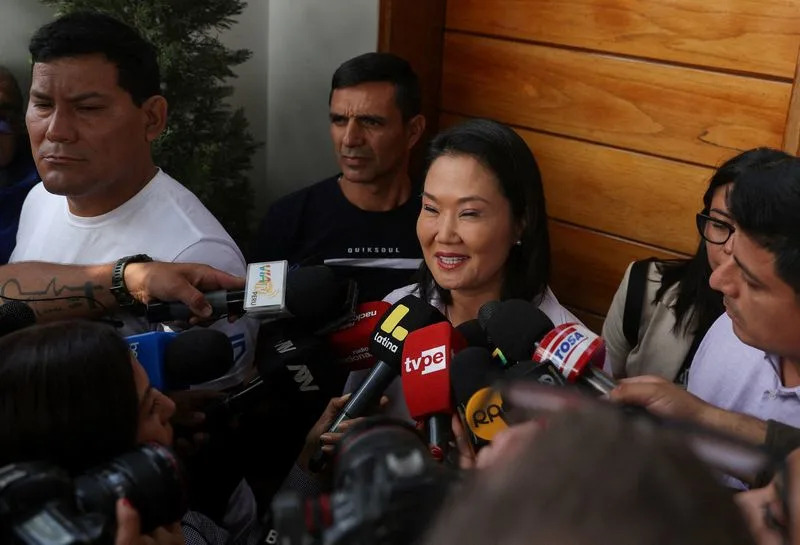
Peru's conservative presidential candidate Keiko Fujimori addresses the media, as vote counting continues in a tight presidential race between Fujimori and leftist candidate Roberto Sanchez, in Lima, Peru June 11, 2026. REUTERS/Alessandro Cinque
How Contested Votes Are Handled
- Initial Check: A Special Electoral Jury (JEE) of three members first reviews the station's tally sheet.
- Quick Resolution: Simple accounting or clerical mistakes can be corrected and the ballots are added to the official count.
- Public Hearing: If the problem cannot be resolved immediately, the physical ballots are requested and the JEE convenes a public hearing within two days. These hearings are streamed live (for example, on YouTube) and include party observers; the panel has up to three calendar days to examine the case.
- Final Count Entry: After the JEE issues its ruling, the ballots are entered into the official tally.
How Long It Could Take
The full review process can take weeks. The JNE has said it expects to declare an official winner by July 15, though a clear winner could emerge earlier if one candidate builds an unassailable lead as reviews progress.
Annulment Requests Versus Contested Ballots
Contest reviews differ from annulment petitions. In addition to the roughly 1,600 stations under review, Sánchez's campaign requested annulments for about 2,400 polling stations. Sánchez's team alleges irregularities at around 1,750 stations inside Peru (mostly in Lima) and problems with how ballots from roughly 650 U.S. polling stations were transported. The JNE has three days to rule on the annulment petition. Peru's foreign minister has said no issues were found with the transport of overseas ballots.
Reporting: Reporting by Alexander Villegas; editing noted by Reuters.
Help us improve.





















