This article examines how conservation and carbon markets can displace Indigenous peoples, using the Ogiek of Kenya’s Mau forest as a central case. It explains the UN principle of free, prior and informed consent (FPIC), highlights how FPIC often lacks enforceability, and gives the Arctic Ice Project as a parallel example. The author argues that only by involving Indigenous communities as decision-makers with real veto power will their rights and stewardship be protected.
When Conservation Displaces: How Carbon Markets and Faux Consultation Threaten Indigenous Lands
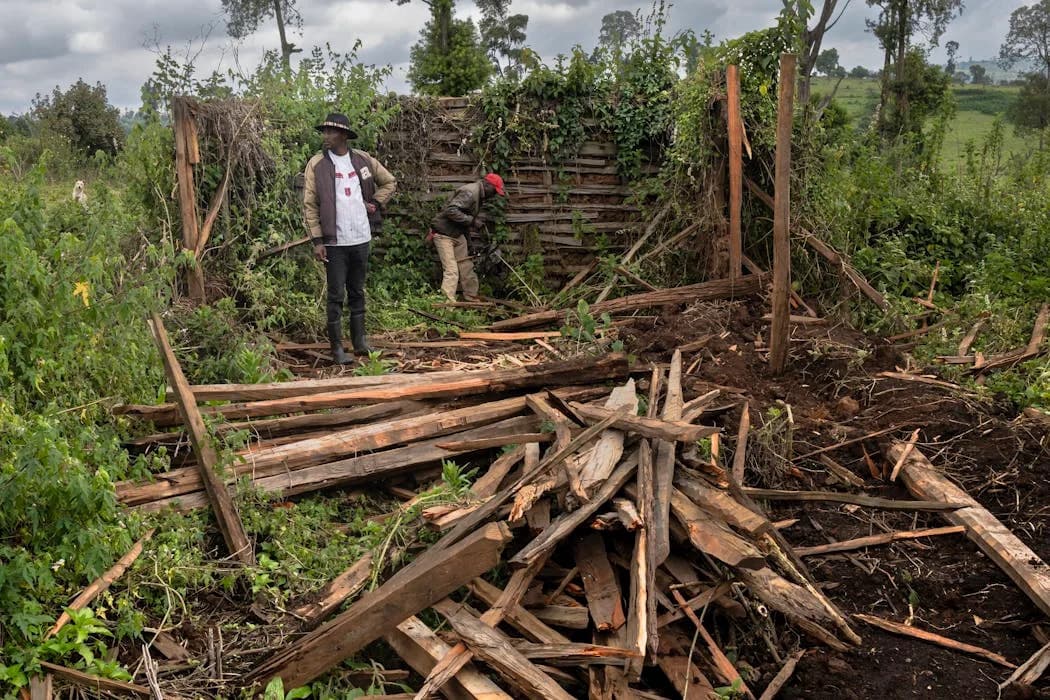
Fred Ngusilo, left, a member of the Ogiek community, works with a relative to sift through the ruins of their grandfather's house in the Mau forest, destroyed by Kenyan police.Tony Karumba/AFP via Getty Images
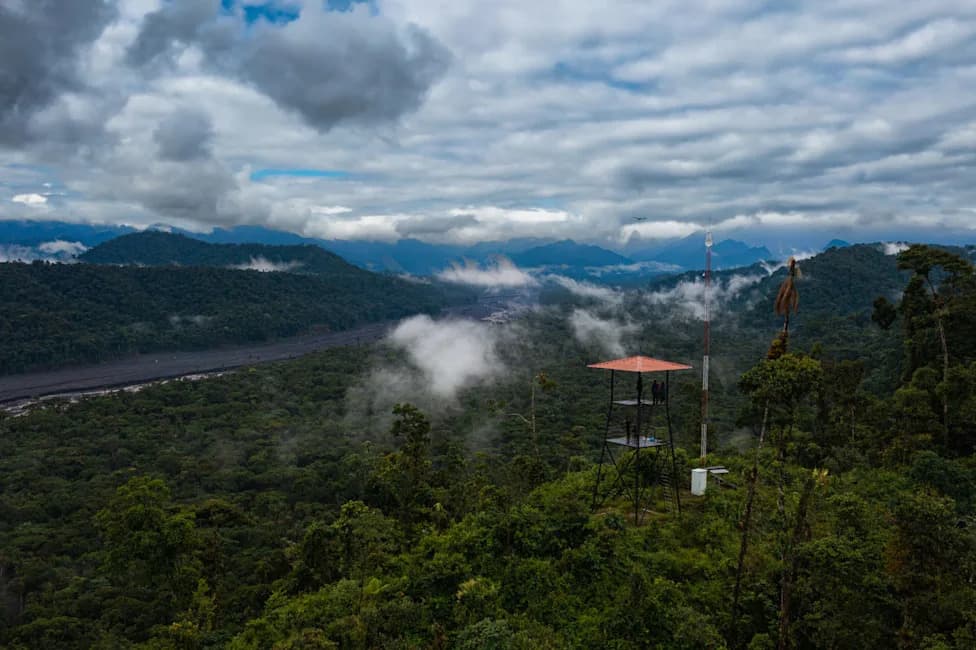
Imagine living in the same forest your family has tended for generations — relying on it for food, shelter, culture and knowledge — and knowing your people have protected it for centuries. Now imagine officials agreeing the forest is an ecological treasure but concluding the only way to protect it is to remove you.
The Ogiek And The Mau Forest
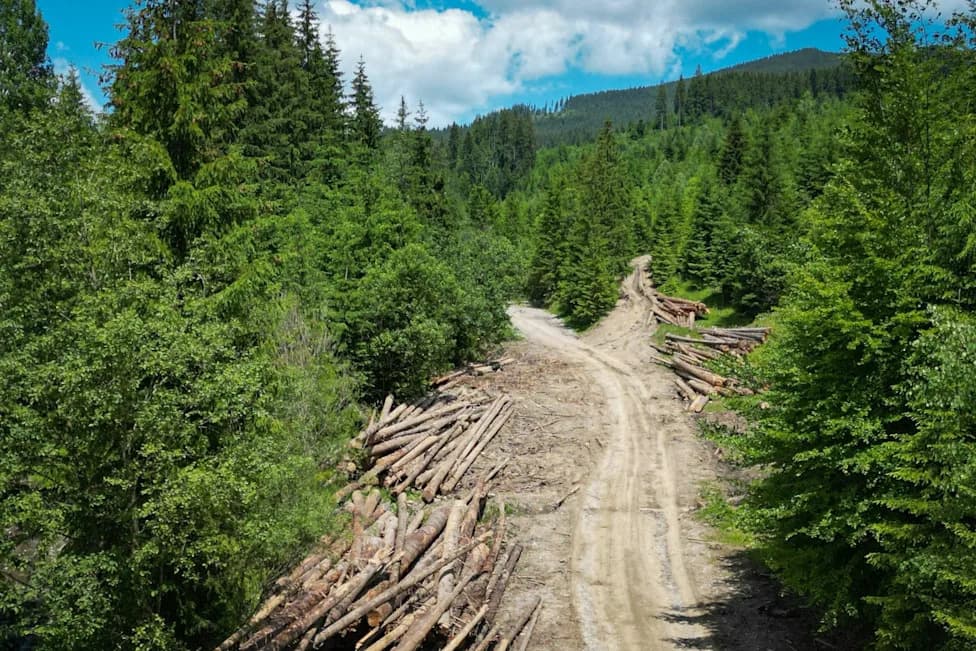
The Ogiek, an Indigenous hunter-gatherer community in Kenya’s Mau forest, have faced eviction pressures for more than a century from colonial and postcolonial authorities. In 2017 they won a landmark judgment at the African Court on Human and Peoples’ Rights affirming their legal claim to ancestral land. Yet in 2023 the Kenyan government again began evicting Ogiek families, this time citing the need to preserve forest land to participate in global carbon-credit markets.
How Carbon Markets Can Harm Indigenous Rights
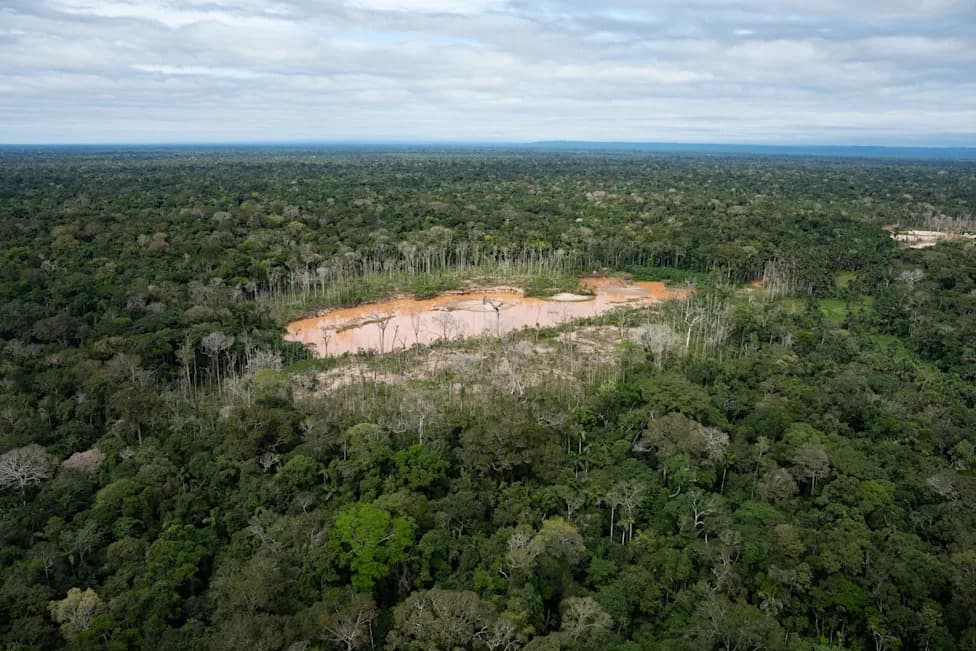
Carbon-credit systems let companies offset their emissions by funding activities that remove or avoid the equivalent amount of carbon dioxide — for example, by protecting forests. But when conservation is framed principally as a market commodity, incentives can arise to restrict access to landscapes Indigenous peoples have long stewarded, often without meaningful participation by those communities.
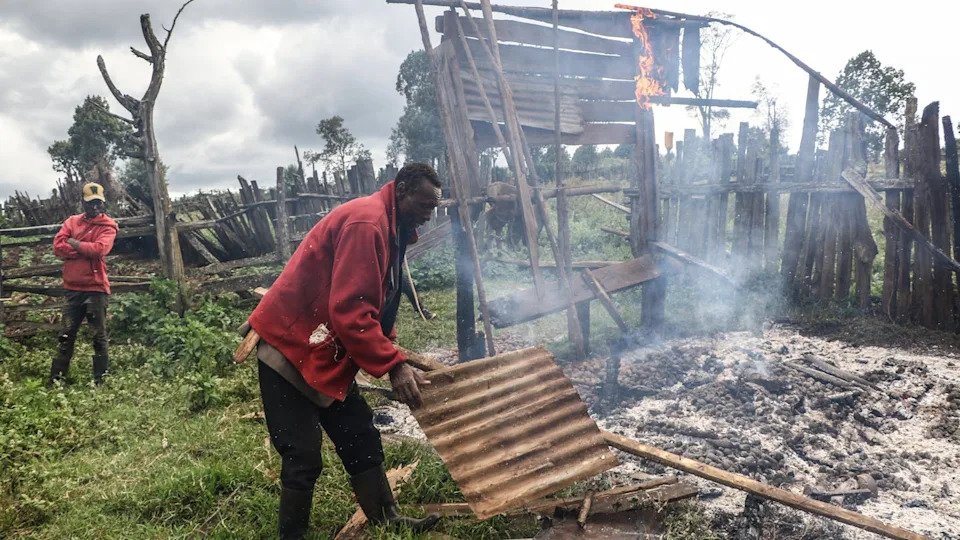
Kenyatta Ngusilo, a member of the Ogiek community, salvages what was left after his storehouse was burned down by Kenyan police in Sasimwani, in the Mau forest.James Wakibia/SOPA Images/LightRocket via Getty Images
Free, Prior And Informed Consent — Principle Versus Practice
The United Nations Declaration on the Rights of Indigenous Peoples (2007) recognizes the standard of free, prior and informed consent (FPIC): governments and companies should disclose plans affecting Indigenous lands, allow communities to object or propose changes, and obtain voluntary approval before proceeding. FPIC was developed after decades of documented harm from projects that ignored Indigenous presence and knowledge.
Yet FPIC typically exists as a normative principle rather than an enforceable domestic obligation in many jurisdictions. As a result, consultations are often perfunctory: a late meeting with a few delegates, documents signed by unrepresentative individuals, or offers to pay fees in exchange for apparent approval.
“Involvement doesn’t mean … a predetermined intervention, (with the organization) inviting us to a restaurant of their choosing, eating a meal they ordered to discuss our future. … We warned them about the potential impacts, and after all that, they want to hire us as consultants for a predetermined intervention. And they told us to set our price.”
This quotation — from an Indigenous Arctic leader responding to a proposed geoengineering approach — highlights how consultation can be reduced to a transactional check-box rather than a meaningful decision-making process.

The Ogiek community has fought in courts for their rights over many years.James Wakibia/SOPA Images/LightRocket via Getty Images
Another Example: The Arctic Ice Project
The nonprofit Arctic Ice Project (formerly ICE911) proposed spreading tiny reflective silica microspheres on sea ice to reflect sunlight and slow melt. The project ran from roughly 2008 until its suspension in 2025 amid ecological concerns about impacts on algae and plankton — foundational species for Arctic food webs — and persistent complaints that Indigenous communities were excluded from substantive discussion.
Why Community-Led Conservation Works Better
Research shows that conservation led by local, Indigenous communities is often more effective and equitable. Indigenous peoples bring dynamic, place-based knowledge systems and a long-term stewardship role that external actors frequently overlook. Where regulations are weak and financial incentives high, outside actors may unintentionally or negligently prioritize market outcomes over community rights.
Legal Protections And The Path Forward
Some legal frameworks strengthen FPIC in practice. The International Labour Organization’s Indigenous and Tribal Peoples Convention (No. 169, 1989) enshrines similar protections, and countries such as the Philippines, Colombia and Peru have integrated FPIC into national law. Other states have not ratified ILO 169 or incorporated FPIC robustly — including the United States.
To make FPIC effective, Indigenous communities must be engaged at the outset as decision-makers with genuine authority — including veto power over actions that affect their lands and livelihoods. Without this shift, the pattern of exclusion is likely to repeat whenever conservation, climate finance or market mechanisms create incentives to control landscapes that Indigenous peoples have long cared for.
Author: Buket Altınçelep (republished from The Conversation)
Help us improve.