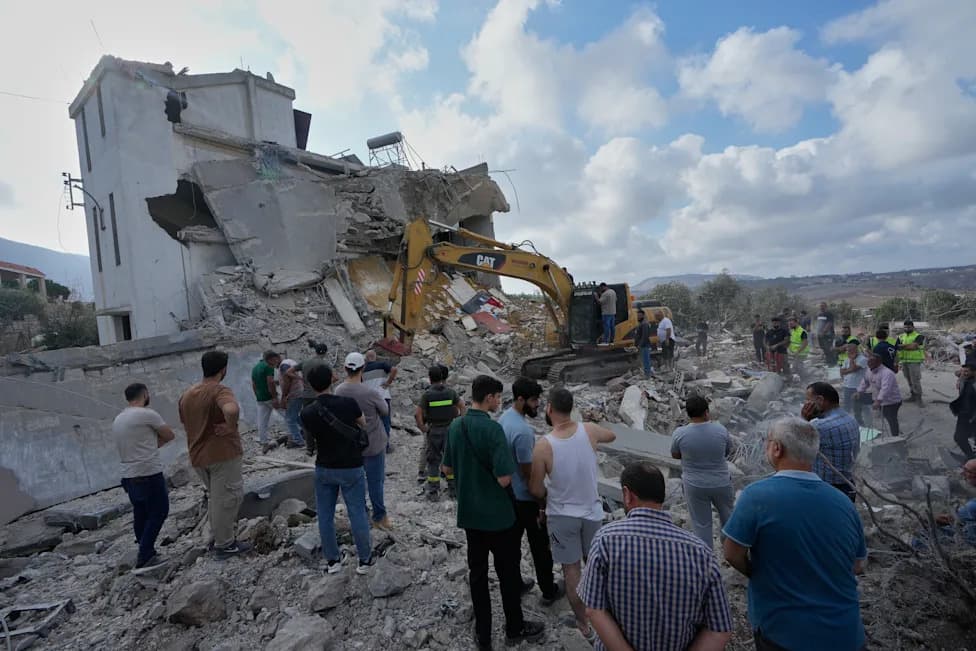
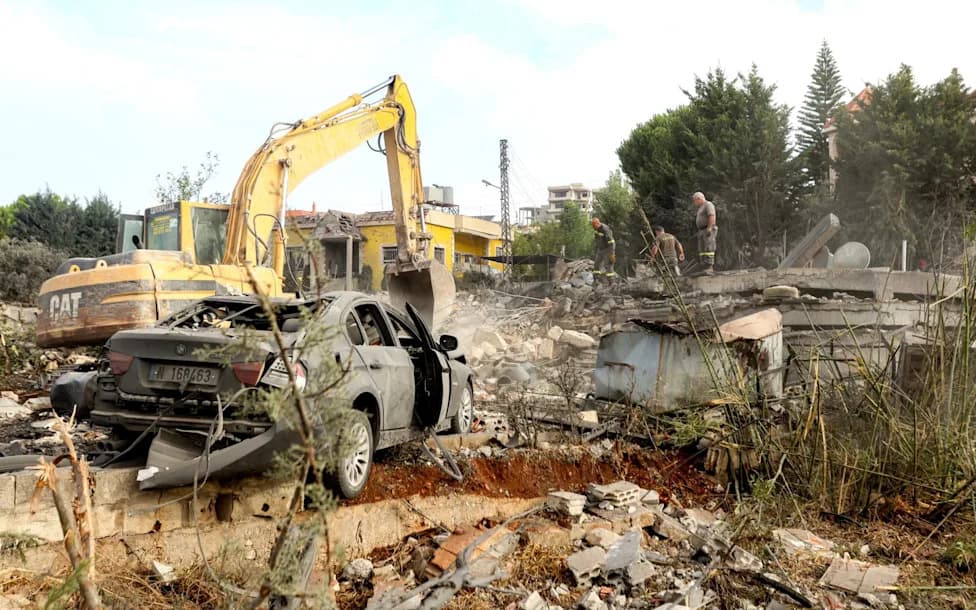
Israeli forces pressed deeper into southern Lebanon amid sustained air and ground strikes, heightening fears of escalation with Hezbollah. State media reported dozens of attacks and at least 13 deaths, including two killed in a drone strike in Sidon. Security sources say troops are now only a few kilometres from Nabatiyeh's centre, which is largely deserted. The Lebanese Health Ministry's tally from March 2 to June 10 stands at 3,696 dead and 11,413 wounded, while local officials say two municipal workers were detained and taken to Israel for questioning.
Israeli Forces Push Deeper Into Southern Lebanon As Deadly Strikes Continue
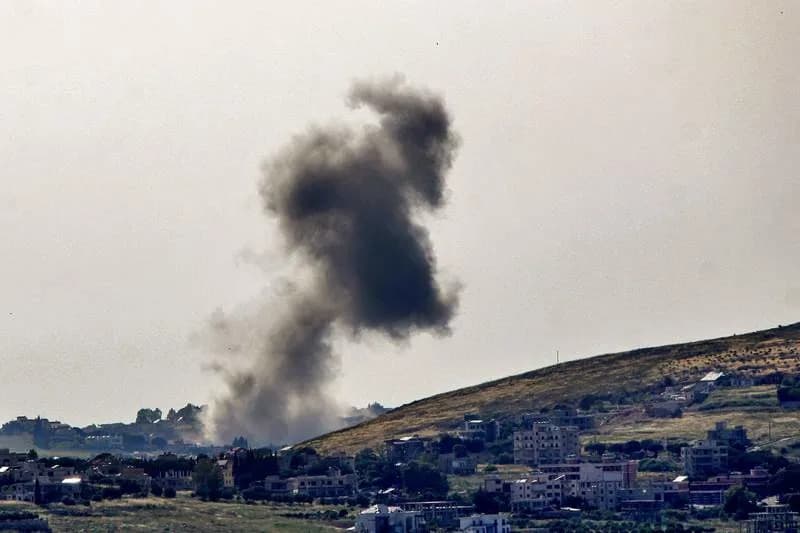
FILE PHOTO - Smoke from an Israeli air raid billows over the southern Lebanese city of Nabatiyeh. (is associated with: «Israeli forces advance deeper into Lebanon as deadly strikes continue») Stringer/dpa
Israeli forces advanced further into southern Lebanon on Wednesday as sustained airstrikes and ground operations swept parts of the country, raising concerns of a wider confrontation with Iran-backed Hezbollah.
Lebanon's state news agency NNA reported dozens of Israeli strikes across southern and eastern areas, with initial accounts saying at least 13 people were killed. In the southern coastal city of Sidon, NNA said a drone strike on a vehicle killed two people.
Fighting continued around the strategically important Beaufort Castle, which Israeli troops captured about a week earlier. Lebanese media reported that Israeli attack helicopters fired at Hezbollah fighters near the hilltop fortress, while Hezbollah claimed responsibility for multiple attacks on Israeli positions in southern Lebanon.
Advance Toward Nabatiyeh: Lebanese security sources said Israeli troops have pushed to the immediate outskirts of Nabatiyeh, one of the main economic centres in southern Lebanon. Forces are reportedly only a few kilometres from the city centre and appear to be preparing further advances. Nabatiyeh's population swells from about 40,000 in winter to as many as 60,000 in summer; today the town is nearly deserted, with roughly a dozen elderly residents remaining.
Human Cost: The Emergency Operations Centre at the Lebanese Ministry of Public Health said in a statement that, from March 2 through June 10, the cumulative toll stands at 3,696 dead and 11,413 wounded.
Detentions in Kfar Shouba: Local officials in the border town of Kfar Shouba accused Israeli forces of detaining two municipal workers. Mayor Qassem al-Qadri told dpa that municipal council member Mohammad Hassan al-Hajj and municipal employee Ahmad Salah Diab were taken while operating a water pumping station on the town's outskirts.
'We have made it clear to all that inside Kfar Shouba there are only civilians who follow the Lebanese government and Lebanese army rules,' al-Qadri said. 'We simply do not want to leave the town. We want to stay on our land.' He added that the men were refuelling a generator to pump water into the village.
The Israeli army said both men had approached Israeli soldiers, were detained to ensure they posed no threat and were taken to Israel for questioning; an army spokesman said they would be released if no suspicion arose.
Hezbollah — which also functions as a political party — continues to provide much basic infrastructure in areas it controls, including parts of southern Lebanon, Beirut's southern suburbs and eastern Lebanon.
Diplomacy and Government Response: The incident came as Lebanese President Joseph Aoun defended ongoing negotiations with the US and Israel aimed at ending hostilities and restoring state authority. 'It is forbidden to return to the era of tutelage, whatever its form,' Aoun said, adding: 'I took the decision to negotiate and I will continue it until the end.' He has argued that an Israeli withdrawal would allow the state to extend authority nationwide and strengthen national institutions.
The situation remains volatile with significant humanitarian consequences and the risk of further escalation across the region.
Help us improve.