
Blue Origin's New Glenn exploded during an engine test at Kennedy Space Center, destroying the vehicle and heavily damaging LC-36. No injuries were reported. The pad is the only facility configured for New Glenn, so repairs and recertification are likely to take months. The mishap threatens Amazon's Kuiper/Leo satellite rollout and puts pressure on NASA timelines and commercial moon-delivery contracts tied to New Glenn.
Blue Origin's New Glenn Explodes at Kennedy Space Center — NASA Moon Timelines Threatened
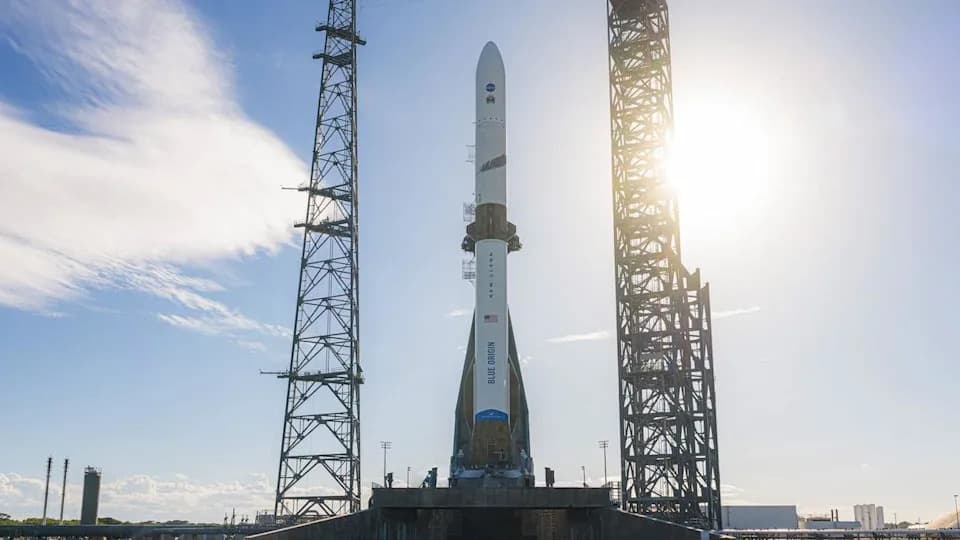
The explosion has cast doubts over Blue Origin's next launch timetable [Blue Origin]
A dramatic fireball over Florida's Kennedy Space Center late last night left Blue Origin's New Glenn rocket destroyed and Space Launch Complex 36 (LC-36) heavily damaged, raising fresh doubts about the company's ability to meet several NASA and commercial launch commitments.
What Happened
Blue Origin says the 98 m (322 ft) New Glenn detonated at about 21:00 local time during a routine engine test. Officials reported no injuries. Video of the accident shows severe structural damage to LC-36, including a collapsed lightning protection tower.
"All personnel are accounted for and safe," Jeff Bezos posted on X. "Very rough day, but we'll rebuild whatever needs rebuilding and get back to flying. It's worth it."
Immediate Consequences
LC-36 is currently the only launch complex configured to fly New Glenn. Until it is rebuilt and recertified, Blue Origin will be unable to fly its largest vehicle — a process analysts expect to take months, not weeks. The destroyed rocket had been scheduled to carry 48 satellites for Amazon's Kuiper/Leo broadband constellation, with a possible launch as soon as 4 June.
Commercial Impact
The failure is a major setback for Amazon's Leo (formerly Project Kuiper) rollout. Amazon is required under its FCC license to have half of its planned 3,236-satellite constellation in orbit by 30 July 2026. As of late May the company was roughly 1,300 satellites short; with New Glenn grounded, Amazon will be more dependent on rival launch providers — notably SpaceX — and is likely to seek additional schedule relief from regulators.
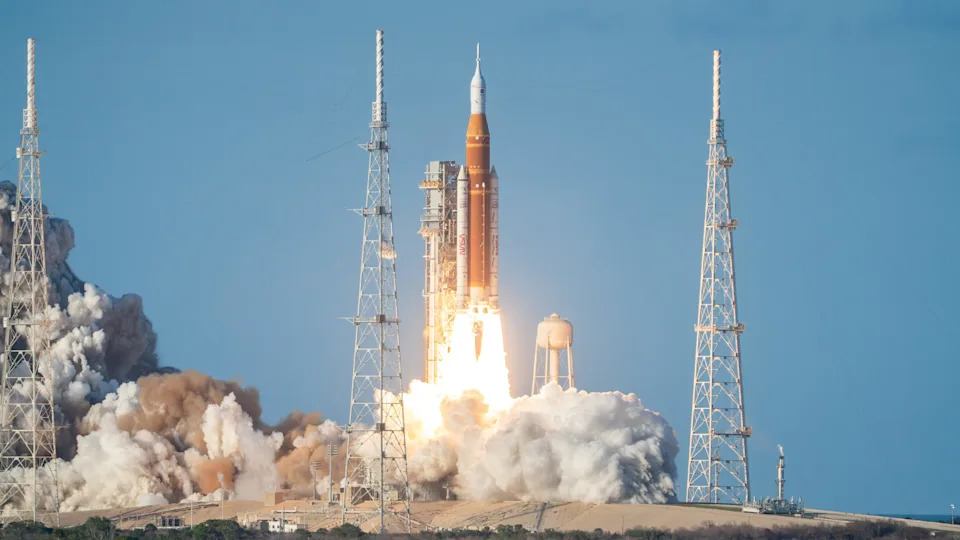
Earlier this year, NASA launched the Artemis II mission with four astronauts aboard the Orion spacecraft [NASA]
Implications For NASA
The accident also complicates NASA-related plans that relied on New Glenn. Blue Origin's Blue Moon Mark 1 "Endurance" lander — intended to carry science payloads for a demonstration mission often referenced as part of an early lunar base campaign — had been expected to ride aboard a New Glenn vehicle. NASA has also awarded Blue Origin up to $468 million to deliver two commercial lunar terrain vehicles (by companies Astrolab and Lunar Outpost) to the Moon's south pole by 2028. Those deliveries, and some lunar-lander tests tied to Artemis planning, may now face schedule pressure.
NASA's officials have emphasized that spaceflight is unforgiving and that developing new heavy-lift capability is difficult. Any extended grounding of New Glenn will shrink schedule flexibility for NASA and its commercial partners as they pursue crewed and robotic lunar objectives in the late 2020s.
Wider Context
SpaceX's Starlink currently operates many more satellites than Amazon's Leo, increasing commercial urgency for affordable, reliable launches. Elon Musk commented on X: "Most unfortunate. Rockets are hard." Blue Origin had previously been viewed as relatively well positioned for some NASA commercial lander tasks, but the loss of LC-36 and a New Glenn vehicle shifts that balance and increases near-term uncertainty.
Investigations into the cause of the explosion are expected to follow, and Blue Origin and regulators will need to certify repairs before New Glenn can return to flight.
Help us improve.





















