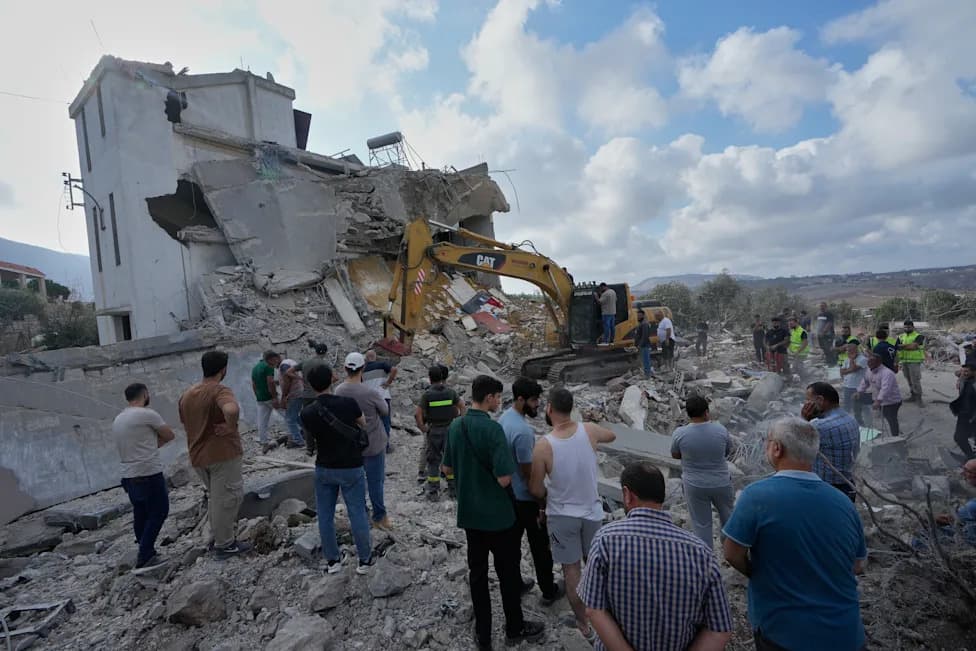
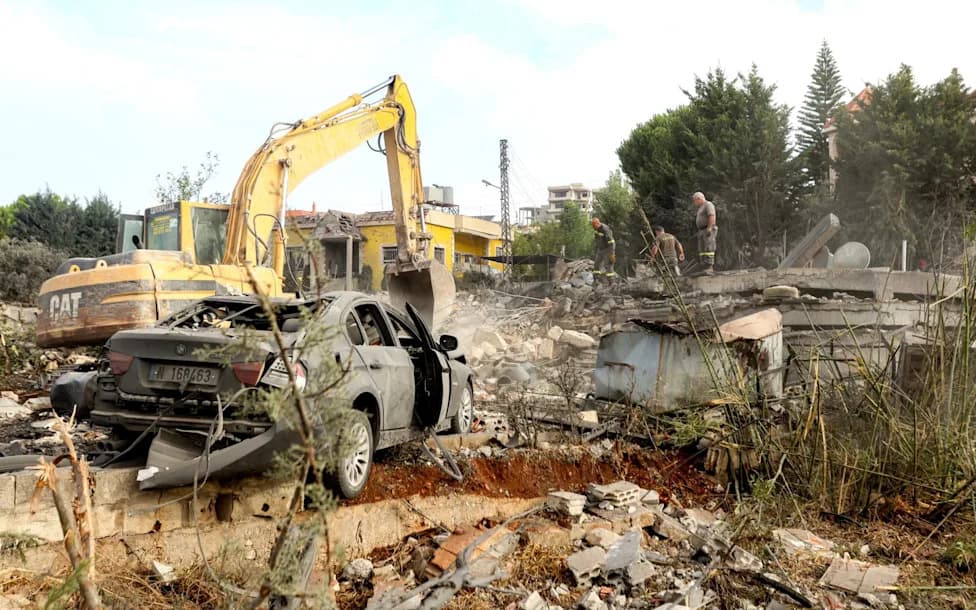
Israeli strikes in southern Lebanon killed at least 14 people, the Lebanese Health Ministry said, with multiple towns hit including Tyre, Marwanieh and Zifta. Iran warned it could resume attacks if strikes on Lebanon continue, while Hezbollah said it engaged Israeli forces inside Lebanon. Israeli leaders rejected Tehran's threats and pledged continued operations against Hezbollah; reports also say a UNESCO World Heritage site in Tyre was damaged.
At Least 14 Killed in Southern Lebanon as Israeli Strikes Continue Despite Iranian Warnings
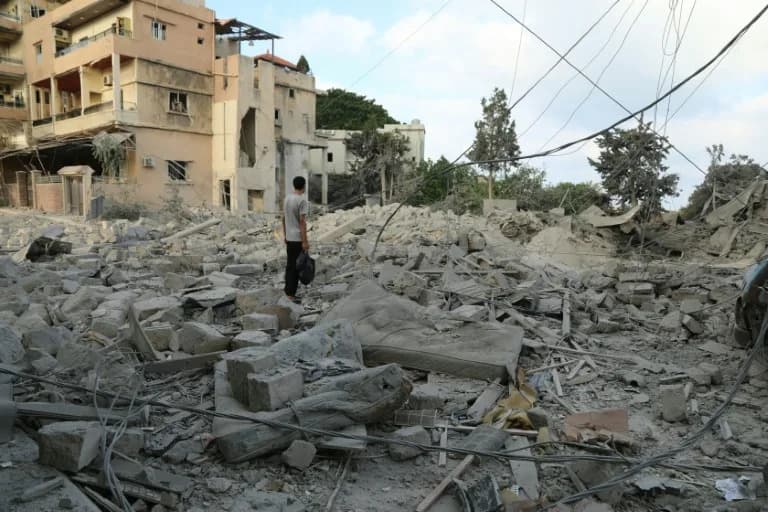
A man stands amid debris following Israeli airstrikes that hit the previous day, near the archaeological site of the Roman baths in the southern Lebanese city of Tyre (KAWNAT HAJU)(KAWNAT HAJU/AFP/AFP)
Israeli air and artillery strikes in southern Lebanon killed at least 14 people on Monday, the Lebanese Health Ministry said, with several casualties occurring after Iran warned it could resume attacks if the bombardment continued.
The strikes struck multiple towns in the south, including Tyre, Marwanieh and Zifta. Hezbollah, backed by Iran, said it had engaged Israeli forces operating inside Lebanon but did not claim strikes on Israeli territory.
Casualties and Local Impact
The Lebanese Health Ministry reported that an airstrike near the Lebanese Red Cross centre in Tyre left five people dead and eight wounded, four of them Red Cross paramedics. A separate strike in Marwanieh killed two people, including a child, and wounded 10 others. An earlier pre-dawn strike in Zifta, in the Nabatieh district, killed seven people, the ministry said, including a Syrian child and a woman.
"An Israeli enemy raid on the city of Tyre, near the Red Cross centre, resulted in 5 martyrs and 8 wounded, four of whom were Red Cross paramedics," the Lebanese Health Ministry said.
AFP photographers and local reporters described scenes of burning vehicles and emergency crews rushing to assist the wounded. Lebanon's state-run National News Agency (NNA) said raids struck more than a dozen locations across the south and reported damage to historic sites in Tyre, including a UNESCO World Heritage site where correspondents observed dust and debris.
Regional Tensions and Military Responses
Iran's military central command said it had halted a round of tit-for-tat strikes but warned that "should acts of aggression and hostility continue, including in southern Lebanon, much more severe and crushing measures than before will follow." Israeli Defence Minister Israel Katz rejected the warning and said Israel would continue operations against Hezbollah and strike Beirut's southern suburbs in retaliation for attacks on northern Israel.
Hezbollah claimed a series of attacks on Israeli troops operating in southern Lebanon. Near the border, the Israeli military reported intercepting three projectiles fired from Lebanon that it said were aimed at its forces.
Lebanese authorities say Israeli strikes have killed more than 3,600 people since Hezbollah's escalation of hostilities on March 2. Following an April 17 ceasefire between Israel and Hezbollah, Israeli forces established a so-called "Yellow Line" inside Lebanese territory, roughly a dozen kilometres from Israel's northern border, where ground troops are now operating.
Humanitarian Concerns
Medical and aid workers have reported mounting civilian harm and disruptions to emergency services. Reports that paramedics were among the wounded have underscored concerns about attacks near medical and relief operations. Damage to cultural heritage sites in Tyre also raises additional alarm about the broader impact of continued bombardment on civilian life and infrastructure.
Reporting for this article relied on statements from the Lebanese Health Ministry, Lebanon's NNA, AFP on-the-ground reporting and official comments from Iranian, Hezbollah and Israeli sources.
Help us improve.