
Overview: Blue Origin says the New Glenn test explosion caused no injuries and left critical fuel tanks and the water tower intact, though the transporter‑erector was demolished and one support tower was damaged but likely repairable. CEO Dave Limp expects a return‑to‑flight before year‑end and plans to shift to an alternative vertical operations concept. NASA has pledged technical support for root‑cause analysis while independent aerial photos largely confirm Blue Origin's damage assessment.
Blue Origin: New Glenn Could Return To Flight This Year, But LC-36 Damage Complicates Plans
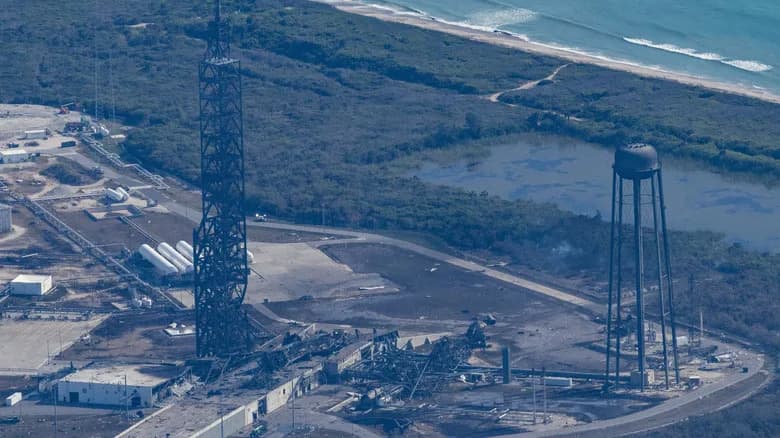
Aerial view of Launch Complex 36 after a Blue Origin New Glenn rocket exploded on May 28, 2026 - Asher B. / X
The New Glenn rocket's explosion during a routine engine test was alarming but, crucially, resulted in no injuries and no satellites aboard. Attention has turned to the extent of damage at Launch Complex 36 (LC-36), how long repairs will take, and whether Blue Origin can meet its target to return New Glenn to flight before year-end.
CEO Update: Blue Origin CEO Dave Limp posted an optimistic assessment on Twitter after teams gained access to the pad and nearby integration facility. He reported that key long‑lead items — the propellant farm including oxygen, liquid hydrogen and LNG tanks — appear intact, and the water tower survived. The main support tower sustained damage but, according to Limp, can be repaired in place rather than requiring complete replacement.
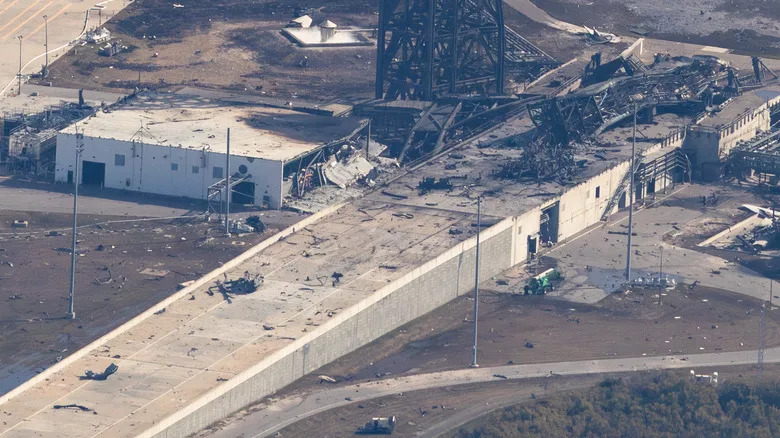
Aerial view of the destroyed Transporter Erector and a nearby building at Launch Complex 36 - Asher B. / X
"We will fly again before the end of this year. Gradatim Ferociter." — Dave Limp (Twitter)
Limp also said the booster nicknamed "Never Tell Me The Odds" and three GS‑2 second stages stored in the integration facility look largely unharmed. Blue Origin plans to accelerate its transition away from a transporter‑erector approach and proceed with an alternative vertical concept of operations already under development, which removes the near‑term need to rebuild that equipment.
Schedule Impact And Obligations
Blue Origin is contractually expected to launch an unmanned Blue Moon lander into Earth orbit for testing before year‑end. Currently, New Glenn is the rocket able to perform that mission and LC‑36 is its assigned launch site; until LC‑36 is repaired, those flights cannot proceed. The pad's status therefore affects both planned lunar support missions and a set of Amazon LEO satellite launches tied to Bezos's companies.
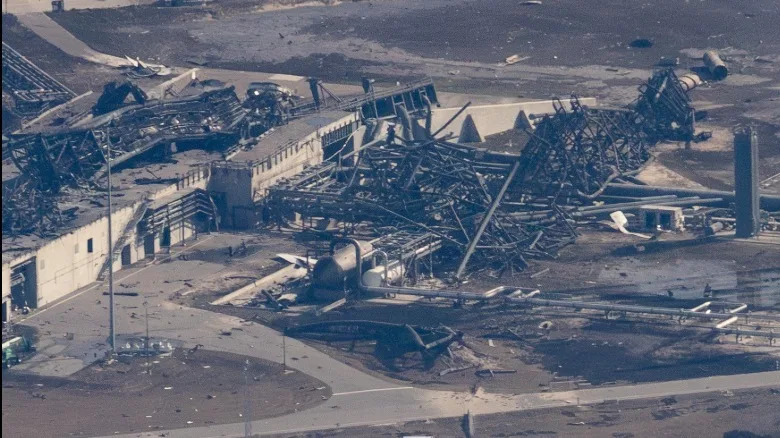
Asher B. / X
In media interviews, NASA representatives cautioned that repairs could take significant time and that timelines for related moon missions could be affected. A NASA official later clarified that comments referring to 2028 related to the timing of missions already scheduled for that year, not necessarily a direct launch slip tied solely to the pad damage. NASA has said it will support root‑cause analysis and help accelerate recovery work where possible.
Independent Observations
Photographer Asher B from Launch Heaven Media posted aerial images and an independent assessment on Twitter that largely echo Blue Origin's account: the transporter‑erector and lightning mast were heavily damaged, while the water tower and fuel tanks look intact. The remaining support tower appears repairable if it can be temporarily stabilized while the damaged section is replaced.
For now, engineers and investigators are focused on confirming the full scope of repairs, validating the integrity of surviving hardware, and preserving schedules for important upcoming tests and missions. If damage is indeed limited and repairs proceed quickly, Blue Origin may be able to return New Glenn to flight this year — but the outcome remains contingent on technical findings and recovery pace.
Help us improve.





















