
Meteor showers temporarily raise the density of high-speed micrometeoroids in near-Earth space; at hypervelocity even tiny particles can damage spacecraft. NASA estimates about 48.5 tons of natural debris enter Earth's atmosphere daily, and vehicles like Orion undergo material selection and hypervelocity testing to reduce MMOD risk. Predicted outbursts — notably a potential Perseid surge on 12 August 2028 — could prompt launch delays or sheltering of crews. Historical precautions and telescope-pointing adjustments show agencies can and do manage these hazards.
Could Meteor Storms Delay or Endanger NASA’s Artemis Moon Missions?
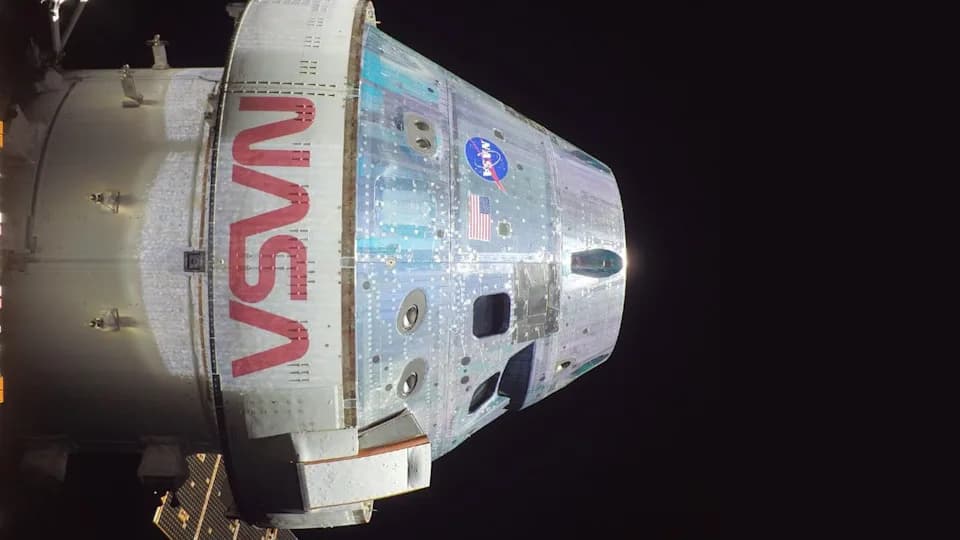
Credit: NASA
Meteor showers are among the most spectacular sights in Earth's sky. But as NASA and international partners prepare crewed Artemis missions to the Moon, planners are asking whether the high-speed particles that accompany these events could threaten spacecraft or force mission delays.
How Much Space Debris Reaches Earth?
NASA estimates that roughly 48.5 tons (about 44,000 kg) of natural space debris enters Earth's atmosphere every day. These fragments range from microscopic micrometeoroids only fractions of a millimetre across to larger pieces that create visible shooting stars and occasional fireballs as they burn up during atmospheric entry.
Why Micrometeoroids Are Dangerous
Micrometeoroids travel at hypervelocity speeds averaging around 22,000 miles per hour (≈35,405 km/h). At that velocity, even a tiny particle can deliver a powerful kinetic blow to a spacecraft. Potential consequences include punctures or deformation of pressure shells, damage to avionics or thermal systems, and — in extreme cases — catastrophic structural failure.
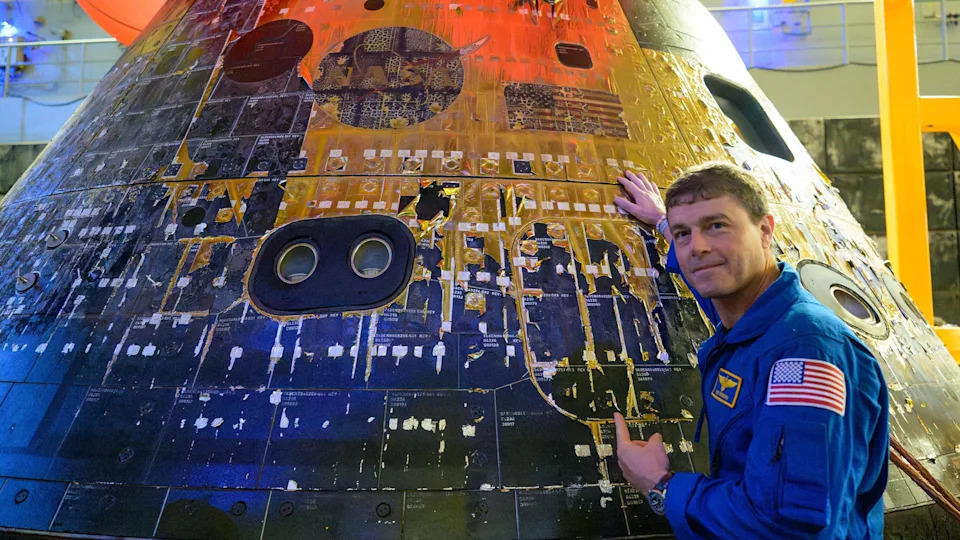
Astronaut Reid Wiseman photographed with his hand on the hull of the charred Artemis 2 Orion spacecraft. | Credit: NASA
There is also specific concern for crewed missions about a micrometeoroid striking critical thermal protection. For example, Orion uses a designed thermal protection system (TPS) and heat shield rather than the shuttle-style tiles; damage to that TPS could jeopardize safe reentry if not identified and mitigated.
Recent Wake-Up Call
In November last year, Chinese taikonaut Chen Dong discovered a crack in the viewport of Shenzhou-20, prompting the crew to use an alternate return vehicle. Incidents like this highlight how small impacts can have outsized operational effects.
How NASA and Industry Reduce the Risk
Modern crew vehicles are engineered to minimise micrometeoroid and orbital debris (MMOD) risk where feasible. Lockheed Martin’s Orion program, for example, optimised material selection and panel thickness to balance protection and weight. Teams also run hypervelocity impact testing to characterise damage and verify survivability.
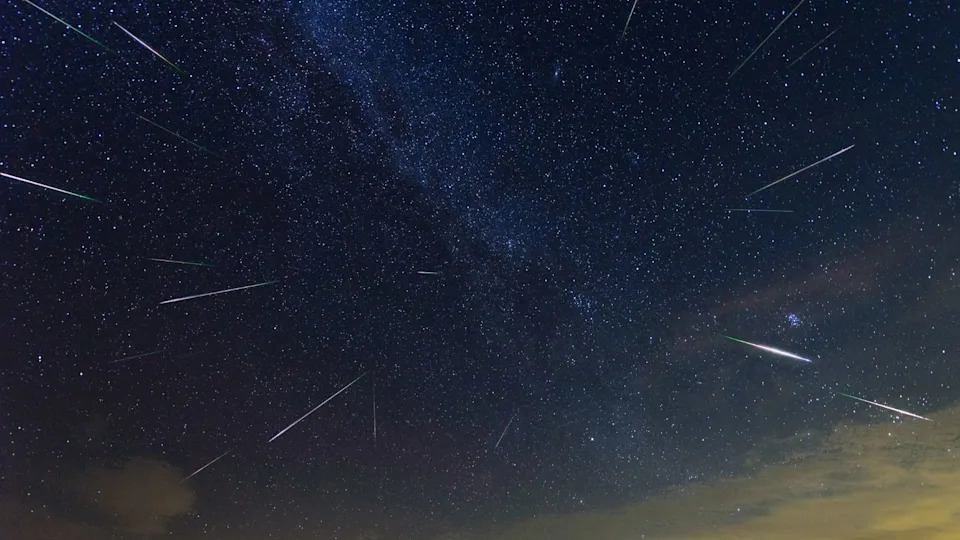
Perseid meteors streak Earthward through the starry sky. | Credit: Wisanuboonrawd via Getty Images
"Hypervelocity impact testing is conducted to confirm impact physics, to characterize damage survivability, and verify performance of the Orion spacecraft MMOD design," said Mike Heckwolf, Orion crew and mission risk integrator at Lockheed Martin.
"The Artemis mission trajectory and Orion flight attitude are carefully assessed to minimize MMOD risk," he added.
Operational mitigations include predicting hazardous intervals, adjusting spacecraft attitude, limiting extravehicular activities (EVAs), sheltering crews inside the vehicle, and delaying launches if needed.
Meteor Showers, Outbursts and Forecasting
Most named meteor showers are only modest enhancements over the sporadic background. According to Bill Cooke of NASA’s Meteoroid Environments Office, only a few of the >1,000 known showers exceed background rates by more than 5% (the Geminids are one strong annual example).
More disruptive are meteor outbursts and storms, which produce a temporary surge of debris. Fortunately, many of these events can be forecast years in advance by modelling the debris streams shed by comets and asteroids.
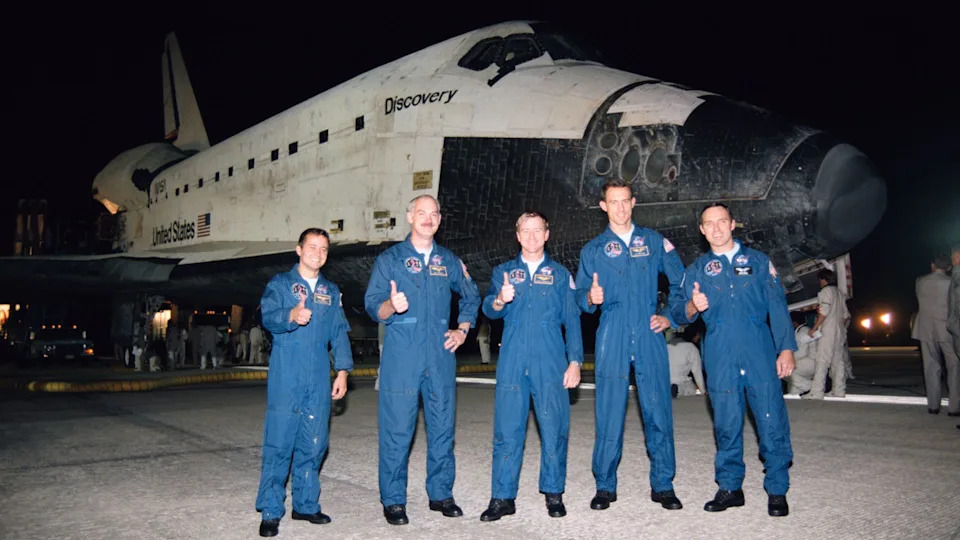
The crew of STS-51 with the space shuttle Discovery after touch down. | Credit: NASA
Robert Lunsford of the American Meteor Society notes four possible outbursts in the next decade, including a potentially strong Perseid surge on 12 August 2028 (estimated 500–1,000 meteors per hour) and Leonid activity predicted for 17 November 2033 and 18–19 November 2034.
Operational Impacts And Historical Precedent
Artemis 4 — currently targeted for early 2028 as NASA’s first crewed lunar landing since Apollo — could, in principle, be affected if scheduling overlapped a significant outburst. If a major meteor storm or outburst is forecast during a launch window or critical crew activity, mission managers can delay liftoff, keep crews sheltered inside, or postpone EVAs until the hazard subsides.
NASA has used such precautions in the past. For example, STS-51 (Space Shuttle Discovery) was delayed in 1993 to avoid the Perseid peak, and an uncrewed mission from Vandenberg was postponed in 2000 because of Leonid activity. Orbital observatories like the Hubble Space Telescope and the James Webb Space Telescope already mitigate risk by avoiding pointing toward strong meteor radiants during intense showers.
Looking Ahead
As humans and robots establish a sustained presence on and around the Moon, strategies for modelling, testing, and mitigating micrometeoroid risks will remain essential. Predictive forecasting, robust vehicle design, and conservative operational planning together reduce the likelihood that meteor activity will threaten crew safety or mission success.
Help us improve.





















