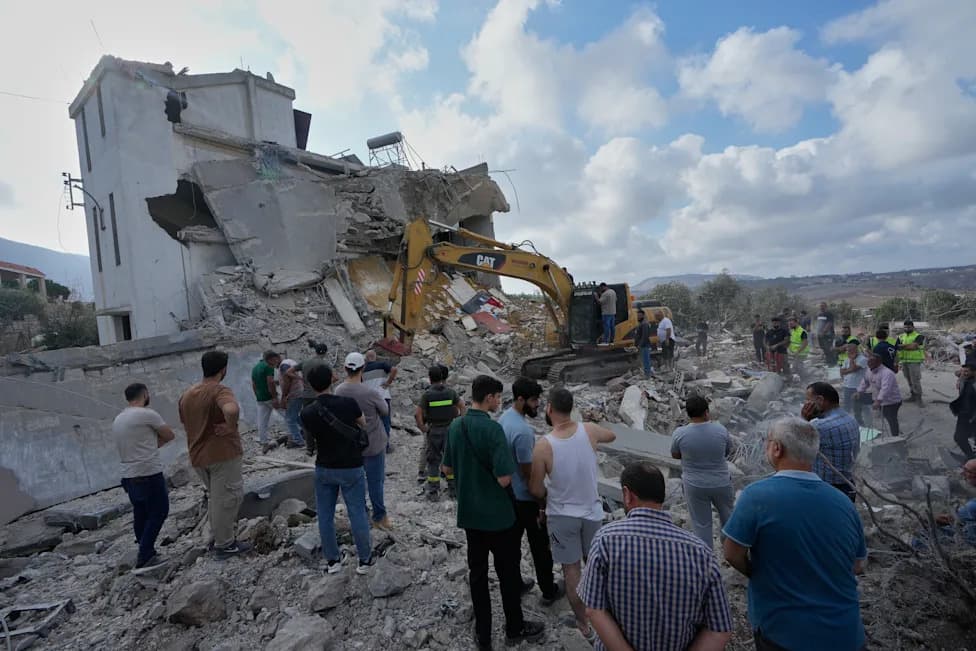
Three Lebanese military personnel killed in an Israeli strike will be buried as Lebanon reels from persistent cross‑border violence. Army chief Rodolphe Haykal made a surprise trip to Pakistan amid mediation efforts tied to broader US‑Iran talks. Despite a conditional ceasefire agreed in April, near‑daily strikes and retaliatory fire continue, causing civilian casualties and widespread damage. Lebanese politicians and analysts stress dialogue as the only realistic path amid stark military asymmetries.
Three Lebanese Soldiers Killed in Israeli Strike as Army Chief Makes Surprise Trip to Pakistan
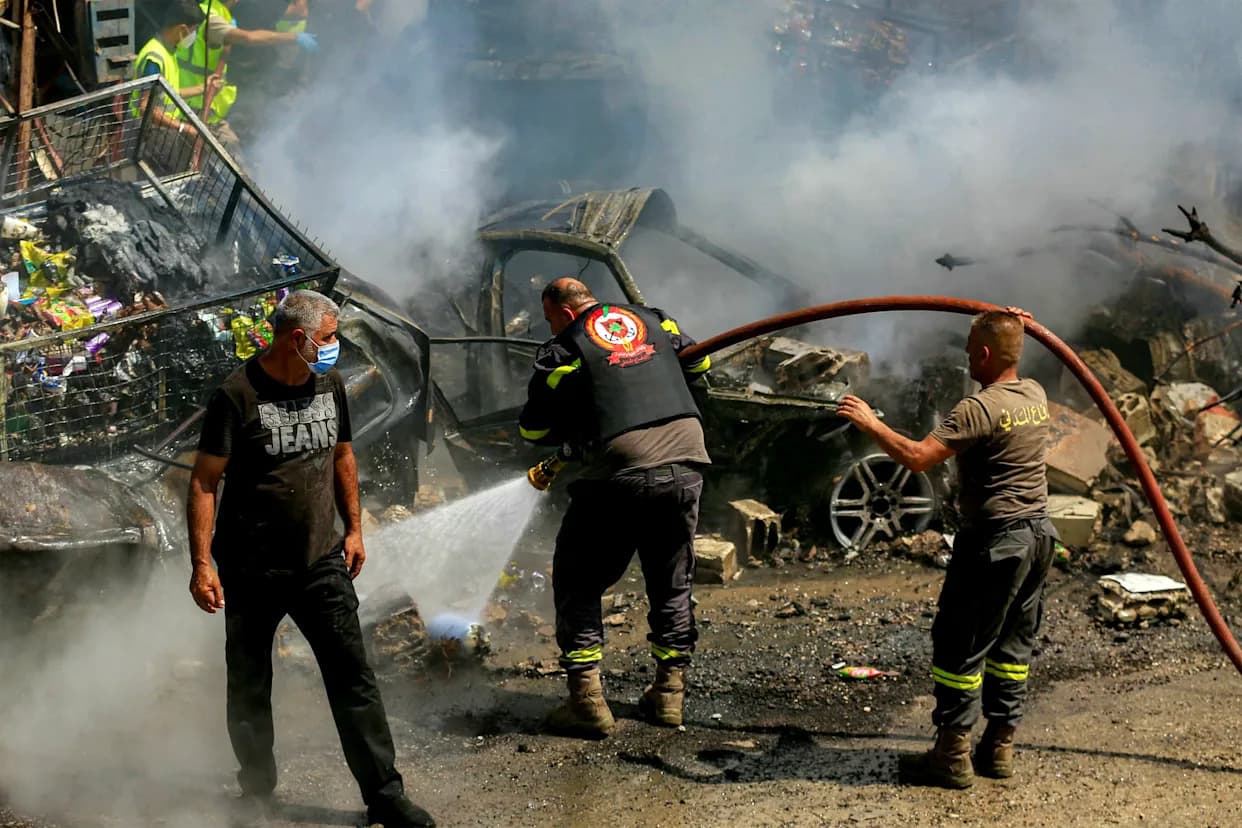
Civil Defence members extinguish a fire following Israeli bombardment on a building in the village of Saksakiyeh in southern Lebanon on June 6, 2026 [AFP]
Funerals have been scheduled for three Lebanese military personnel killed in an Israeli strike in southern Lebanon, as Lebanon’s army chief made an unexpected visit to Pakistan amid ongoing mediation linked to wider US‑Israel talks with Iran.
Fatal Strike and Immediate Aftermath
The three servicemen — a brigadier general, a captain and a soldier — were killed when a military vehicle was struck on the Khardali‑Nabatieh road. The Israeli military said it was investigating the incident. The fallen are due to be buried on Sunday.
Ceasefire Efforts and Mediation
Although a ceasefire agreed on April 17 was intended to halt hostilities between Israel and Hezbollah, near‑daily strikes by Israel and retaliatory attacks by Hezbollah have continued. Last week, Lebanese and Israeli envoys announced a conditional ceasefire in Washington; Hezbollah rejected the proposal because it excluded the group and did not demand an Israeli withdrawal from southern Lebanon.
Lebanon’s army chief, Rodolphe Haykal, departed on Saturday for Pakistan, which has emerged as a key intermediary in talks involving the United States and Iran. The trip drew attention because US officials and senior Lebanese figures have said that ceasefire negotiations for Lebanon should be kept separate from the Pakistan‑mediated US‑Iran dialogue.
Wider Violence and Civilian Impact
Overnight strikes hit several towns across southern Lebanon and the western Bekaa. Lebanon’s Ministry of Public Health reported that an Israeli raid on Saksakiyeh killed at least two people and wounded 22 others, including three children and a woman. Additional strikes and artillery fire were reported in Qalawiya, al‑Qatrani, Byblos, Rihan, Deir Kifa, Barashit, Chaqra, al‑Mansouri, Bayt al‑Sayyad, Srifa and Dweir near Nabatieh. Paramedics continue to search for survivors under rubble left by the attacks.
Claims, Characterizations and Reactions
Hezbollah said it launched rockets, artillery fire and drone attacks against Israeli positions, including near the Beaufort Castle in Yohmor al‑Shaqif. Al Jazeera correspondent Nour Odeh described a pattern she called the “Gazafication of Lebanon,” citing similarities with tactics used in Gaza such as strikes near schools and hospitals and reports of so‑called double‑tap attacks on rescuers.
Independent MP Najat Aoun Saliba condemned the killings and urged negotiations, arguing that Lebanon faces a stark military imbalance with Israel and that dialogue is the only viable path. President Joseph Aoun said the attack appeared aimed at undermining efforts to reach a solution, while Prime Minister Nawaf Salam called it "a heinous crime and an attack on Lebanon and all Lebanese people."
Context
Lebanon was drawn into the wider Middle East conflict after Iran‑backed Hezbollah attacked Israel on March 2, following joint US‑Israeli strikes on Iranian targets. Tehran has conditioned any broader deal with Washington on a ceasefire between Israel and Hezbollah in Lebanon. The violence in Lebanon has taken a heavy toll: authorities say more than 3,500 people have died since hostilities intensified on March 2.
Note: Reporting on the ground remains volatile. Local casualty figures and claims by parties to the conflict are subject to verification.
Help us improve.