
Researchers used JWST plus gravitational lensing to directly measure the mass of a dormant black hole 10 billion light-years away in galaxy MRG-M0138 — the most distant such direct measurement. A Sahara angrite meteorite (NWA 12774) contains high-pressure clinopyroxene formed at ≥17.5 kilobars, indicating a parent body with a radius of at least 1,118 miles, possibly Moon- to Mars-sized. Other headlines: NASA declares MAVEN dead, the Nancy Grace Roman Telescope is set to launch Aug 30, Cambridge reports an AI-designed vaccine antigen, and Google and Blue Origin announce major commitments.
JWST Weighs a Dormant Black Hole 10 Billion Light-Years Away — Meteorite Reveals a Lost Protoplanet
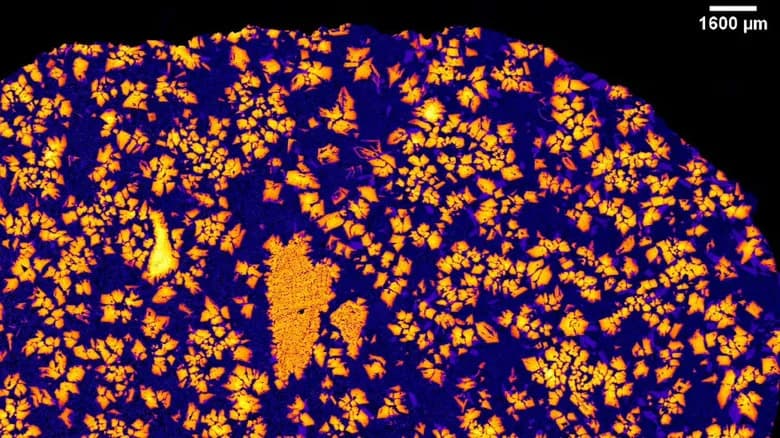
An X-ray image of NWA 12774 - Aaron Bell/CU Boulder
It was a busy week in space and science news: astronauts aboard the International Space Station briefly sheltered in place after an air leak was discovered in a transfer tunnel; NASA confirmed the end of its MAVEN Mars mission; researchers reported promising tests of an AI-designed vaccine antigen; and teams using the James Webb Space Telescope and a rare meteorite published striking new findings about the early solar system and distant black holes.
JWST and Gravitational Lensing Let Astronomers Weigh a Dormant Black Hole
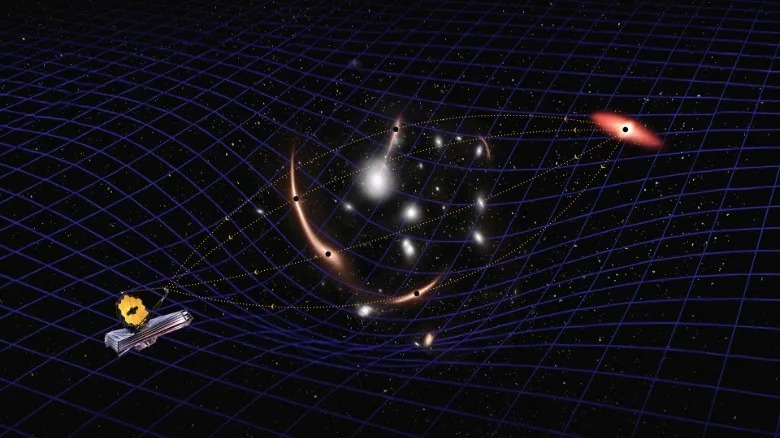
Using high-resolution observations from the James Webb Space Telescope (JWST) combined with the magnifying effect of gravitational lensing, researchers directly measured the mass of a dormant black hole roughly 10 billion light-years away. The black hole sits at the center of the distant galaxy MRG-M0138 and lacks the bright accretion disk that makes active black holes easier to study.
Navid Marvi/Carnegie Science
“By combining JWST data with gravitational lensing, we could peer inside the black hole’s sphere of influence, where its gravity boosts the speeds of stars,” said lead author Andrew Newman of Carnegie Science.
This is the most distant dormant black hole directly weighed to date, and the result offers new constraints on how massive black holes and their host galaxies grew during the early universe. The study appears in the journal Science.
A Meteorite from the Sahara Points to a Lost Protoplanet
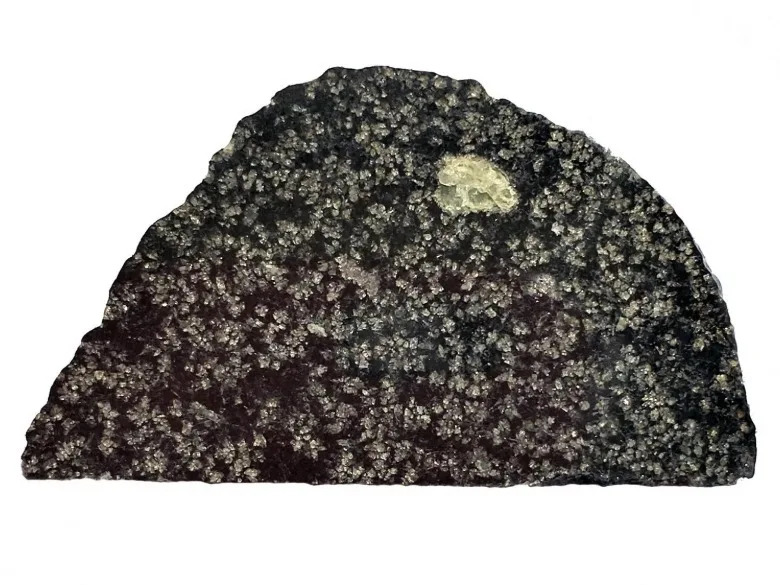
Researchers studying a rare angrite meteorite recovered from the Sahara Desert identified an aluminum-rich clinopyroxene crystal that formed under high pressure (at least 17.5 kilobars). The mineral textures indicate formation at relatively shallow depth, which implies a parent body much larger than a typical asteroid.
John Kashuba
From the required pressure and crystal patterns, the research team estimates the parent body had a radius of at least 1,118 miles—comparable to the Moon and potentially approaching Mars in size. That suggests the meteorite, labeled NWA 12774, preserved fragments of a once-independent protoplanet that existed during the first few million years of the solar system. The findings are published in Earth and Planetary Science Letters.
Other Notable Headlines This Week
- NASA declared the MAVEN Mars orbiter no longer operational.
- The Nancy Grace Roman Space Telescope is scheduled to launch on August 30.
- Researchers at the University of Cambridge reported successful tests of an AI-designed vaccine antigen that aims to broaden immune responses.
- Google pledged to replenish more water than its data centers consume by 2030.
- Blue Origin’s CEO said the New Glenn rocket is expected to fly again before the end of the year.
Taken together, these results highlight how modern telescopes, careful laboratory analysis of extraterrestrial rocks, and advances in AI-driven biology are rapidly expanding our picture of both the distant and nearby universe.
Help us improve.





















