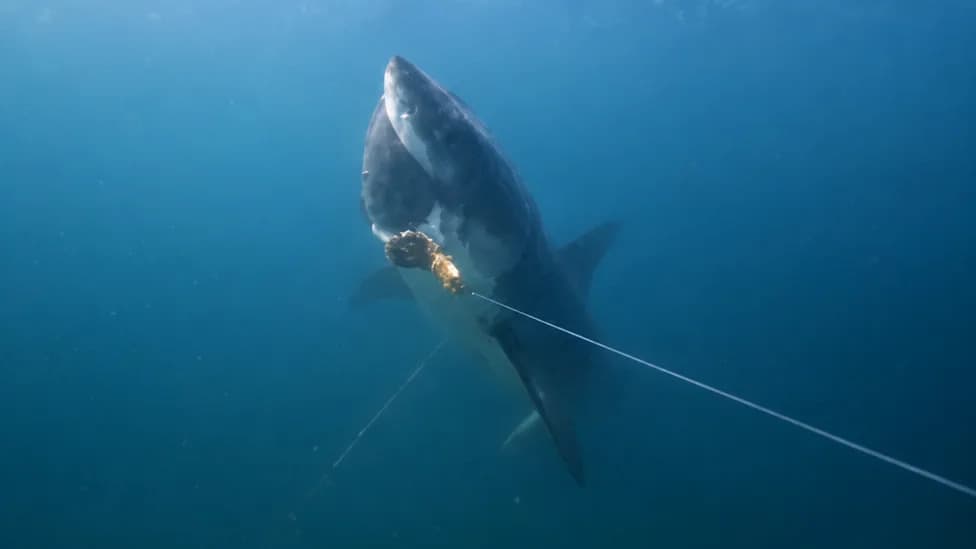
Dusky sharks, once heavily hunted and reduced to a fraction of their former numbers, have been spotted off Massachusetts—raising cautious optimism that they may be returning to New England waters. Federal protections since about 2000 and recent seal-feeding sightings in the North Atlantic suggest recovery is possible. Experts caution that recovery will be slow because dusky sharks mature near 20 years and reproduce infrequently, and that they are sometimes misidentified as great whites.
Dusky Shark Returns: Rare Sighting Off Massachusetts Sparks Cautious Optimism

dusky shark swimmingqldian/Getty Images(qldian/Getty Images)
A rare dusky shark sighting off the coast of Massachusetts is prompting marine biologists to reconsider which large sharks are using New England waters. Once heavily targeted by fishermen, the dusky shark (also called the black whaler or common whaler) now appears to be reappearing in parts of its former range.
Dusky sharks were intensively hunted in the late 19th century and suffered further declines as Atlantic commercial fishing expanded in the 1970s and 1980s. By 2006, population estimates suggested dusky numbers had fallen to roughly 15–20% of their 1970 levels.
Federal protections enacted around 2000, along with regulatory actions by the National Marine Fisheries Service and NOAA to curb overfishing and finning, helped reduce mortality. More recently, multiple summer sightings of dusky sharks feeding on seals in the North Atlantic have given scientists cautious hope that the species is beginning to recover along the East Coast.
"Their populations are vulnerable and slow to recover because of their slow growth rate, late age of maturation, and small litter sizes," said Danielle Castillo, Zoological Curator of Aquariums for SeaWorld, speaking to ABC News. "These sharks do not reach reproductive maturity until they are around 20 years old and females only reproduce every few years."
Part of the reason dusky sharks have been hard to track on the East Coast is misidentification. Many sightings attributed to great white sharks may actually have been dusky sharks. The two species share habitats and prey—especially seals—and can look similar at a glance.

Shark swims underwaterJulian Gunther/Getty Images(Julian Gunther/Getty Images)
How to Tell Dusky Sharks From Great Whites
Dusky sharks are generally leaner than great whites and often have a longer upper lobe on the caudal (tail) fin—the top lobe is noticeably longer than the bottom. Great white sharks typically have more robust bodies and tail lobes that are more equal in length. Observers and researchers must consider size, body shape, tail profile, and behavior when identifying large sharks at sea.
Beach Safety Tips
For beachgoers, expert guidance focuses on reducing risk: avoid swimming at dawn, dusk, and night when many shark species are most active; steer clear of areas where sharks or seal colonies have been reported; minimize splashing and avoid shiny or brightly colored swimwear that can attract attention. If a shark approaches, remain as calm as possible—slowly exit the water if you can. In the rare case of an aggressive pursuit, a firm blow to the snout or targeting the eyes or gills can help create an opportunity to escape.
Dusky sharks are not generally considered unusually aggressive, but because they can occur in shallow coastal waters, awareness and caution are important. Continued monitoring, fisheries protections, and scientific study will determine whether these recent sightings indicate a sustained rebound or temporary visits by recovering populations.
Originally published by PetHelpful on Jun 5, 2026. Reporting includes statements to ABC News and context from the National Marine Fisheries Service and NOAA.
Help us improve.