Nandini Harinath, deputy operations director for India's Mars Orbiter Mission (Mangalyaan), wore a red‑and‑blue silk sari on 1 December 2013—the day her team performed the critical burn that sent the spacecraft toward Mars. The sari is now displayed in the Smithsonian National Air and Space Museum's "Futures in Space" gallery, alongside artifacts such as Sally Ride's 1983 T‑shirt. Curator Matt Shindell says the garment represents both national pride in India’s successful Mars insertion on 24 September 2014 and a personal story meant to inspire more women in STEM.
From Control Room to Smithsonian: The Sari Worn by India's 'Rocket Woman' Joins Museum Collection
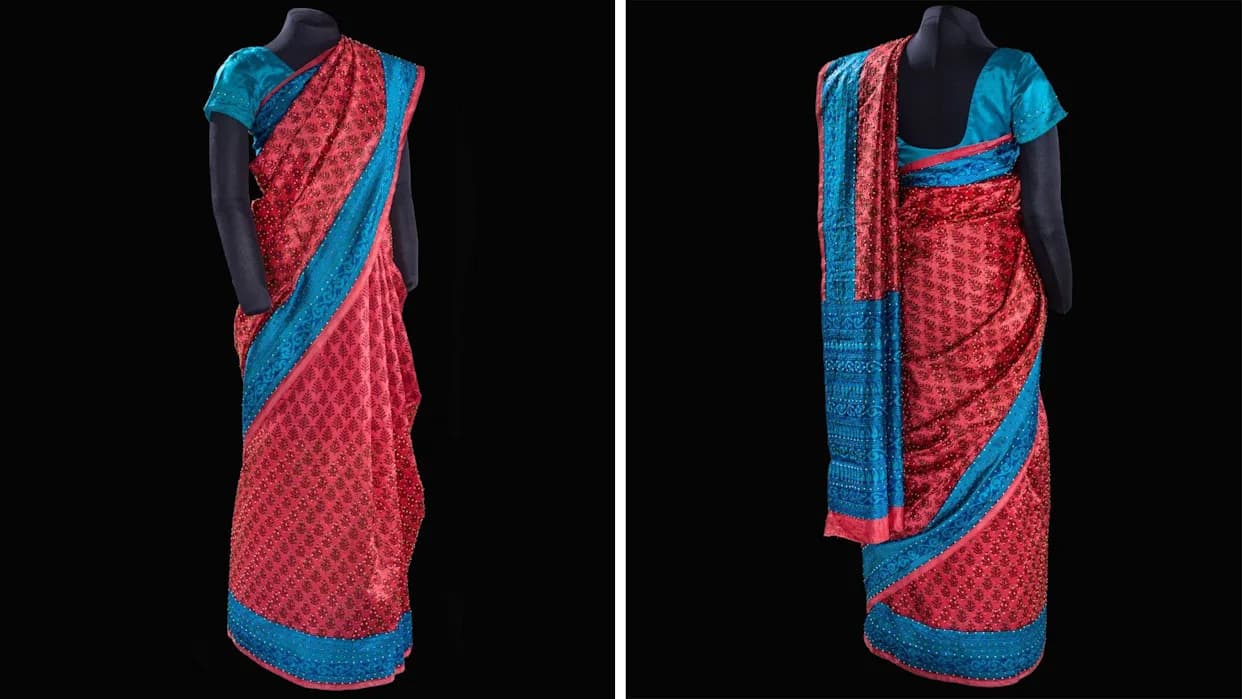
Nandini Harinath's sari is displayed in Smithsonian's National Air and Space Museum in Washington [Smithsonian’s National Air and Space Museum]
On 1 December 2013, Indian space scientist Nandini Harinath arrived at the ISRO control room wearing a bright red-and-blue silk sari. That garment—worn on the day the Mars Orbiter Mission (Mangalyaan) began its trans‑Mars injection burn—now occupies a prominent place in the Smithsonian National Air and Space Museum's collection in Washington, D.C.
From Control Room to Museum
Harinath, who served as deputy operations director for Mangalyaan, chose the sari for a high-stakes day she later described as the most important of her career. On that day, her team performed the critical burn that sent Mangalyaan out of Earth orbit on a roughly 300‑day voyage to Mars. The mission succeeded when the spacecraft entered Martian orbit on 24 September 2014, making India the fourth country or geo‑bloc to achieve that milestone.
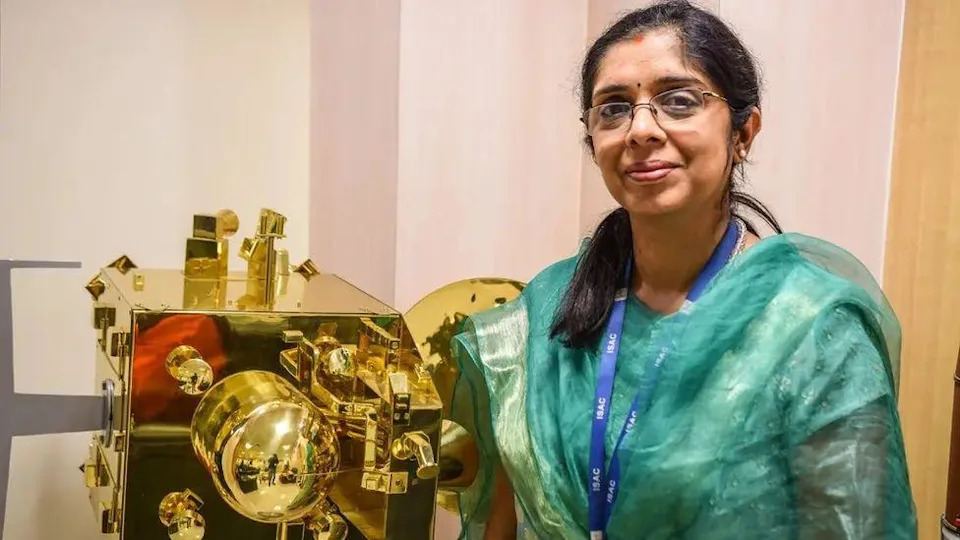
Nandini was the Deputy Operations Director for Mangalyaan, India's maiden Mars Orbiter Mission [BBC]
"It was a do‑or‑die moment, the most critical operation in the mission," Harinath recalled in a 2016 interview. "We had to decide where the spacecraft goes, how it goes and when it goes. The success of the mission depended on what we did that day."
A Viral Image And A Conversation About Who Goes To Space
A photograph of women in saris celebrating at ISRO went viral after the mission and helped challenge assumptions that rocketry in India is a male preserve. ISRO later clarified that the widely circulated image primarily showed administrative staff, while also noting that several female scientists had contributed to the mission and were present in the control room. The image nonetheless became a powerful symbol of women’s visibility in India’s space effort.
Selection And Conservation
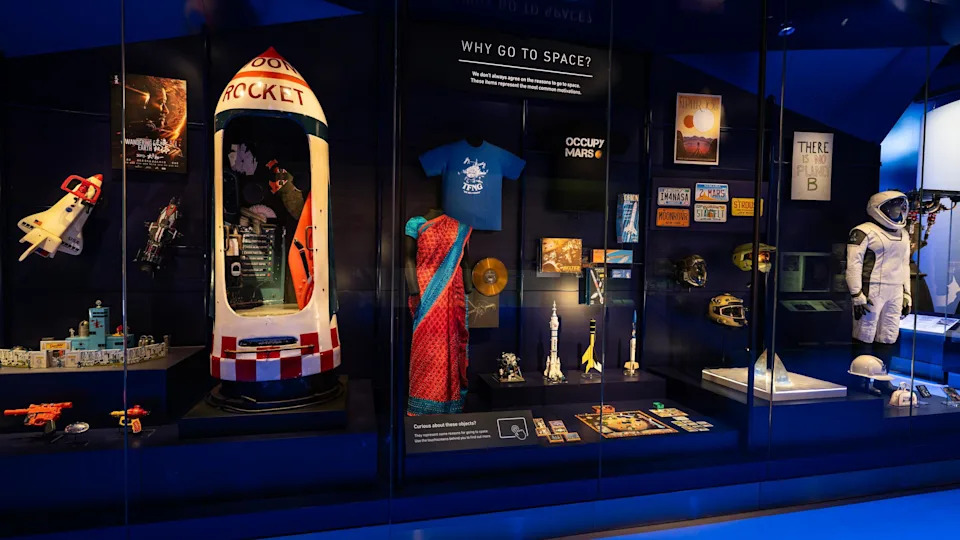
The sari is displayed alongside toys, games, movie posters and the iconic blue t-shirt worn by the first American woman in space [Smithsonian’s National Air and Space Museum]
In 2020 Matt Shindell, the Smithsonian’s curator of space history, contacted Harinath to discuss an object that could represent India’s Mars mission. They agreed on the sari Harinath had worn during the trans‑Mars injection. When the sari and its matching blue blouse arrived at the museum, textiles conservator Beth Knight watched instructional videos and consulted resources to learn how to drape the garment authentically on a mannequin.
The museum notes the sari has a "family resemblance" to other garments in its ground‑control collection—similar in storytelling power to the vest Gene Kranz wore while guiding Apollo 13. The sari is displayed in the Air and Space Museum's "Futures in Space" gallery, adjacent to Sally Ride's iconic blue T‑shirt from the 1983 Shuttle mission.
What The Exhibit Aims To Do
The "Futures in Space" installation invites visitors to consider contemporary questions about access, purpose and the future of space exploration: Who decides who goes to space? Why do we go? What will we do when we get there? According to Shindell, Harinath’s sari serves a dual role—it symbolizes national pride in India’s successful interplanetary mission and conveys a personal story that can inspire more women to pursue careers in science and engineering.
"I'm overjoyed that visitors are watching the sari and wanting to find out more about it. It's a fantastic addition to our collection," Shindell said.
Help us improve.