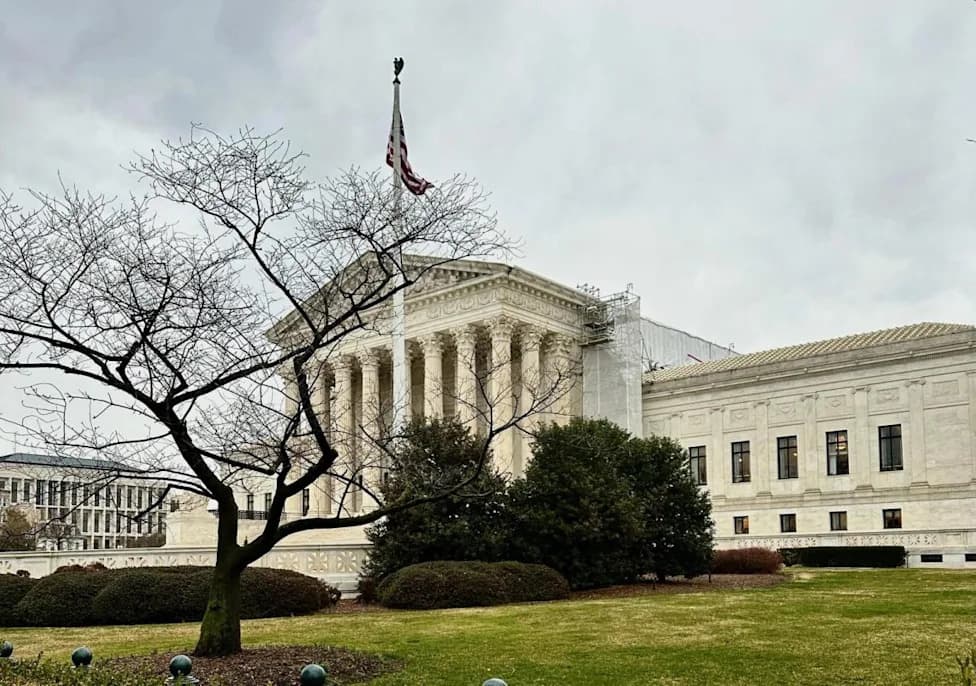
The Supreme Court unanimously reversed the Federal Circuit in Hikma Pharmaceuticals USA Inc. v. Amarin Pharma, Inc., issuing a 9–0 opinion authored by Justice Ketanji Brown Jackson. The ruling clarifies when generic drugmakers can face inducement claims after using 'skinny labels' that omit patented uses and remands the case for further proceedings under the clarified legal standard. The decision could influence how generics enter the market under the Hatch-Waxman framework and underscores that unanimous opinions remain a notable part of the Court’s docket.
Jackson Pens Rare Unanimous 9–0 Opinion in Key 'Skinny Label' Drug Patent Case

Supreme Court Justice Ketanji Brown Jackson speaks at the Library of Congress in Washington, D.C., on February 13, 2025.
The Supreme Court on Thursday issued a unanimous 9–0 opinion authored by Justice Ketanji Brown Jackson in the closely watched patent dispute Hikma Pharmaceuticals USA Inc. v. Amarin Pharma, Inc. The Court reversed the Federal Circuit and sent the case back to lower courts for further proceedings under the legal standard Jackson outlined.
Background
Amarin, maker of the cholesterol drug Vascepa, sued Hikma after Hikma sought approval to market a generic version that excluded a patented cardiovascular indication from its label — a so-called 'skinny label' that omits patented uses from the product's marketing and labeling.
Lower Courts And Supreme Court Ruling
A federal district court initially dismissed Amarin’s inducement claims. The U.S. Court of Appeals for the Federal Circuit later found the allegations plausible and allowed the case to move forward. The Supreme Court reversed the Federal Circuit in a unanimous opinion by Justice Jackson, clarifying the legal standard governing when inducement claims based on skinny labels may proceed.
Why This Matters
The opinion clarifies how courts should evaluate whether generic manufacturers can be sued for inducing patent infringement when they use skinny labels that exclude patented uses. The decision refines how inducement allegations are tested under the Hatch-Waxman framework, which governs competition between brand-name drugs and generics, and could affect how lower-cost generics enter the market.
Broader Context
Beyond the immediate parties, the ruling is significant for patent litigation strategy and for generic manufacturers weighing how to market products while avoiding infringement exposure. The unanimous nature of the decision — rare in high-profile cases — also highlights that the Court continues to reach consensus on many legal questions. According to term statistics, Justice Jackson was in the majority in about 72% of cases during the 2024–25 term, the lowest rate among the justices that term.
The case returns to the lower courts so judges can apply the Supreme Court’s clarified standard to determine whether Amarin’s inducement claims may proceed.
Help us improve.