
NASA has put the next Boeing Starliner launch window "under review." The follow-up mission will be uncrewed and carry cargo to validate system upgrades after a problematic June 2024 crewed flight. A February 2026 NASA report criticized both engineering deficiencies and leadership decisions, and the agency is coordinating technical fixes and ISS scheduling before setting a new launch date.
NASA Puts Next Boeing Starliner Flight 'Under Review' — What We Know
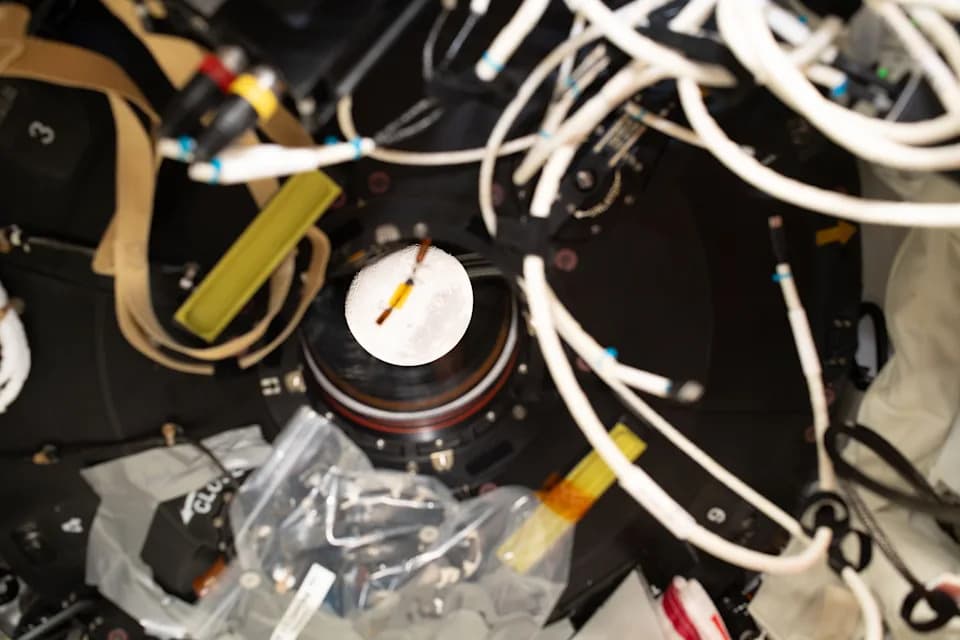
NASA released thousands of new photos taken during the Artemis II mission around the moon. The astronauts selected for the mission thoroughly documented the 10-day voyage, which included an April 6 lunar flyby as they traveled more than a quarter-million miles from Earth.(Provided by NASA)
NASA has placed the next Boeing Starliner test flight schedule "under review," delaying a previously targeted April launch as engineers complete upgrades and the agency coordinates station traffic. The follow-up mission will be uncrewed and carry cargo to validate fixes implemented after a problematic crewed debut in June 2024.
Why This Matters
The Starliner program, built by Boeing under NASA's Commercial Crew Program, is intended to provide a second operational crew transport to the International Space Station (ISS) alongside SpaceX's Dragon. Certifying Starliner before the planned retirement of the ISS in 2030 would restore redundancy for crewed access to low-Earth orbit.
What Went Wrong Before
Starliner's first crewed mission in June 2024 carried NASA astronauts Butch Wilmore and Suni Williams to the ISS. Technical problems prevented the capsule from safely returning its crew, and the spacecraft ultimately undocked and landed empty. Wilmore and Williams later returned to Earth in March 2025 aboard a SpaceX Dragon that arrived on Crew-9 in September 2024.
Next Flight: Uncrewed Validation
The next planned mission — referred to in coverage as Starliner-1 — is being readied as an uncrewed flight that will deliver cargo to the ISS while engineers observe upgraded systems in orbit. NASA said in a May 1 blog post that it is "assessing operational readiness and space station traffic to determine the earliest feasible launch window," explaining that teams continue to refine the vehicle and its procedures.
Findings From the Agency Review
In February 2026, NASA released a critical report on the June 2024 mission. The assessment described both technical and engineering deficiencies in the spacecraft and also cited leadership and decision-making problems during the mission's execution. In a message to agency staff accompanying the report, the agency's administrator warned that the most troubling failures were organizational and cultural — not only hardware issues — and urged corrective action.
"Starliner has design and engineering deficiencies that must be corrected, but the most troubling failure revealed by this investigation is not hardware. It is decision making and leadership that, if left unchecked, could create a culture incompatible with human spaceflight." — NASA Administrator (agency statement)
Personnel and Program Status
Both Wilmore and Williams retired from NASA following the incident — Wilmore in August 2025 after a 25-year career and Williams in January 2026 after more than 27 years with the agency. Meanwhile, Boeing and NASA remain engaged in redesign, testing, and process improvements with the goal of certifying Starliner for operational crewed missions.
What's Next
The timing of the next Starliner launch depends on technical readiness and the availability of a suitable docking window at the ISS. NASA and Boeing say they are continuing preparations, but the precise launch date remains undecided while the agency finishes assessments and coordinates with international and commercial partners.
Quick Facts
Previous Crew Flight: June 2024 (unplanned empty return)
Astronaut Return: March 2025 on SpaceX Dragon (Crew-9)
Agency Review: February 2026 report cited technical and leadership issues
Next Mission: Uncrewed cargo flight to validate system upgrades (launch window under review)
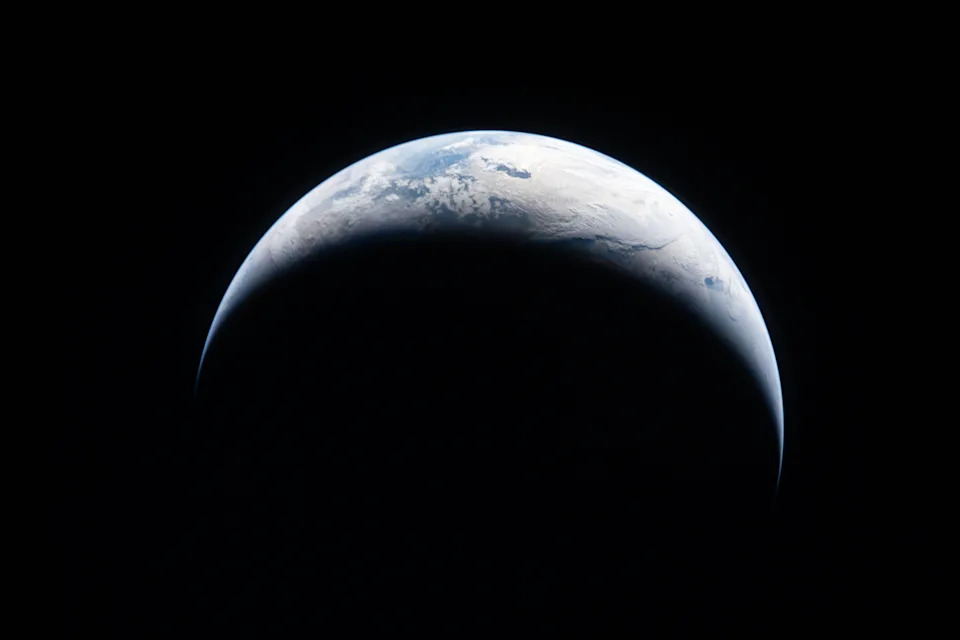
NASA released thousands of new photos taken during the Artemis II mission around the moon. The astronauts selected for the mission thoroughly documented the 10-day voyage, which included an April 6 lunar flyby as they traveled more than a quarter-million miles from Earth.(Provided by NASA)
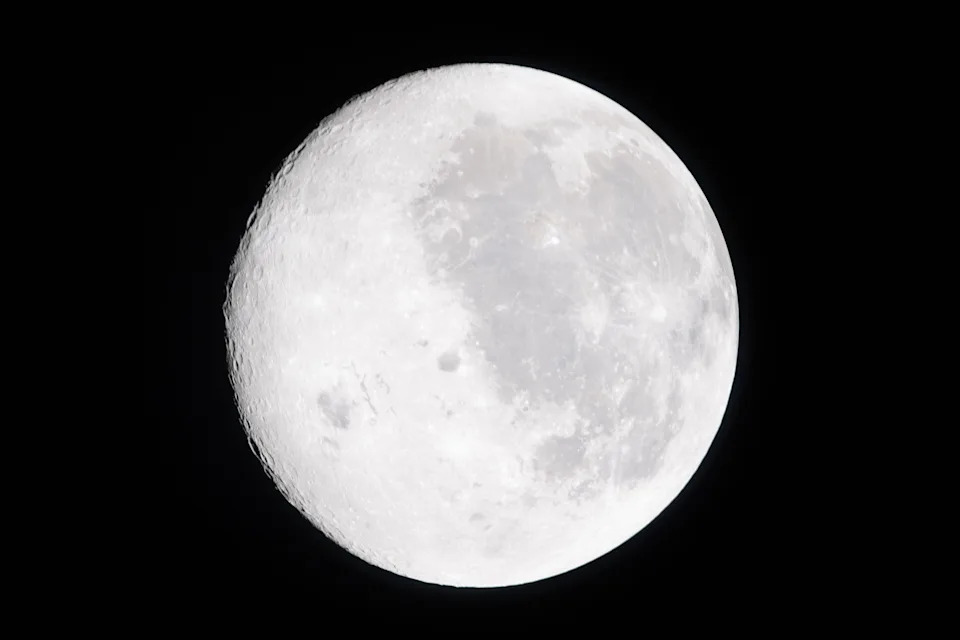
NASA released thousands of new photos taken during the Artemis II mission around the moon. The astronauts selected for the mission thoroughly documented the 10-day voyage, which included an April 6 lunar flyby as they traveled more than a quarter-million miles from Earth.(Provided by NASA)
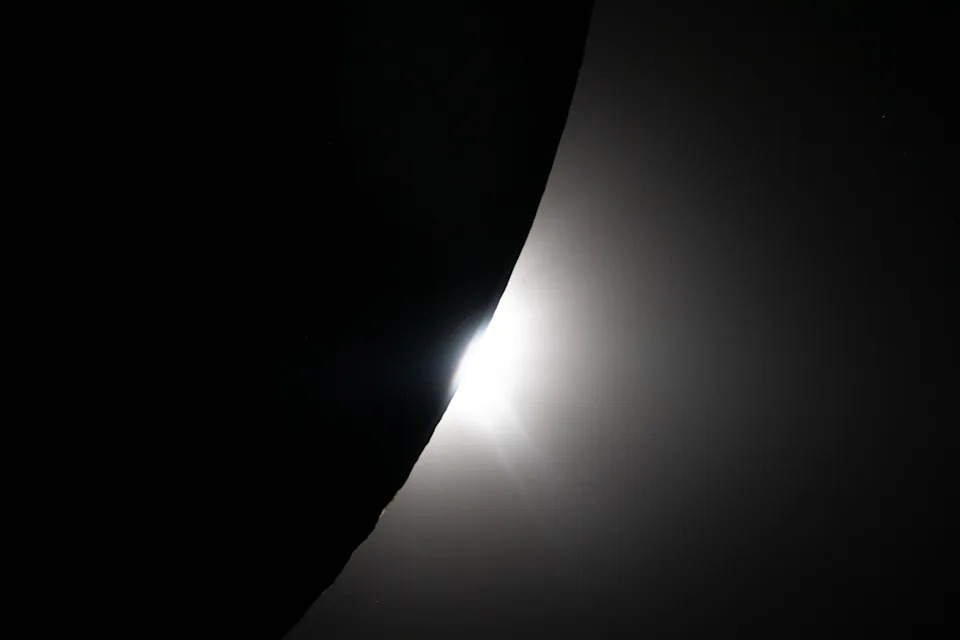
NASA released thousands of new photos taken during the Artemis II mission around the moon. The astronauts selected for the mission thoroughly documented the 10-day voyage, which included an April 6 lunar flyby as they traveled more than a quarter-million miles from Earth.(Provided by NASA)
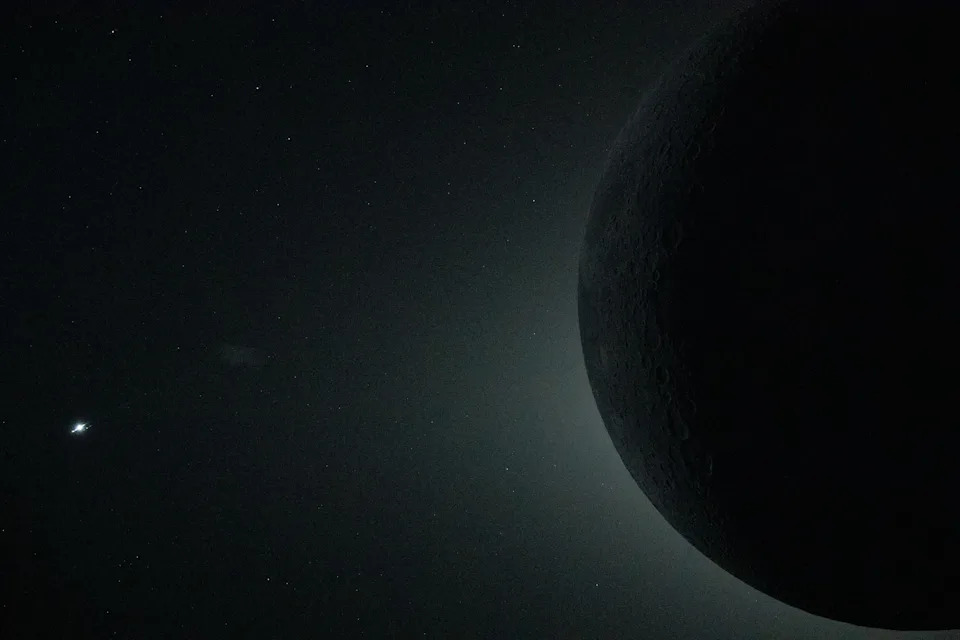
NASA released thousands of new photos taken during the Artemis II mission around the moon. The astronauts selected for the mission thoroughly documented the 10-day voyage, which included an April 6 lunar flyby as they traveled more than a quarter-million miles from Earth.(Provided by NASA)
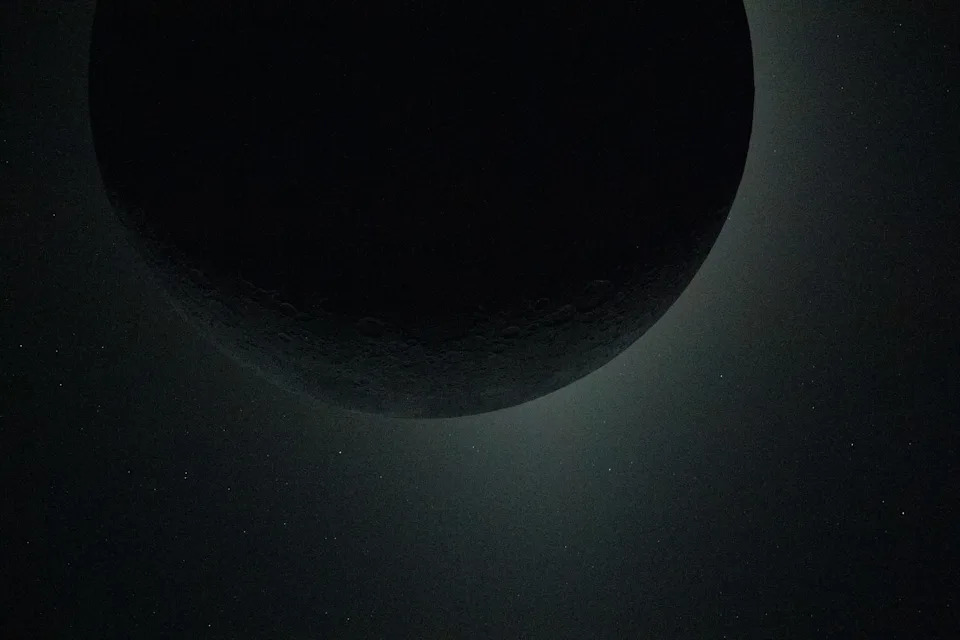
NASA released thousands of new photos taken during the Artemis II mission around the moon. The astronauts selected for the mission thoroughly documented the 10-day voyage, which included an April 6 lunar flyby as they traveled more than a quarter-million miles from Earth.(Provided by NASA)
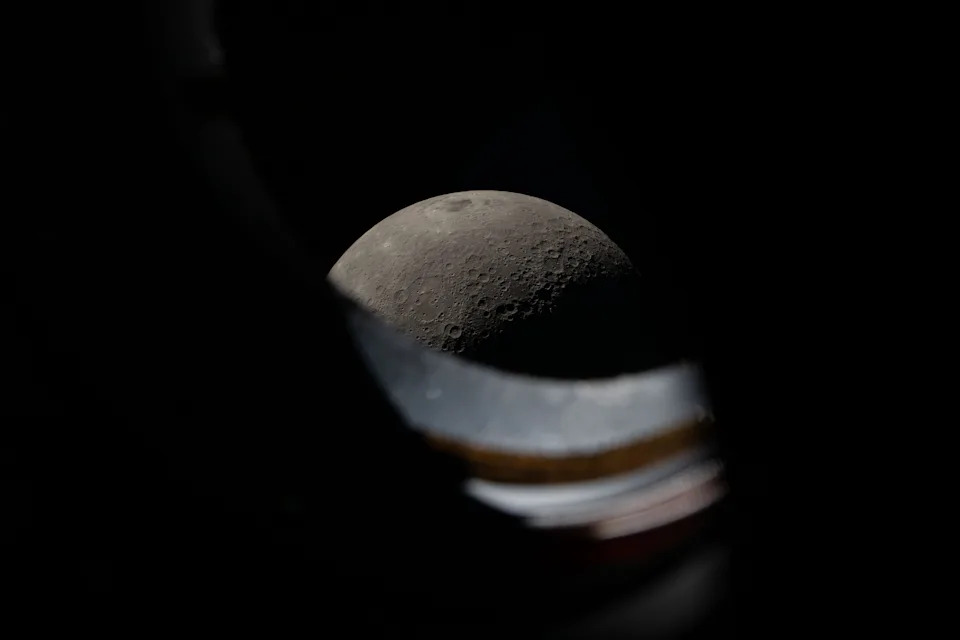
NASA released thousands of new photos taken during the Artemis II mission around the moon. The astronauts selected for the mission thoroughly documented the 10-day voyage, which included an April 6 lunar flyby as they traveled more than a quarter-million miles from Earth.(Provided by NASA)
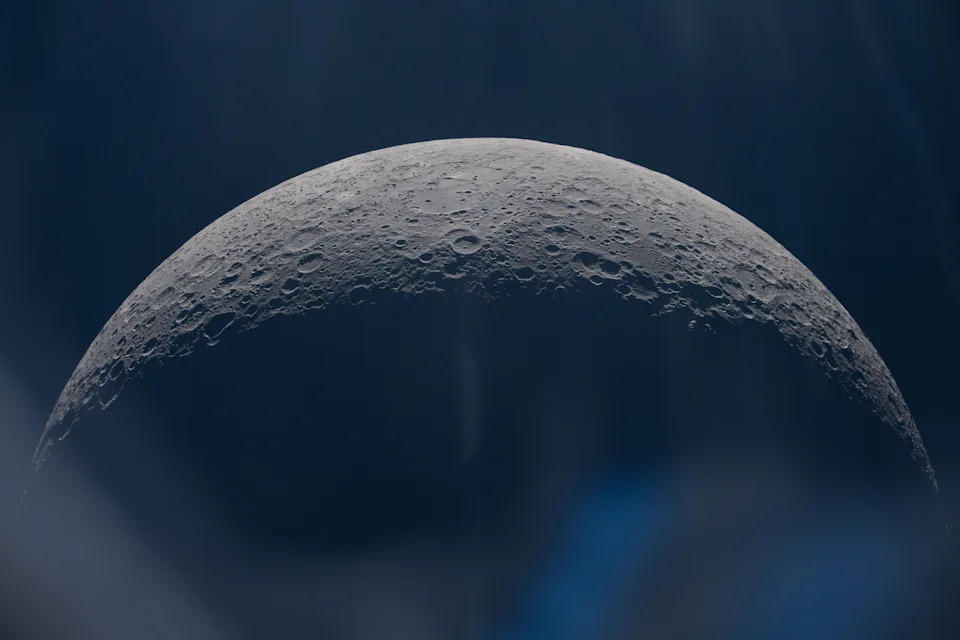
NASA released thousands of new photos taken during the Artemis II mission around the moon. The astronauts selected for the mission thoroughly documented the 10-day voyage, which included an April 6 lunar flyby as they traveled more than a quarter-million miles from Earth.(Provided by NASA)
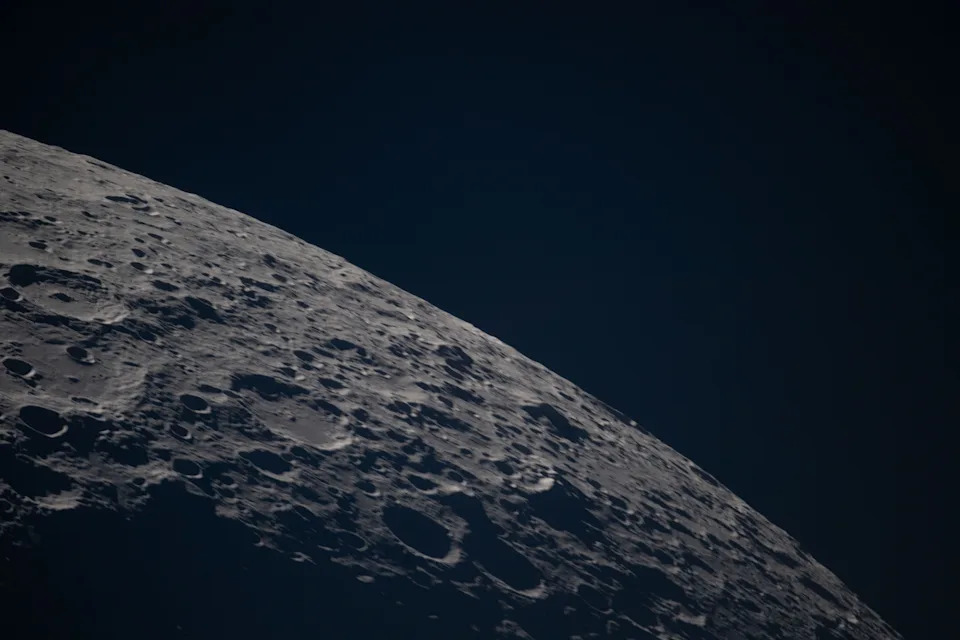
NASA released thousands of new photos taken during the Artemis II mission around the moon. The astronauts selected for the mission thoroughly documented the 10-day voyage, which included an April 6 lunar flyby as they traveled more than a quarter-million miles from Earth.(Provided by NASA)
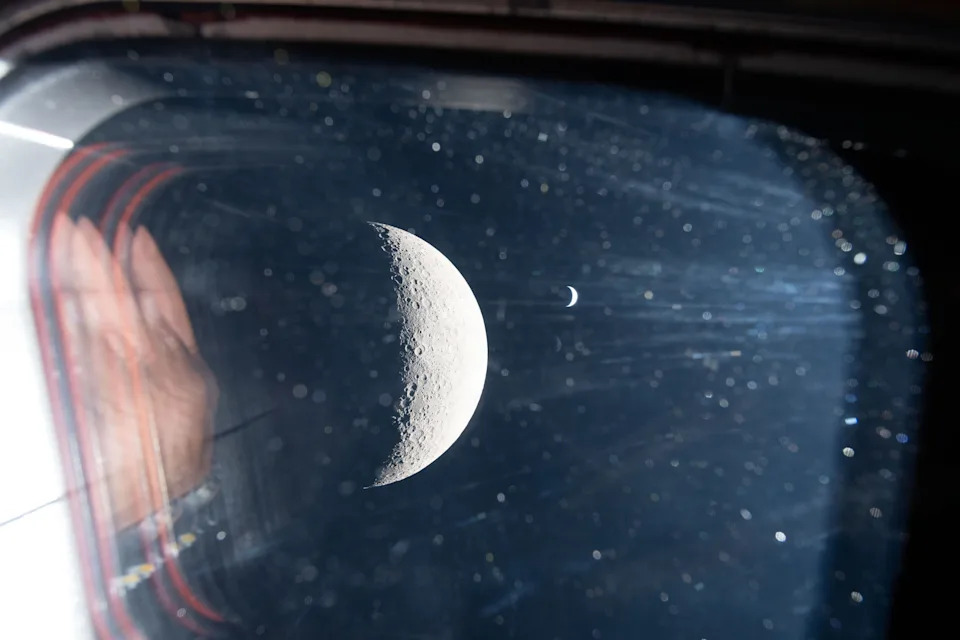
NASA released thousands of new photos taken during the Artemis II mission around the moon. The astronauts selected for the mission thoroughly documented the 10-day voyage, which included an April 6 lunar flyby as they traveled more than a quarter-million miles from Earth.(Provided by NASA)
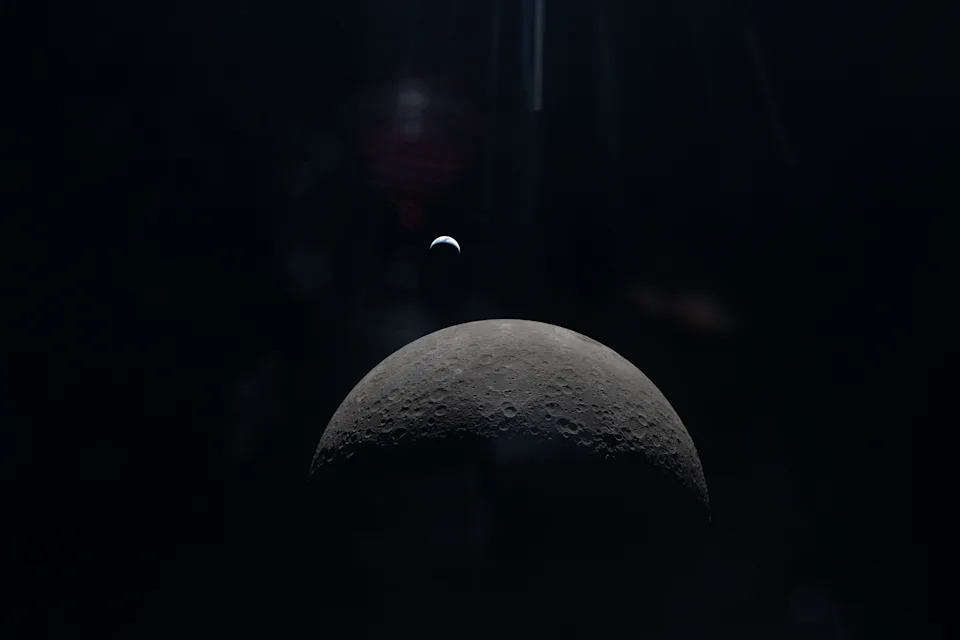
NASA released thousands of new photos taken during the Artemis II mission around the moon. The astronauts selected for the mission thoroughly documented the 10-day voyage, which included an April 6 lunar flyby as they traveled more than a quarter-million miles from Earth.(Provided by NASA)
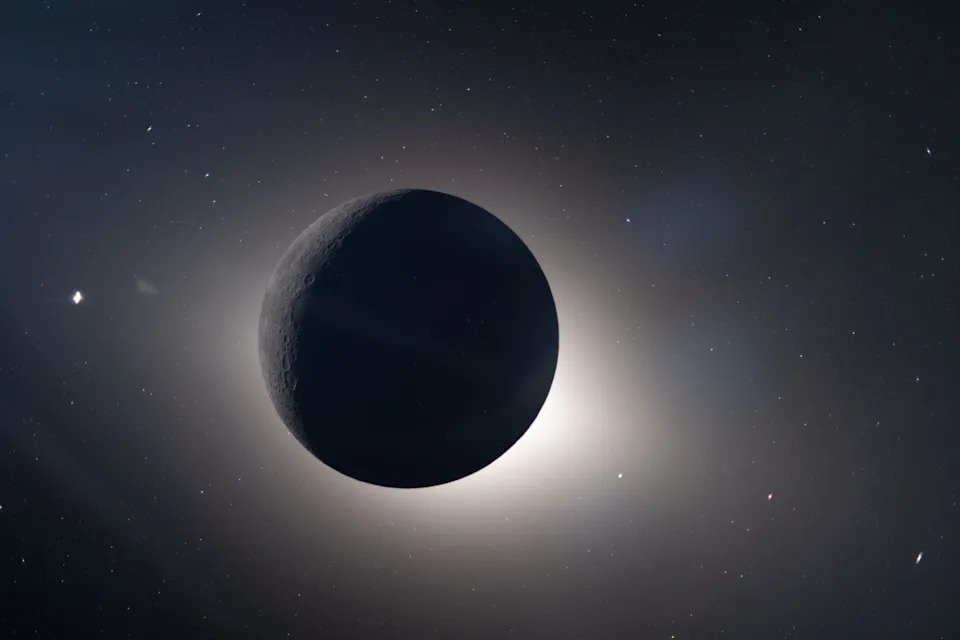
NASA released thousands of new photos taken during the Artemis II mission around the moon. The astronauts selected for the mission thoroughly documented the 10-day voyage, which included an April 6 lunar flyby as they traveled more than a quarter-million miles from Earth.(Provided by NASA)
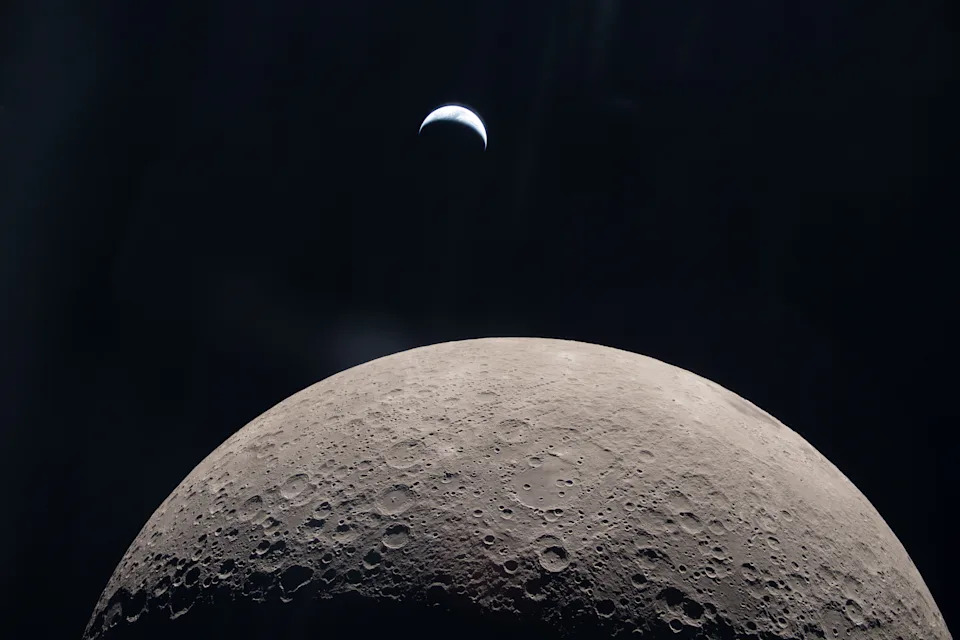
NASA released thousands of new photos taken during the Artemis II mission around the moon. The astronauts selected for the mission thoroughly documented the 10-day voyage, which included an April 6 lunar flyby as they traveled more than a quarter-million miles from Earth.(Provided by NASA)

NASA released thousands of new photos taken during the Artemis II mission around the moon. The astronauts selected for the mission thoroughly documented the 10-day voyage, which included an April 6 lunar flyby as they traveled more than a quarter-million miles from Earth.(Provided by NASA)

NASA released thousands of new photos taken during the Artemis II mission around the moon. The astronauts selected for the mission thoroughly documented the 10-day voyage, which included an April 6 lunar flyby as they traveled more than a quarter-million miles from Earth.(Provided by NASA)
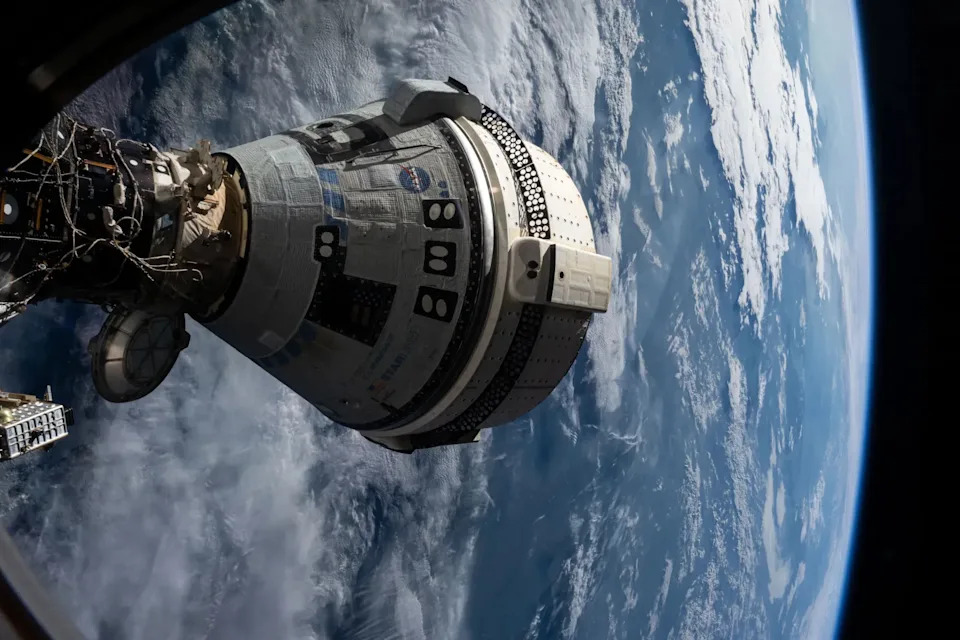
Boeing’s Starliner spacecraft that launched NASA astronauts Butch Wilmore and Suni Williams to the International Space Station is pictured July 3, 2024 docked to the Harmony module’s forward port. This view is from a window on the SpaceX Dragon Endeavour spacecraft docked to the port adjacent to the Starliner.
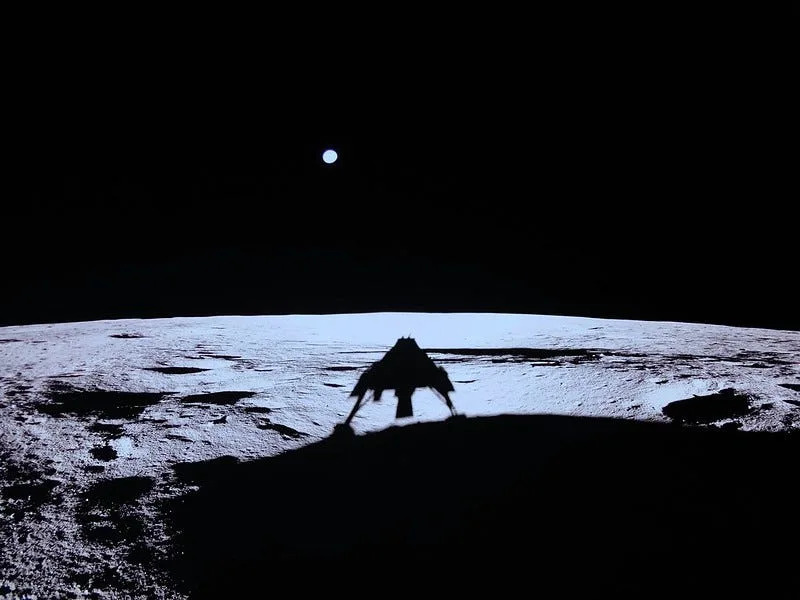
Firefly's Blue Ghost lunar lander captures its shadow on the moon's surface after completing a successful landing March 2 near a volcanic feature on the moon called Mons Latreille. The vehicle became the first of two landers manufactured by a U.S. company to reach the moon is 2025 in crucial missions to lay the groundwork for NASA to return humans to the lunar surface in the years ahead.(Firefly Aerospace)
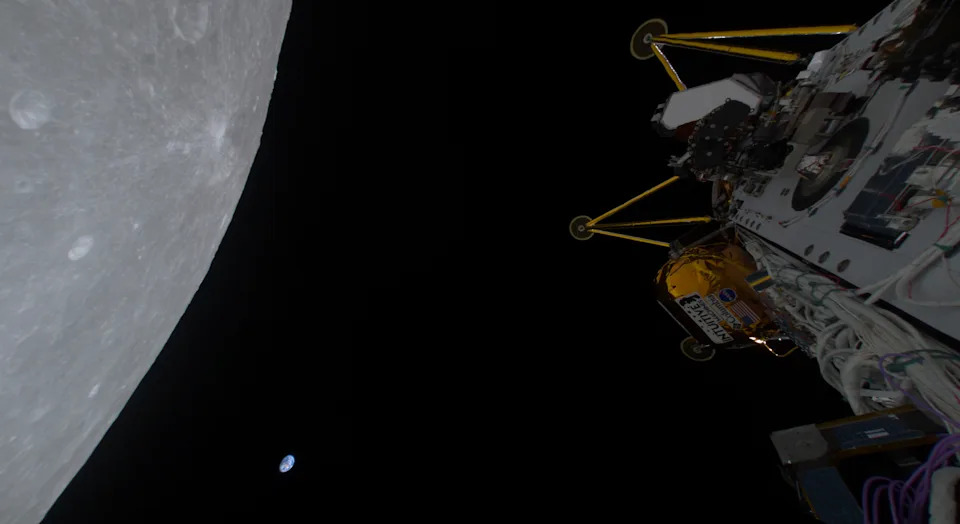
Athena, the lunar lander on Intuitive Machines' IM-2 mission, captured this image of the moon's surface with Earth seen in the distance ahead of a March 6 landing attempt. While the lander was the second U.S. vehicle to reach the moon within a week, it ultimately landed on its side, which hindered much of its mission.(Intuitive Machines)
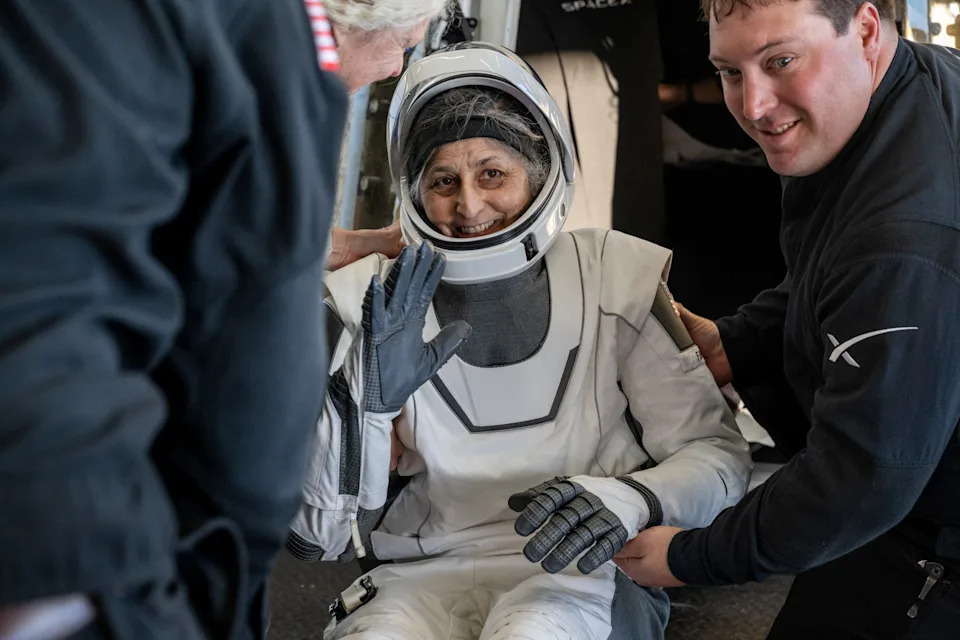
NASA astronaut Suni Williams is helped out of a SpaceX Dragon spacecraft March 18 following a return to Earth after a nine-month stay at the International Space Station. She and NASA astronaut Butch Wilmore crewed the Boeing Starliner, which had launched in June 2024 on a failed test flight that was meant to return them to Earth a few days later.(NASA/Keegan Barber/ Handout via Reuters)
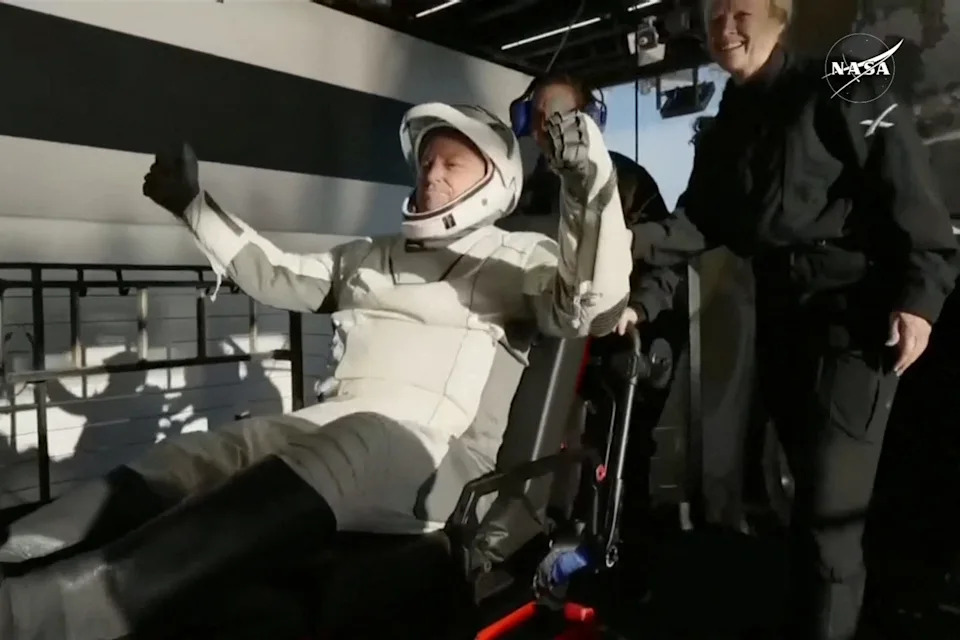
Butch Wilmore reacts after he and Suni Williams and two other astronauts splashed down March 18 in a Crew Dragon space capsule following their return to earth from the International Space Station off the coast of Florida. The astronauts' extended stay at the orbital outpost dominated the news cycle for months.(NASA TV, via REUTERS)
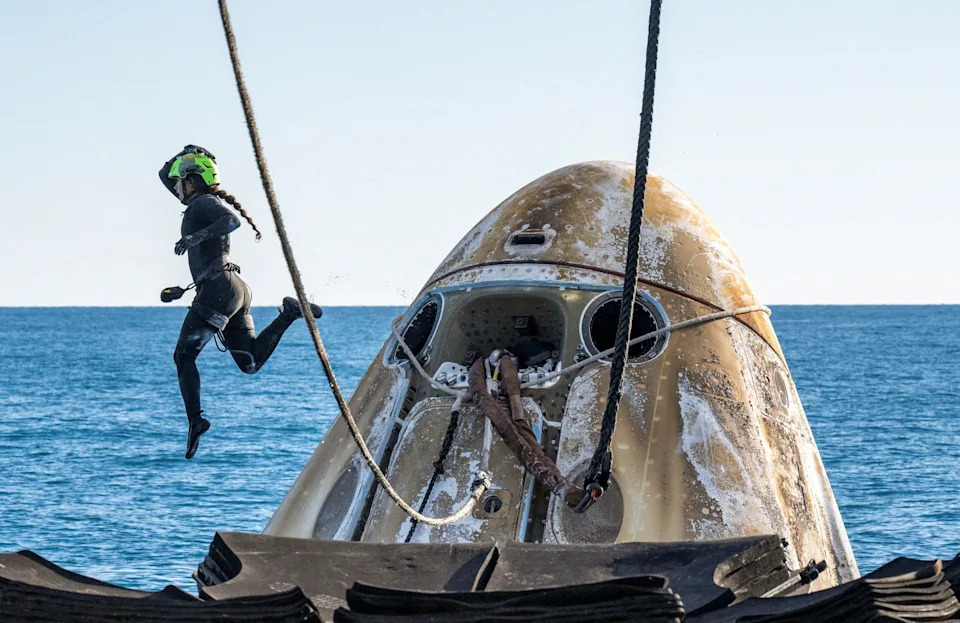
A SpaceX support team member is seen airborne while working to lift the SpaceX Dragon capsule that returned the Starliner astronauts and two others onto a recovery vehicle following its landing off the coast of Florida.(NASA/Keegan Barber/ Handout via Reuters)

This picture shows the crew of a privately-funded mission known as Fram2, from left to right, mission specialist and medical officer Eric Philips, mission commander Chun Wang, pilot Rabea Rogge and vehicle commander Jannicke Mikkelsen on March 19, 2025 in Hawthorne, California. Launched March 31 from Florida using a SpaceX Dragon capsule, the mission became t first ever human spaceflight over the Earth's polar regions.(Courtesy of Fram2/SpaceX/AFP via Getty Images)
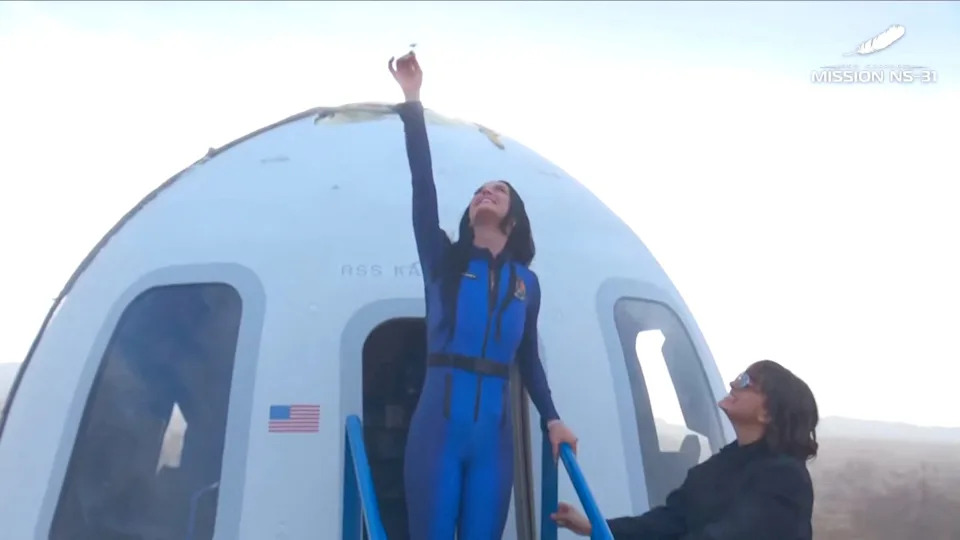
Pop musician Katy Perry emerges April 14 from Blue Origin's New Shepard capsule in West Texas following a brief flight to the edge of space. Perry was part of an all-women crew that also included broadcast journalist Gayle King that took the ride from Blue Origin's facility called Launch Site One. The high-profile launch attracted plenty of headlines and even drew some backlash from those who viewed the mission as a wasteful publicity stunt.(Blue Origin, via REUTERS)
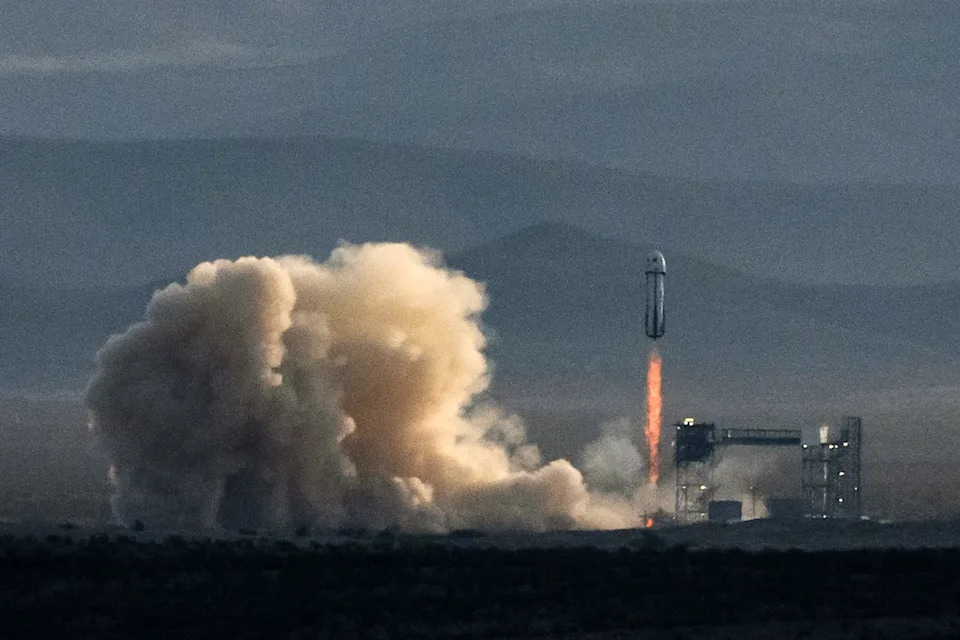
Blue Origin's New Shepard rocket carrying astronauts Aisha Bowe, Amanda Nguyen, Kerianne Flynn, Gayle King, Katy Perry, and Lauren Sanchez lifts off April 14 from Launch Site One near Van Horn, Texas. Blue Origin has since launched five more human spaceflights on the New Shepard in 2025.(Justin Hamel/Getty Images)
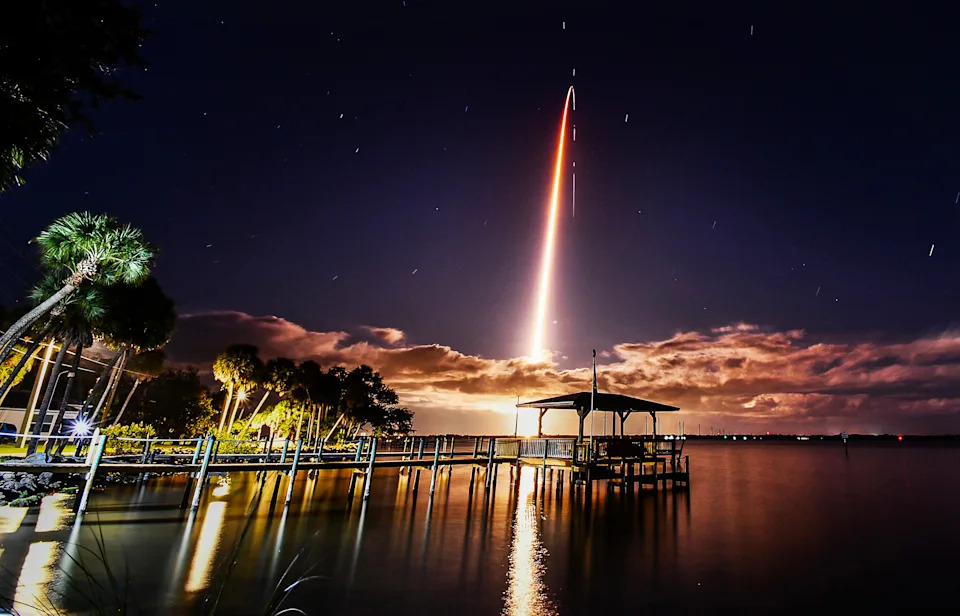
This photo depicts a United Launch Alliance Atlas V rocket carrying the latest batch of Amazon's broadband satellites on Dec. 16 to low-Earth orbit after launching from the Cape Canaveral Space Force Station in Florida. Formerly called Project Kuiper, the venture has since been renamed Amazon Leo. Since its debut April launch, Amazon Leo has deployed 180 of 3,000 satellites planned for its first constellation, which could challenge SpaceX's Starlink.(Malcolm Denemark/Florida Today)
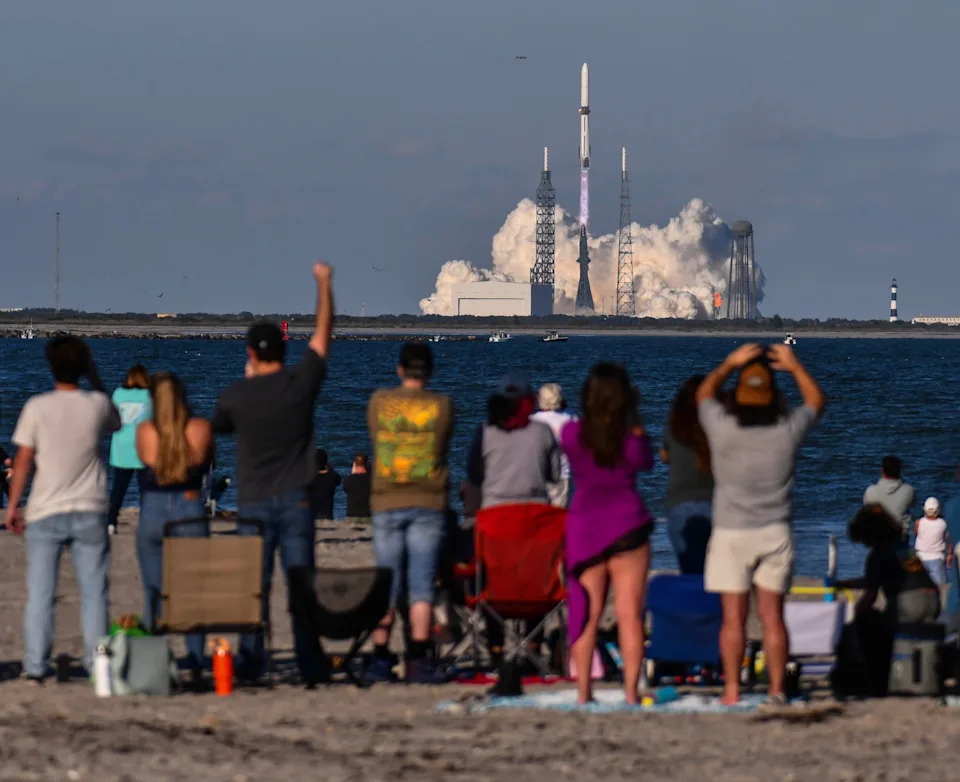
A group of Blue Origin employees with their friends and families gather on the beach in Cape Canaveral for the launch of Blue Origin's second New Glenn rocket in 2025. Following its January debut, the rocket launched for the second time Nov. 13 from Launch Complex 36 at Cape Canaveral Space Force Station, sending NASA's twin ESCAPADE spacecraft on their trek to Mars.(Malcolm Denemark/Florida Today)
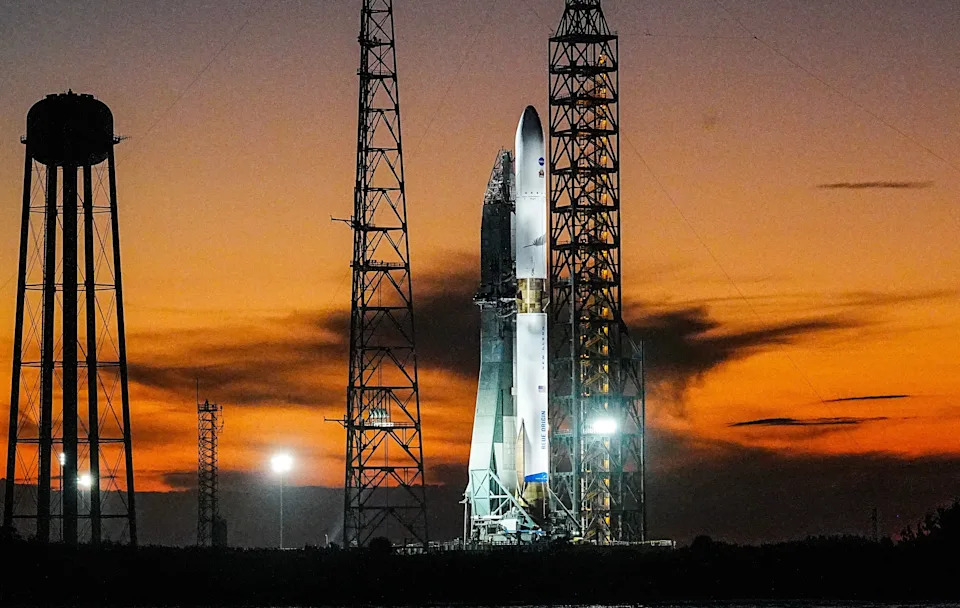
Darkness falls Nov. 9 as a Blue Origin New Glenn rocket is prepped for its second-ever launch from the Cape Canaveral Space Force Station. Blue Origin is developing the towering rocket for heavy-lift missions that could see Jeff Bezos' company compete with Elon Musk and SpaceX.(Craig Bailey/FLORIDA TODAY/ USA TODAY NETWORK)
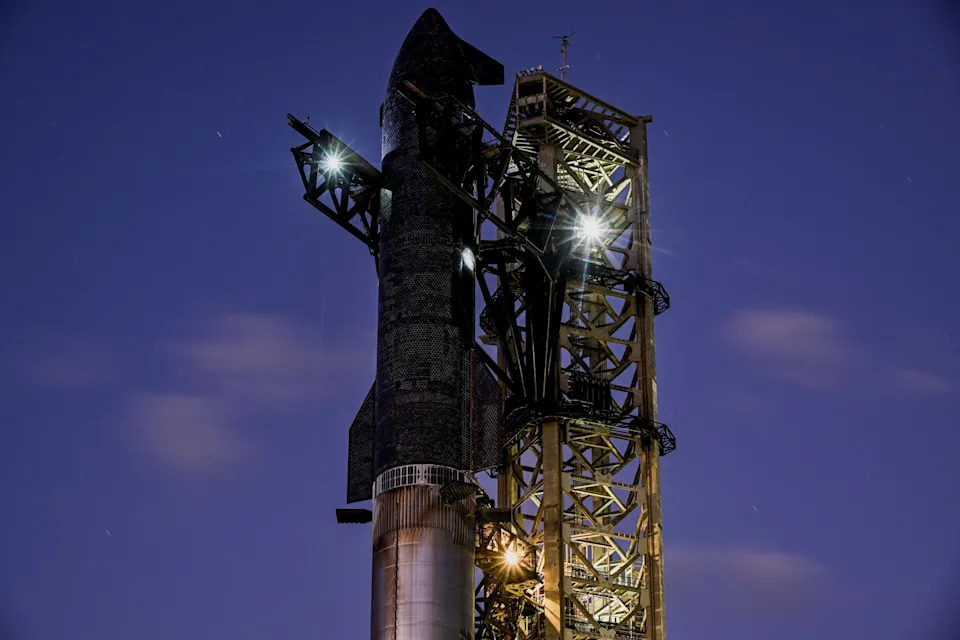
The SpaceX Starship spacecraft sits Oct. 12, 2025 atop the Super Heavy booster before sunrise as preparations continue for its 11th test flight from the company's complex in Starbase, Texas.(Steve Nesius/Reuters)
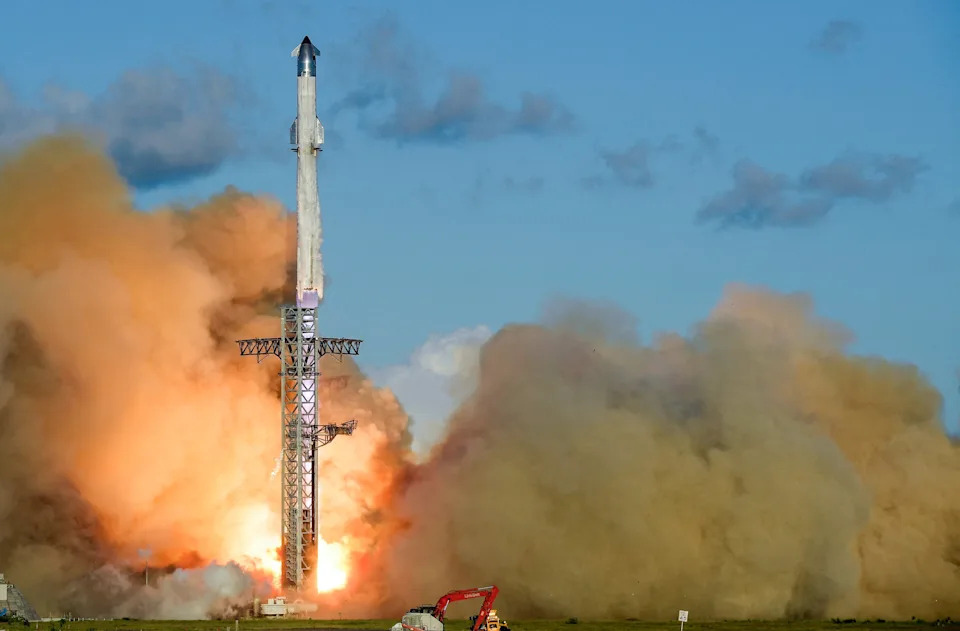
A SpaceX Super Heavy booster carrying the Starship spacecraft lifts off Oct. 13, 2025, on its 11th ever test flight at the company's launch pad in Starbase, Texas. The launch was Starship's fifth of 2025, and second consecutive successful test flight following a year that was early on marked by explosive failures. SpaceX is developing the rocket for future missions that would help NASA astronauts land on the moon and also potentially transport the first humans to Mars.(Steve Nesius/Reuters)
Help us improve.





















