The author argues that President Trump has steered the Republican Party toward policies and rhetoric that weaken Black political power, notably through mid-decade redistricting and a Supreme Court ruling that limited parts of the Voting Rights Act. The piece highlights executive actions targeting DEI programs, shifts in the Justice Department’s civil-rights priorities, and inflammatory public statements as part of an emerging anti-Black posture. While the author warns these trends threaten Black representation, he believes the broader arc of progress toward equal rights will ultimately continue.
Opinion: How Trump Has Turned the Republican Party Into an Anti-Black Force

Under President Donald Trump’s leadership, the Republican Party has, the author argues, aligned itself with white Christian nationalist forces and pursued policies that roll back decades of progress against racial discrimination.
Redistricting and the Erosion of Black Political Power
Research from the Pew Research Center finds roughly 83 percent of Black voters identify as or lean Democratic. In response to that partisan reality, the piece says, Trump has urged Republican officials to adopt measures that make it harder for African Americans to vote and elect candidates of their choice.
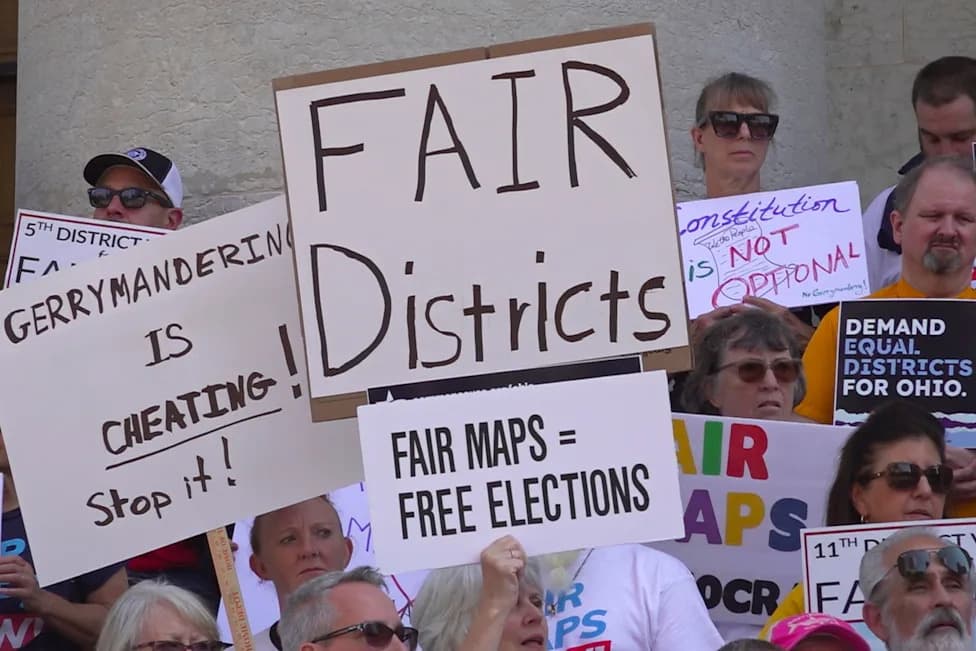
The president has pressured Republican-controlled states to pursue mid-decade congressional redistricting that could allow the GOP to pick up more than a dozen House seats and shrink Black representation in Congress. Rep. Yvette Clarke (D-N.Y.), chair of the Congressional Black Caucus, has warned that 19 of the 59 Black Democrats in the House are at risk of losing their seats this fall because of Republican-led map changes. By contrast, redistricting approved by California voters could net Democrats up to five seats, and a court-ordered map in Utah is likely to hand Democrats an additional seat.
Supreme Court Ruling and the Voting Rights Act
The effort to reduce Black representation was enabled by a 6-3 Supreme Court ruling authored by justices appointed by Republican presidents. The decision curtailed protections established under the 1965 Voting Rights Act for jurisdictions where racial minorities constitute a majority, making it harder to challenge maps that dilute minority voting power unless overt racial intent can be proven — a burden that advocates say is extremely difficult to meet.
Policy Moves and Rhetoric
The article catalogs a series of actions and statements the author sees as part of an anti-Black agenda: executive orders targeting diversity, equity and inclusion (DEI) programs; legislative pushes that could disproportionately restrict voting access; proposed cuts to social programs that benefit many Black Americans; and personnel decisions that reduced Black representation in federal leadership roles. The author notes that, in the president’s second-term Cabinet of 24 members, only one Black person was appointed.
According to the piece, the Justice Department’s Civil Rights Division has shifted emphasis away from investigating discrimination against people of color and women toward defending claims of discrimination by white men and focusing on rare instances of noncitizen voting.
The author also recounts inflammatory public rhetoric and incidents reported in the media: racial insults directed at Black critics, derogatory comments about immigrants, and the widely criticized posting of an AI-generated video that depicted Barack and Michelle Obama in demeaning imagery — actions the author says mirror the language and behavior associated with extremist racist groups.
Why Representation Matters
The Voting Rights Act helped dismantle barriers that had prevented many African Americans from voting, dramatically increasing Black political representation. As Howard University law professor Sherrilyn Ifill has noted, there were about 1,500 Black elected officials in 1970 and more than 10,000 today. Greater representation, the author argues, makes government more responsive to the needs of Black communities and motivates elected officials — including white officeholders in diverse districts — to serve all constituents effectively.
Conclusion
Rather than diluting Black communities through redistricting, the author contends Republicans should adopt policies that attract Black voters. Writing as a descendant of enslaved African Americans, A. Scott Bolden — an attorney, NewsNation contributor, former chair of the D.C. Democratic Party and a former New York state prosecutor — concludes that while these actions may slow progress, the nation’s long journey toward equal rights, begun under Abraham Lincoln, will continue.
Note: This is an opinion piece reflecting the author’s perspective on recent political developments and documented actions by the administration and courts.
Help us improve.