Two decades after São Paulo police carried out mass reprisals in May 2006, most killings remain unresolved and families continue to press the state for truth and redress. Forensic reports and human rights groups say many of the more than 500 deaths were executions rather than shootouts. A Supreme Court appeal over compensation is pending, while activists demand an official apology, legal reforms and accountability for those responsible.
The Mothers of May: Two Decades Seeking Truth and Justice After São Paulo Police Rampage
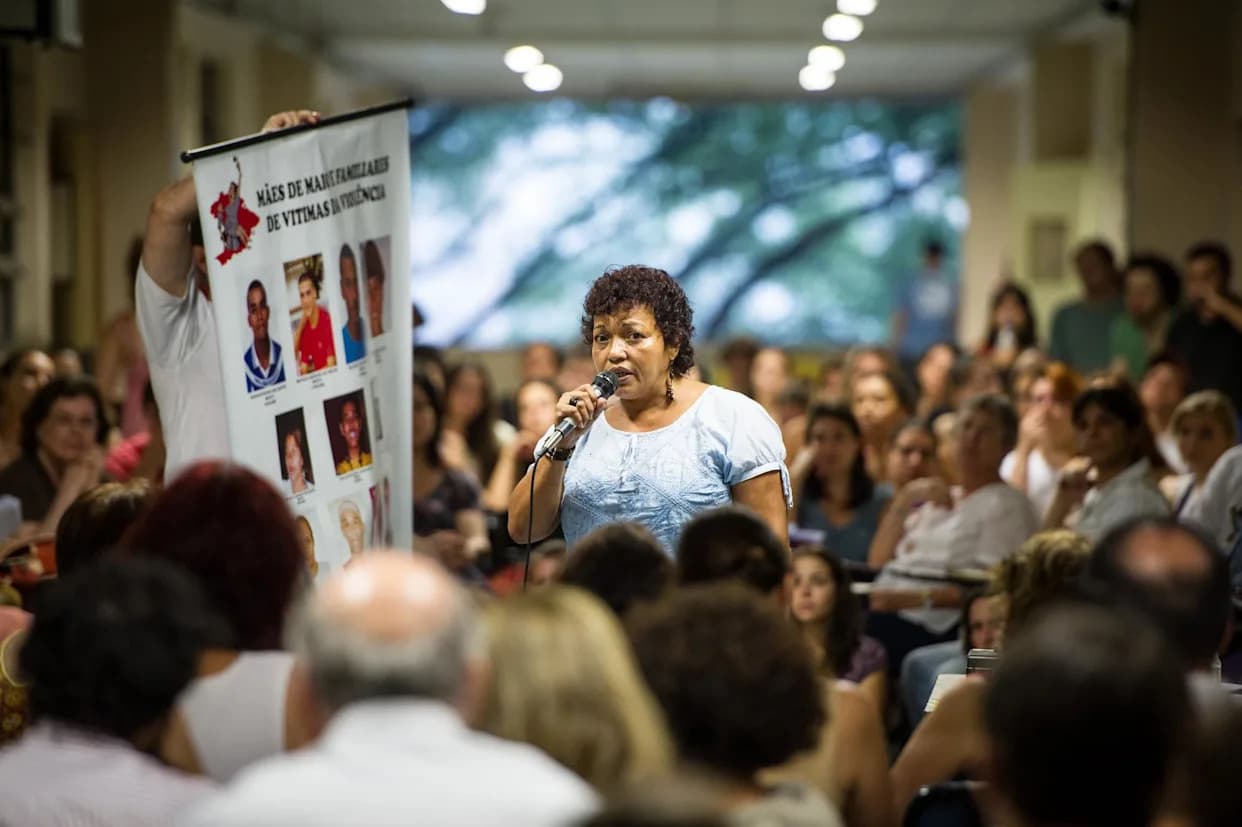
Debora Maria da Silva, coordinator of "Mothers of May", a national network of mothers of victims presumably killed by the police, speaks to professors at the Pontifical Catholic University of Sao Paulo (PUC), Brazil on December 13, 2012.Photograph: AFP/Getty Images(Photograph: AFP/Getty Images)
In May 2006, São Paulo authorities transferred nearly 800 suspected gang members to maximum-security prisons. The move triggered a wave of prison uprisings and attacks by the criminal faction PCC that left 59 police and prison officers dead. Over the next nine days, police reprisals resulted in the deaths of more than 500 people — officially described as shootouts with "criminals" — but human rights organisations and forensic experts have concluded that many of those killed were executed, including people with no criminal records.
Personal Toll: The Mothers Of May
"There is no amount of money that can pay for the life of a child,"
Débora Maria da Silva, founder of the Mothers of May movement, learned her eldest son Edson, 29, was among the dead when a radio presenter read a list of names. Through years of investigation she located a witness, secured an exhumation and reburial in 2012, and discovered that Edson — a street cleaner — had been stopped by eight officers at a petrol station, beaten, then shot five times. After lengthy legal battles a court ordered compensation of £72,000 (about $97,000) and a pension equal to one-third of the monthly minimum wage, with the judge finding the police response to the PCC attacks had been "violent, unreasonable and indiscriminate and therefore illegal." Yet none of the officers implicated in Edson's death has been identified.
Forensic Evidence And Accountability Challenges
Forensic analyses of 124 bodies recorded as killed in alleged shootouts showed most gunshot wounds struck highly lethal areas, were fired at close range and from above — factors forensic experts say are more consistent with execution than with crossfire. Official records indicate roughly 505 civilians died in the reprisals; most were young Black men from poor neighbourhoods and favelas, and only about 6% had criminal records.
Accountability has been limited. A recent investigation by Folha de S. Paulo identified only 15 convictions connected to the events, including a 50-year sentence for PCC leader Marcos Willians Herbas Camacho ("Marcola") for ordering the execution of a firefighter. As far as is publicly known, only one police officer — a corporal — has been convicted of murder in relation to the attacks.
Legal and investigative failures undermined efforts to hold perpetrators to account: crime scenes were often not secured, bodies were frequently moved to hospitals under the pretext of providing aid even when victims were already dead, and evidence was lost or contaminated.
Legal Progress And Ongoing Struggles
In 2018 a public prosecutor filed a lawsuit seeking compensation for the families of the dead and the 110 injured survivors, but a state court rejected the claim. The case is awaiting resumption at Brazil's Superior Court of Justice, with proceedings scheduled to resume on 10 June. Activists say the movement is seeking not only monetary reparations but also a formal apology, legislative changes and systemic reforms to prevent repeat abuses.
Broader Impact
Critics say the state's violent reprisal did not weaken the PCC; the organisation has since grown into one of Latin America's most powerful criminal networks, expanding cocaine exports to more than 20 countries. "The state's response to the PCC attacks was so misguided that it produced no restraint to the organisation," said Gabriel Sampaio, director at the NGO Conectas.
The Mothers of May continue to press for truth, justice and institutional reform. Their demands highlight a broader debate about police violence, racial injustice and impunity in Brazil that remains unresolved two decades after the killings.
Help us improve.