A federal jury in Spokane convicted three protesters, including a former US Army sergeant, on felony conspiracy charges for a June 2025 demonstration aimed at blocking ICE operations. The defendants face up to six years in prison and $250,000 in fines and have filed appeals and Rule 29 motions arguing insufficient evidence. The trial drew scrutiny for evidentiary rulings, inflammatory social-media posts by an ICE witness, and the decision of the acting US attorney to resign rather than sign the indictment. The verdict contrasts with a Chicago prosecution where conspiracy charges were dropped.
Federal Jury Convicts Army Veteran and Two Others in Controversial ICE Protest Conspiracy Case
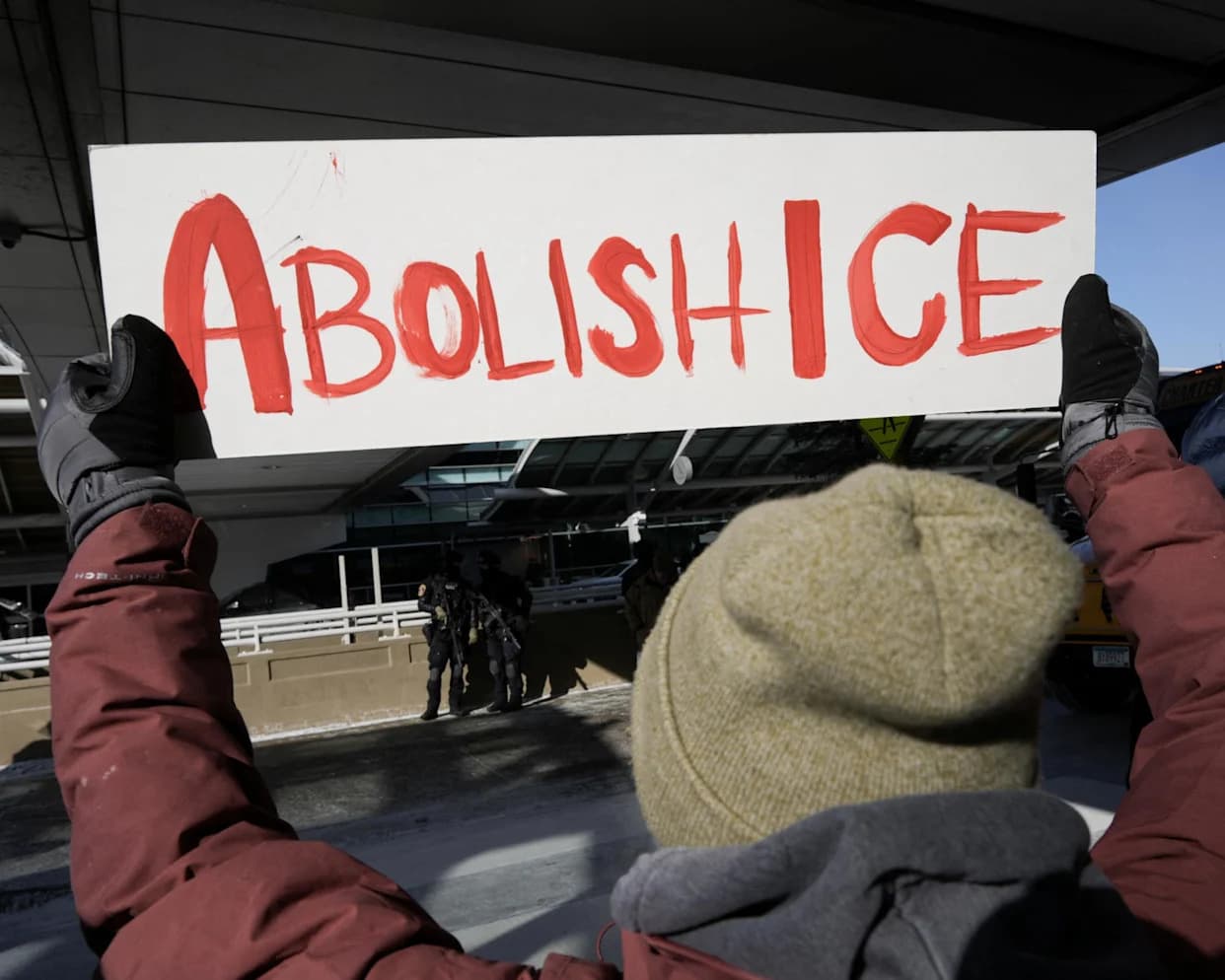
A person holds up an anti-ICE sign during a protest in Minneapolis, Minnesota, on 23 January.Photograph: Tim Evans/Reuters(Photograph: Tim Evans/Reuters)
A federal jury in Spokane, Washington, on Thursday convicted three protesters — including a former US Army sergeant who served in Afghanistan — on felony conspiracy charges for their roles in a June 2025 demonstration that sought to block US Immigration and Customs Enforcement (ICE) operations.
Verdict, Sentences and Appeals
The defendants face up to six years in prison and fines of as much as $250,000. All three are expected to appeal and have filed Rule 29 motions asking US District Judge Rebecca Pennell to set aside the guilty verdicts on the ground that the evidence was legally insufficient to sustain a conviction.
Legal and Public Reaction
Legal observers and civil-rights advocates described the prosecution as a troubling expansion of government enforcement in cases tied to First Amendment activity. Robert Chang, director of the Fred T. Korematsu Center for Law and Equality at UC Irvine, warned that the decision could chill protest activity: "By this logic, any protest could be a conspiracy," he said.
“I’m not done. I’m going to keep fighting,” said Bajun Mavalwalla, a former US Army sergeant and one of the convicted demonstrators.
His father, retired Army intelligence officer Bajun Ray Mavalwalla, who earned three Bronze Stars in Iraq and Afghanistan, said the verdict risked disenfranchising people from their rights to speech and assembly. Other veterans attended the hearing in support.
Evidence, Trial Rulings and Controversies
Judge Pennell — a former federal public defender appointed by President Joe Biden — barred the defendants from presenting the First Amendment as a formal legal defense, though she allowed them to explain their motives for protesting. She also excluded certain evidence, including a prior federal ruling that a Venezuelan migrant at the center of the protest was arrested in violation of the Constitution; the jury did not hear that ruling.
Prosecutors presented hours of law-enforcement body-camera footage and testimony from multiple ICE agents, a federal contractor and local officers. One ICE agent testified he was "concerned for the safety of the officers." The prosecution relied in part on 18 U.S.C. § 372, a rarely used Civil War–era statute recently revived in this case.
The trial was further complicated when Range, a local outlet, reported that ICE agent Jeremy Burlingame — a witness for the government — had posted inflammatory social-media comments disparaging Black politicians and transgender people and had amplified a post celebrating ICE’s detention of a pregnant woman. Federal prosecutors recalled Burlingame to impeach his testimony; Assistant US Attorney Lisa Cartier-Giroux called his posts "horrendous" in open court, and Burlingame acknowledged an investigation into his conduct.
Jury Decision and Broader Context
Despite questions about witness credibility, lack of reported injuries to officers, and no clear evidence shown at trial of prior coordination among the three protesters, the jury returned unanimous guilty verdicts roughly 24 hours after closing arguments.
The case drew national attention, in part because Richard Barker, the acting US attorney for Eastern Washington, resigned rather than sign the indictment. Barker told the Guardian that no agents or protesters were injured in the incident and later questioned whether the prosecution was an appropriate use of Justice Department resources.
The Spokane convictions stand in stark contrast to a related federal case in Chicago, where Justice Department officials in May moved to dismiss conspiracy charges against protesters at ICE’s Broadview detention facility and instead pursued only misdemeanor counts.
The defendants in the Spokane case are expected to continue their appeals and to press their Rule 29 motions. The case raises ongoing questions about how broadly conspiracy statutes can be applied to protest activity and whether such prosecutions will chill constitutionally protected speech and assembly.
Help us improve.