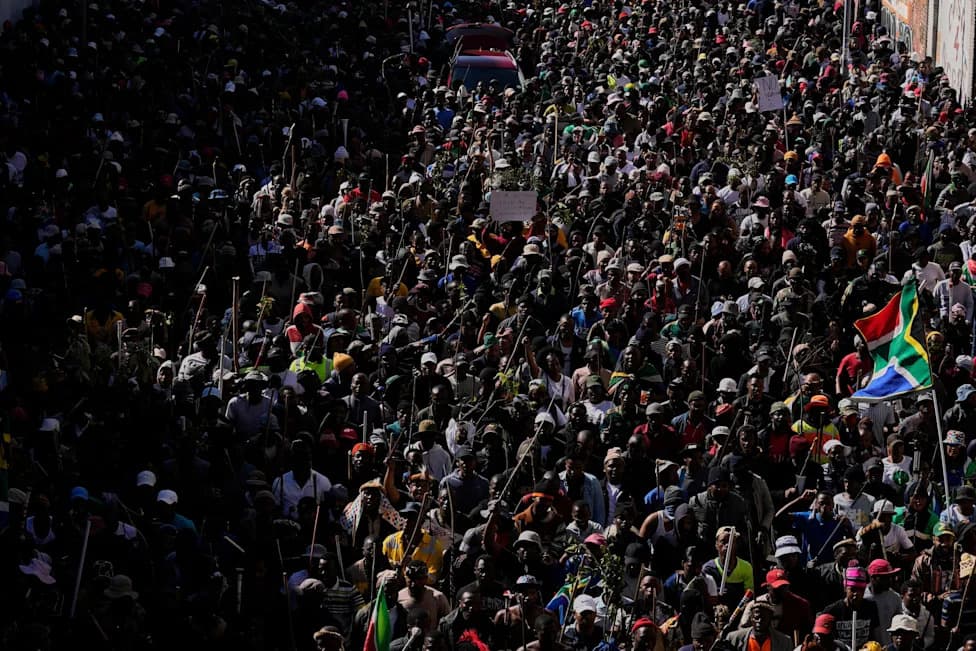
South African police used rubber bullets, tear gas and stun grenades to disperse roughly 400 displaced migrants outside a Durban police station after a surge of vigilante attacks sparked regional outrage. Human Rights Watch condemned the clearance, and Ghana and Nigeria have asked the African Union to hold an emergency debate. Evacuation registrations rose — Ghana to about 800 and Nigeria to at least 130 — amid rising public distrust of migrants and a contentious 'First Safe Country' policy that critics say could validate vigilante claims.
South African Police Disperse Displaced Migrants as Vigilante Attacks Escalate, Straining Ties With Ghana and Nigeria
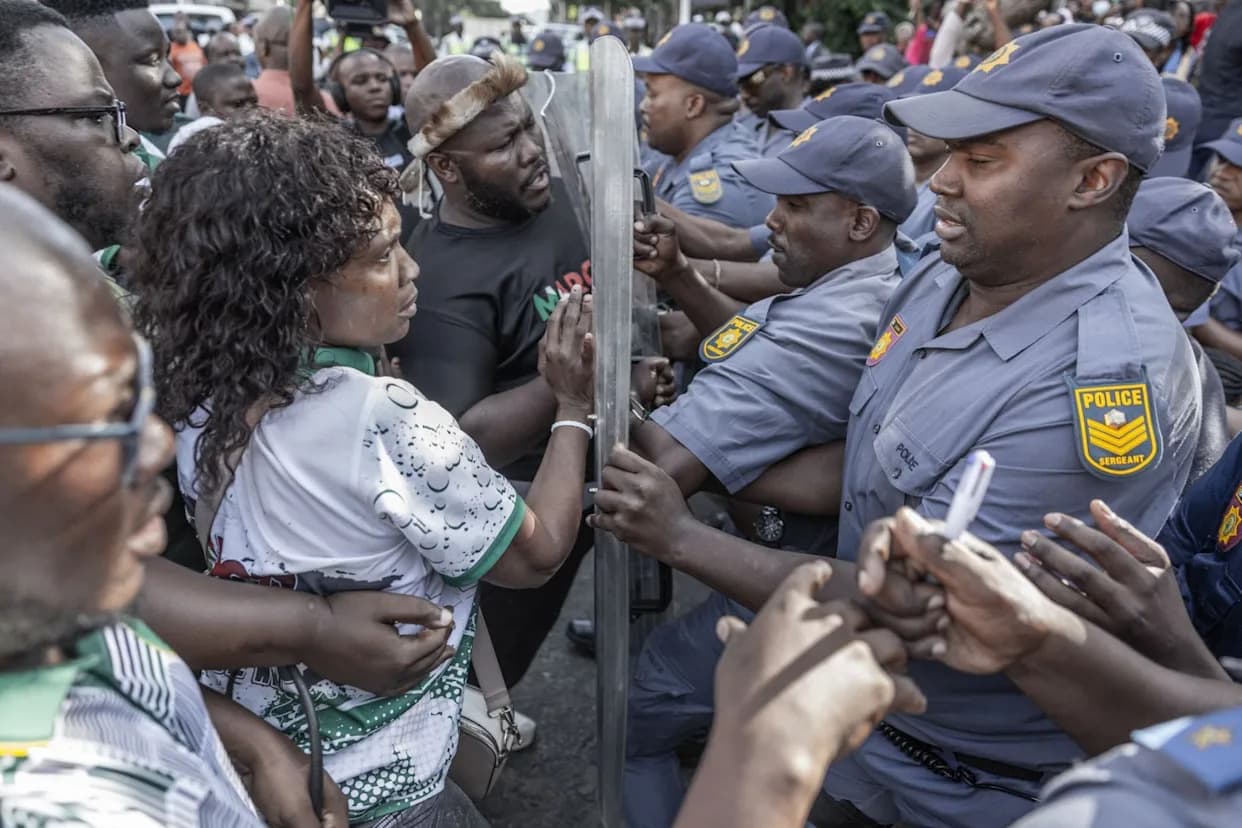
South African police deployed rubber bullets, tear gas and stun grenades to disperse hundreds of migrants seeking emergency shelter after a wave of vigilante attacks — a clearance that has intensified diplomatic tensions with Ghana and Nigeria.
The forcible removal of roughly 400 displaced African and Asian migrants who had gathered outside a Durban police station drew sharp criticism from Human Rights Watch, which said vigilante groups were operating with impunity and that the forced clearance raised serious rights concerns.
Political Context
Researchers and independent analysts say the recent surge in anti-migrant violence has coincided with a heated local government election campaign. Political parties and self-styled community leaders are increasingly accused of exploiting anti-immigrant sentiment to win support from a frustrated electorate.
Diplomatic Fallout
Accra and Abuja have asked the African Union to convene an emergency debate on the situation at next month’s AU summit. Pretoria described Ghana's move as regrettable and reiterated that South Africa has a responsibility to secure its borders, further fuelling tensions between the capitals.
Evacuations And Advisories
Both Ghana and Nigeria operate formal evacuation programs for citizens who feel threatened. Registrations for Ghana's evacuation program rose to about 800 this week, up from 300 when the plan was first announced. Nigeria has recorded at least 130 nationals signing up. Meanwhile, Malawi, Zimbabwe, Lesotho and Kenya have issued travel and safety advisories for their citizens in South Africa.
Public Opinion And Grassroots Movements
Data from the Cape Town-based Inclusive Society Institute indicate that public distrust of African immigrants in South Africa climbed to over 73% in 2025, up from 62% four years earlier. Emerging civic movements such as 'March and March,' alongside established groups like Operation Dudula, have expanded their activities from coastal KwaZulu-Natal into economic centres including Gauteng.
Armed with traditional weapons, sjamboks and pepper spray, these groups have carried out aggressive so-called 'citizens' audits' of small businesses, blockaded public health facilities and set up unauthorised checkpoints outside schools to screen people by language, accent and documentation.
Policy Debate
Analysts point to South Africa's persistently high unemployment rate, now above 40%, as a factor that makes non-nationals convenient scapegoats. The violence follows a cabinet-approved proposal to formalise a 'First Safe Country' principle that would disqualify asylum seekers who passed through other safe states before arriving in South Africa. Home Affairs Minister Leon Schreiber has welcomed the policy, arguing it will bolster security and attract skilled professionals, while human rights lawyers warn it risks validating the grievances used to justify vigilante attacks.
Related Protests Abroad
Separately, tens of thousands of anti-immigration protesters gathered in central London for a 'Unite the Kingdom' rally, marching against high net-migration figures and what demonstrators described as a threat to British identity.
Note: This article summarises developments reported by local and international groups and reflects data and statements available at the time of publication.
Help us improve.