President Trump said Israeli Prime Minister Benjamin Netanyahu will do "whatever I want him to do" on Iran and signaled limited patience for talks, while Iran's Revolutionary Guard warned renewed strikes would expand the war beyond the region. Tehran has staged public weapons displays and created a Persian Gulf Strait Authority claiming parts of the Strait of Hormuz; U.S. forces have boarded and redirected vessels under a blockade. Oil prices fell more than 5% amid hopes for a deal, and the U.N. warned a strait shutdown could spark a global food-price crisis.
Trump: "Netanyahu Will Do Whatever I Want" — Iran Tensions Surge As Strait Of Hormuz Is Claimed
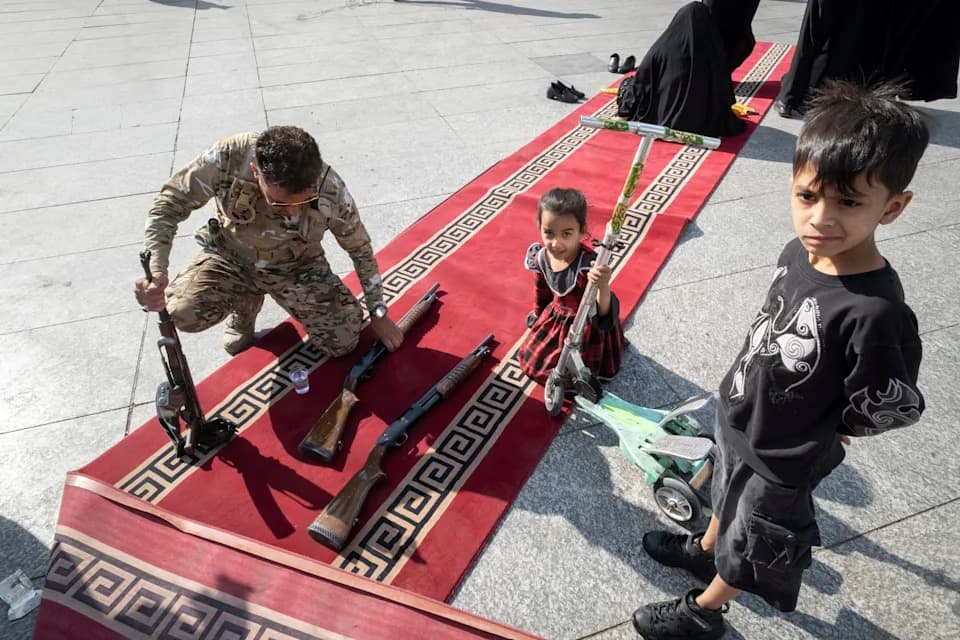
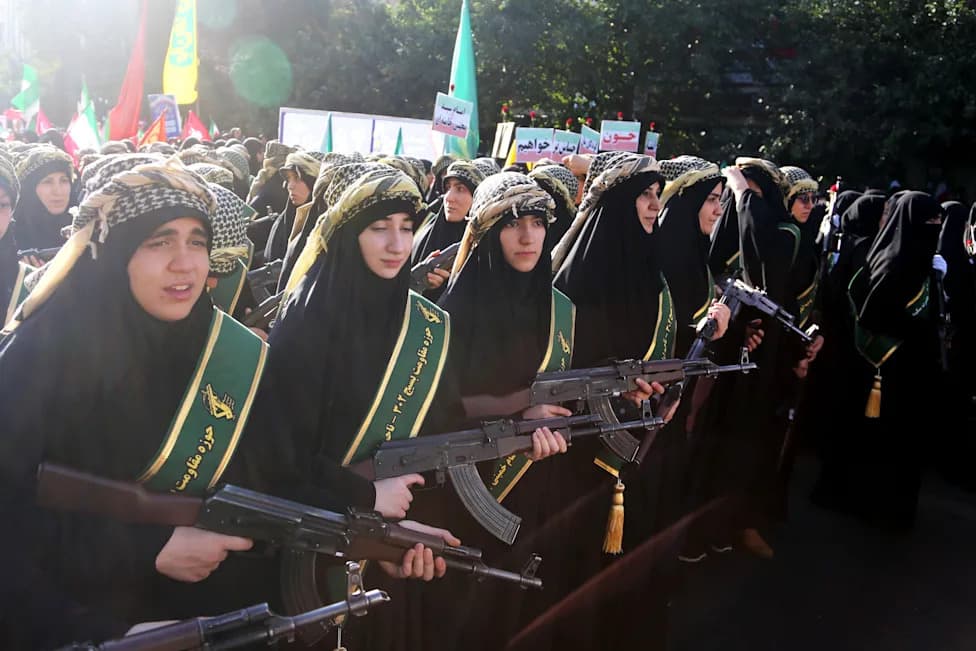
A young Iranian girl observes as Islamic Revolutionary Guard Corps personnel adjust rifles before the start of a mass wedding ceremony for Self-Sacrificing Couples, organized by the IRGC in southern Tehran, Iran, on May 18, 2026. / Credit: Morteza Nikoubazl/NurPhoto via Getty Images
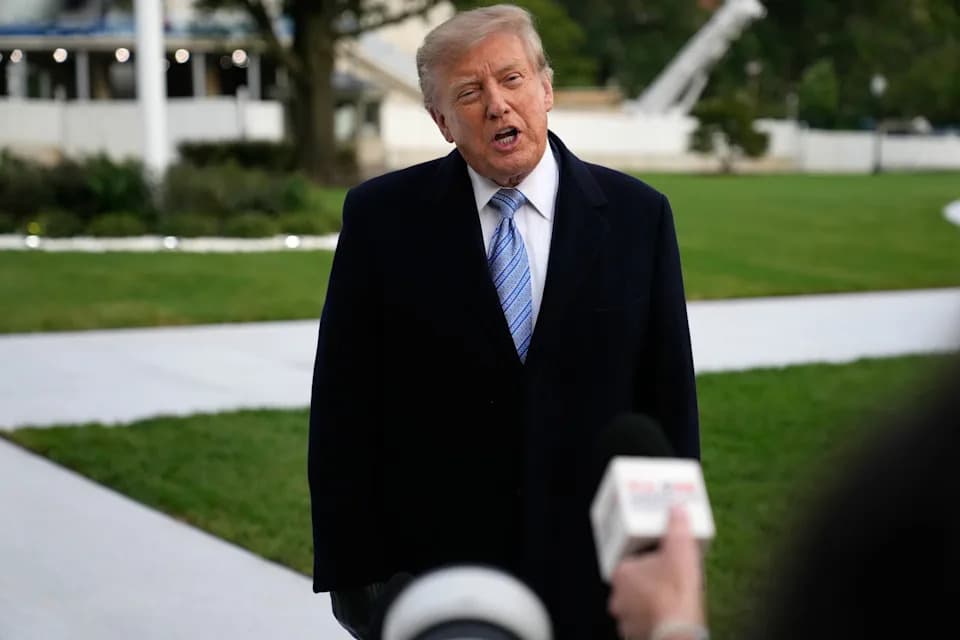
President Donald Trump told reporters Wednesday that Israeli Prime Minister Benjamin Netanyahu will do "whatever I want him to do" on Iran and said he is "in no hurry" to reach a settlement to end the conflict. His comments came as Tehran’s Islamic Revolutionary Guard Corps warned that renewed U.S. or Israeli strikes would push the war "beyond the region."
Weapons On Display And A Show Of Defiance In Tehran
In Tehran, members of the Revolutionary Guard have increasingly displayed weapons publicly: Kalashnikov-style rifles at parades, military vehicles equipped with belt-fed Soviet-era machine guns and, at one large wedding, a ballistic missile placed on stage. Authorities say the demonstrations reflect both a response to external threats and an effort to reassure and mobilize hard-line supporters amid worsening economic pain — mass layoffs, business closures and soaring prices for essentials.
"This is necessary for all our people to get trained because we are in a war situation these days," said Ali Mofidi, a 47-year-old Tehran resident who attended a weapons exercise.
Maritime Claims And Blockade Tensions
Iran's newly created Persian Gulf Strait Authority (PGSA) published a map declaring a "controlled maritime zone" in parts of the Strait of Hormuz and said ships transiting for passage through the strait must coordinate with and receive authorization from Tehran. The PGSA — described on its social account as the legal representative for managing passage through the strait — also said it would collect fees and has threatened action against vessels that transit without permission.
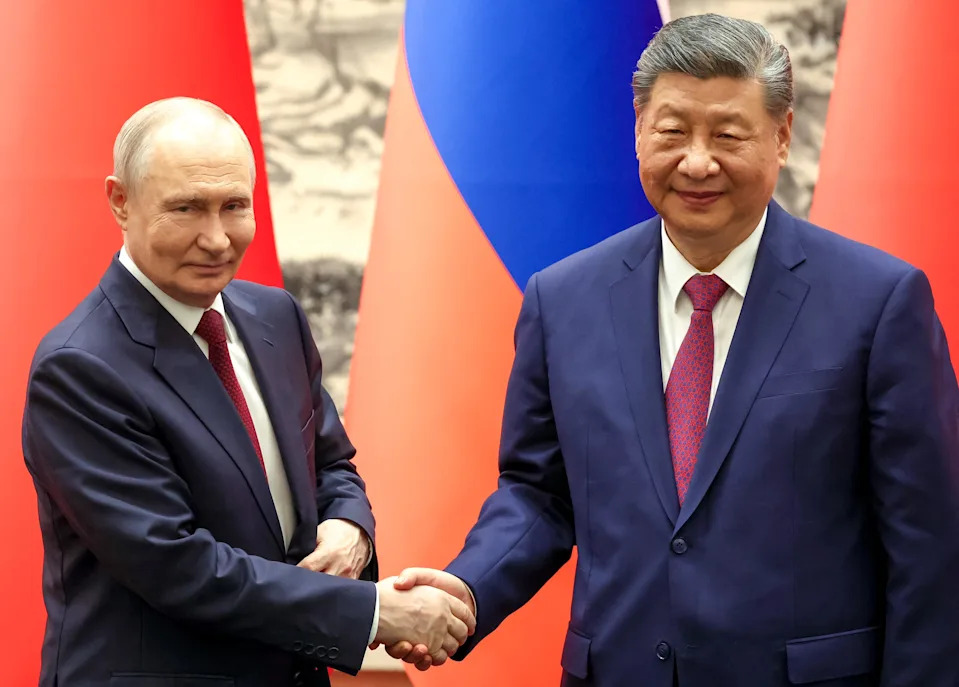
Russia's President Vladimir Putin and China's President Xi Jinping shake hands during a signing ceremony following talks in Beijing, China, May 20, 2026, in a pool photograph distributed by the Russian state news agency Sputnik. / Credit: Alexander KAZAKOV/POOL/AFP/Getty
U.S. Central Command reported that Marines boarded and searched an Iranian-flagged tanker, M/T Celestial Sea, suspected of trying to violate the U.S. blockade; the vessel was later released and ordered to change course. CENTCOM said U.S. forces have redirected roughly 90 commercial ships to enforce the blockade, while Iran's Revolutionary Guard claimed that 26 commercial vessels transited the strait in coordination with Iranian authorities within 24 hours.
Diplomacy, Markets And Warnings
President Trump said he was willing to wait briefly to see if talks produce results: "If I can save war by waiting a couple of days . . . I think it's a great thing to do." He also warned patience was limited and that any deal would need to meet U.S. demands fully. Iran's foreign ministry said it had received a new U.S. proposal and was examining it while Pakistan stepped up shuttle diplomacy in Tehran to facilitate message exchanges.
Markets reacted to hopes of a diplomatic breakthrough: Brent crude fell about 5.2% to roughly $105.47 a barrel and West Texas Intermediate dropped about 5.0% to near $98.94 a barrel. Meanwhile, the U.N. Food and Agriculture Organization warned that a prolonged closure or disruption of the Strait of Hormuz could trigger a severe global food price crisis because the strait previously handled about a fifth of world oil shipments and a large share of fertilizer traffic.
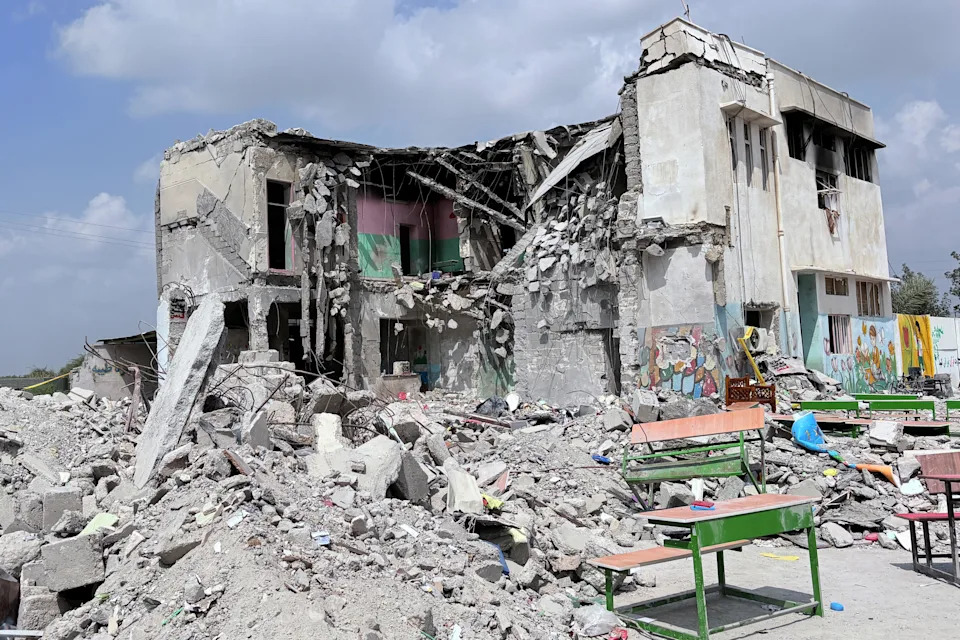
Iranian state media said more than 165 people, including many students, were killed in a strike on a school in Minab, southern Iran, on Feb. 28, the first day of the U.S.-Israeli war against Iran. Damage is seen in this photo from March 5, 2026. / Credit: Stringer/Anadolu/Getty
Political Fallout, Investigations And Human Costs
In Washington, the Senate advanced a resolution to limit the president's war powers in Iran for the first time, a procedural step that signals congressional concern even as a presidential veto remains likely. In Israel, videos showing far-right Minister Itamar Ben-Gvir mocking detained flotilla activists prompted diplomatic complaints from Italy and domestic rebukes from other Israeli officials.
Humanitarian and legal questions persist. Iran denounced a U.S. claim that a girls' school struck on the first day of the war was located on a missile facility as an "appalling lie," while U.S. military officials said investigations into the strike remain ongoing. Lebanon's health ministry reported more than 3,000 killed and over 9,000 wounded in Israeli attacks since March 2, illustrating the conflict's continued human toll.
Other Notable Developments
- Iranian authorities have detained public figures critical of the regime, including ex-goalkeeper Mohammad Rashid Mazaheri, according to family and state media reports.
- China and Russia condemned U.S.-Israeli strikes and called for a comprehensive ceasefire, with leaders signaling readiness to assist diplomatic efforts.
- Reports that the U.S. and Israel sought to free former president Mahmoud Ahmadinejad to lead a post-conflict Iran were disputed by state-aligned outlets; claims remain unconfirmed.
The situation remains fluid: diplomatic channels are active while military forces in the region remain on high alert, and both sides continue to make public statements that could shape the next phase of negotiations or escalation.
Help us improve.