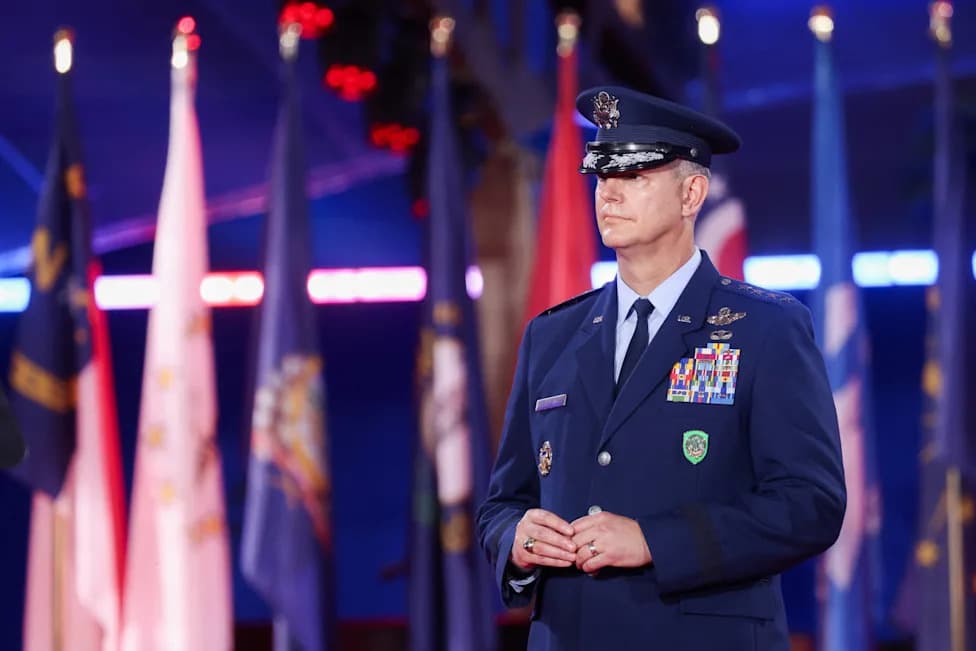
Dutch Prime Minister Mark Rutte said planned U.S. reductions in Europe will be phased in gradually and 'will not have an impact on NATO's defense plans.' The Pentagon has reduced Brigade Combat Teams in Europe from four to three and delayed a deployment of about 4,000 troops to Poland, while withdrawing roughly 5,000 troops from Germany. Rutte urged Europe and Canada to shoulder more conventional defense responsibilities as NATO leaders stress the changes will be managed over time.
Rutte: U.S. Troop Pullback Won't Weaken NATO — Europe and Canada Must Step Up
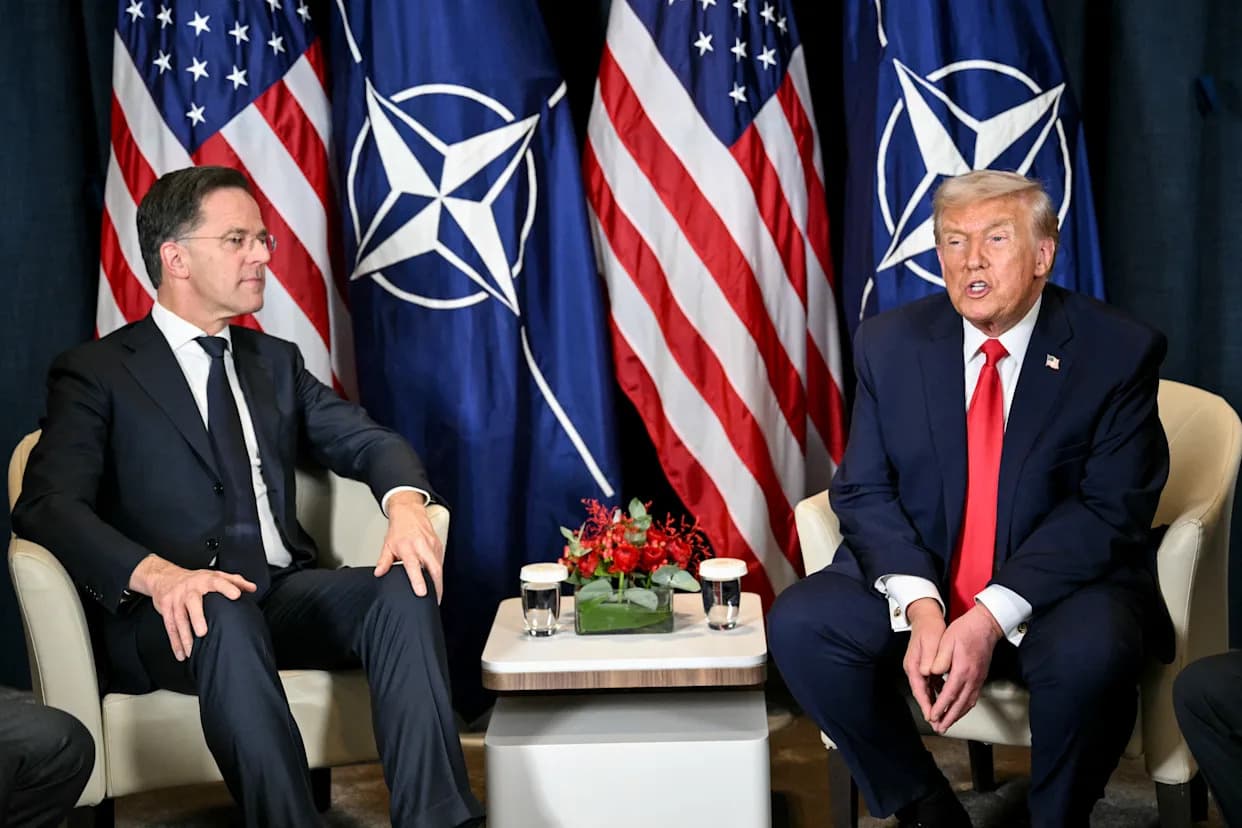
NATO Secretary General Mark Rutte and President Donald Trump at the World Economic Forum in Davos, Switzerland, on Jan. 21, 2026. —Chip Somodevilla—Getty Images
Dutch Prime Minister Mark Rutte, an influential voice in NATO discussions, said the planned reductions of some U.S. forces in Europe will be phased in and 'will not have an impact on NATO's defense plans.' Speaking at a Brussels press conference, Rutte described the drawdown as gradual and 'structured' and urged European allies and Canada to assume greater responsibility for conventional defense.
The Pentagon recently announced it is reducing Brigade Combat Teams (BCTs) in Europe from four to three, returning force posture to roughly 2021 levels. U.S. Central Command describes BCTs as stand‑alone, self‑sufficient tactical units that train and deploy together on rotation. The change was cited as a factor behind a delayed deployment of about 4,000 U.S. troops to Poland earlier this month, and Washington has also confirmed the withdrawal of roughly 5,000 troops from Germany.
Allies Urged To Close The Gap
Rutte framed the U.S. moves as part of a broader strategic recalibration—Washington is reprioritizing its global posture, including a pivot toward Asia—and argued this creates an opportunity for Europe and Canada to 'take a bigger role together with Canada' in conventional defense. 'We need a stronger Europe in a stronger NATO,' he said, calling on allies to invest more in defense capabilities and readiness.
'I'm not popular with you now because I'm defending Donald Trump, but I really believe you can be happy that he is there because he has forced us in Europe to step up,' Rutte told reporters, pointing to recent increases in defense spending pledges.
Reassurances From NATO Leadership
NATO operational leaders have sought to reassure allies that the drawdown will not hollow out collective defense. NATO's top operational commander told reporters he does not expect further large‑scale withdrawals in the near term and described any redeployment as a gradual process that will occur 'over time as allies build their capacity,' potentially taking several years.
Still, the reductions have provoked concern among some U.S. lawmakers and several European capitals. Republican members of the House Armed Services Committee warned the Germany withdrawal could send 'the wrong signal' to Moscow, while critics in Poland called the delayed deployment a 'slap in the face.'
Broader Transatlantic Tensions
The troop changes come amid a broader period of friction between Washington and several European governments over issues ranging from involvement in the Iran conflict to defense spending and even disputes over Greenland. Rutte has at times adopted a conciliatory stance toward U.S. pressure, while defending the need for Europe to invest more in its own defenses.
Analysts say the current moment highlights two parallel trends: the United States adjusting its global force posture and a renewed push for European burden‑sharing. How quickly Europe and Canada can close capability gaps will shape the long‑term impact of the U.S. reductions.
What to Watch: whether European defense spending and readiness commitments accelerate, how NATO coordinates rotational forces and prepositioned equipment, and whether political tensions with key U.S. partners ease.
Help us improve.