
Supreme Court Declines To Reinstate Virginia Referendum. The high court denied an emergency request from Attorney General Jay Jones to block a Virginia Supreme Court ruling that invalidated a voter-approved redistricting measure. The state court ruled 4-3 that the referendum was passed after early voting began and therefore violated Virginia’s constitutional requirement of two intervening elections. As a result, Virginia will hold elections under the existing map (six Democrats, five Republicans) ahead of the midterms.
Supreme Court Denies Emergency Bid; Virginia Redistricting Referendum Remains Voided
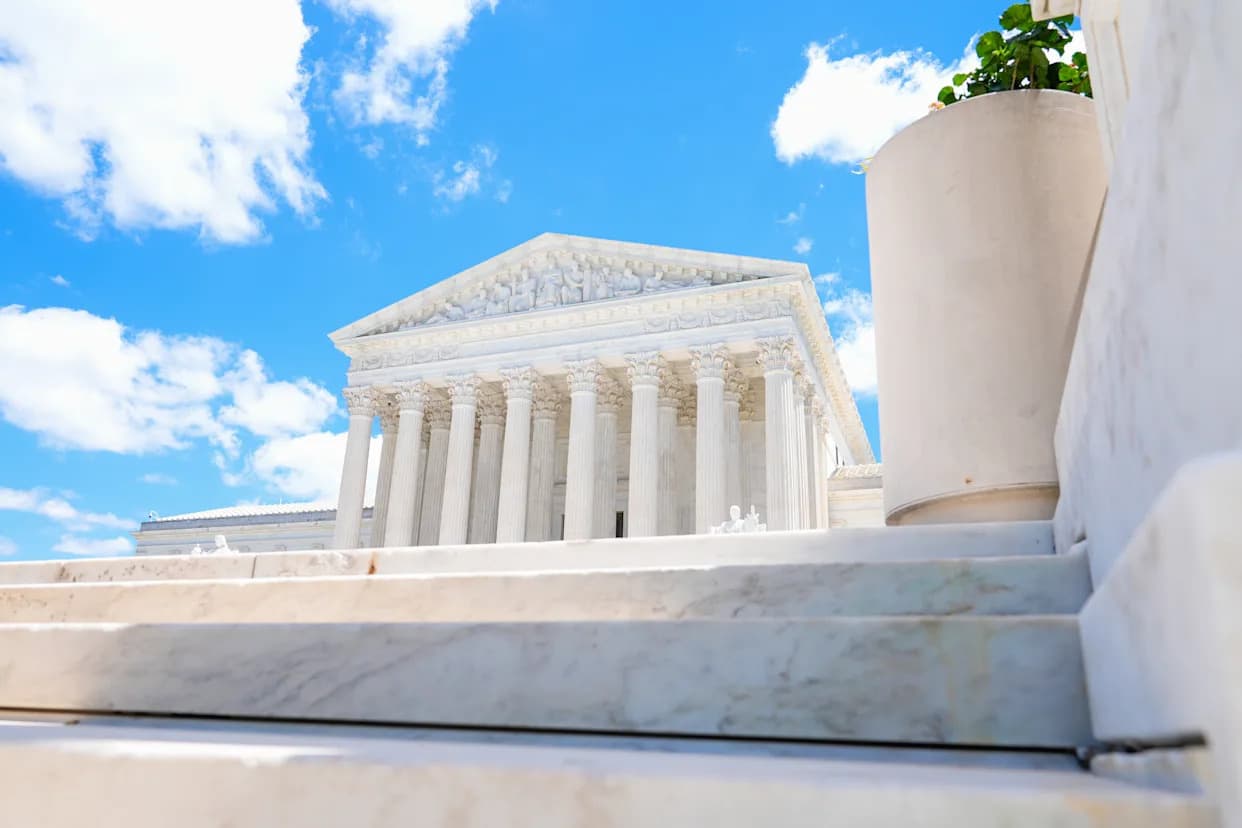
Washington — The U.S. Supreme Court on Friday declined an emergency request from Virginia Attorney General Jay Jones to reinstate a voter-approved redistricting referendum, leaving intact a Virginia Supreme Court decision that invalidated the measure.
Jones had urged the nation’s highest court to block a 4-3 ruling by the Virginia Supreme Court that nullified the referendum on the grounds that it violated the state constitution. A one-sentence order issued shortly after Jones filed his final brief said Chief Justice John Roberts referred the stay request to the full court, which then denied relief. No justice noted any dissent or filed an opinion explaining the denial.
Why the Referendum Was Tossed
The Virginia Supreme Court concluded the referendum was improper because the legislature passed the measure after early voting had already begun last year. Under Virginia’s constitution, amendments of this type require two intervening elections before taking effect — a timing requirement the state court said had not been met.
Jones argued the state court’s ruling was "interwoven" with an erroneous reading of federal law and that the decision effectively overrode the legislature’s intent in violation of the U.S. Constitution.
Legal analysts widely characterized the emergency appeal as a longshot because it rested largely on the Virginia court’s interpretation of state constitutional law. Federal courts typically defer to state high courts on issues of state law, making relief from the U.S. Supreme Court unlikely in such cases.
Practical Impact
With the Supreme Court’s refusal, Virginia will conduct upcoming elections under the existing congressional map, which currently yields a House delegation of six Democrats and five Republicans. Democrats had hoped the referendum would redraw districts to offset Republican gains after mid-decade redistricting efforts by GOP-controlled legislatures aimed at increasing Republican representation.
The decision narrows options for Democrats seeking to counter gerrymandering gains before the midterm elections and leaves the question of the state’s map settled — at least for now — by state-court interpretation of Virginia’s constitution.
A spokesperson for Attorney General Jones did not immediately respond to requests for comment.
Help us improve.





















