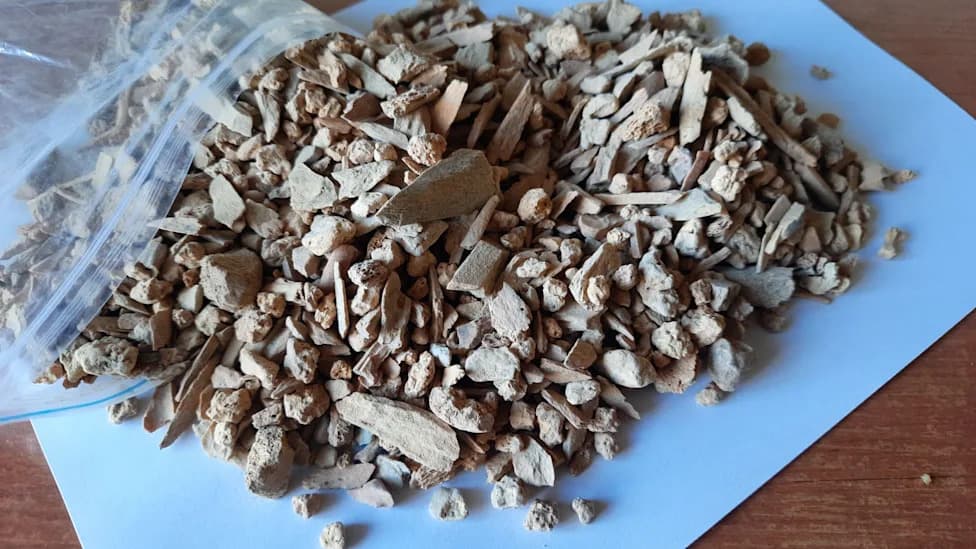
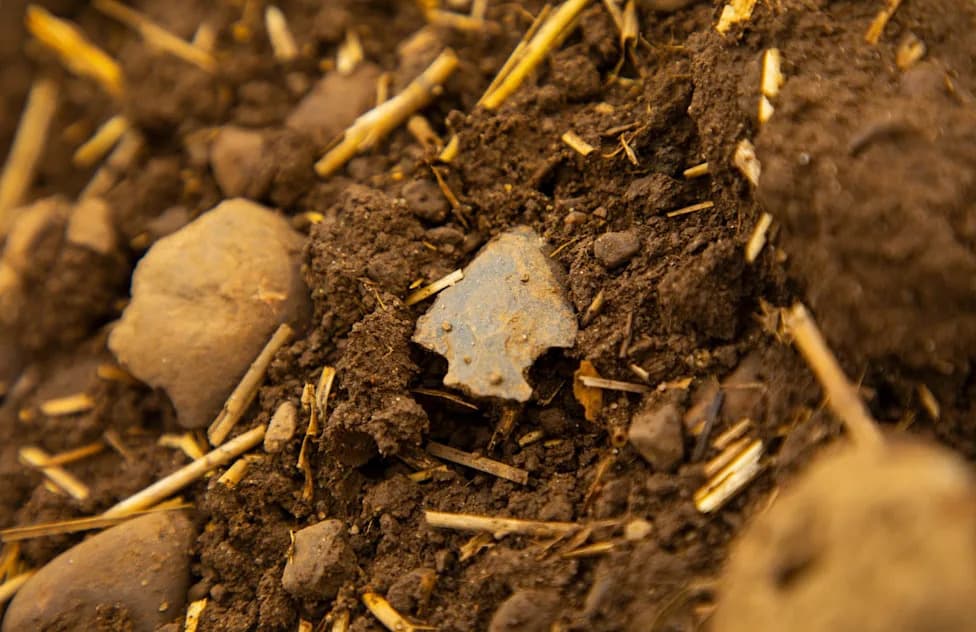
New research reframes horse domestication as a prolonged, regionally varied process rather than a single event around 2200–2100 BCE. Archaeological and molecular evidence from Botai (c. 3500–3100 BCE), Yamnaya sites (c. 3200–2600 BCE), and other Eurasian regions indicates people were corralling, milking, and likely riding horses by the fourth millennium BCE. Genetic data show a later DOM2 expansion, but earlier regional lineages (DOM1, DOM3) point to parallel experiments that enabled increased mobility, migrations, and the spread of languages.
Humans Rode and Managed Horses Millennia Before Full Domestication
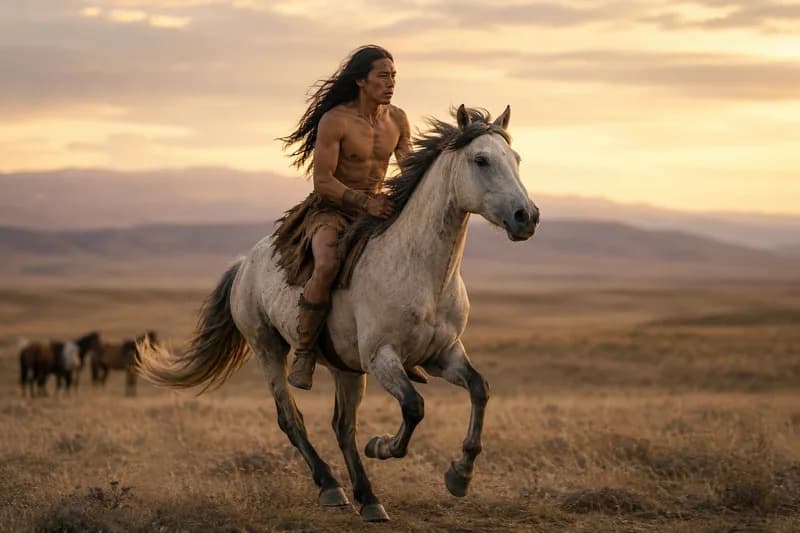
New research argues horse domestication began centuries before the DOM2 lineage spread across Eurasia. (CREDIT: Wikimedia / CC BY-SA 4.0)
New research argues that horse domestication was not a single, sudden event around 2200–2100 BCE but a long, uneven process. Archaeological, skeletal, molecular, and genetic evidence indicates people across Eurasia were managing, milking, and likely riding horses as early as the fourth millennium BCE.
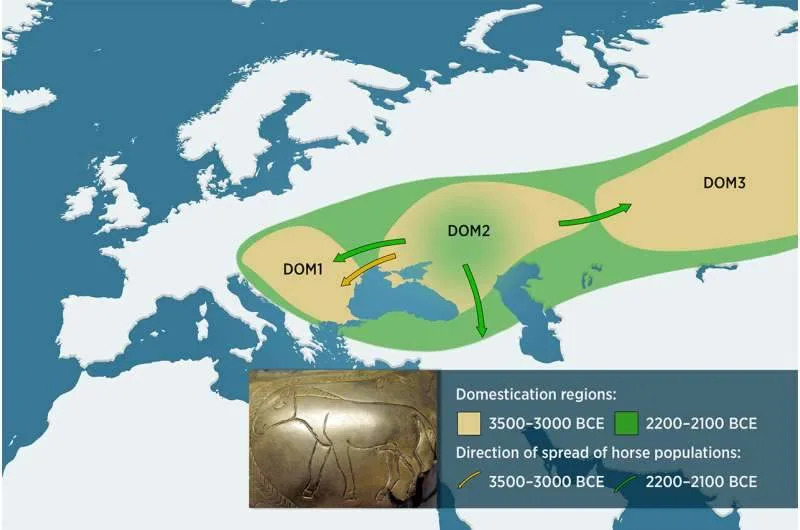
Archaeological, osteo-zoological and ancient DNA evidence reveals that three distinct horse populations – DOM1, DOM2, and DOM3 – once ranged from western Siberia to Central Europe. (CREDIT: Jani Närhi)
Early Evidence: Botai and Beyond
One of the clearest early cases comes from Botai (modern Kazakhstan), dated to roughly 3500–3100 BCE. At Botai, horses account for about 99% of consumed animal remains and the site shows signs of corralling, butchery, and dairying. Dental wear on some horse premolars resembles patterns produced by bit use in experimental and modern comparisons, a hint that humans were handling—and possibly riding—horses in this period.
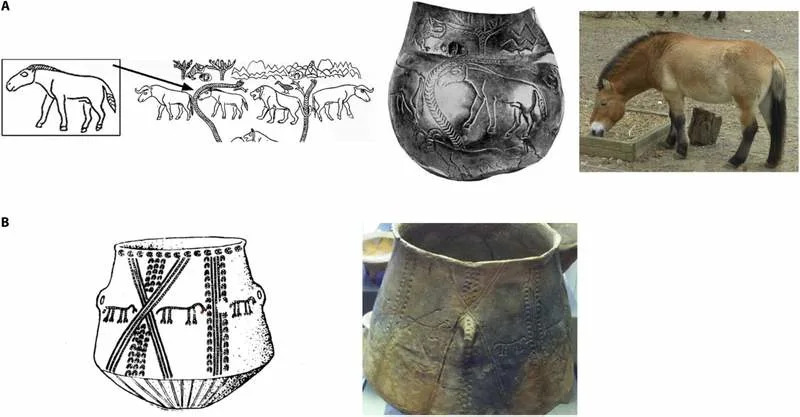
Early horse representations in the steppes. (CREDIT: Science Advances)
Yamnaya And Steppe Indicators
Farther west, Yamnaya communities on the Pontic–Caspian steppe (c. 3200–2600 BCE) present multiple lines of evidence for horse management. Horse bones appear in settlements, graves, and kurgan fills; horse fat residues were found on 37% of analyzed ceramic sherds at the Mykhailivka site; and distinctive horse-milk peptides were recovered from dental calculus of two Yamnaya individuals (dated c. 3345–3096 BCE and 2881–2633 BCE). Together these signals indicate that domesticated mares were integrated into some Yamnaya herds.
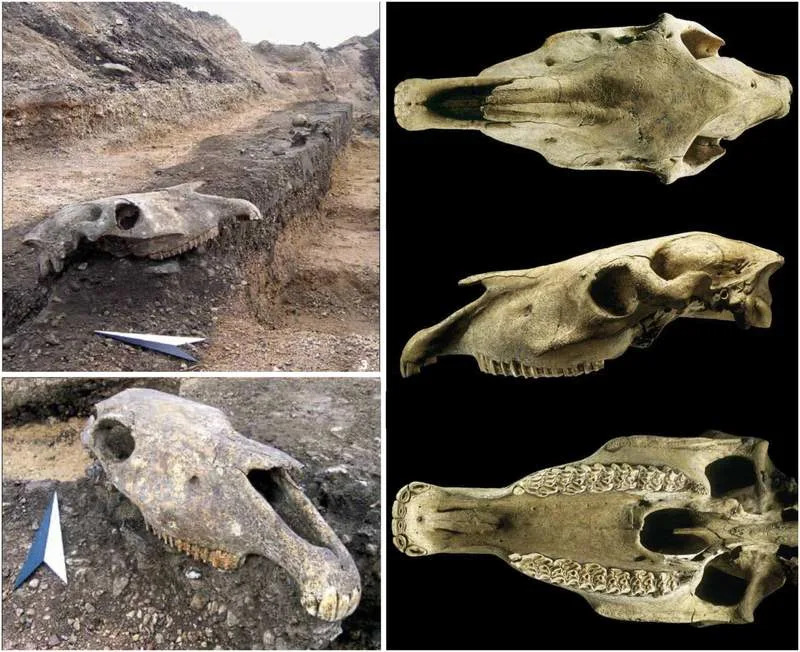
The skull of the Salzmünde tobiano horse, Germany. (CREDIT: Science Advances)
Skeletal Signs Of Riding
Human skeletons add to the case. A study of 217 individuals from Southeast Europe (fifth–second millennia BCE) used six skeletal markers associated with habitual riding. Several Yamnaya individuals displayed multiple riding-related traits, and researchers estimate roughly 20% of the analyzed Yamnaya sample may have ridden horses habitually. No single marker proves riding, but combinations of pelvic, femoral, and lower-spine changes—plus trauma consistent with falls—make habitual riding a plausible explanation.
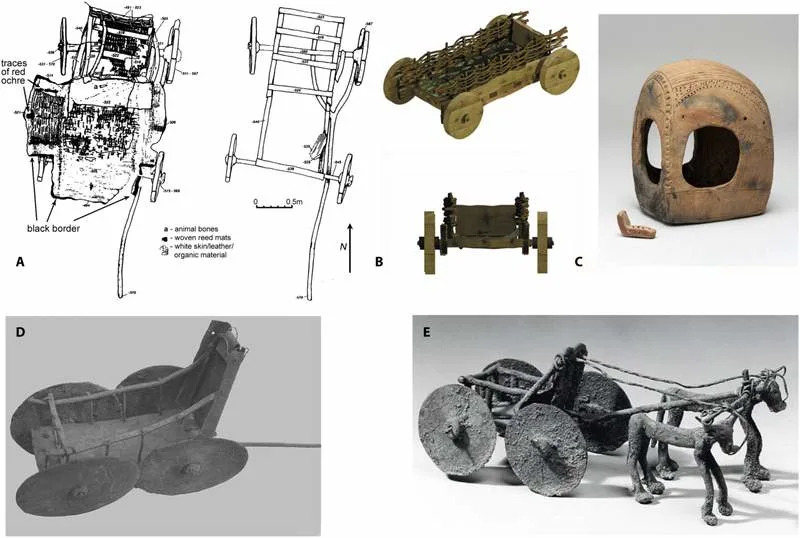
Wagons in the third millennium BCE record. (CREDIT: Science Advances)
Genetics And Multiple Domestication Lineages
Genetic studies show a major later expansion of a lineage called DOM2 after about 2200–2100 BCE, associated with traits favoring calmer temperament and greater back endurance. The new perspective does not deny that DOM2 became dominant; rather, it emphasizes earlier, regional experiments. Researchers describe multiple lineages (often labeled DOM1 in Central Asia, DOM2 on the Pontic–Caspian steppe, and a DOM3 group in parts of Europe and Anatolia) and argue domestication progressed through parallel, regionally variable steps.
Implications For Mobility, Migration, And Language
Practically, horses and wagons performed different tasks: wagons moved heavy loads and households, horses provided speed and scouting capacity. Early riding—already emerging by the late fourth and early third millennia BCE—could have amplified steppe mobility and helped long-distance movements attributed to Yamnaya and related groups. That mobility is implicated in major population shifts across Eurasia (c. 3200–2600 BCE) and is often linked to the spread of Proto-Indo-European languages.
Wild Versus Domestic
Today there are no truly wild horse populations; even Przewalski’s horse is now understood to derive from early domesticated stocks. The boundary between wild and domestic began to blur thousands of years ago, and domestication should be seen as a protracted, regionally diverse process with false starts and local experiments.
“Horses were already being used in sophisticated, widespread ways before we could pin down full domestication. That gap reshapes how we understand human history,” said Professor Volker Heyd of the University of Helsinki, co-lead author of the study.
Publication: The research is published in Science Advances.
Help us improve.