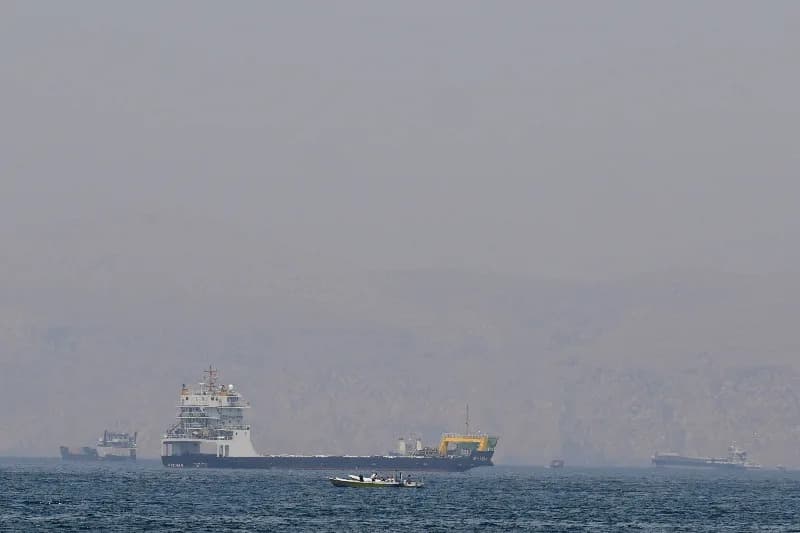
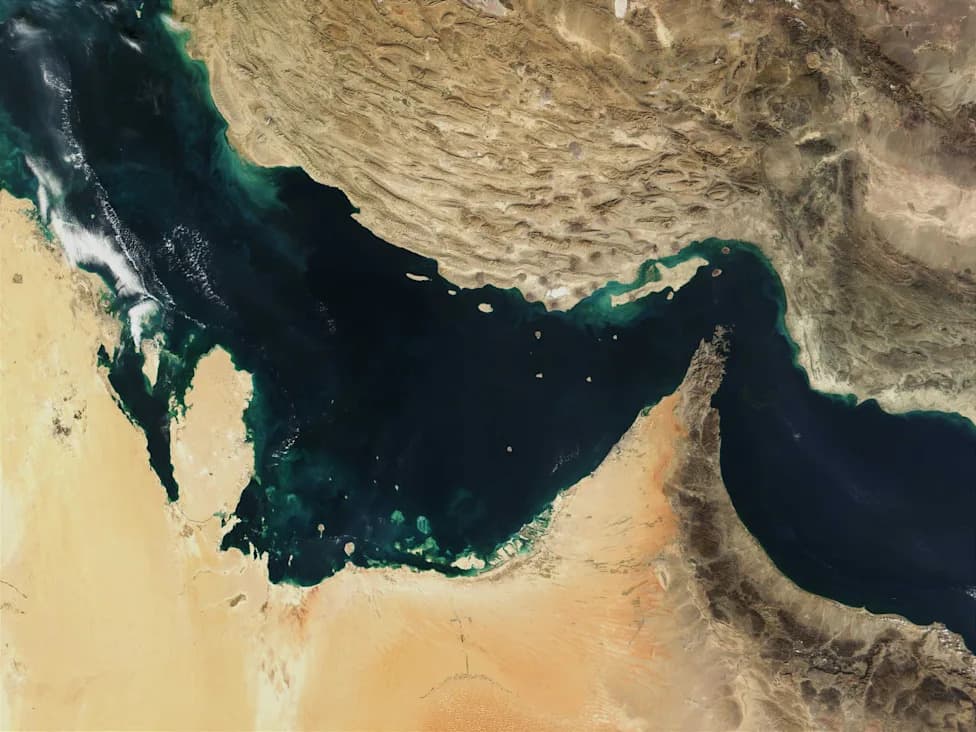
Ships detouring around the Strait of Hormuz are increasingly passing through the Somali basin, where pirate attacks have risen in recent weeks. A May 12 UKMTO advisory says at least three vessels — two tankers and a cargo/cement ship — were seized between April 21 and May 2. Experts attribute the resurgence to redeployed naval forces, opportunistic pirate networks and Somalia’s long‑term governance gaps; Operation Atalanta says it remains active in the area.
Somali Piracy Surges As Iran Conflict Forces Ships Onto High‑Risk Detours
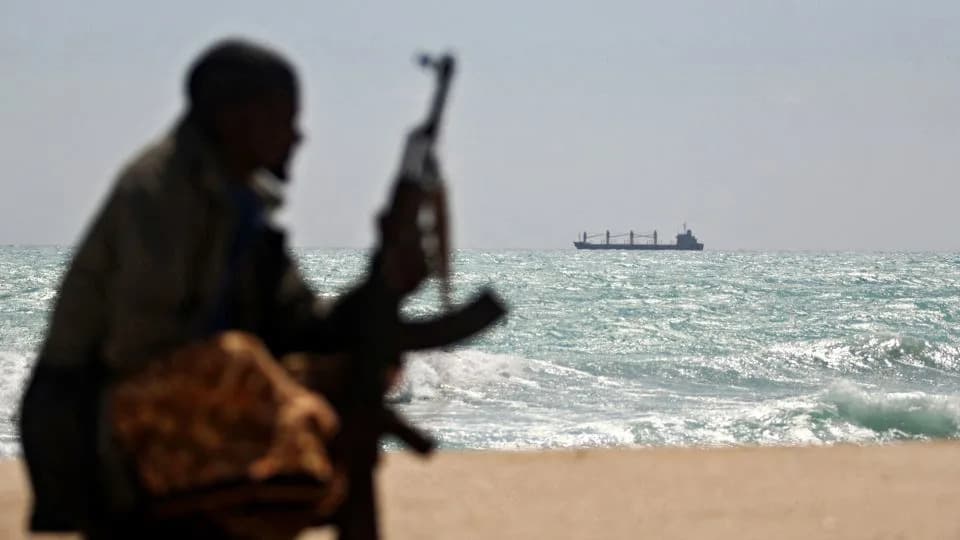
An armed Somali pirate is seen on the coastline while a Greek cargo ship is anchored off the shores of Hobyo, in northeastern Somalia, after being held by pirates in January 2010. - Mohamad Dahir/AFP/Getty Images
Commercial vessels rerouting around the Strait of Hormuz to avoid the Iran‑linked conflict are taking much longer voyages around Africa’s Cape of Good Hope — and many are now transiting the Somali basin, a region with a renewed wave of pirate activity.
Rerouting, Costs and Risk
The Strait of Hormuz handles roughly 20% of the world's oil, natural gas and critical raw materials. With that route constrained by regional hostilities, carriers face detours that add weeks to transit times and an estimated $1 million in extra costs per vessel from higher fuel use, increased insurance and operational expenses. Those longer routes also concentrate traffic in waters that were once a global piracy hotspot.
Recent Hijackings
Maritime authorities report a series of recent attacks. A May 12 advisory from the United Kingdom Maritime Trade Operations (UKMTO) said Somali pirates are holding at least three vessels — two oil tankers and a general cargo/cement carrier — captured between April 21 and May 2. One of the vessels was seized off Yemen and diverted toward Somalia; the two countries share a maritime border that complicates security operations.
Why Piracy Is Reemerging
Analysts link the uptick to a mix of external and internal factors: redeployment of naval patrols to the Persian Gulf, opportunistic pirate networks, and Somalia’s long‑running governance gaps. Since the early 1990s Somalia has lacked a fully functioning central government, a vacuum that allowed piracy to flourish in the 2000s and early 2010s. At its peak in 2011, Somali piracy produced 237 incidents and cost the global economy an estimated $7 billion; more than 3,800 mariners suffered attacks that year.
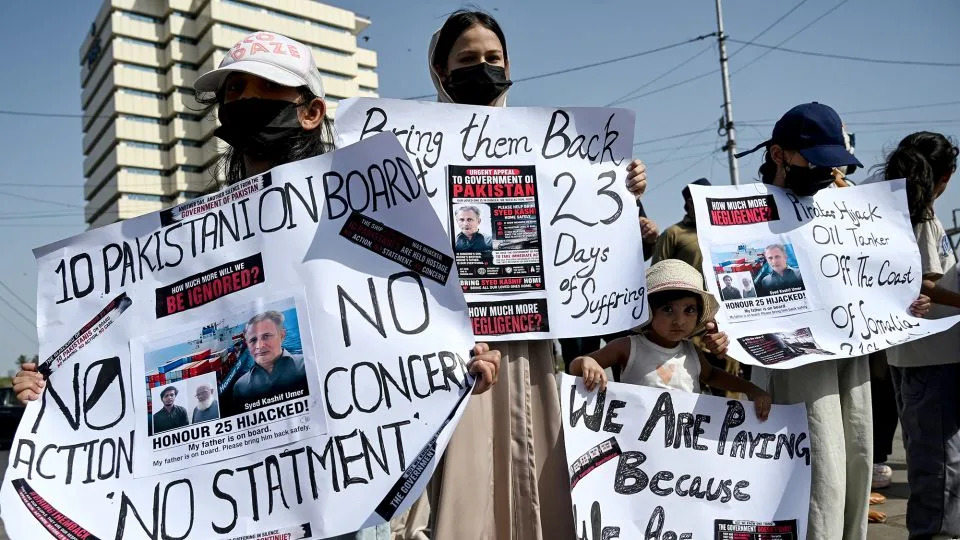
Families of Pakistani crew members of an oil tanker seized by pirates in Somalia demonstrate during a protest in Karachi, Pakistan, on Wednesday. - Rizwan Tabassum/AFP/Getty Images
"Recent piracy incidents stem from opportunism, with shifting international maritime shipping routes driven by geopolitical crises," said Somali lawmaker Mohamed Dini, adding that current regional tensions have given pirate networks "a pretext to remobilize."
"Redeployment from the region to concentrate forces in the Persian Gulf has created opportunities," said Manu Lekunze, an international relations lecturer at the University of Aberdeen.
International Response
The ICC International Maritime Bureau reported only a small number of incidents off Somalia in early 2025 and attributed the limited resurgence, in part, to the deterrent effect of sustained naval patrols. The European Union’s Operation Atalanta confirmed a recent uptick but said it continues to operate in the region; the force said it forced pirates to abandon an Iranian‑flagged dhow during a recent operation.
Operation Atalanta emphasized coordination with international partners and Somali authorities and urged vessels transiting the area to maintain heightened vigilance and report suspicious activity.
Outlook
Security analysts warn the situation could worsen if naval assets remain concentrated in the Persian Gulf and if pirate action groups — reportedly active in northern Somalia — continue to exploit commercial traffic. Shipping firms, naval forces and coastal governments face an urgent need to coordinate patrols, share intelligence and adopt best practices to protect crews, cargo and global supply chains.
Practical guidance: masters and operators should follow UKMTO guidance, report suspicious approaches immediately, and consider additional onboard and convoy protections when transiting high‑risk areas.
Help us improve.