Judge Darrin P. Gayles denied former President Donald Trump’s request for discovery in his 2025 defamation suit against The Wall Street Journal, finding Trump lacked an operative complaint after an earlier dismissal. The lawsuit accused the Journal of falsely reporting that Trump contributed a letter and lewd drawing to Jeffrey Epstein’s birthday book; the House Oversight Committee later released a page attributed to Trump that matched the Journal’s description. Gayles said allowing discovery now would enable "expensive yet groundless litigation" and undermine the actual malice standard that protects robust reporting. Trump was given a short extension to file an amended complaint, due May 27.
Federal Judge Denies Trump’s Discovery Request in WSJ Defamation Case, Citing 'Expensive Yet Groundless Litigation'
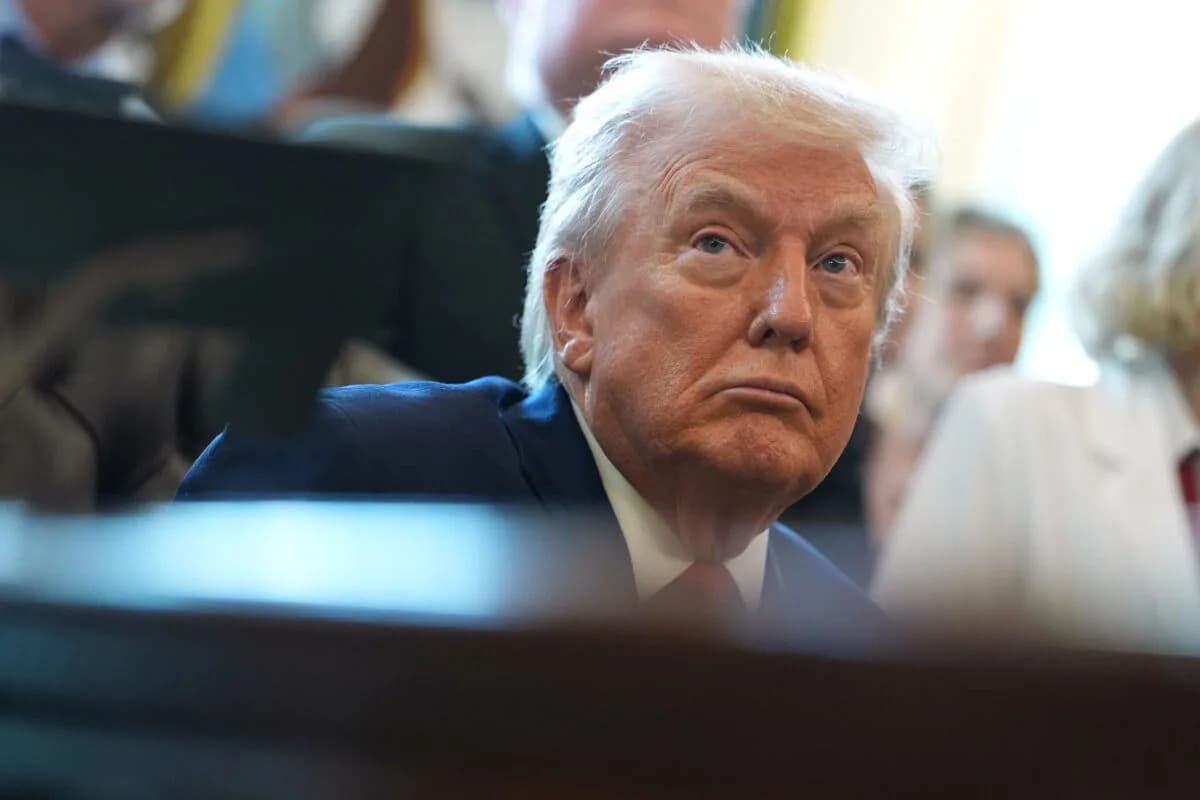
Donald Trump in Oval Office
A federal judge in Florida has denied former President Donald Trump’s request for discovery in his 2025 defamation lawsuit against The Wall Street Journal, while granting a short extension for filing an amended complaint.
The suit, filed in 2025, named The Wall Street Journal, its publisher Dow Jones, parent company News Corp, owner Rupert Murdoch, News Corp CEO Robert Thomson, and reporters Khadeeja Safdar and Joe Palazzolo. The complaint challenged a July 17, 2025 Journal article that reported Trump had contributed a letter and a crude drawing to a birthday book compiled for Jeffrey Epstein by Ghislaine Maxwell.
Trump denied the article’s account, threatened legal action and filed suit the following day. Legal analysts from the outset questioned the suit’s prospects because Trump, as a public figure, must plausibly allege that the defendants acted with "actual malice"—a high standard that requires showing the publisher knew the story was false or acted with reckless disregard for the truth.
In September, the House Oversight Committee released materials from Epstein’s estate, including the birthday book. Those materials included a page attributed to Trump with a signature, a message and a drawing of a nude female figure—details that matched the Journal’s reporting.
Last month, U.S. District Judge Darrin P. Gayles (S.D. Fla.) dismissed Trump’s original complaint for failing to plausibly allege actual malice, but he permitted Trump to file an amended complaint. Trump then asked for additional time and sought limited discovery into how defendants allegedly acted with actual malice, how they verified the letter and drawing, and whether they purposefully avoided the truth.
In a three-page order, Judge Gayles rejected the discovery request. He said Trump had no operative complaint after the dismissal and was effectively seeking discovery to help him draft a viable complaint—an approach the court deemed improper. The judge emphasized that allowing discovery at that stage would undermine the purpose of the actual malice standard.
"There is a powerful interest in ensuring that free speech is not unduly burdened by the necessity of defending expensive yet groundless litigation," Gayles wrote, explaining that the actual malice standard gives publishers a "breathing space" to report robustly on public figures without facing burdensome discovery in weak suits.
Gayles concluded that permitting discovery when the initial pleading failed to meet the required standard would be the type of "expensive yet groundless litigation" the Eleventh Circuit has warned against. He denied the discovery motion but granted a short extension: Trump now has until May 27 to file an amended complaint.
The order closes the immediate path to discovery while preserving the plaintiff’s opportunity to try to cure the pleading defects in an amended filing.
Help us improve.