
German Chancellor Friedrich Merz said Europe will work to keep NATO united despite strains with the United States that have emerged over the Iran conflict. He emphasized a shared goal with Washington to end the fighting and prevent Iran from acquiring nuclear weapons, calling for "unity of purpose" rather than a narrow focus on troop numbers. Merz also noted that Sweden and Finland have bolstered NATO's European pillar, and he expressed concern over Slovakian PM Robert Fico's reported trip to Moscow.
Merz Urges Unity: Europe Backs Strong NATO and Shares U.S. Goal To End Iran Conflict
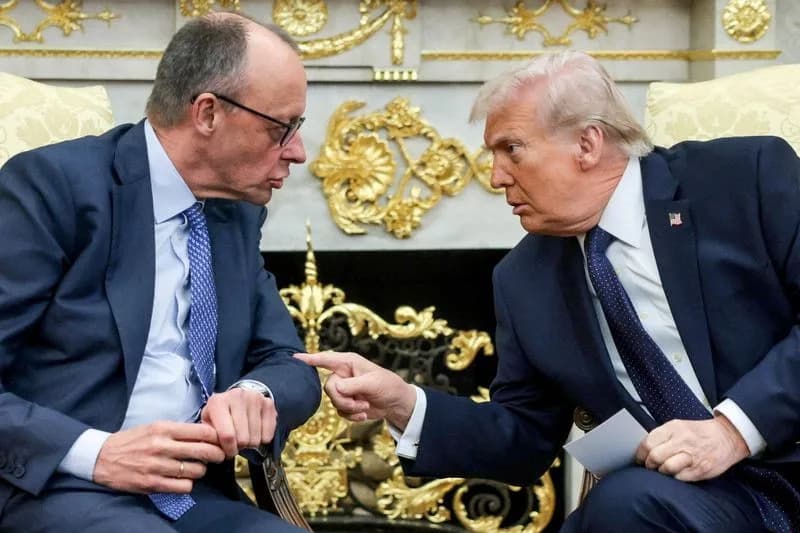
FILE PHOTO: U.S. President Donald Trump and German Chancellor Friedrich Merz meet in the Oval Office at the White House in Washington, D.C., U.S., March 3, 2026. REUTERS/Jonathan Ernst//File Photo
German Chancellor Friedrich Merz told reporters in Stockholm on May 9 that Europe is committed to keeping NATO functioning and united, even as differences exposed by the Iran conflict have tested relations with the United States.
Merz acknowledged mounting tensions between President Donald Trump’s administration and European NATO partners, which have been amplified not only by U.S. criticism of defence spending and migration policy but also by disagreements over the military campaign against Iran that began at the end of February.
"We are really willing to keep this alliance alive for the future,"Merz said at a joint press conference with Swedish Prime Minister Ulf Kristersson, noting that Sweden and Finland have strengthened NATO’s European pillar.
"We know that there are some differences. We know that we are seeing challenges, all of us, but our final goal is to bring this conflict to an end and to guarantee that Iran is not able to produce nuclear weapons,"he added. "And this goal is a common goal between America and Europe."
Merz stressed that the central issue is not raw troop numbers but a "unity of purpose" across the alliance. His comments followed a diplomatic flare-up after he said last month that Iran was "humiliating" the United States. In response, President Trump ordered the withdrawal of 5,000 U.S. troops and cancelled a planned deployment of long-range Tomahawk missiles.
Merz argued it remains in America's interest to have a robust European military contribution within NATO: "We are remaining interested and highly interested in having the American army and the American military support on our side," he said.
Across Europe, countries including Germany have increased defence spending after years of underinvestment, rebuilding armed forces in the face of what Merz described as an imminent threat from Russia. Speaking as Russian President Vladimir Putin attended a Moscow parade marking the Soviet victory in World War II, Merz said he was disappointed that Slovakian Prime Minister Robert Fico had reportedly travelled to Moscow and intended to raise "this day in Moscow" with him. Fico later said he stayed away from the parade itself.
Context
The comments highlight ongoing friction within NATO over strategy and burden-sharing, while underscoring a shared Western objective to prevent Iran from developing nuclear weapons. Merz’s appeal for unity reflects efforts to preserve alliance cohesion amid divergent national responses to the Iran campaign and to Russia’s growing assertiveness.
Help us improve.





















