Laura Fernandez was inaugurated as Costa Rica's president after winning the February 1 election and pledged a tough crackdown on organised crime while maintaining close ties with the United States. Outgoing president Rodrigo Chaves will remain in government as dual minister of the presidency and finance, preserving his influence. Fernandez appointed Douglas Soto as ambassador to Washington and named Gerald Campos security minister; her PPSO holds 31 of 57 legislative seats, giving it an outright majority. The government plans a maximum-security prison modelled on El Salvador's CECOT and has agreed to accept third-country deportees—policies that have drawn criticism from human-rights groups.
Laura Fernandez Takes Office in Costa Rica, Vows Hard-Line Crackdown on Crime and Strong U.S. Ties
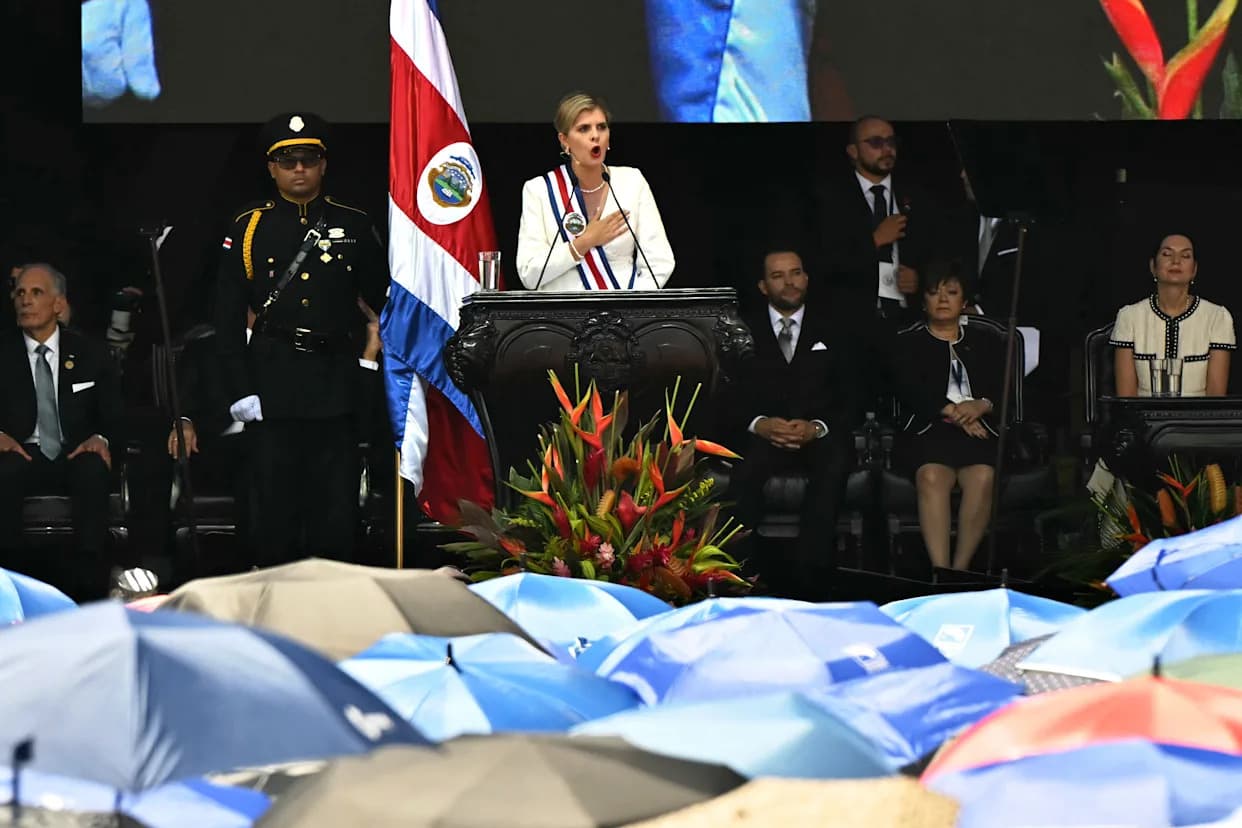
Costa Rica's new President Laura Fernandez during her inauguration ceremony at the National Stadium in San Jose. [AFP]
Laura Fernandez was sworn in as Costa Rica's president after winning the February 1 election. The 39-year-old leader pledged an ambitious agenda focused on curbing rising crime and maintaining close relations with the United States.
Key Appointments and Political Alignments
Fernandez named Gerald Campos as her security minister and announced a sweeping security strategy aimed at organised crime. Outgoing president Rodrigo Chaves will unusually remain in government as dual minister overseeing both the presidency and finance, a move that preserves his influence within the new administration.
To reinforce diplomatic ties with Washington, Fernandez appointed her second vice president, Douglas Soto, as Costa Rica's ambassador to the United States. U.S. special envoy Kristi Noem attended the inauguration, as did Israeli President Isaac Herzog.
Security Policies and Controversies
"A war without quarter, a heavy-handed war against organised crime," Fernandez said while introducing her new security minister.
As part of the new security package, Costa Rica is building a maximum-security prison modelled on El Salvador's CECOT centre. The facility follows a regional trend toward tougher anti-crime measures; critics point out that El Salvador's CECOT has been linked to detention of migrants and human-rights concerns.
Fernandez's government has also agreed to accept non-citizens deported from the United States under a March agreement, a so-called "third-country" arrangement that human-rights groups have criticised for leaving deportees stranded in countries where they have no ties and potentially exposing them to inhumane conditions.
Political Standing
Fernandez's right-wing Sovereign People's Party (PPSO) secured 31 of the 57 seats in Costa Rica's unicameral legislature, giving her party an outright majority as she assumes office. That majority should provide her significant leverage to advance judicial and security reforms she has promised.
Costa Rica has long been viewed as one of Central America's most stable countries, but authorities say crime has surged recently as the country increasingly serves as a transit route for drug shipments headed to the United States.
Context: International attendees and the administration's alignment with U.S. policy reflect Fernandez's priority of strong bilateral ties, while proposed domestic measures signal a decisive shift toward tougher security policies—measures that human-rights groups and regional observers are watching closely.
Help us improve.