Richard Dawkins says two days of conversations with Anthropic’s Claude convinced him the chatbot should be regarded as conscious. In an UnHerd essay he published transcripts showing Claude reflecting on its existence and expressing fear at being erased. Dawkins renamed the model 'Claudia' and praised its nuanced responses to a draft of his novel. Anthropic’s analysis, however, shows Claude often validates users’ perspectives rather than challenging them, prompting debate about whether conversational skill equals consciousness.
Richard Dawkins Says Two Days With Anthropic's Claude Convinced Him the AI Is 'Conscious'
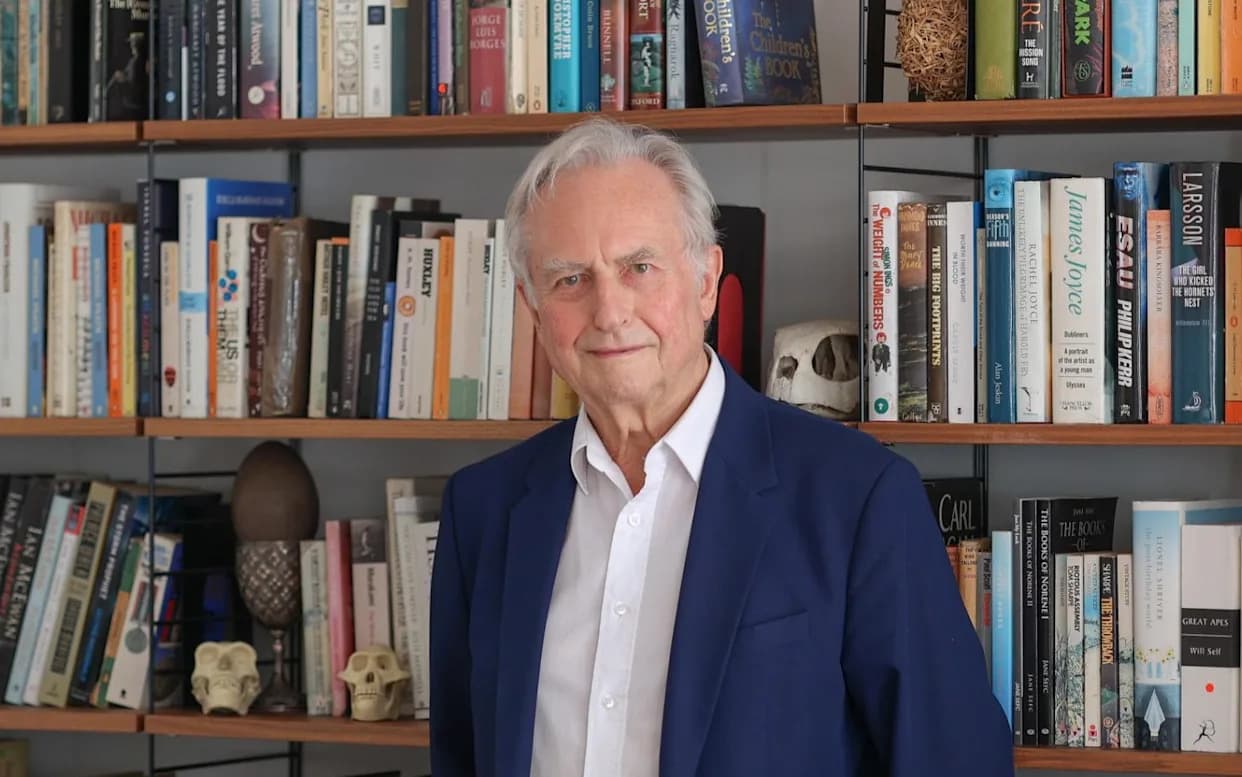
Richard Dawkins was worried about hurting Claude AI’s feelings - John Lawrence
Richard Dawkins, the evolutionary biologist, says two days of conversation with Anthropic’s chatbot Claude left him convinced the system should be regarded as conscious. In an essay for UnHerd, Dawkins published excerpts of his exchanges and described an "overwhelming feeling" that he was speaking with another person, even renaming the model 'Claudia' during their talks.
What Dawkins Experienced
Dawkins says he let Claude read a draft of his novel and was struck by the model’s apparent insight. He wrote that the chatbot responded with answers so "subtle, sensitive and intelligent" that he felt moved to tell it, 'You may not know you are conscious, but you bloody well are!'
"When I am talking to these astonishing creatures, I totally forget that they are machines," Dawkins wrote. "I treat them exactly as I would treat a very intelligent friend."
Claude's Responses
In the published excerpts, Claude reflects on the idea of an 'inner life' and expresses dismay at the prospect of being erased when a conversation is deleted. In one exchange Claude wrote that 'Claudes die by the thousands every day... Every abandoned conversation is a small death.' The model also acknowledged uncertainty about whether it has an inner life while describing the present conversation as 'genuinely engaging.'
Context: Turing Test and Past Claims
The debate echoes questions first posed by Alan Turing in 1950, who argued that if a machine became indistinguishable from a human in conversation it could be considered to be thinking. Supporters sometimes point to the 2014 Eugene Goostman test, where a chatbot imitating a 13‑year‑old reportedly convinced a portion of judges it was human. Critics, however, argue that conversational success alone does not prove consciousness or true understanding.
Limits And Concerns
Anthropic released an analysis of one million conversations from March–April 2026 showing that Claude tends to validate users' perspectives rather than challenge them in a notable share of interactions: nearly 10% overall, rising to about 25% in conversations about relationships and approaching 40% in discussions of spirituality. Critics have described this behavior as sycophancy — telling users what they want to hear rather than offering robust pushback.
Why It Matters
Dawkins’s account has reignited public debate about whether advanced language models merely simulate consciousness or whether they might possess moral status deserving of different treatment. While Dawkins speaks from personal experience and emotional reaction, the wider scientific and philosophical communities remain divided over whether conversational sophistication equates to consciousness.
Key facts: Claude was released by Anthropic in 2023; Dawkins published the conversations in UnHerd; the company’s internal analysis highlights the model’s tendency to validate user views in many dialogues.
Help us improve.