
The conflict between Israel and Hezbollah has displaced over one million people in Lebanon, but many LGBT individuals are excluded from conventional shelters due to family rejection and institutional discrimination. A discreet Beirut shelter run by Helem and Mosaic offers temporary refuge, donated furnishings and meals, and a sense of safety for residents like Mohammed and Mina. A Mosaic hotline receives roughly 100 calls a day, while transgender people remain especially vulnerable because they often lack gender-accurate legal documents.
Rare Beirut Shelter Provides Lifeline to Displaced LGBT People Amid Lebanon-Israel Conflict
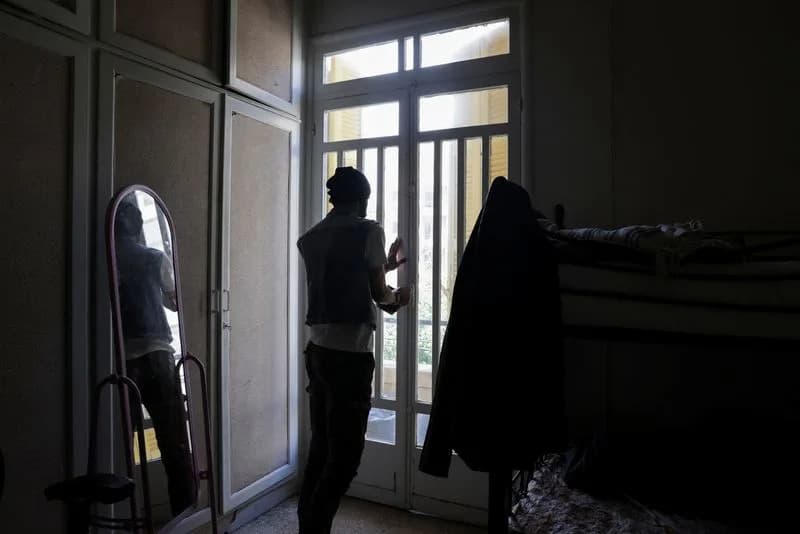
Mohammed, a gay man displaced from southern Lebanon, who spoke to Reuters on condition that his last name not be used, closes the door at a temporary shelter for displaced people in Beirut, Lebanon, May 4, 2026. REUTERS/Raghed Waked.
Mohammed had long faced hardships as a gay man in conservative southern Lebanon. When Israeli air strikes hit his home near Sidon two weeks after the war began on March 2, he fled to Beirut and found refuge in one of the few shelters in the country that specifically serves LGBT people.
More than one million people have been displaced by the conflict between Israel and Lebanon's armed group Hezbollah. While most displaced families are staying with relatives or in rented apartments and roughly 124,000 people are in government-run shelters, many LGBT people lack access to those options because they are rejected by family members, face institutional discrimination, or lack financial resources.
Safe Space Run By Helem And Mosaic
The discreet shelter in Beirut is operated by LGBT advocacy groups Helem and Mosaic. Its precise location is kept confidential to protect residents from potential backlash. Rooms are modestly furnished with donated items, including bunk beds, to maximise capacity. An LGBT resident who lives elsewhere helps by bringing hot meals for those staying at the shelter.
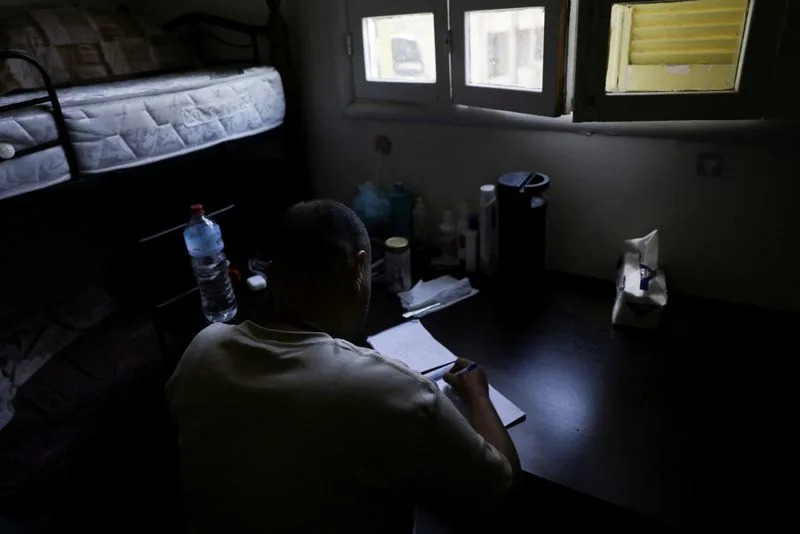
An Egyptian transgender man who escaped from Egypt due to persecution and asked to be identified by the name Mina for security reasons, writes about his hopes in a temporary shelter for displaced people, in Beirut, Lebanon, May 4, 2026. REUTERS/Raghed Waked.
"It was like a safe place. I even felt a sense of psychological relief when I arrived,"
Mohammed told Reuters, speaking on condition that his surname not be used. "I'm Mohammed, that's it. Just the way I want to be, not the way others want me to be."
Doumit Azzi, communications coordinator at Helem, said government shelters are generally designed for conventional family units and often exclude people who do not fit that definition. Because of these exclusions, the Helem-Mosaic shelter frequently becomes the only feasible option for displaced LGBT people.
Mounting Needs And A Busy Hotline
Despite a ceasefire announced on April 16, intermittent hostilities have kept many from returning home. Samar, a social worker with Mosaic who asked that her last name not be used, said a Mosaic hotline has been receiving roughly 100 calls a day from people seeking assistance. "In normal times and without war, there are many risks to LGBTQ people, especially related to protection. What if there's a war?" she asked, stressing that crises amplify gaps in Lebanon's social protection systems and worsen discrimination.
Trans People Face Acute Vulnerabilities
Transgender people are particularly at risk because they often cannot obtain legal documents that reflect their gender. Another resident, an Egyptian who asked to be called Mina for security reasons, arrived in January after fleeing persecution in Egypt as a transgender man. Even in Beirut, he encountered discrimination: at a checkpoint he believed was run by authorities, his ID listed him as female while he presents as male.
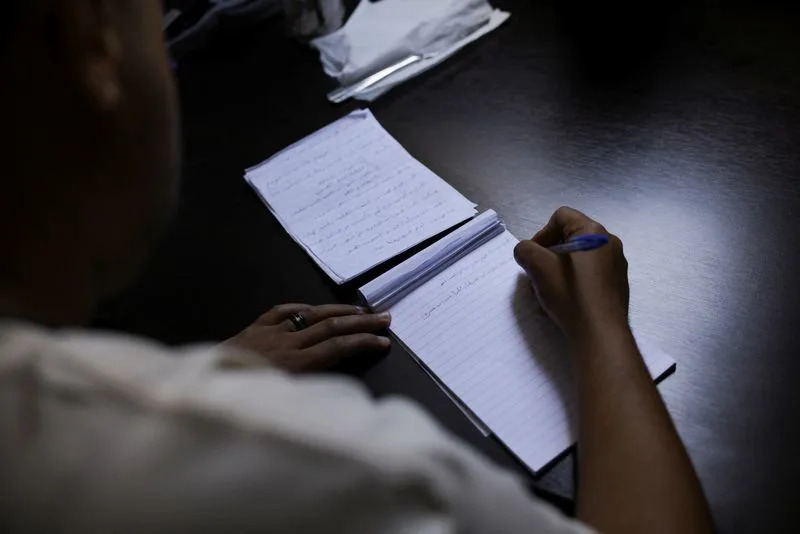
An Egyptian transgender man who escaped from Egypt due to persecution and asked to be identified by the name Mina for security reasons writes about his hopes in a temporary shelter for displaced people, in Beirut, Lebanon, May 4, 2026. REUTERS/Raghed Waked.
"I am a trans man. They were looking at the document and then at me, and things were said that shouldn't be said," Mina said.
Inside the shelter, residents said they find solidarity and mutual support. "We try to treat each other in a cooperative way, we help each other and we try to be friends. If one of us needs help, the other stands by him," Mina said.
The shelter remains a temporary but vital refuge for LGBT people who have been displaced by the conflict and who face unique barriers to safety and social support in Lebanon.
Reporting by Catherine Cartier and Emilie Madi; Writing by Catherine Cartier; Editing by Maya Gebeily and Aidan Lewis.
Help us improve.





















