Five major publishers and author Scott Turow have sued Meta, alleging Mark Zuckerberg personally authorised the mass copying of copyrighted books and articles to train the Llama AI model. The plaintiffs claim millions of works — from textbooks and scientific papers to novels — were used without permission and seek class certification and unspecified damages. The case adds to ongoing litigation over whether using copyrighted material to train AI constitutes fair use, with previous settlements such as Anthropic’s $1.5 billion agreement highlighting the stakes.
Publishers Sue Meta, Allege Zuckerberg Authorized Mass Copyright Copying To Train Llama
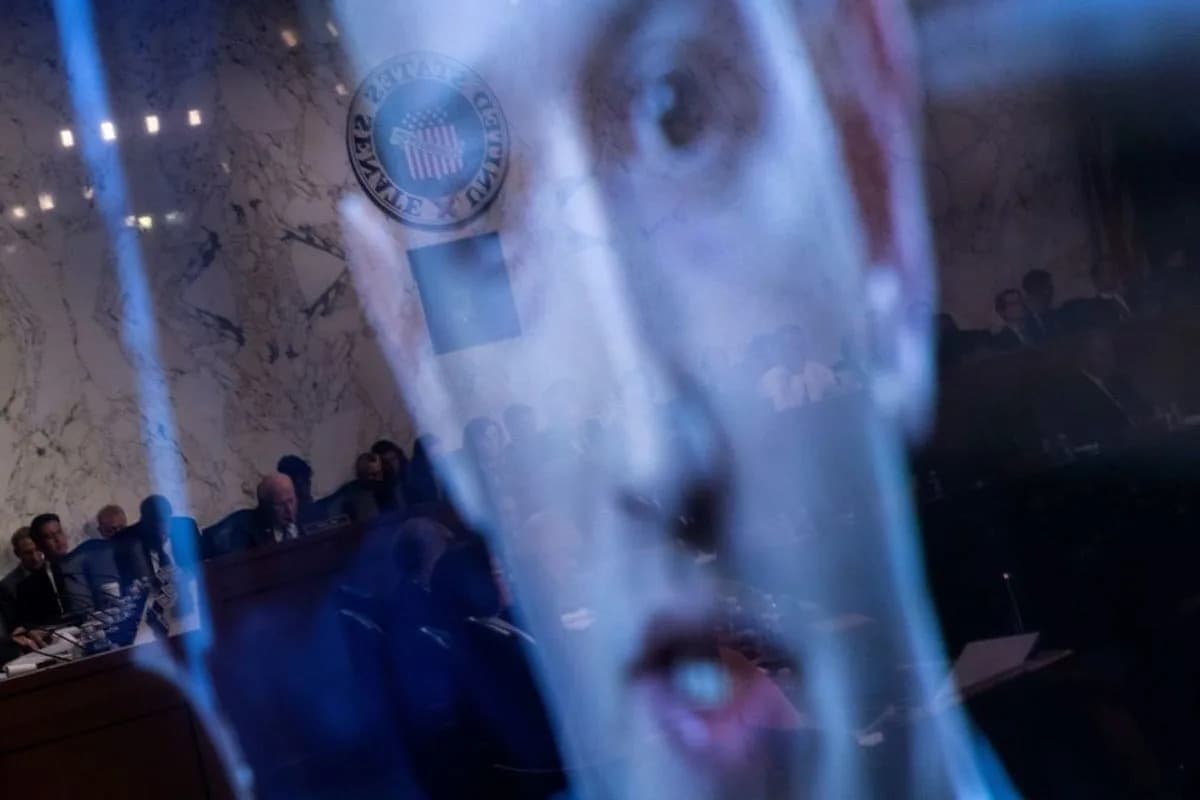
Mark Zuckerberg is seen on a screen speaking during a hearing on Capitol Hill on 10 April, 2018 in Washington, DC (AFP via Getty Images)
Mark Zuckerberg is accused in a new lawsuit of personally authorising the large-scale copying of books and articles to train Meta's Llama artificial intelligence model, according to a complaint filed by five major publishers and author Scott Turow.
The plaintiffs — Elsevier, Cengage, Hachette, Macmillan and McGraw Hill — say Meta copied and used millions of copyrighted works without permission to train Llama. They have asked the court to certify a broader class of copyright owners and to award an unspecified sum in damages.
Allegations and Examples
The suit alleges the allegedly pirated material ranges from textbooks and scientific articles to fiction, naming specific titles such as The Fifth Season by N.K. Jemisin and The Wild Robot by Peter Brown as among the works used to train the model.
"Meta’s mass-scale infringement isn’t public progress, and AI will never be properly realized if tech companies prioritize pirate sites over scholarship and imagination," said Maria Pallante, president of the Association of American Publishers.
Legal Context
The case opens a new front in a broader legal battle over whether training AI systems on copyrighted material constitutes fair use. Dozens of authors, news organisations, visual artists and other creators have sued major AI firms — including Meta, OpenAI and Anthropic — arguing their works were copied without permission for model training.
Judges have issued conflicting rulings on related issues, leaving the legal landscape unsettled. The first major settlement in the wave came when Anthropic, backed by Amazon and Google, agreed to pay $1.5 billion to resolve a class-action claim brought by authors.
Meta's Response
In a statement, a Meta spokesperson said: "AI is powering transformative innovations, productivity and creativity for individuals and companies, and courts have rightly found that training AI on copyrighted material can qualify as fair use."
As the litigation proceeds, courts will weigh whether use of copyrighted works for training is sufficiently transformative to qualify as fair use, and whether publishers and authors are owed damages for the alleged copying.
Additional reporting from agencies.
Help us improve.