Researchers at Penn State used live two-photon imaging, micro-CT, and computational models in mice to show that abdominal muscle contractions produce pressure waves that displace the brain. These tiny motions can drive cerebrospinal fluid from brain tissue into the subarachnoid space, a path linked to waste clearance. While promising, the results come from animal experiments and simplified simulations, so further work is needed to confirm effects in humans.
Tiny Abdominal Movements May Power a Hidden Brain 'Cleaning' Pump, Study Finds

(Andriy Onufriyenko/Moment/Getty Images)
New research from Pennsylvania State University suggests a surprising physical link between everyday body movements and brain health. In mice, brief contractions of the abdominal muscles generate pressure waves that travel up the spine, shift the brain slightly within the skull, and can drive cerebrospinal fluid out of brain tissue and into the subarachnoid space. This mechanical action could help clear metabolic waste that accumulates during wakefulness.

YouTube Thumbnail
How the Study Was Done
The team combined live imaging, anatomical reconstruction, and computational modeling. Using cranial windows and two-photon microscopy, they recorded high-resolution images of brain motion in awake mice walking on a treadmill while the head was fixed. Micro-computed tomography was used to map venous pathways connecting the abdomen, spinal cord, and skull. Finally, simplified computational models treated brain tissue as a porous structure to test how small displacements might move cerebrospinal fluid, or CSF.
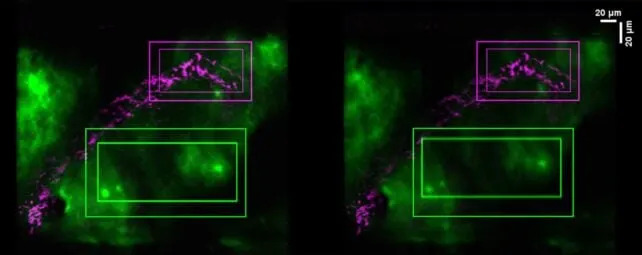
Two-photon microscopy captured the brain shifting in the moments before mice moved, right after the tightening of the abdominal muscles that spurred further movement. Left: the brain (in green) during a stationary moment. Right: the brain during movement. (Patrick Drew and team/Penn State)
Patrick Drew: Our research explains how just moving around might serve as an important physiological mechanism promoting brain health
Main Findings
When mice contracted their abdominal muscles just before stepping, investigators observed a rapid, tiny displacement of the brain. Light external pressure applied to the abdomen of anesthetized animals reproduced the effect and reversed immediately when the pressure was released. The researchers' simulations indicated these small motions can push CSF from brain tissue into the subarachnoid space, a route implicated in clearing metabolic waste.
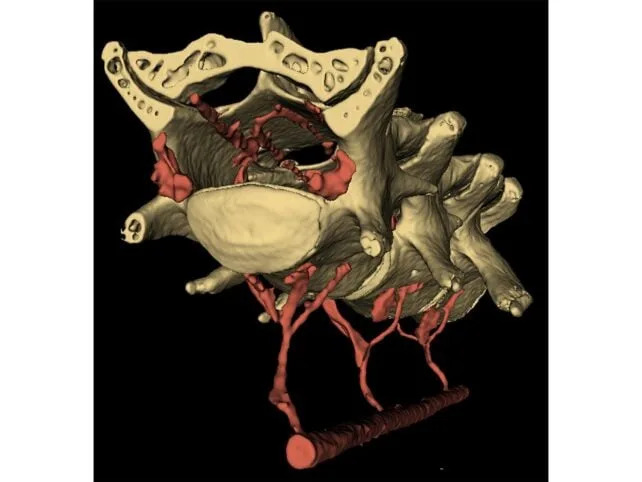
Using microCT scanning, the researchers mapped the veins (in red) that run through the interior of vertebrae and around the spine. (Patrick Drew and team/Penn State)
Francesco Costanzo: Think of the brain as a porous, dirty sponge: squeezing combined with a flow of fluid can mobilize and remove trapped material
Why It Matters
CSF movement is linked to removal of waste products that, if retained, may contribute to neurodegenerative disease. The study also highlights a plausible mechanical reason why CSF flows differ between wakefulness and sleep: during wakefulness small motions and abdominal compressions may expel fluid from tissue, while sleep appears to favor CSF influx into the brain.

Subscribe to ScienceAlert's free fact-checked newsletter
Limitations and Next Steps
These experiments were performed in mice, which share many mammalian characteristics with humans, but direct translation is not established. The computational model used simplifying assumptions to make the complex fluid dynamics tractable. Future studies are needed in humans and across behavioral states to confirm whether similar pump-like mechanics operate and meaningfully affect brain clearance in people.
Overall, the findings add to growing evidence that ordinary physical activity may support brain maintenance by promoting fluid flow and waste clearance. The study was published in the journal Nature Neuroscience.
Help us improve.