
Blue Origin’s Endurance (Blue Moon Mark 1) has successfully passed vacuum and thermal testing at NASA’s Johnson Space Center, a key milestone ahead of a planned demonstration flight later this year. MK1 is an uncrewed cargo lander capable of delivering up to three metric tons under NASA’s CLPS program, and test data will inform improvements to both MK1 and the larger crewed MK2. Blue Origin aims to fly Endurance on Pathfinder Mission 1 aboard a New Glenn rocket, and MK1 is also expected to support NASA’s CT-3 Science mission to the lunar south pole. Competition with SpaceX’s Starship continues as both companies advance toward lunar-capable systems.
Blue Origin’s Endurance Clears Key Vacuum Tests as Blue Moon Program Advances — Rivalry With SpaceX Intensifies
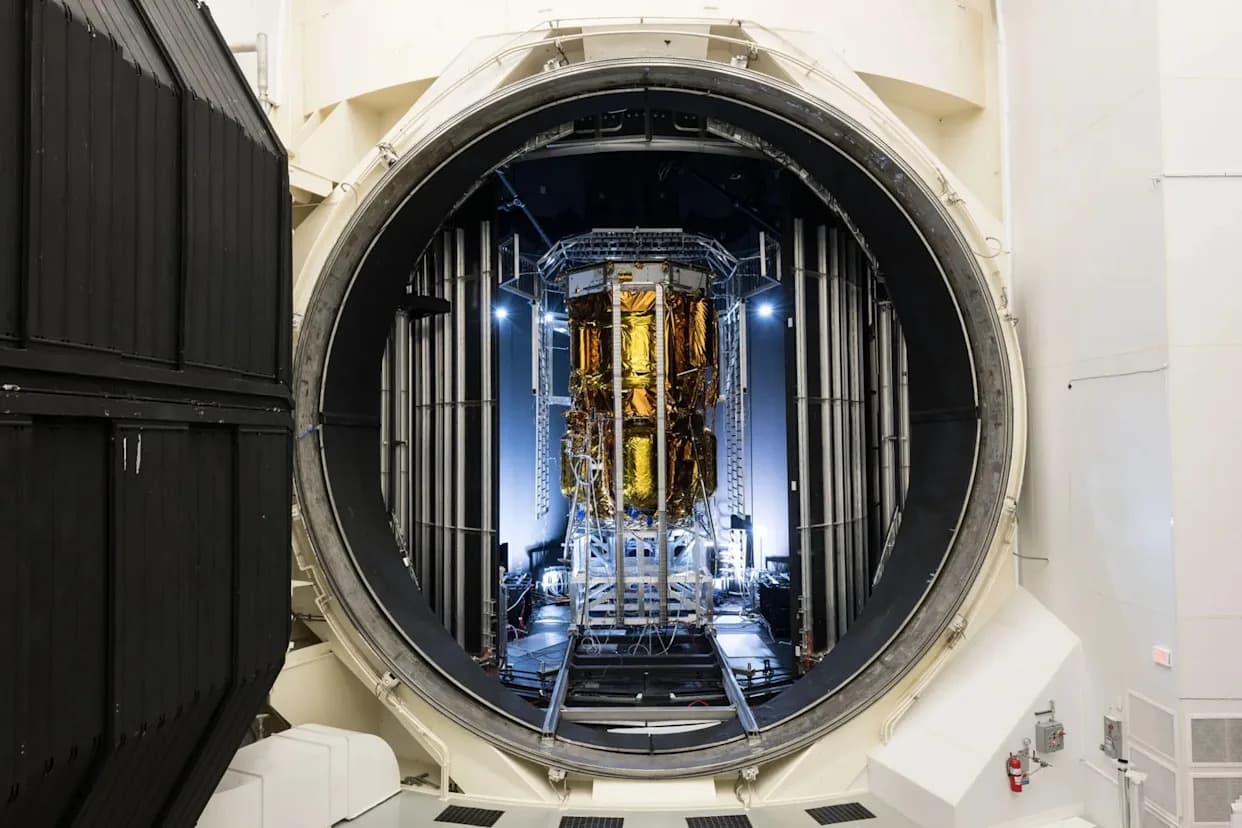
Blue Origin’s Endurance lander, formally Blue Moon Mark 1 (MK1), has completed a battery of vacuum and thermal tests inside a NASA simulation chamber at Johnson Space Center, marking a critical milestone as the company prepares for a possible demonstration flight later this year.
What Was Tested
Engineers subjected Endurance to spacelike conditions, including extreme temperature swings and the stresses associated with vacuum environments. The data gathered from these tests will be analyzed to refine MK1’s design and to inform development of the larger, crewed Blue Moon Mark 2 (MK2).
Role In NASA Programs
MK1 is an uncrewed, single-use cargo lander developed under NASA’s Commercial Lunar Payload Services (CLPS) program. It is designed to deliver up to three metric tons of supplies and equipment to the lunar surface—an important capability for plans to establish a continuously staffed lunar base.
Next Steps And Flight Plans
Blue Origin plans to validate Endurance’s performance in flight on Pathfinder Mission 1, slated for later this year aboard the company’s New Glenn rocket. That test will exercise the lander’s engines, propulsion and cryogenic power-fluid systems, avionics and other critical subsystems under real launch and spaceflight conditions.
Connection To Artemis Missions
Blue Origin envisions its crewed MK2 lander transporting astronauts between a spacecraft in lunar orbit and the Moon’s surface. MK2 is a candidate for the 2027 Artemis III demonstration, which will test Orion’s ability to rendezvous and dock with a commercial lander. Selection for the later Artemis IV mission, the one expected to return astronauts to the lunar surface, remains undecided; SpaceX’s Starship is another leading candidate.
SpaceX Competition And Broader Context
SpaceX’s Starship continues to undergo rapid development and flight testing. While several early Starship test flights ended in destructive failures, the program has shown progress with recent successful demonstrations and planned additional test flights in the near term. The evolving competition underscores multiple commercial approaches to delivering cargo and crew to the Moon.
Science Mission Use
NASA also plans to use MK1 for the CT-3 Science mission, which is expected to carry two science payloads to the Moon’s south pole. Those instruments will capture images of descent to improve future landing operations and study material ejected from the surface during touchdown to better understand local regolith behavior.
These tests do not guarantee a successful flight, but they are essential steps that bring Blue Origin closer to demonstrating Endurance in space and advancing its Blue Moon family toward crewed lunar operations.
Help us improve.





















