
The Aug. 2, 2027 total solar eclipse will produce the longest accessible totality of the 21st century, with NASA projecting up to 6 minutes 23 seconds of darkness. The path crosses southern Spain, North Africa and the Arabian Peninsula — with Luxor, Egypt near the centerline and expected to experience about 6 minutes 19 seconds of totality at ~1:02 p.m. local time. The eclipse track spans ~9,400 miles and covers an area inhabited by roughly 89 million people. Safety: only during totality is direct viewing safe without certified eclipse glasses.
A Record Solar Eclipse on Aug. 2, 2027: The Longest Accessible Totality of the Century
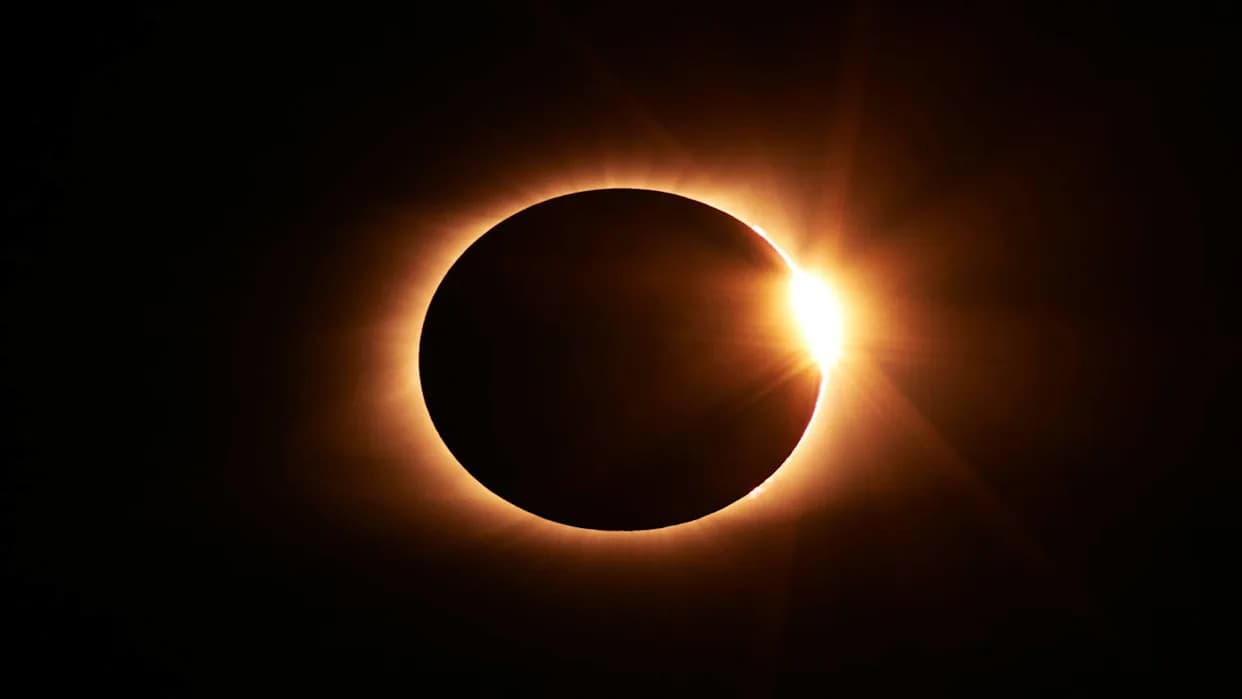
On Aug. 2, 2027, skywatchers along a broad corridor from southern Spain through North Africa into the Arabian Peninsula will witness an extraordinary celestial event: the longest easily accessible total solar eclipse of the 21st century. NASA projects a maximum duration of totality of 6 minutes 23 seconds, a span of darkness not expected to be surpassed on reachable land until 2114.
Why This Eclipse Is So Long
The unusually long totality results from a rare alignment of factors: the Moon will be near perigee (its closest approach to Earth), so it appears large enough to fully cover the Sun, while the Sun will be nearly overhead across much of North Africa. Those combined conditions create an extended central shadow and make this event especially dramatic for viewers located near the centerline.
Where You Can See It
The path of totality stretches roughly 9,400 miles, beginning at Spain’s southern tip near the Straits of Gibraltar and sweeping across Morocco, Algeria, Tunisia, Libya and Egypt before continuing into Saudi Arabia and Yemen. An estimated 89 million people live within that corridor, meaning the eclipse will be accessible to many residents and travelers.
Prime viewing locations include:
- Luxor, Egypt — Nearly centered on the path, Luxor is expected to experience about 6 minutes 19 seconds of totality, with totality occurring at roughly 1:02 p.m. local time. August weather in the region tends to be clear, improving the odds for unobstructed viewing.
- Tangier, Morocco — About 4 minutes 50 seconds of totality, near 10:45 a.m. local time.
- Tarifa, Spain — Roughly 4 minutes 39 seconds of totality from the southernmost tip of Spain.
Tour operators are already planning Mediterranean and regional cruises and excursions that position passengers directly in the path of totality for optimal viewing.
What You’ll See
During totality, the Moon’s shadow will race across Earth at about 5,000 miles per hour. Observers should look for classic eclipse phenomena in quick succession: Baily’s Beads (bright points of sunlight shining through lunar valleys), the diamond-ring effect, and then the Sun’s outer atmosphere — the corona — appearing as a pearly halo. The sky will darken enough that bright stars and some planets become visible in daytime.
Safety First
Eye safety is critical: only during the brief interval of totality is it safe to view the Sun directly without certified eclipse glasses. Any exposure to direct sunlight before or after totality — even a thin sliver — can cause permanent retinal damage. Use certified solar-viewing glasses or indirect viewing methods for all partial phases.
Plan Ahead
The 2027 eclipse is a rare travel and photography opportunity. If you plan to chase totality, book travel and accommodations well in advance, prioritize locations near the centerline (like Luxor), and prepare certified solar filters for cameras and binoculars. Whether you’re a seasoned eclipse chaser or a first-time observer, this event promises dramatic skies and unforgettable views.
Note: Times and durations cited are approximate and may vary slightly depending on precise location along the path. Check local astronomical resources and NASA updates as the event approaches.
Help us improve.





















