NASA published two high-resolution 360° panoramas from its active Mars rovers that showcase dramatically different landscapes. Perseverance’s mosaic of “Lac de Charmes” near Jezero Crater (980 images, Dec 18, 2025–Jan 25, 2026) highlights ancient lake and delta deposits. Curiosity’s panorama from Gale Crater (1,031 images, Nov 9–Dec 7, 2025) reveals boxwork ridges formed by groundwater and underscores discoveries of carbonates and complex organic molecules. Together they offer complementary evidence of Mars’ wetter past and support the search for ancient life.
NASA’s Curiosity and Perseverance Release New 360° Panoramas, Revealing Two Sides of Ancient Mars
Credit: NASA/JPL-Caltech/MSSS
NASA has released two expansive 360-degree panoramas from its active Mars rovers, Perseverance and Curiosity, offering strikingly different views of the Red Planet and fresh clues about its watery past.
Two Contrasting Vistas
The mosaics, stitched from hundreds of individual frames, spotlight how water, geology and time sculpted divergent terrains across Mars. Perseverance’s panorama was assembled from 980 images taken between Dec. 18, 2025 and Jan. 25, 2026 over an area nicknamed “Lac de Charmes” near the rim of Jezero Crater. That scene looks out over rugged ground carved by ancient surface water — including lake and delta deposits that make the site a top target in the search for signs of past microbial life.
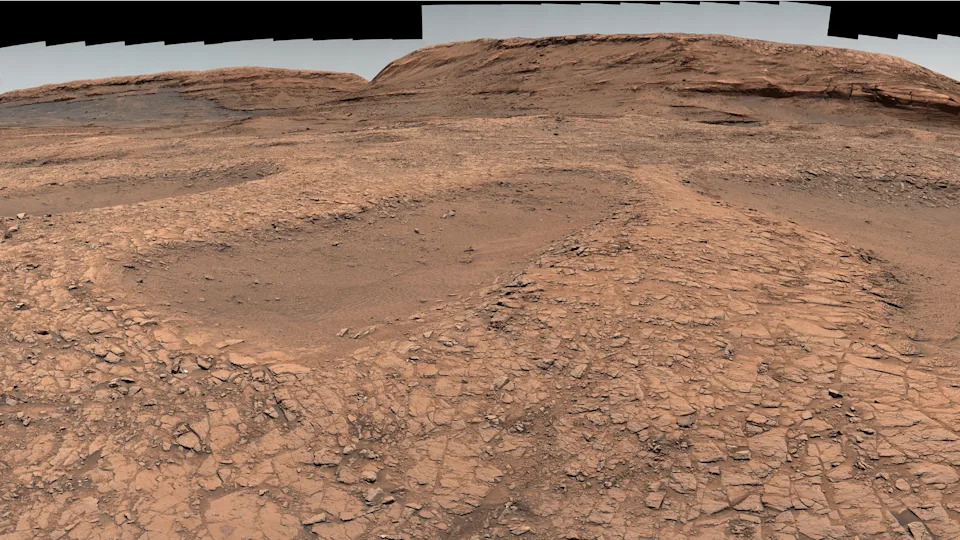
Portion of a 360-degree panorama, featuring low ridges called boxwork formations, captured by NASA's Curiosity Mars rover between Nov. 9 and Dec. 7, 2025. At 1.5 billion pixels, it's one of the largest panoramas Curiosity has ever taken. | Credit: NASA/JPL-Caltech/MSSS
“These rocks were here long before water filled the crater,” a NASA video explains. “Scientists even believe some rocks in this area formed when Mars was still shaping its crust and atmosphere — and massive asteroids were pummeling the planet’s surface. This terrain is a time capsule from the earliest period of the solar system.”
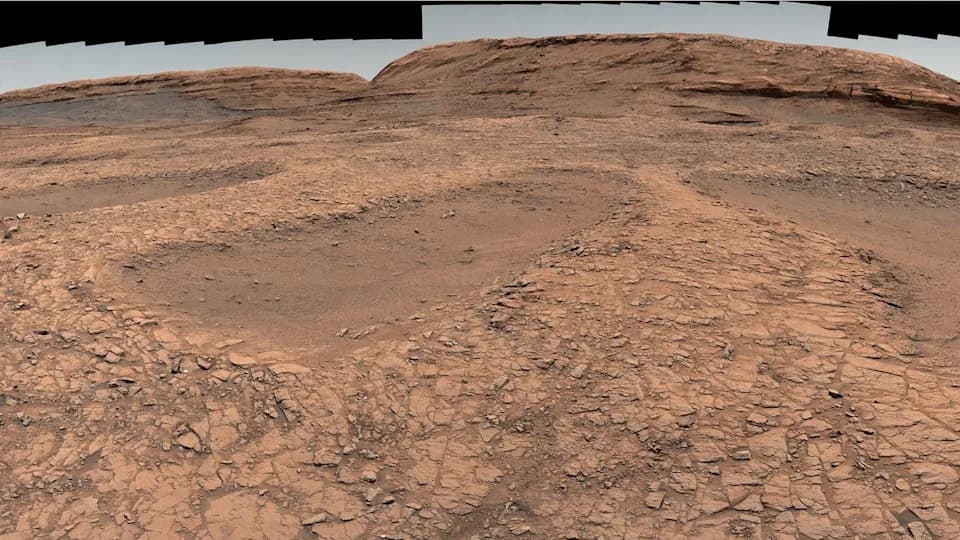
By contrast, Curiosity’s panorama — composed from 1,031 images captured between Nov. 9 and Dec. 7, 2025 — looks out from deep inside Gale Crater as the rover continues its ascent of Mount Sharp. The scene highlights distinctive low ridges called “boxwork” formations, created when groundwater moved through bedrock fractures and left behind mineral deposits that later resisted erosion.
What The Panoramas Reveal
Together the images present complementary records of Mars’ hydrologic history: Perseverance’s site preserves evidence of surface water in lakes and deltas, while Curiosity’s exposures reveal the mineral fingerprints of groundwater moving through rock. Over nearly 15 years on Mars, Curiosity has also identified carbonate minerals such as siderite that may have locked away carbon dioxide from a once-thicker atmosphere, and it has detected a growing suite of complex organic molecules — some of the largest yet found on the planet.
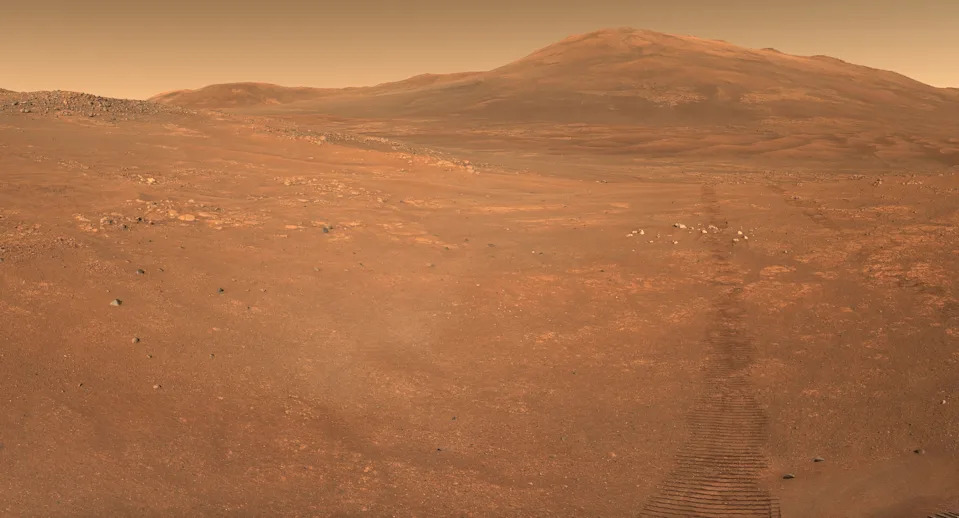
Part of a 360-degree panorama NASA’s Perseverance Mars rover captured of a region nicknamed “Crocodile Bridge” on the rim of Jezero Crater. This region holds some of the oldest rocks anywhere in the solar system. | Credit: NASA/JPL-Caltech/ASU/MSSS
Context And Significance
The rovers are currently separated by roughly 2,345 miles (3,775 kilometers), yet NASA’s stitched video places their viewpoints side by side, guiding viewers across both scenes and simulating aspects of Mars’ ancient environments. The contrast underscores the missions’ complementary goals: Curiosity focuses on whether ancient environments could have been habitable, while Perseverance seeks direct signs of past life and is collecting rock samples that could one day be returned to Earth.
As Curiosity continues climbing Mount Sharp and Perseverance explores fresh ground along Jezero’s rim, more high-resolution panoramas are expected. Each new mosaic adds another piece to the scientific puzzle, helping researchers refine the timeline of Mars’ transition from a wetter world to the cold, arid planet we see today.
Help us improve.