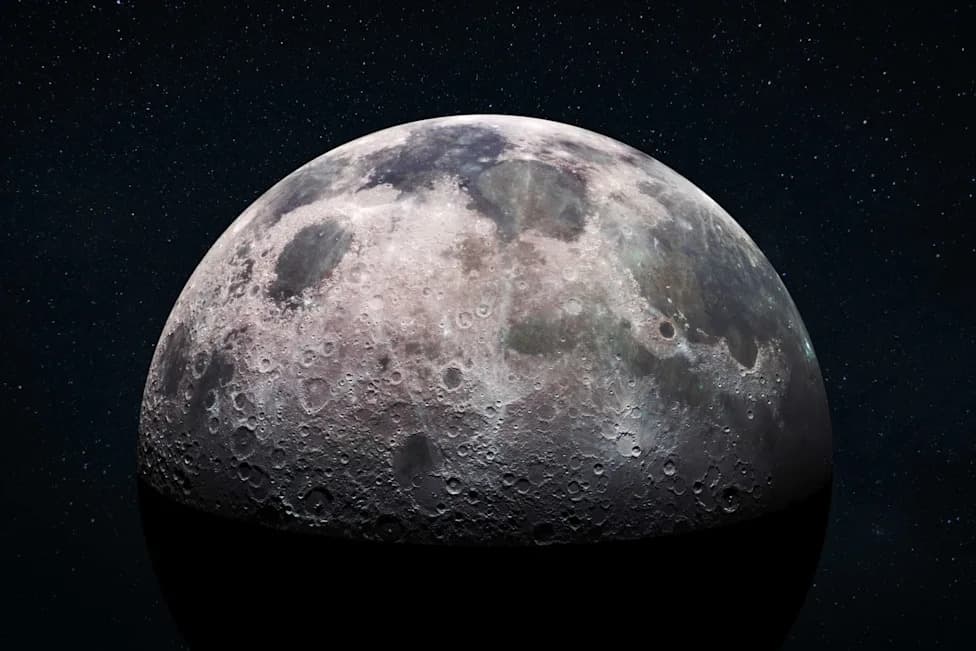
A spent SpaceX Falcon 9 upper stage is predicted to hit the Moon on Aug. 5, 2026, striking the Earth-facing side near Einstein crater at roughly 5,400 mph (≈2.4 km/s). The stage launched on Jan. 15, 2025 with Firefly Aerospace's Blue Ghost lander, which touched down on March 2, 2025. The impact poses no danger but will create a small crater and offers scientists a chance to study excavated lunar material. The event underscores a growing space-debris challenge as lunar missions increase.
Discarded SpaceX Falcon 9 Upper Stage Set To Strike Moon On Aug. 5, 2026
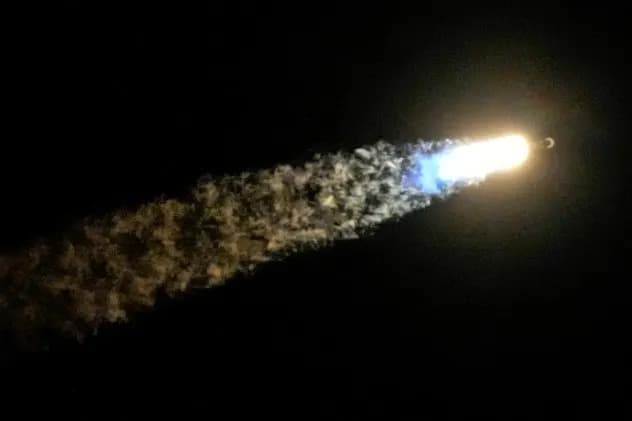
A SpaceX Falcon 9 rocket lifts off from pad 39A with a payload of a pair of lunar landers at the Kennedy Space Center in Cape Canaveral, Fla., Wednesday, Jan. 15, 2025. (AP Photo/John Raoux)
A discarded upper stage from a SpaceX Falcon 9 rocket is predicted to collide with the Moon on Aug. 5, 2026, and researchers have calculated the likely impact location and timing.
What Happened
The Falcon 9 upper stage launched on Jan. 15, 2025 carrying Blue Ghost Mission 1, a lunar lander built and operated by Firefly Aerospace and nicknamed "Ghost Riders in the Sky." Firefly's Blue Ghost lander successfully touched down on the Moon on March 2, 2025. After deployment, the spent upper stage remained on a trajectory that will intersect the lunar surface.
Predicted Impact
Bill Gray of Project Pluto, which tracks near-Earth objects and orbital debris, calculated that the rocket stage will impact the Moon's Earth-facing side near the crater Einstein. At impact the stage is expected to be traveling at roughly 5,400 miles per hour (≈2.4 km/s) — about seven times the speed of sound — and will create a new, small crater.
Scientific Value and Observations
Officials say the collision poses no hazard to people or active missions. The impact will likely be too small to see with the unaided eye from Earth, but telescopes and specialized instruments could detect the flash or ejecta. Scientists regard such impacts as valuable opportunities to study subsurface lunar material excavated by the crash and to refine models of impact processes.
Wider Context
Although this event is standalone, it highlights a growing challenge: spent rocket stages and other debris do not simply disappear. As lunar activity increases, researchers who monitor space debris warn that the number of objects striking or orbiting the Moon will likely grow, creating both scientific opportunities and long-term management questions for cislunar space.
Who Is Watching: Astronomers, space agencies, and debris-tracking groups plan to monitor the predicted impact; observations from Earth-based telescopes and lunar orbiters may help confirm the site and study excavated material.
Help us improve.