
Jared Isaacman, a private astronaut and entrepreneur, publicly urged that Pluto be restored to full planet status and said the space agency is reportedly preparing papers to reopen the discussion. Pluto was reclassified in 2006 by the IAU as a dwarf planet because it does not clear its orbital neighborhood. The move remains controversial with the public, while many astronomers maintain that any redefinition should come from scientific consensus informed by new research.
Pluto Debate Reignited: Isaacman Urges “Make Pluto A Planet Again,” Scientists Push Back
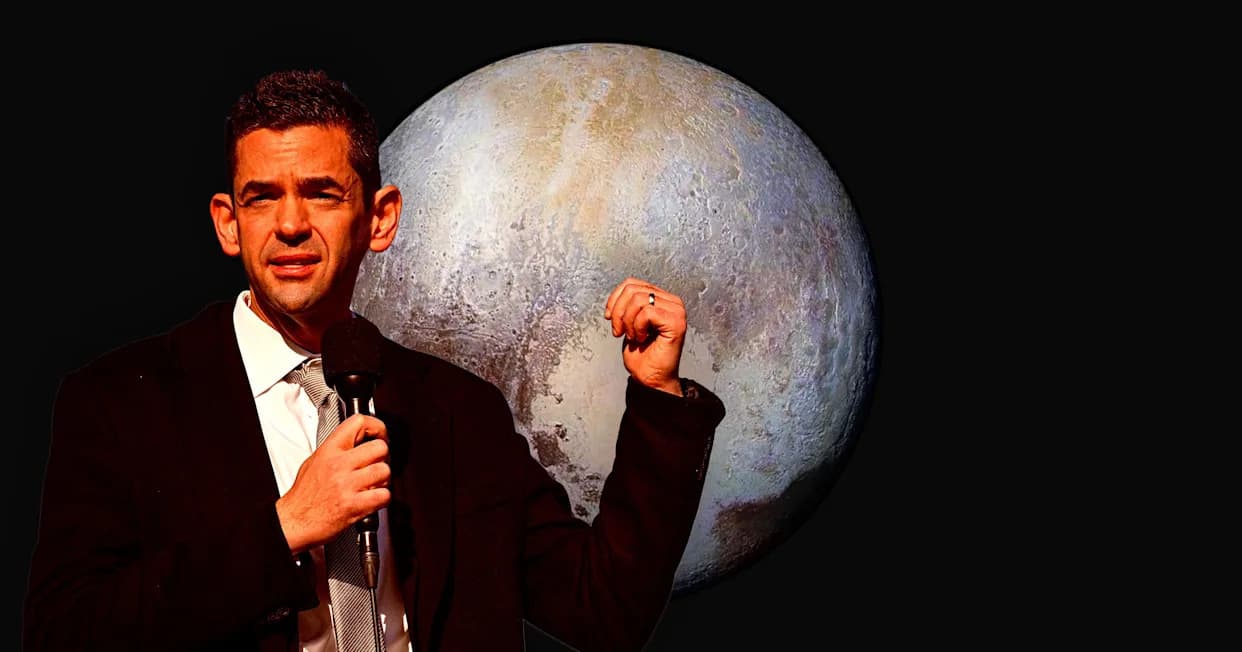
Getty / Futurism
Jared Isaacman, a private astronaut and entrepreneur, reignited the long‑running debate over Pluto's status when he publicly urged that the dwarf planet be returned to full planet status during a Senate hearing. Isaacman said he is "very much in the camp of, 'Make Pluto A Planet Again,'" and added that the space agency is "doing some papers right now" to push a position through the scientific community. That claim about agency action has not been independently verified.
Why Pluto Was Reclassified
In 2006 the International Astronomical Union (IAU) adopted a formal three‑part definition of a planet: it must orbit the Sun, be massive enough for its gravity to make it nearly spherical, and have cleared its orbital neighborhood of other similar‑sized objects. Pluto meets the first two criteria but not the third, and was therefore reclassified as a "dwarf planet." Pluto remains one of five IAU‑recognized dwarf planets in the Solar System (Pluto, Eris, Haumea, Makemake and Ceres) and has a diameter of roughly 1,500 miles—about half the width of the continental United States.
Reactions From the Scientific Community
The reclassification has long been a flashpoint with the public, who often view Pluto's 2006 demotion as a sentimental loss. Many professional astronomers, however, defend the IAU ruling as a useful, pragmatic way to classify objects and to aid scientific communication. "While NASA administrators are free to wax nostalgic for the days when Pluto was a planet, the actual scientists working in the field will continue to try to explain and classify objects in the solar system in the way that actually helps us understand the world in which we live," said Mike Brown, professor of planetary astronomy at Caltech.
Bill McKinnon, director of the McDonnell Center for the Space Sciences at Washington University in St. Louis, summarized the common scientific view: "Of course Pluto’s a planet, but it is a dwarf planet—a subspecies of planet."
What This Means
The core issue—what exactly counts as a "planet"—remains open to scholarly debate and refinement as we discover more about our own Solar System and exoplanetary systems. Public appeals and slogans can draw attention, but most astronomers say changes to definitions should come from careful scientific discussion and consensus. Isaacman’s comments have revived public interest in the question, but many in the field want the debate to be resolved through research and professional channels rather than administrative pronouncements.
Bottom Line
The discussion over Pluto’s status is likely to continue. If the scientific community revisits the IAU criteria, any change will rest on evidence and agreement among planetary scientists—not on slogans alone.
Help us improve.





















