
In recent years Kfar Kila, a historic Lebanese village known for its olive oil, has been repeatedly razed amid Israeli operations that officials say target Hezbollah infrastructure. About 1.2 million Lebanese—roughly one in five—have been displaced by the wider conflict, and satellite images and eyewitness accounts show Kfar Kila largely destroyed. Residents describe deep cultural and psychological loss as homes, farms and communal life are erased, while authorities warn reconstruction is uncertain and the cleared "buffer zone" could become permanent.
The Vanishing Village: How Kfar Kila Was Flattened and Its People Displaced
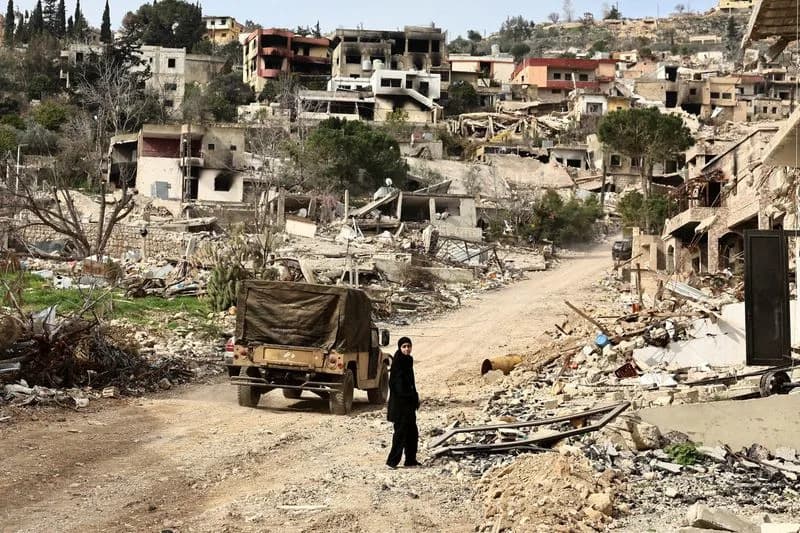
A returning resident walks near a damaged site amid destroyed buildings, as Israeli troops withdrew from most of south Lebanon, in the southern Lebanese village of Kfar Kila, Lebanon, February 19, 2025. REUTERS/Emilie Madi
BEIRUT, April 30 (Reuters) - In a rubbish-strewn parking lot near Beirut's Mediterranean shore, Hassan Yahya has taped a cardboard sign to a traffic signal pole beside the tarpaulin that now serves as his shelter. The hand-scrawled message reads: "Kfar Kila welcomes you." It is a fragile echo of the sign that once marked the entrance to the centuries-old village now largely reduced to rubble.
From Olive Groves to Craters
Kfar Kila, one of roughly a dozen communities along Lebanon's southern border, has been repeatedly struck by Israeli operations over the past two and a half years. Once home to about 5,500 people and known nationally for its olive oil, the village's farmland, homes and communal spaces have been progressively razed as Israeli forces establish a cleared "buffer zone" along the frontier.
Human Cost and Cultural Loss
Villages in Lebanon are more than places of residence: they are repositories of family history and communal life. Weddings, harvests, religious rituals and everyday gatherings in bakeries and cafes create bonds that tie generations to the land. Former resident Hassan Yahya described the dislocation bluntly: "It's like fish—if they leave the water, they die." Many displaced residents now live scattered across Lebanon, staying connected by sporadic phone calls and muted ceremonies.
"Everything in the old village has meaning and significance for us—the historic houses, our family's homes, the homes of our ancestors. These things are impossible to bring back." — Kheder Hammoud, former resident
Security Claims and Verification
The Israeli military has said Kfar Kila hosted extensive Hezbollah infrastructure and that forces seized more than 90 truckloads of weapons there in 2024, with further finds this year. Reuters reports these assertions and says it was unable to independently verify them. Hezbollah denies placing military infrastructure amid civilian homes and has condemned the demolitions.
Timeline and Impact
After the October 7, 2023 attacks and subsequent escalation, Kfar Kila emptied by January 2024. A November 2024 ceasefire briefly allowed some returns, but nearly 85% of buildings were already destroyed by then. New demolitions and earthmoving operations in early 2025 further flattened the village; by late April Israeli military sources said more than 90% of homes had been destroyed.
The wider fighting has displaced about 1.2 million Lebanese—roughly one in five people—and transformed once-thriving southern communities into cratered landscapes. Residents and local officials warn that what is described as a temporary buffer zone risks becoming permanent, pointing to past territorial changes in the region.
Lives in Limbo, and the Prospect of Rebuilding
Some residents attempted makeshift returns or set up prefabricated shelters near the ruins. Lebanese officials have pledged reconstruction, but renewed demolition and ongoing insecurity make near-term rebuilding uncertain. Mayor Hassan Sheet and others express a firm desire to return: "This isn't just talk," he said. "We're going back."
Reporting by Alexander Dziadosz/Reuters; additional reporting and editing as per original story.
Help us improve.





















