Two months after a surprise US–Israeli strike, ceasefire measures have paused major combat but negotiations with Iran have stalled. Competing blockades of the Strait of Hormuz continue to disrupt energy and food supplies, while both sides preserve the option of intermittent strikes. Analysts warn that a protracted "frozen" conflict—driven by drone warfare and low-intensity attacks—would exact heavy economic and political costs regionally and globally.
Could the US–Iran Conflict Freeze Into a Protracted Stalemate?
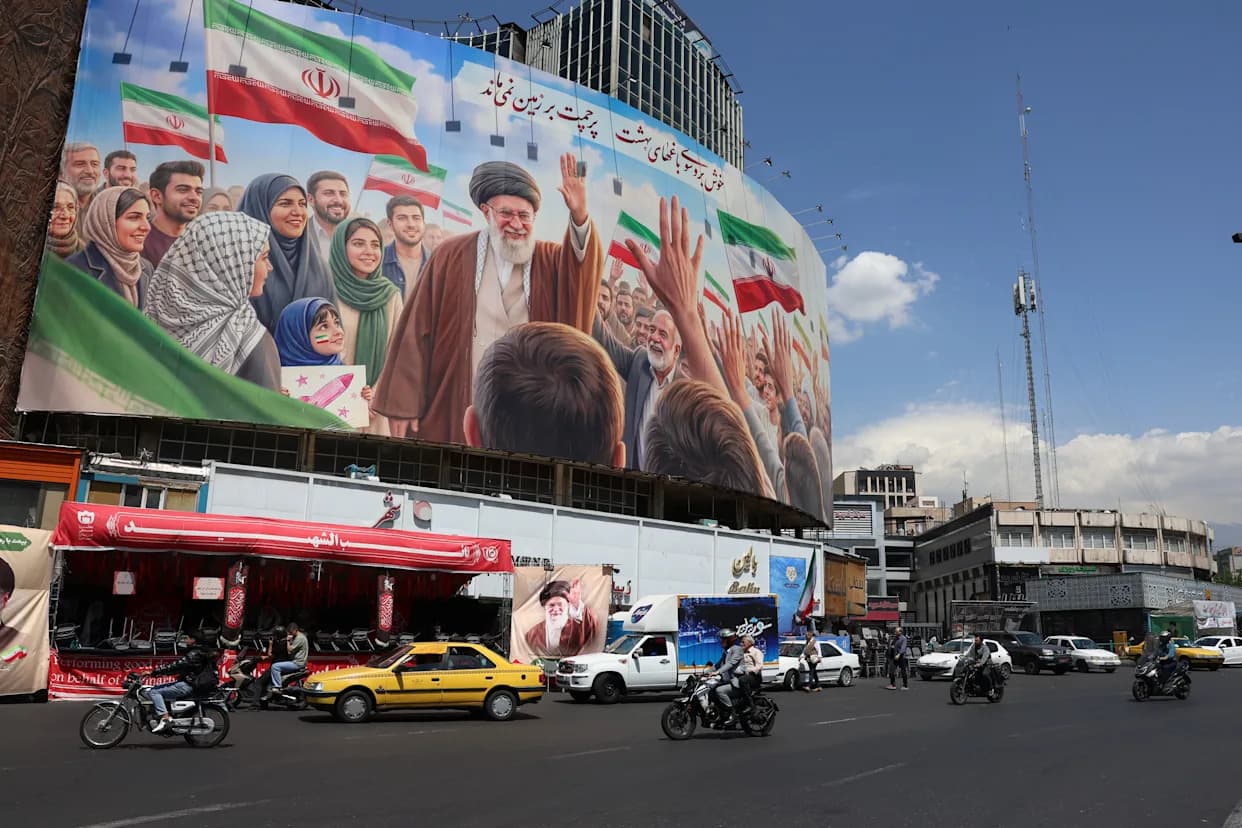
Iranians drive by picture of the late Iranian Supreme Leader Ayatollah Ali Khamenei in Tehran, Iran, as the US and Iran remain in deadlocked in a ceasefire that temporarily suspended the conflict [Abedin Taherkenareh/EPA]
Two months after a surprise joint US–Israeli strike on Iran, diplomatic talks have stalled while competing blockades of the Strait of Hormuz continue to disrupt global energy and food supplies. A ceasefire has paused large-scale combat, but both sides retain the option to carry out intermittent strikes, raising the prospect of a costly, long-running "frozen" conflict.
Stalled Diplomacy and Ongoing Military Threats
White House spokesperson Anna Kelly said on Tuesday that Washington remains engaged in negotiations with Tehran but will "not be rushed into making a bad deal," after President Donald Trump and senior security advisers reviewed a fresh Iranian proposal. Despite the ceasefire in place since April 8, officials stress that "all military options remain on the table." Qatar’s foreign ministry warned of a growing risk that the confrontation could ossify into a frozen conflict, with the Strait of Hormuz serving as an enduring leverage point.
Economic and Strategic Costs
The Quincy Institute estimated that US expenditures in the first month of the conflict were between $20 billion and $25 billion. It also warned that a large-scale ground invasion comparable to the 2003 Iraq campaign would demand at least 500,000 personnel and cost roughly $55 billion per month—more than $650 billion annually—figures likely to understate broader economic and political fallout.
Since April 13, the US military has enforced a naval blockade on Iranian ports and vessels. The Pentagon recently deployed a third carrier strike group and thousands of elite troops, marking the largest US buildup in the region since 2003. Estimates place more than 10,000 US personnel in the area.
Straits, Supplies and Domestic Pressures
Iran has imposed restrictions on ships transiting the Strait of Hormuz that do not comply with its demands, contributing to higher global fuel prices: average petrol in the US has reached about $4.18 a gallon ($1.10 a litre), the highest in nearly four years. The economic ripple effects arrive ahead of November midterm elections, with President Trump's approval ratings reported near 34 percent.
The United Nations Development Programme (UNDP) reported that the military escalation has disrupted employment, mobility and supply chains inside Iran. Much of Iran's grain imports traverse the Strait of Hormuz; shipping delays threaten domestic food supplies and raise the risk of growing food insecurity for a population of roughly 90 million.
Shifting Tactics: Drones and Low-Intensity Warfare
On Tuesday the US Department of Defense requested $53.6 billion for autonomous drones in its 2027 budget proposal, a dramatic increase from the prior year. Experts warn that a shift toward drone-led, low-intensity conflict could lower costs for attackers while imposing disproportionate damage on recipients—mirroring dynamics observed in other recent conflicts.
“Iran cannot afford indefinite port blockades, and the US cannot sustain an indefinite blockade,” said Mehran Kamrava, an Iran specialist at Georgetown University in Qatar. “A short-term frozen conflict is possible, but it cannot continue for many months or years.”
Risks of an Attrition Strategy
Analysts caution that an attrition approach—periods of quiet punctuated by punitive strikes, sometimes described as "mowing the grass"—may produce tactical gains without delivering a durable political settlement. Michael Kerr of King’s College London warned that applying such a strategy against a state with Iran’s missile and drone capabilities risks regional spillovers, including attacks on Gulf partners and US naval assets.
In the absence of a negotiated settlement that allows both sides to claim victory, experts say a prolonged low-intensity conflict is an ugly compromise: it avoids full-scale invasion but prolongs instability, exacts economic costs, and keeps global markets on edge.
What Comes Next: The conflict’s trajectory will depend on whether diplomatic channels can produce a deal both sides can accept, whether external pressures (economic or political) force concessions, and whether either side escalates in a way that removes off-ramps to war. For now, the region remains fragile and vulnerable to episodic violence and wider economic shocks.
Help us improve.