
Artemis II completed a 10-day lunar flyby that set a modern-distance record of about 252,756 miles from Earth. The crew captured extensive imagery of the Moon’s far side, witnessed a nearly 54-minute total solar eclipse, and returned via Pacific splashdown on April 10. Since returning, the astronauts have taken part in welcome events in Houston and are scheduled for a White House visit (Apr 29) and a TV appearance (Apr 30) while supporting future Artemis missions.
Photos and Video Trace Artemis II: Timeline of the Record-Breaking Lunar Flyby
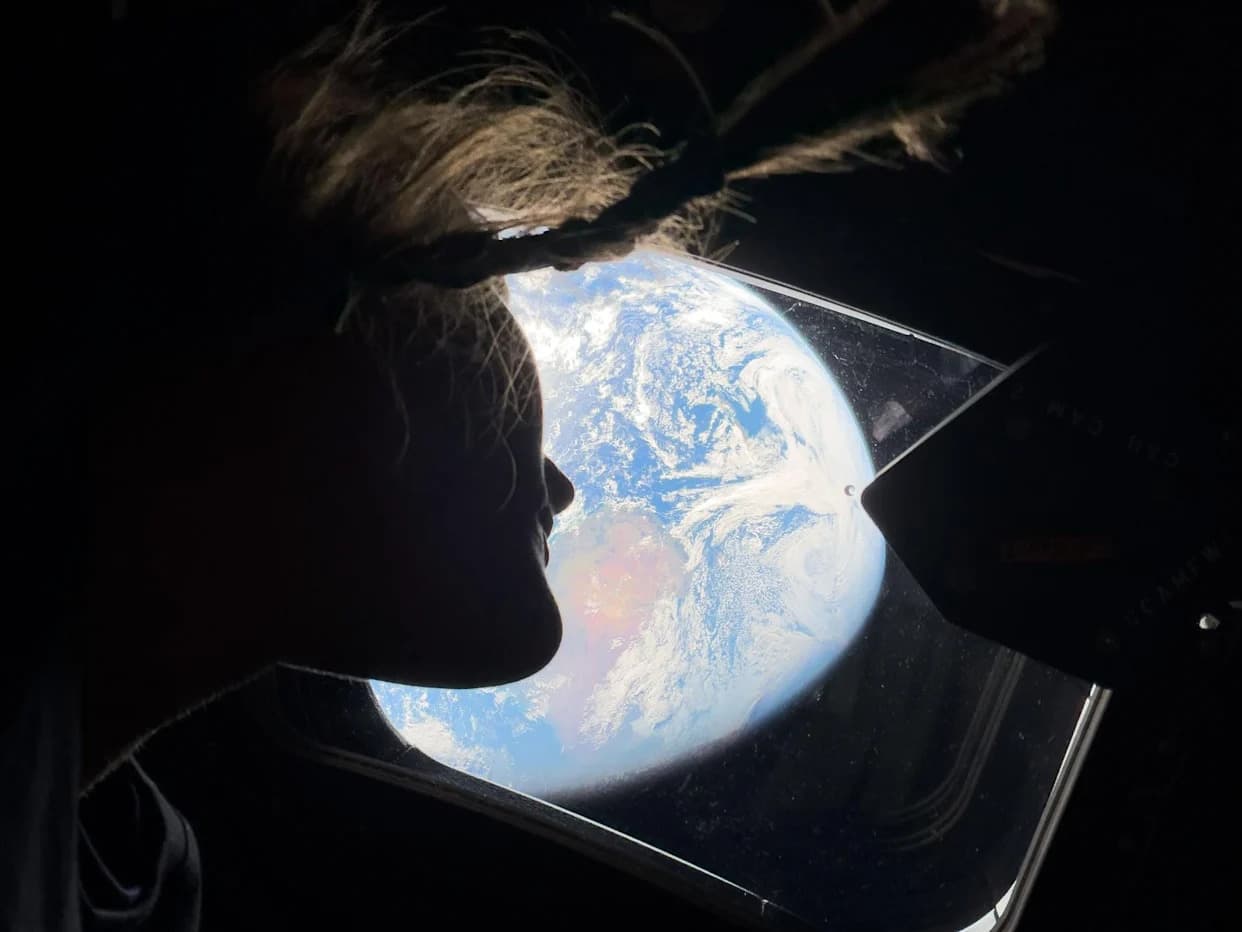
Photos, video show timeline of Artemis II moon mission 3 weeks later
Nearly three weeks after splashdown off the U.S. West Coast, the four astronauts of NASA's Artemis II mission have been active both publicly and behind the scenes as they help prepare future missions in the Artemis program.
Mission Overview
The crew — Commander Reid Wiseman, Pilot Victor Glover, Mission Specialist Christina Koch and Canadian Space Agency astronaut Jeremy Hansen — launched April 1, 2026, aboard the Orion crew capsule atop NASA's Space Launch System from Kennedy Space Center in Florida. The 10-day mission performed a far-side lunar flyby, captured striking imagery and set a modern distance record for human spaceflight.
Prelaunch and Liftoff
Photographers and spectators gathered around Launch Pad 39B in the days before launch to document the rocket and capsule. Remote cameras were staged inside the pad, and collectors issued commemorative coins marking the flight. Orion and the crew reached orbit on April 1 and began the transit toward the Moon.
Outward Journey and Crew Photos
During the first five days the crew traveled from Earth into the Moon's sphere of influence, documenting their voyage with images taken from inside Orion. Among the most memorable were candid crew photos — including the now-familiar "lunar selfie" — and dramatic views of Earth shrinking as the Moon drew nearer. The astronauts used personal smartphones and onboard cameras to capture these moments.
Far-Side Flyby and Historic Distance
On April 6, during the far-side flyby, Artemis II reached a maximum distance of approximately 252,756 miles from Earth — surpassing the Apollo-era record of 248,655 miles set in 1970 by Apollo 13. The spacecraft passed no closer than 4,067 miles above the Moon's surface, offering the crew views of far-side regions rarely if ever seen firsthand.
Eclipse, Lunar Detail and Scientific Imagery
The crew witnessed a nearly 54-minute total solar eclipse from their vantage point, which produced a luminous halo around the dark lunar disk and an extended view of totality impossible from Earth. They also photographed dramatic shadows along the lunar terminator that emphasized craters and basins such as Jule, Birkhoff, Stebbins, the Orientale basin and Vavilov Crater on Hertzsprung's rim. An "Earthrise" and crescent-Earth shots were among the mission's standout images.
Personal Moment Aboard Orion
In a poignant onboard moment, the crew informally named a newly observed lunar crater "Carroll" in honor of Commander Reid Wiseman's late wife, Carroll Taylor Wiseman, who died in 2020 after a battle with cancer. The tribute was spoken emotionally during the flight and underscores the personal dimensions of exploration.
Return and Recovery
Orion reentered Earth's atmosphere on April 10, reaching roughly 25,000 mph during atmospheric entry. Parachutes deployed and the capsule splashed down in the Pacific Ocean near California, where recovery teams reached the vehicle after it bobbed for a few hours. On April 11 the astronauts participated in welcome events at the Johnson Space Center and Ellington Field in Houston while beginning rehabilitation under Earth's gravity.
Public Engagements and Next Steps
Following their return, the crew received a congratulatory call from President Donald Trump and are scheduled to visit the White House on April 29 and appear on "The Tonight Show" with Jimmy Fallon on April 30. Meanwhile, they are supporting NASA's preparations for upcoming missions under Artemis, including Artemis III — targeted for 2027 — which will test docking and rendezvous with commercial lunar landers under development by companies such as SpaceX and Blue Origin.
Program Context
Artemis II is part of NASA's broader Artemis program, an effort begun in prior administrations to return humans to the lunar surface and establish a sustainable presence at the Moon's south pole ahead of future crewed missions to Mars. Planned steps include commercial robotic landers, additional crewed flights, and, if schedules permit, a crewed surface landing during Artemis IV in 2028.
Images and video from the mission provide a clear timeline: prelaunch activity at Kennedy Space Center; the transit to the Moon; far-side observations and extended eclipse; record-setting distance from Earth; and the high-speed return and ocean splashdown. These visuals capture both technical achievements and personal moments from the crew's journey.
Reporting contributions: Amanda Lee Myers and Saman Shafiq of USA TODAY; Eric Lagatta, Space Connect reporter for the USA TODAY Network ([email protected]).
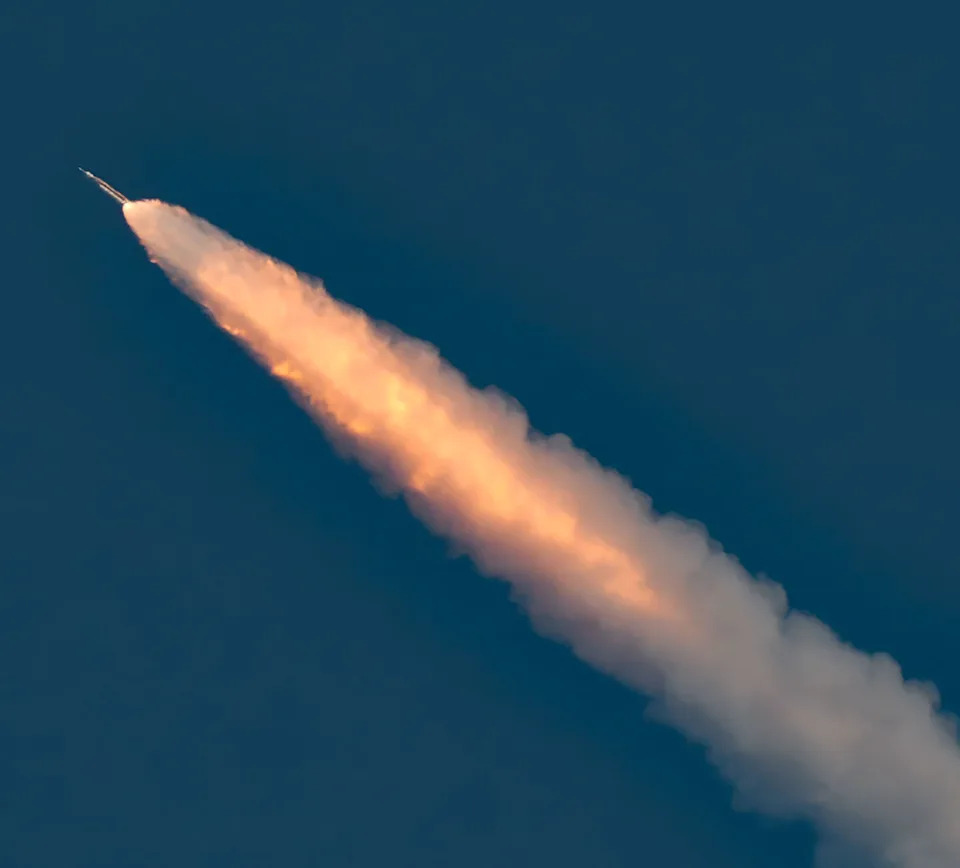
The Artemis II mission launches April 1 from the Kennedy Space Center in Cape Canaveral, Florida. The four-person crew aboard the Orion spacecraft hitched a ride to orbit atop NASA's giant 322-foot Space Launch System rocket. Launching atop 8.8 million pounds of thrust, the SLS is the most powerful rocket NASA ever launched, about 17% more powerful than the iconic Saturn V rocket used during the Apollo era.
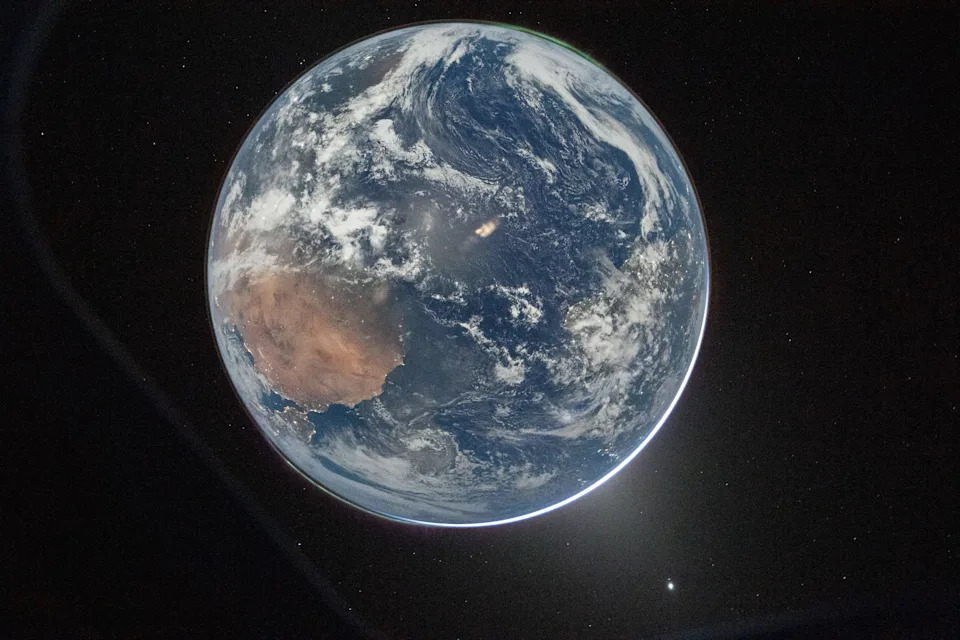
Artemis II Commander Reid Wiseman of NASA took this stunning photograph of Earth from the Orion spacecraft's window on April 2. The image is reminiscent of the iconic "blue marble" image captured during the Apollo 17 mission in 1972.
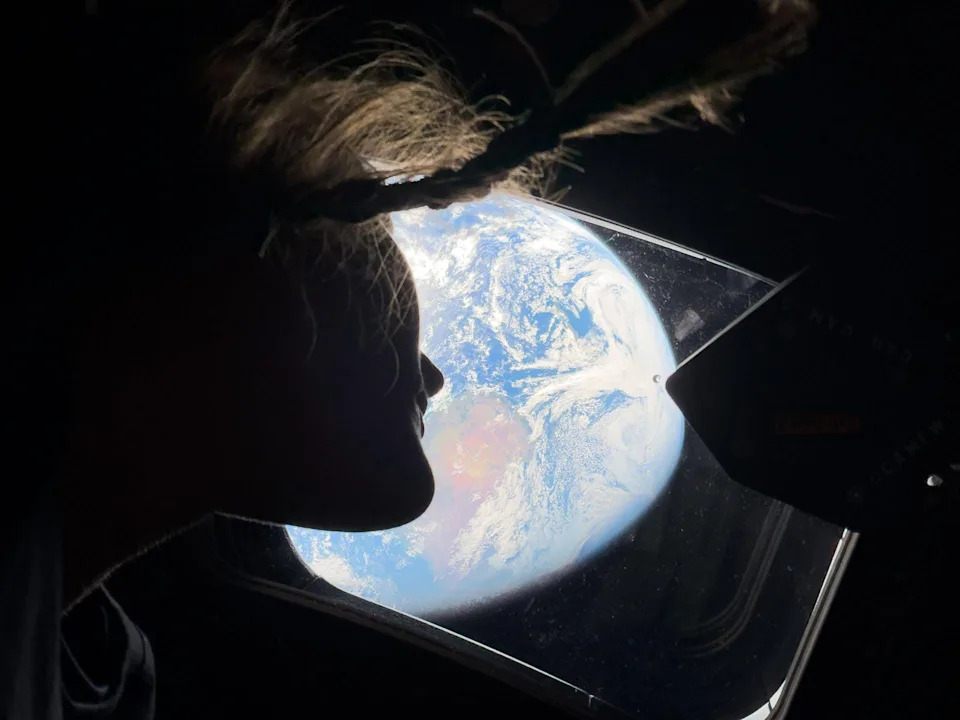
NASA astronaut Christina Koch, a mission specialist on Artemis II, gazes out the windows of the Orion vehicle back at Earth as she and the crew head toward the moon. Koch, who already holds several NASA records from her first spaceflight in 2019 to the International Space Station, became the first woman to fly on a lunar mission.
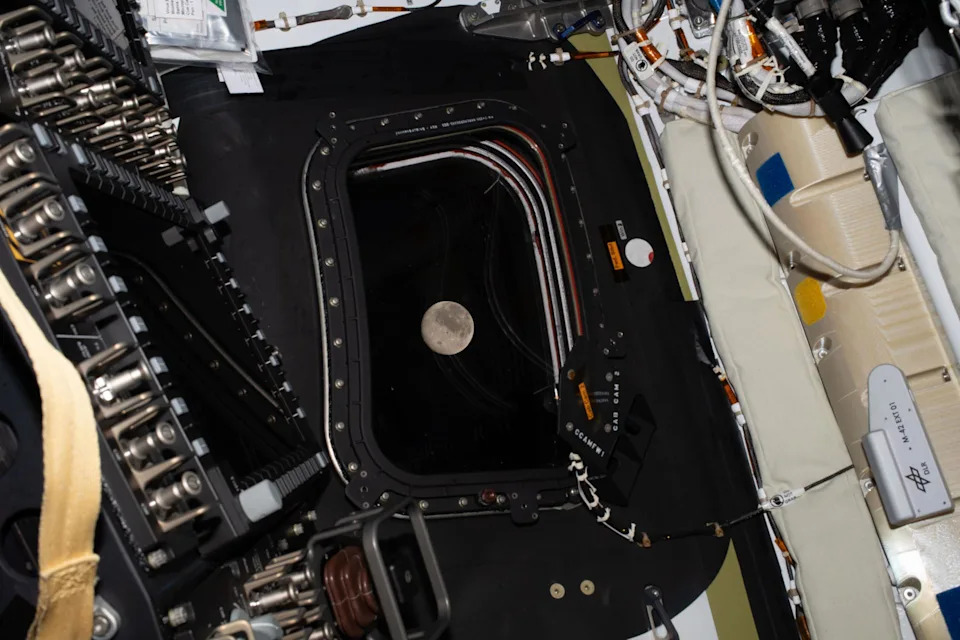
Before going to sleep April 5, the Artemis II crew snapped one more photo of the moon, as it drew close in the window of the Orion spacecraft. Shortly after, the astronauts entered the lunar sphere of influence, where the pull of the moon's gravity became stronger than Earth's.
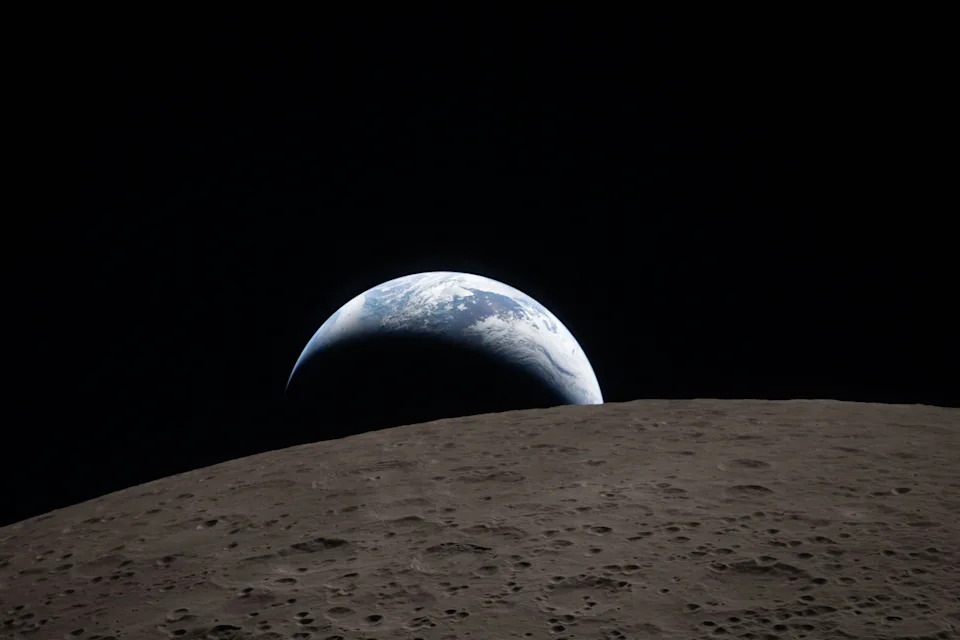
The crew of Artemis II captured a breathtaking image of a celestial event known as an "Earthset," in which the Earth dropped below the lunar horizon. The image is reminiscent of the iconic "Earthrise" photo that NASA astronaut Bill Anders captured in 1968 during the Apollo 8 mission that showed our planet rising on the lunar horizon.
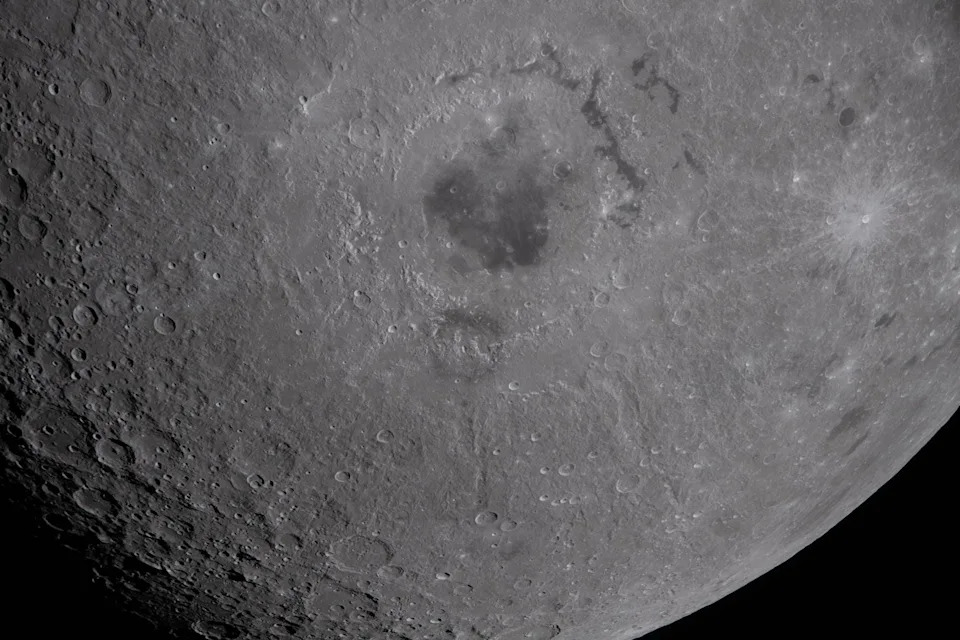
Of the impact craters, ancient lava flows and other lunar features the Artemis II astronauts observed during an April 6 flyby, a crater known as the Orientale basin was perhaps the most prominent. Spanning nearly 600 miles, the 3.8 billion year old crater (seen in the upper center of this photo) had never been seen with the naked eye prior to the mission.
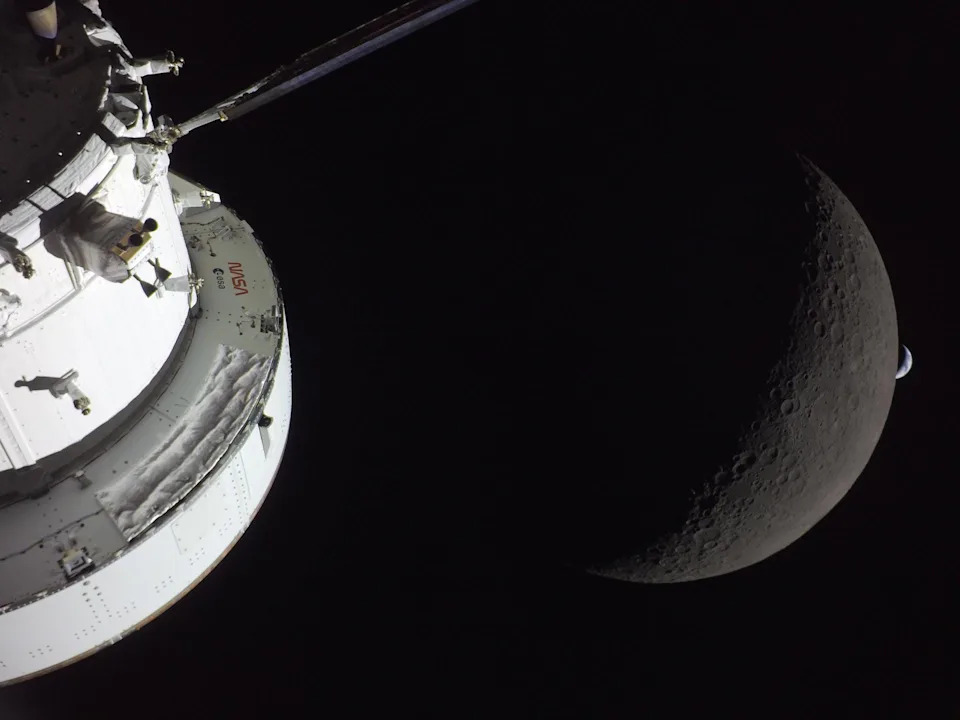
The Orion spacecraft the Artemis II astronauts were aboard is captured in the same frame as both the moon and Earth in this photo captured about four hours into the historic April 6 flyby.
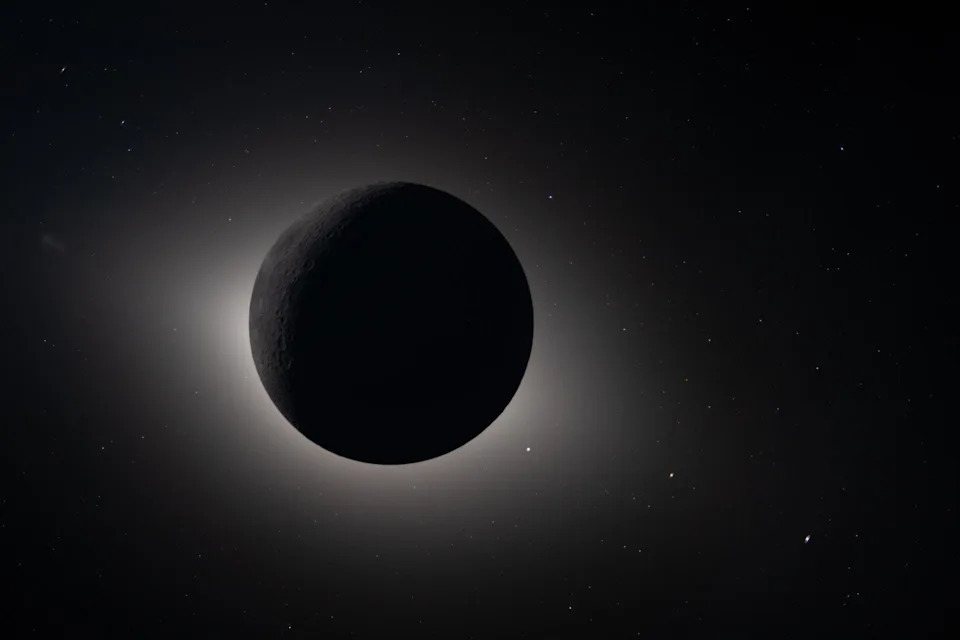
This image shows the moon fully eclipsing the sun from the vantage of the Orion spacecraft, not unlike what millions of people witnessed in April 2024 from Earth. From the crew’s perspective, the moon appeared large enough to completely block the sun, creating nearly 54 minutes of totality and revealing our star's elusive outermost layer, known as the corona.
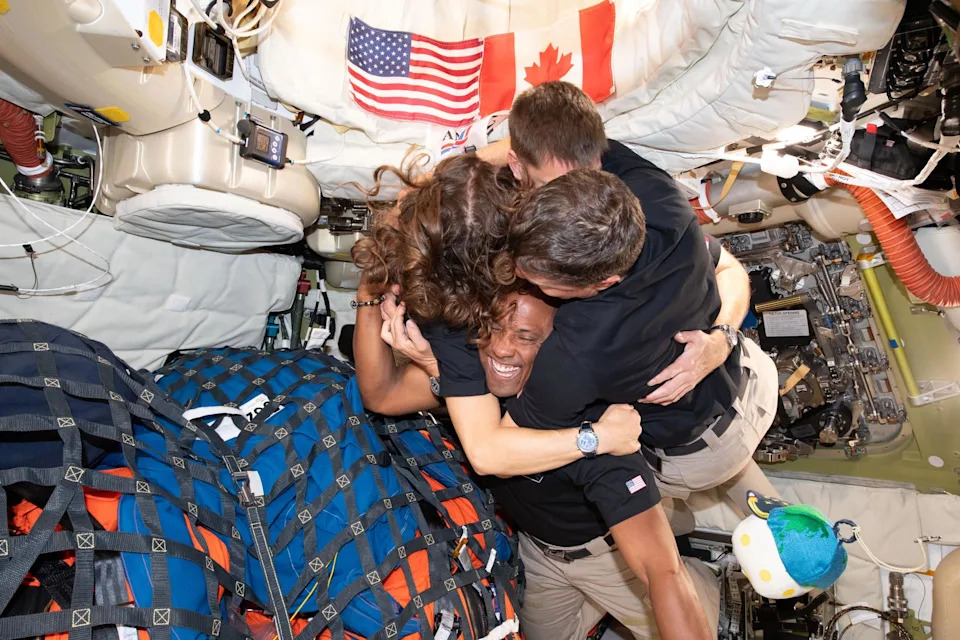
The crew members of Artemis II embrace following the historic lunar flyby April 6, during which the astronauts flew farther from Earth than anyone in human history while seeing sights of the moon's far side never seen in person.
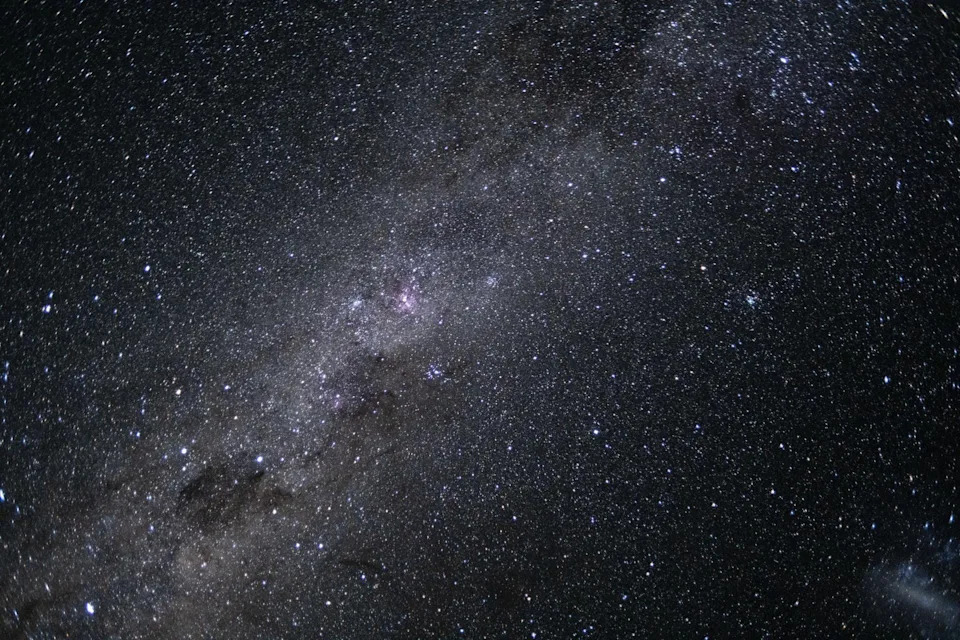
The Artemis II crew captured this breathtaking photo of our galaxy, the Milky Way. Spanning more than 100,000 light-years, Earth is located along one of the galaxy’s spiral arms, about halfway from the center.
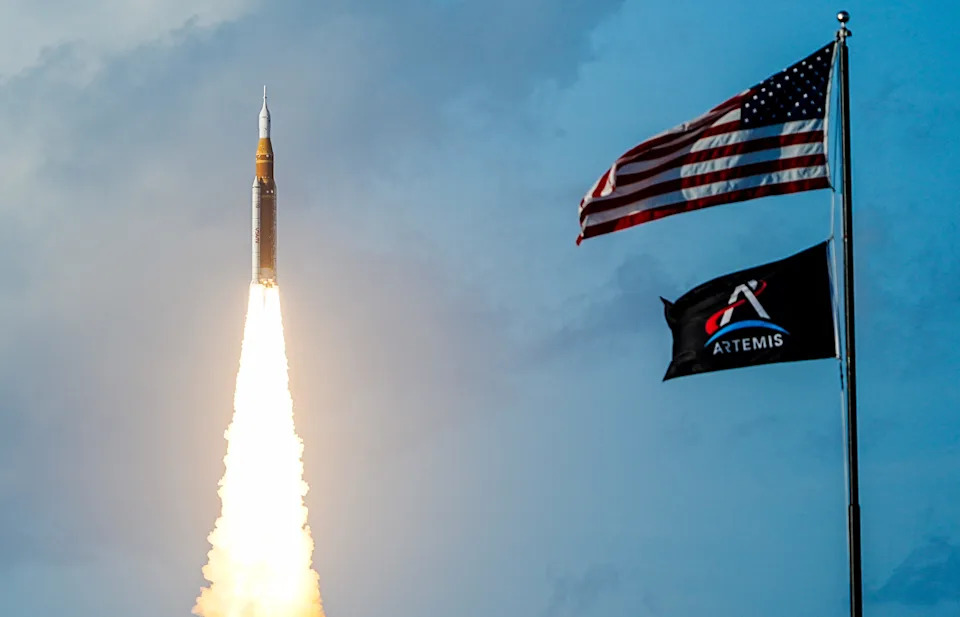
Artemis IIand it’s crew of four lift off from Kennedy Space Center April 1, 2026 on a 10-day mission around the Moon and back. Craig Bailey, FLORIDA TODAY via USA TODAY NETWORK
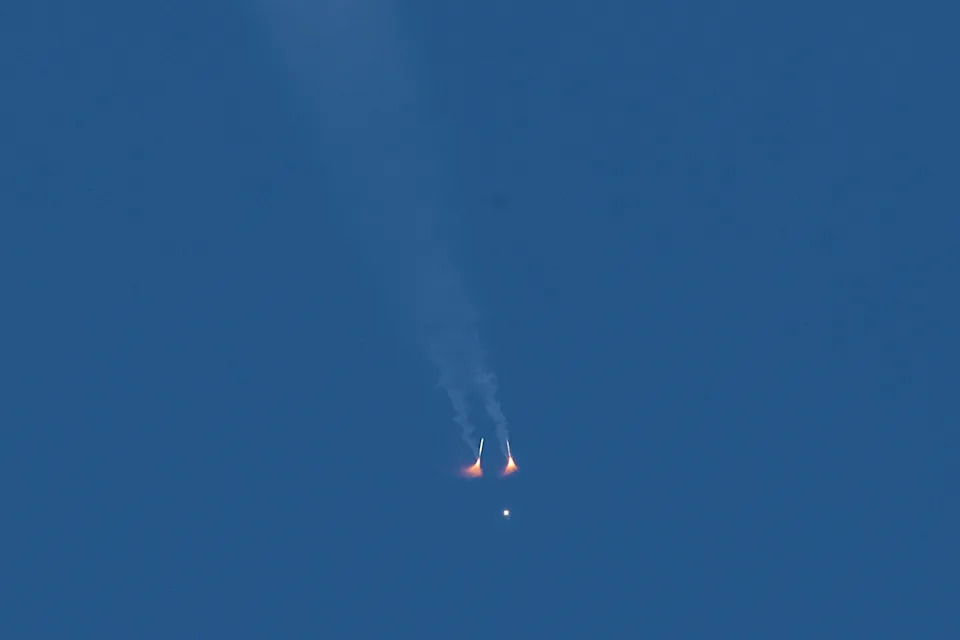
The solid rocket boosters (SRBs) detach after NASA's Artemis II Space Launch System rocket carrying the Orion spacecraft lifts off from Launch Complex 39B at Kennedy Space Center on April 1, 2026 in Cape Canaveral, Florida. The 10-day mission will take NASA astronauts Commander Reid Wiseman, Pilot Victor Glover and Mission Specialist Christina Koch and CSA (Canadian Space Agency) Mission Specialist Jeremy Hansen around the moon and back. The astronauts are supposed to fly 230,000 miles out into space, the farthest any human has ever traveled from Earth.
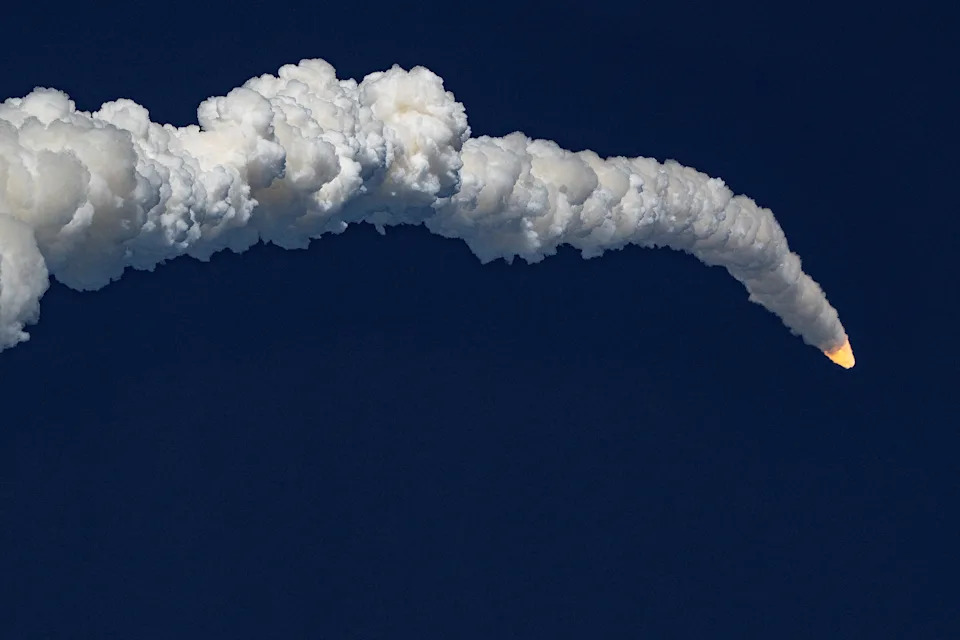
The Artemis II crewed lunar mission launches at Kennedy Space Center in Cape Canaveral, Florida, on April 1, 2026. Four astronauts blasted off aboard a massive NASA rocket April 1 on a long-anticipated journey around the Moon, the first crewed lunar flyby in more than 50 years.
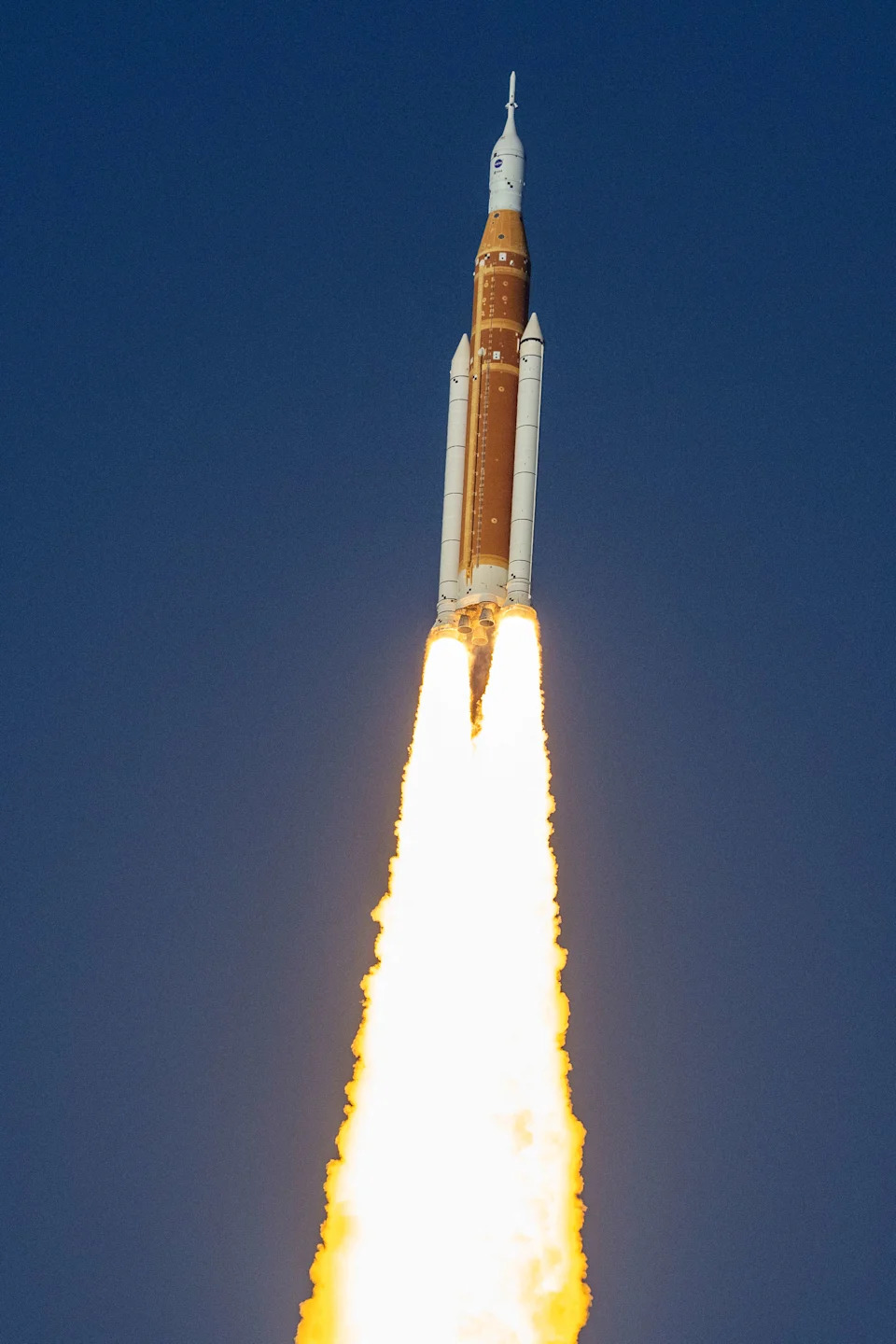
The Artemis II crewed lunar mission launches at Kennedy Space Center in Cape Canaveral, Florida, on April 1, 2026. Artemis II is a 10-day flight with four astronauts on a loop around the Moon, marking the first time humans have traveled beyond low Earth orbit since the Apollo 17 mission in 1972.
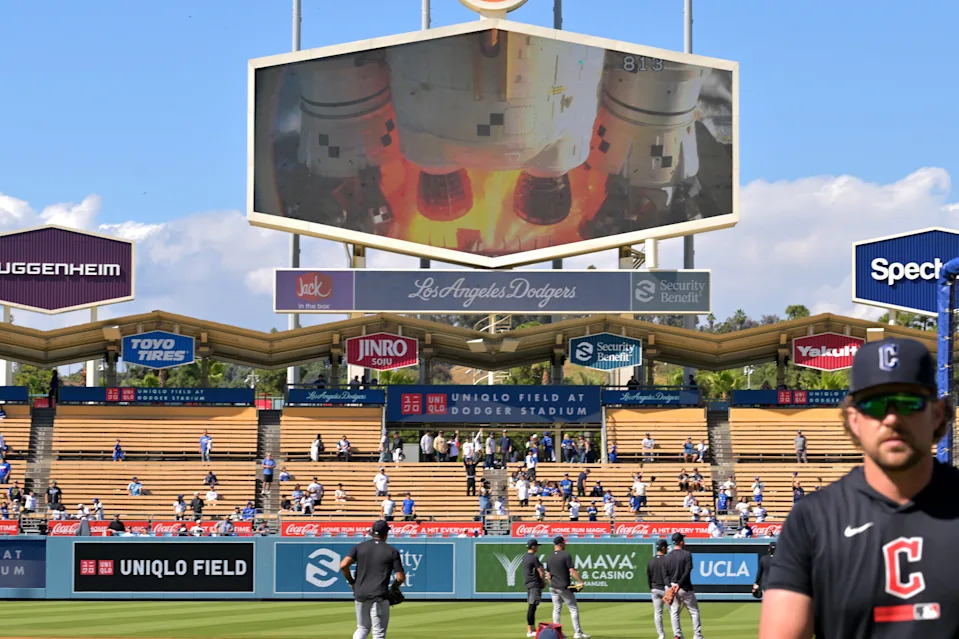
Cleveland Guardians players warm up as the NASA's Artemis II launches from Kennedy Space Center in Florida prior to the game against the Los Angeles Dodgers at Dodger Stadium.

People watch the Artemis II crewed lunar mission launch on a television outside of the News Corp building on April 1, 2026 in New York City. The 10-day mission will take NASA astronauts Commander Reid Wiseman, Pilot Victor Glover and Mission Specialist Christina Koch and CSA (Canadian Space Agency) Mission Specialist Jeremy Hansen around the moon and back. The astronauts are supposed to fly 230,000 miles out into space, the farthest any human has ever traveled from Earth.
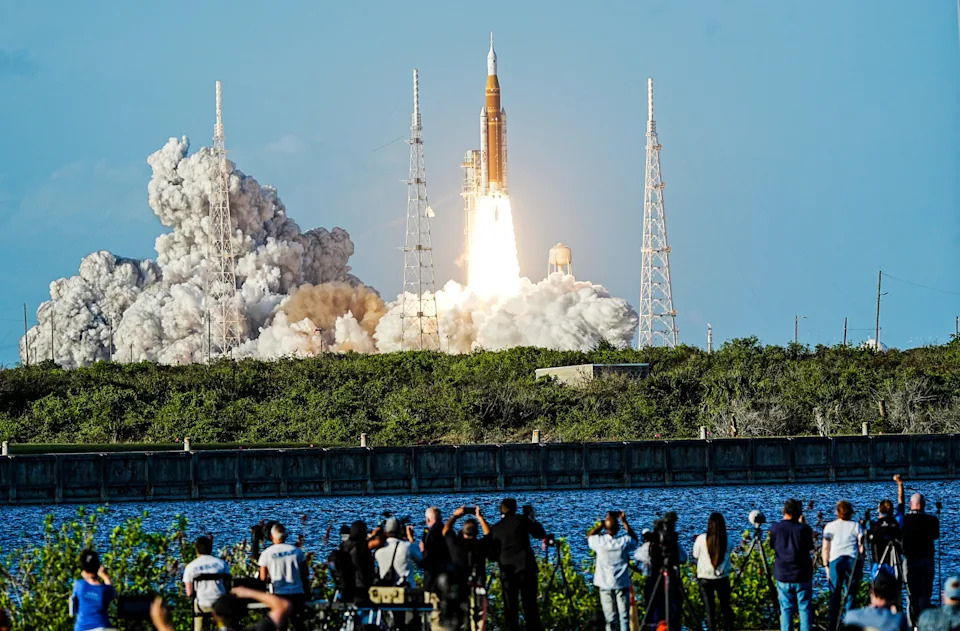
Artemis II and it’s crew of four lift off from Kennedy Space Center April 1, 2026 on a 10-day mission around the Moon and back.

People observe the launch of Artemis II from the A. Max Brewer Bridge in Titusville, Florida on April 1, 2026 in Cape Canaveral, Fla. The 322-foot-tall rocket will take astronauts around the moon and back, 230,000 miles out into space and the farthest any human has ever traveled from Earth.
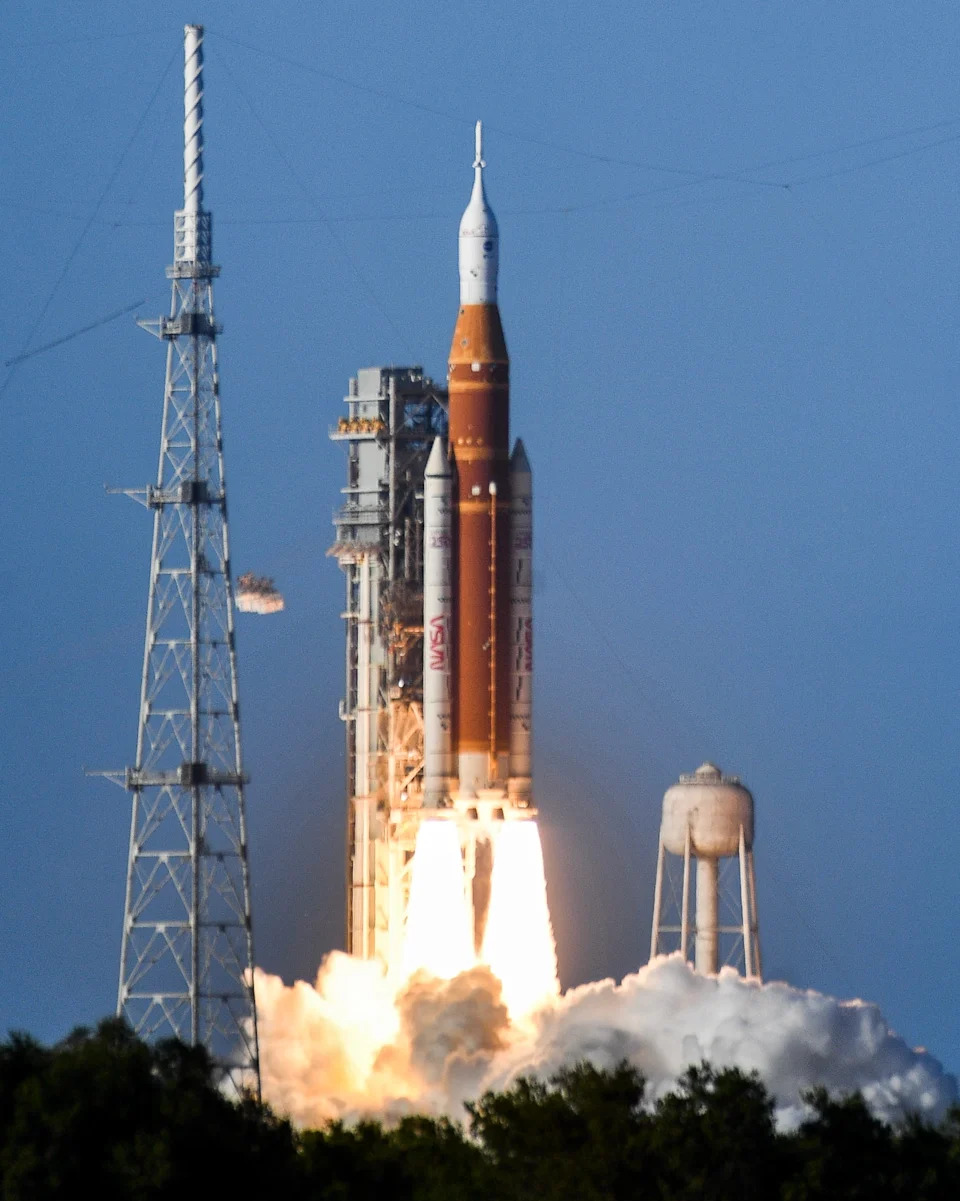
Artemis II and it’s crew of four lift off from Kennedy Space Center April 1, 2026 on a 10-day mission around the Moon and back. Craig Bailey, FLORIDA TODAY via USA TODAY NETWORK
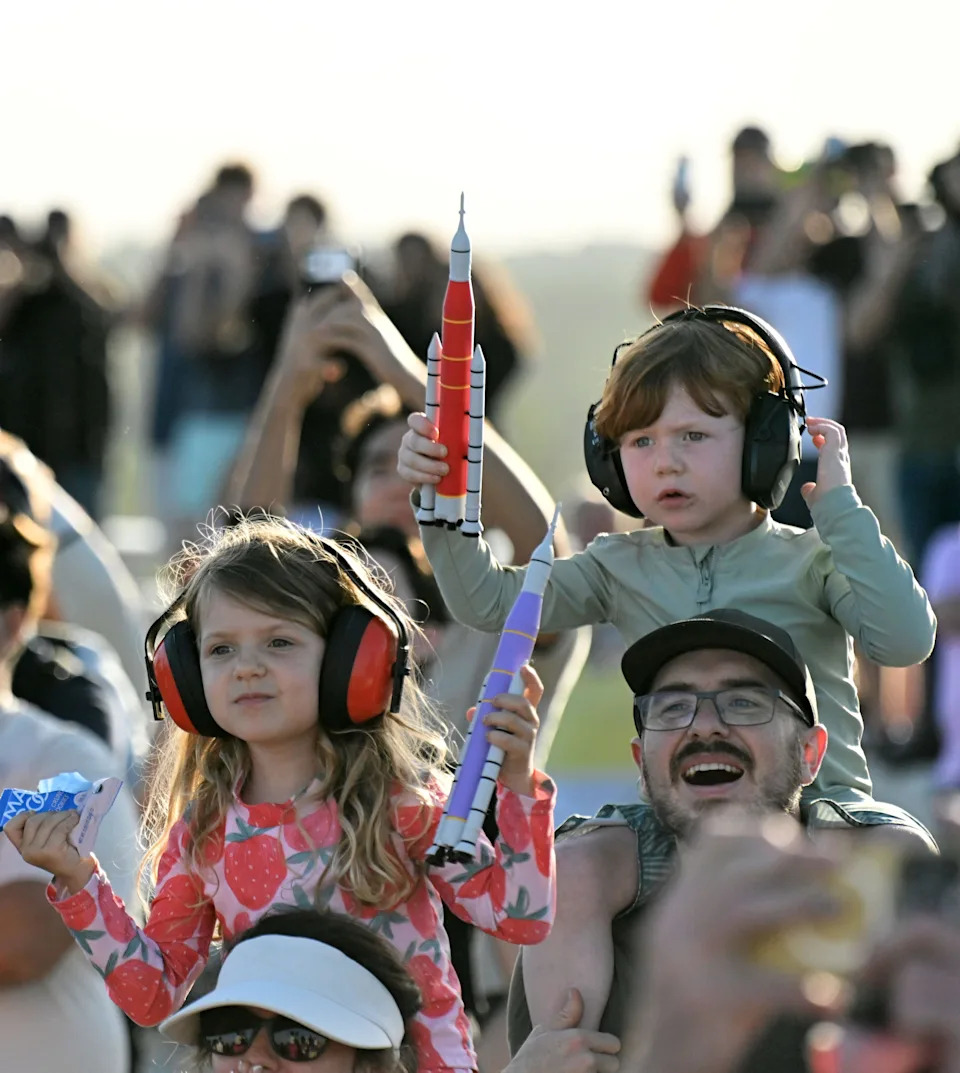
People observe and celebrate the launch of the Artemis II from the A. Max Brewer Bridge in Titusville, Florida on April 01, 2026 in Cape Canaveral, Florida. The 322-foot-tall rocket will take astronauts around the moon and back, 230,000 miles out into space and the farthest any human has ever traveled from Earth.
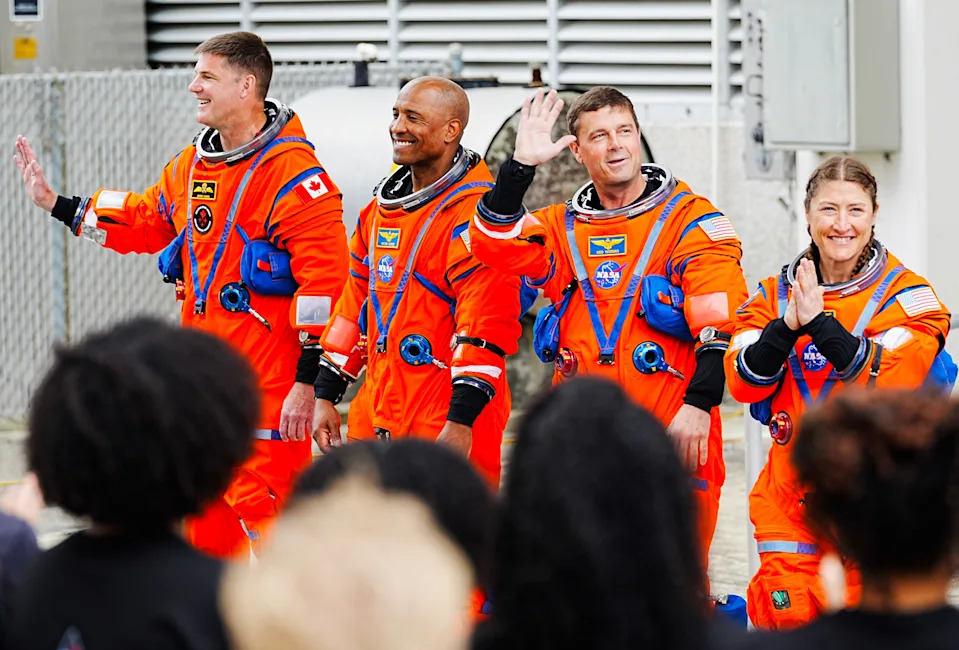
The Artemis II astronauts leave crew quarters at Kennedy Space Center, FL April 1, 2026 headed to Pad 39B for launch on an 10-day rendezvous with the Moon. Craig Bailey, FLORIDA TODAY via USA TODAY NETWORK
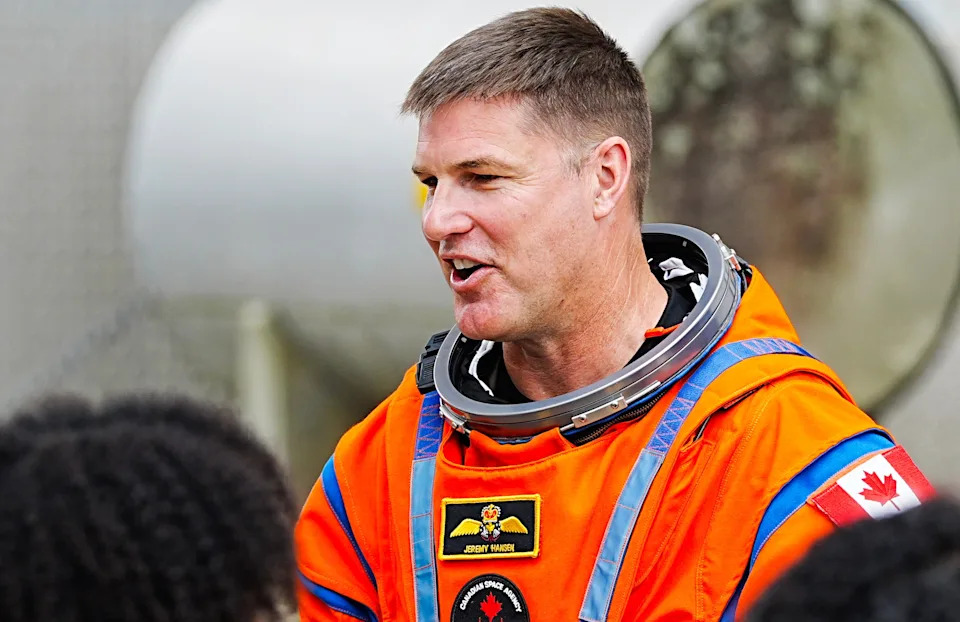
Artemis II Mission Specialist Jeremy Hansen talks with family as the crew leaves crew quarters at Kennedy Space Center, FL April 1, 2026. They’re headed to Pad 39B for launch on an 10-day rendezvous with the Moon. Craig Bailey, FLORIDA TODAY via USA TODAY NETWORK
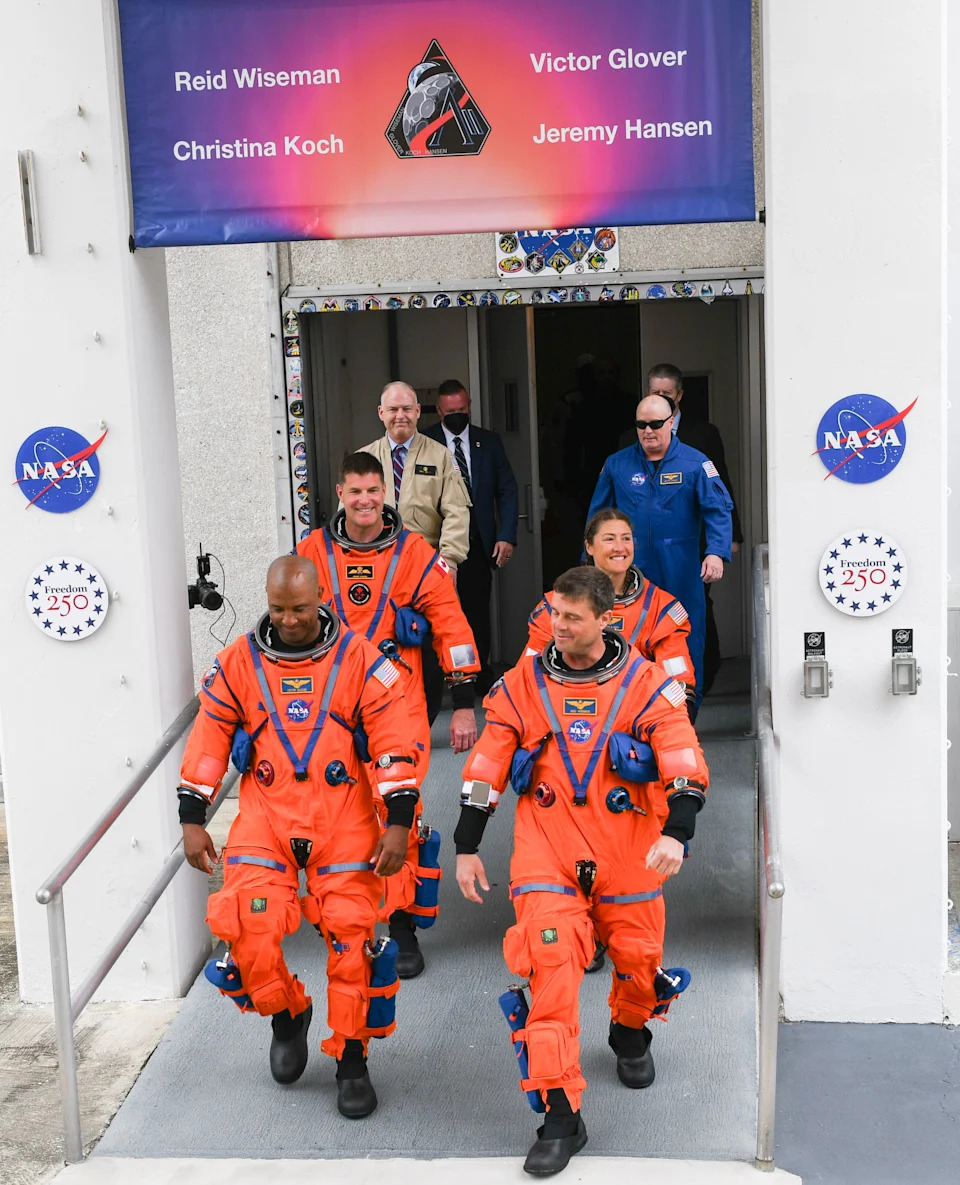
The Artemis II astronauts leave crew quarters at Kennedy Space Center, FL April 1, 2026 headed to Pad 39B for launch on an 10-day rendezvous with the Moon. Craig Bailey, FLORIDA TODAY via USA TODAY NETWORK
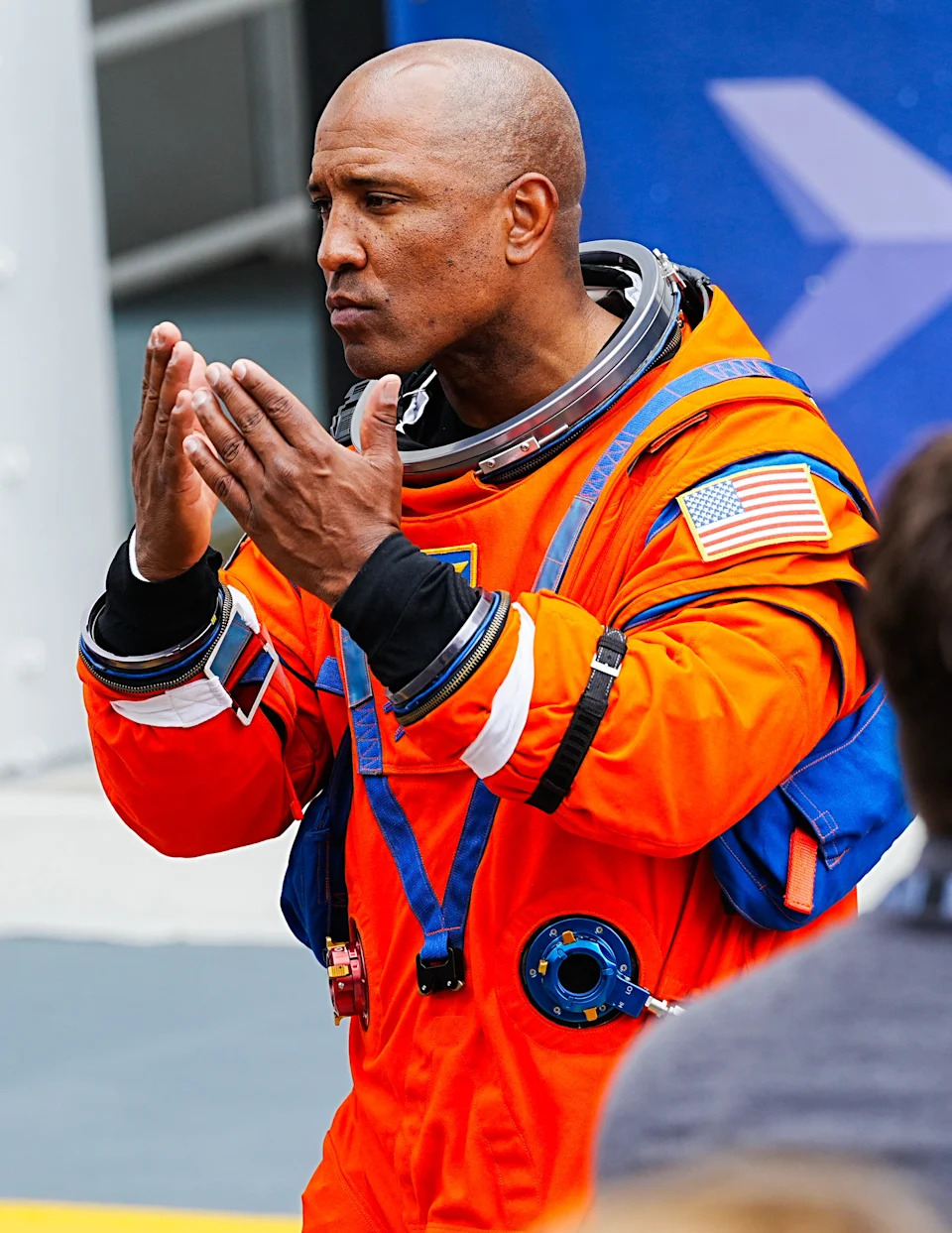
Artemis II Pilot Victor Glover blows kisses to his family as the crew leaves crew quarters at Kennedy Space Center, FL April 1, 2026. They’re headed to Pad 39B for launch on an 10-day rendezvous with the Moon.
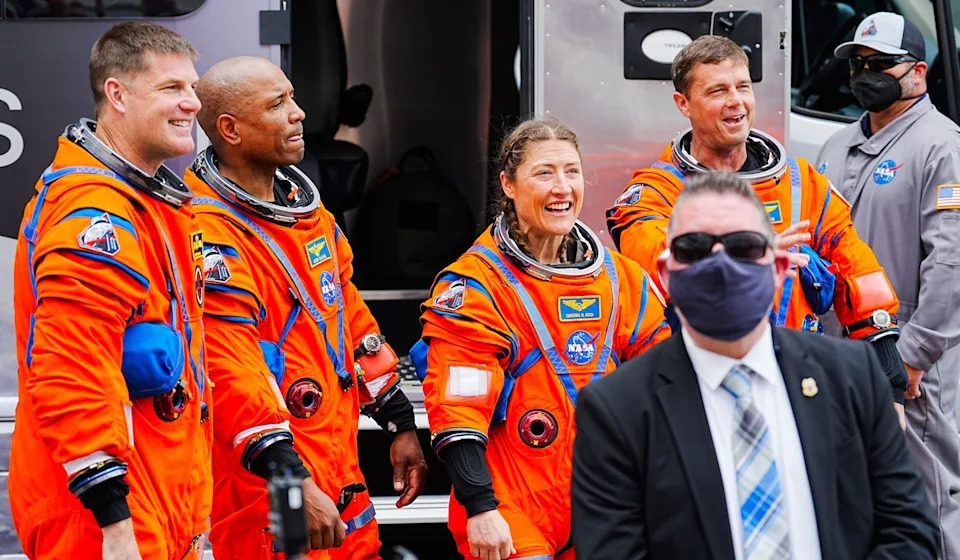
The Artemis II astronauts (from left) Mission Specialist Jeremy Hansen, Pilot Victor Glover, Commander Reid Wiseman and Mission Specialist Christina Koch leave crew quarters at Kennedy Space Center, FL April 1, 2026 headed to Pad 39B for launch on an 10-day rendezvous with the Moon. Craig Bailey, FLORIDA TODAY via USA TODAY NETWORK
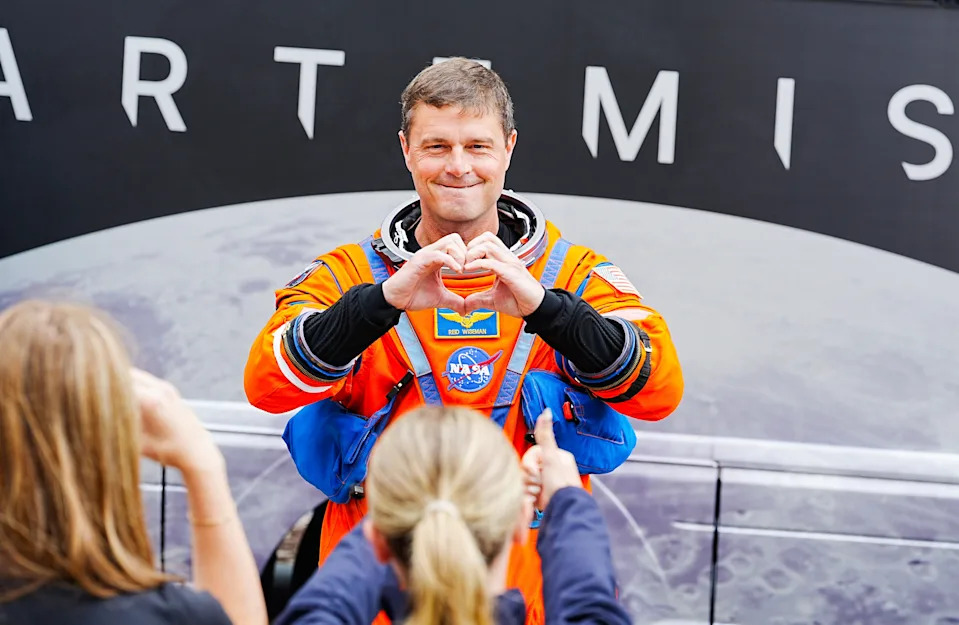
Artemis II Commander Reid Wiseman sends a heart of loved ones as the crew leaves crew quarters at Kennedy Space Center, FL April 1, 2026. They’re headed to Pad 39B for launch on an 10-day rendezvous with the Moon. Craig Bailey, FLORIDA TODAY via USA TODAY NETWORK
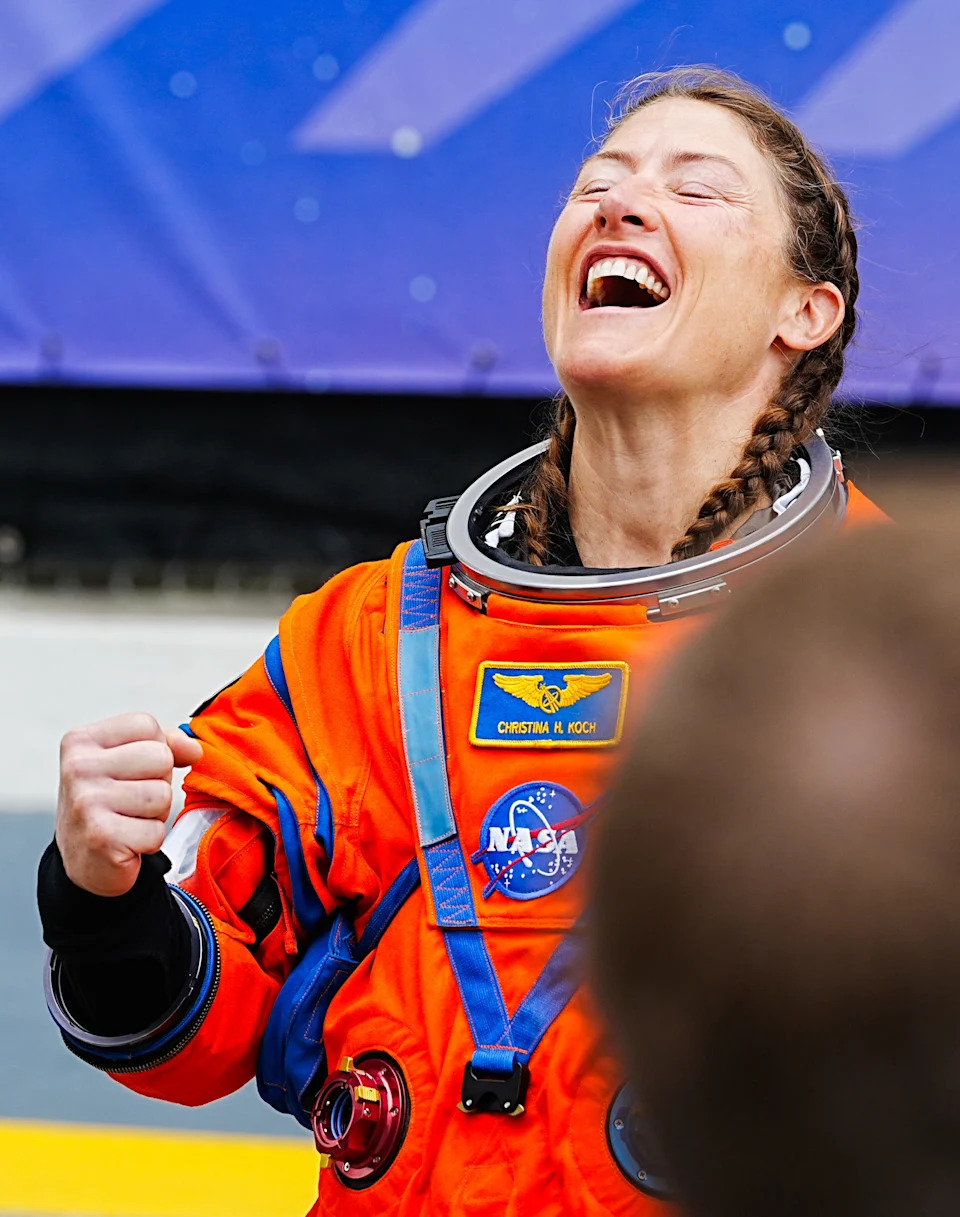
Artemis II Mission Specialist Christina Koch laughs as the crew leaves crew quarters at Kennedy Space Center, FL April 1, 2026. They’re headed to Pad 39B for launch on an 10-day rendezvous with the Moon. Craig Bailey, FLORIDA TODAY via USA TODAY NETWORK
Photographers set up remote cameras inside Pad 39B March 31, 2026 in advance of the launch of Artemis II. Craig Bailey, FLORIDA TODAY via USA TODAY NETWORK
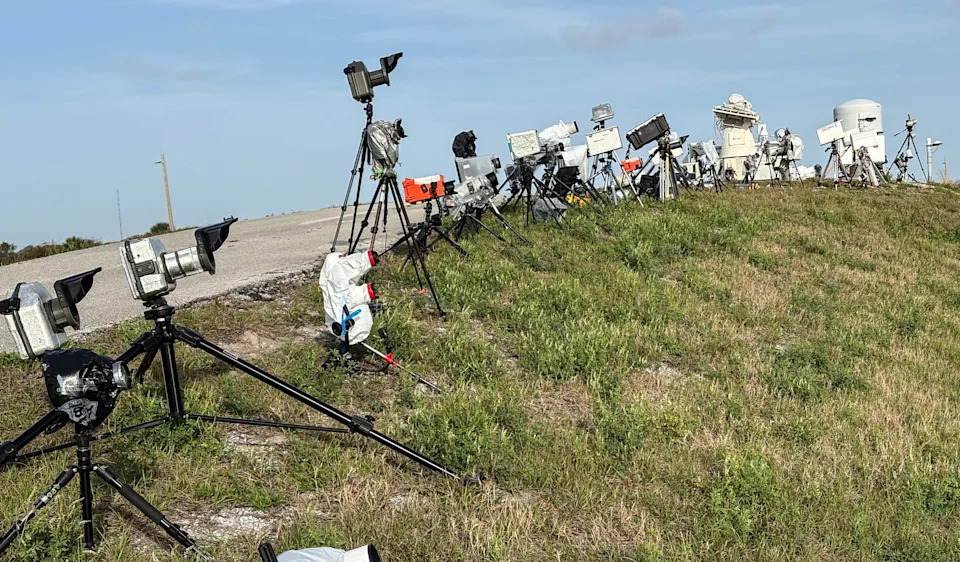
Remote camerasa are set up inside Pad 39B March 31, 2026 in advance of the launch of Artemis II. Craig Bailey, FLORIDA TODAY via USA TODAY NETWORK
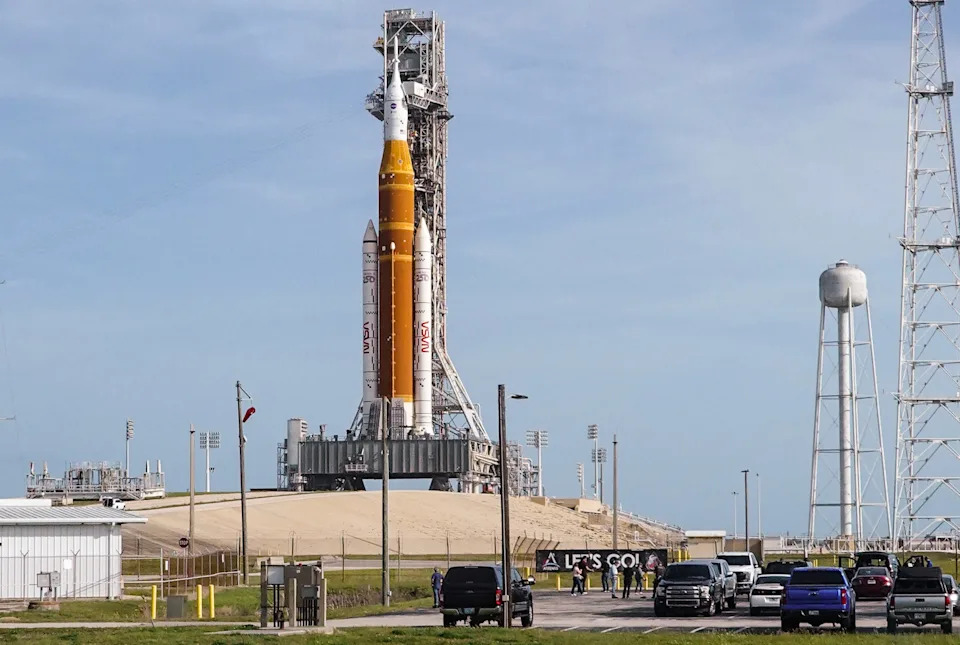
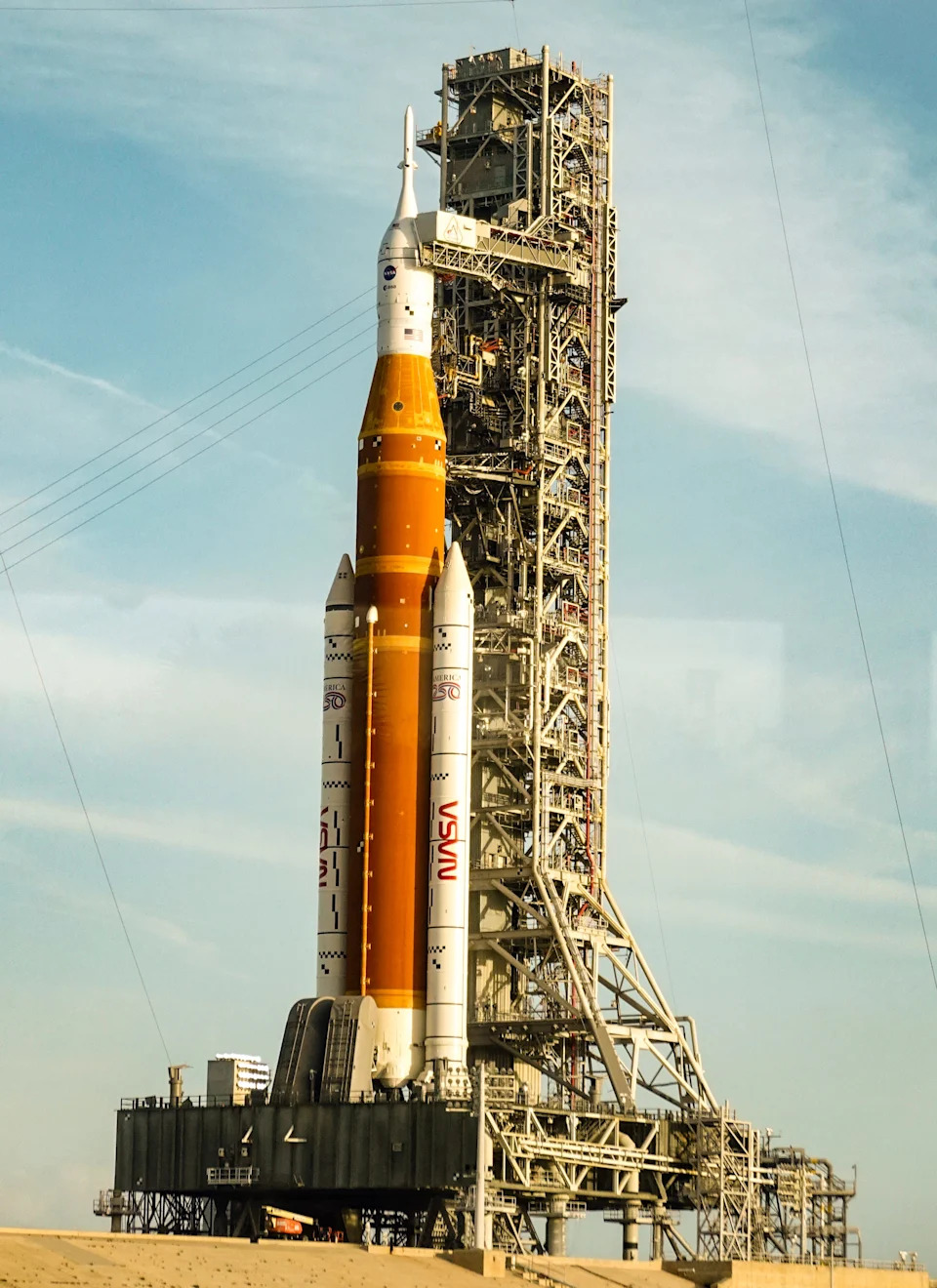
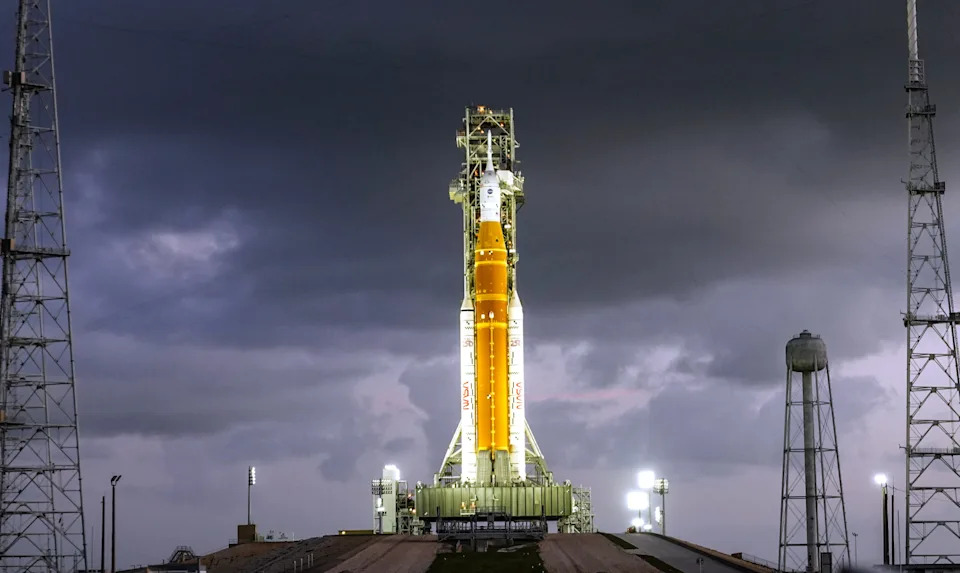
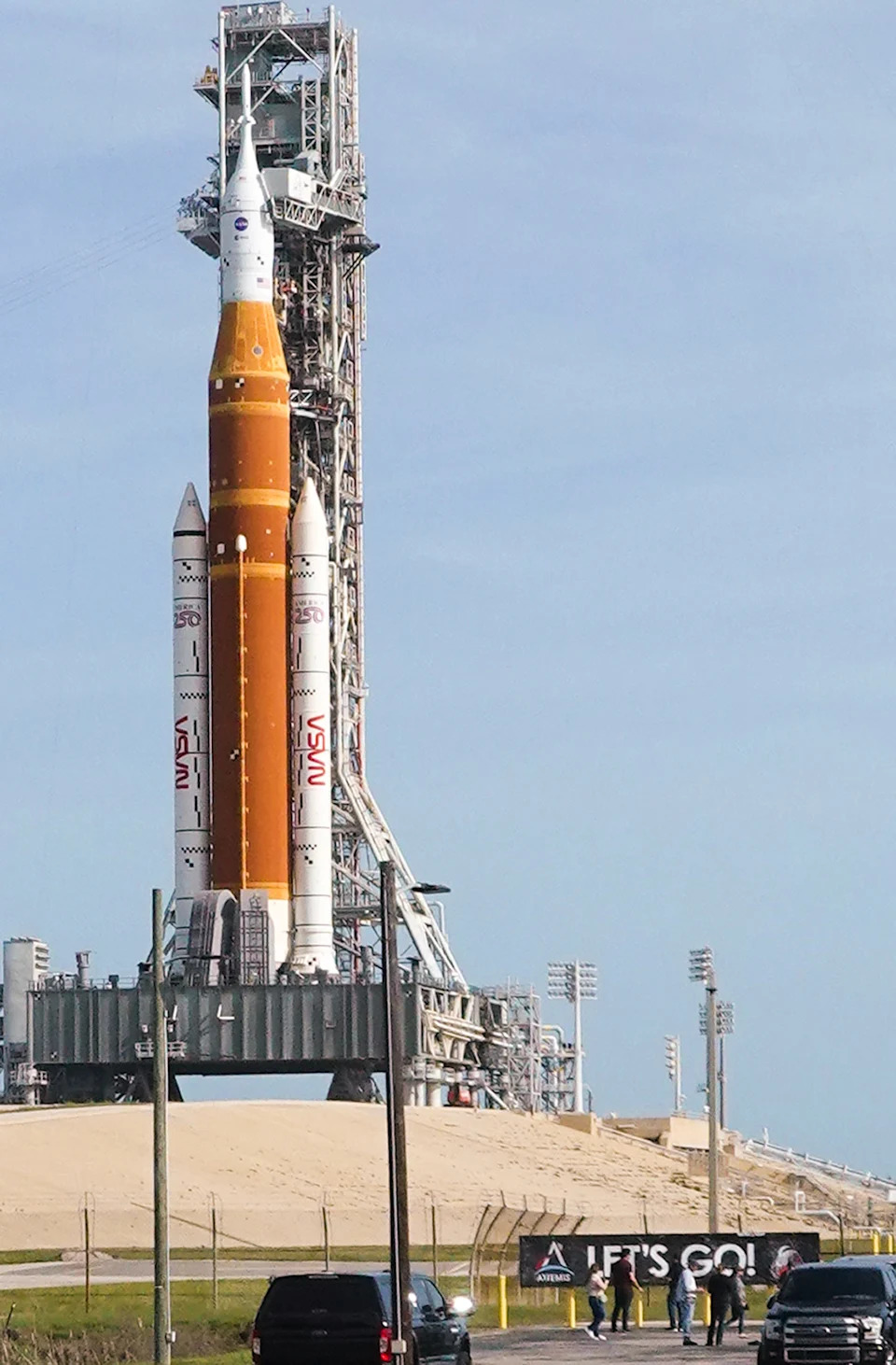
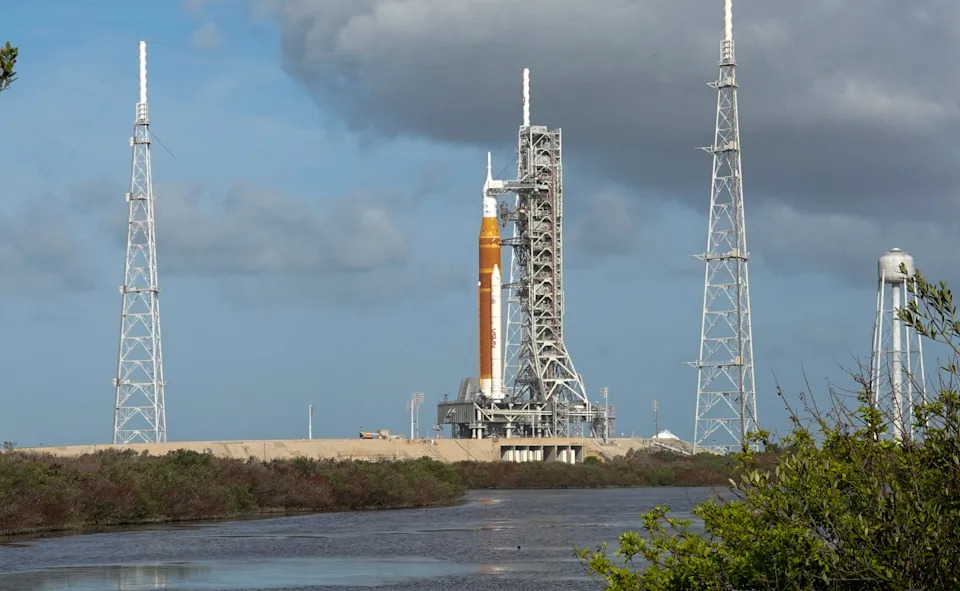
NASAÕs Space Launch System rocket Artemis II is readied for launch on Pad 39B at Kennedy Space Center, FL, March 31, 2026. Artemis II is scheduled to launch April 4, taking 4 astronauts around the Moon and back. Craig Bailey, FLORIDA TODAY via USA TODAY NETWORK
Photographers set up remote cameras inside Pad 39B March 31, 2026 in advance of the launch of Artemis II. Craig Bailey, FLORIDA TODAY via USA TODAY NETWORK
Photographers set up remote cameras inside Pad 39B March 31, 2026 in advance of the launch of Artemis II. Craig Bailey, FLORIDA TODAY via USA TODAY NETWORK
Photographers set up remote cameras inside Pad 39B March 31, 2026 in advance of the launch of Artemis II. Craig Bailey, FLORIDA TODAY via USA TODAY NETWORK
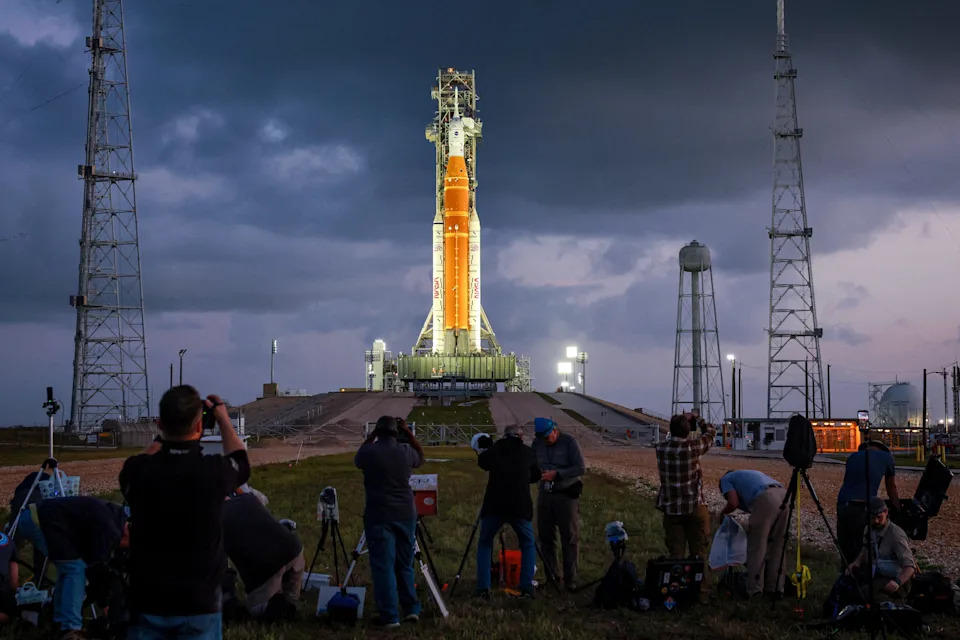
People set cameras to photograph NASA's Artemis II lunar flyby mission, with the next-generation moon rocket, the Space Launch System (SLS) rocket and the Orion crew capsule, on Pad 39B ahead of the launch of theArtemis II missionat the Kennedy Space Center in Cape Canaveral, Fla., March 31, 2026. The rocket is scheduled for an April 1, 2026, 6:24 p.m. launch of the 10-day mission.
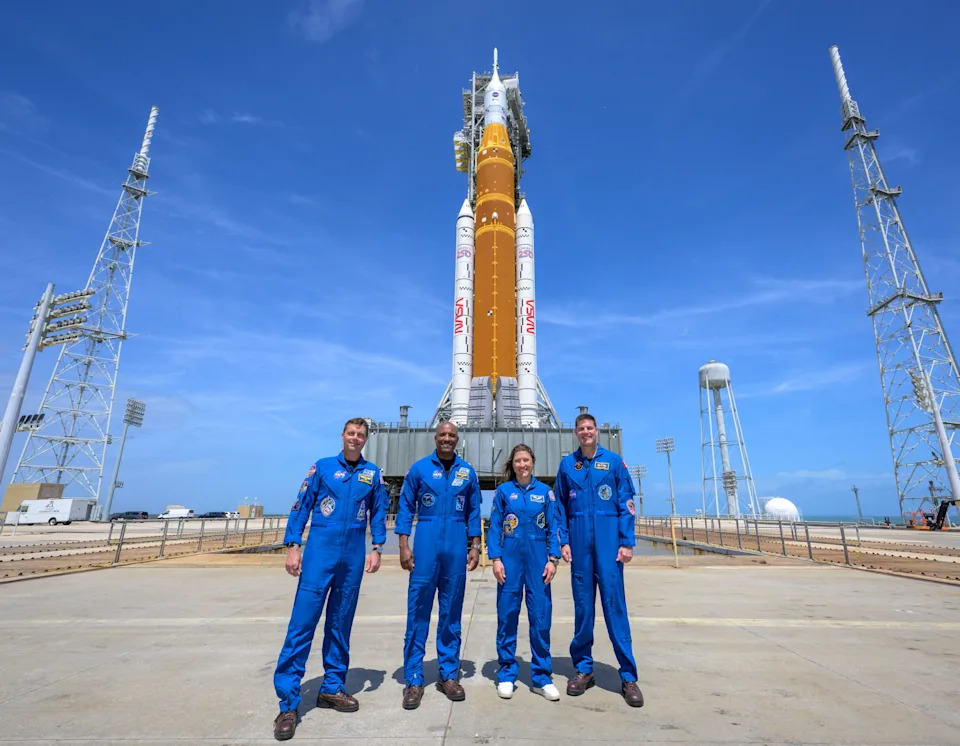
This NASA handout image shows NASA astronauts Reid Wiseman, Artemis II commander (L), Victor Glover, Artemis II pilot (2L), Christina Koch, Artemis II mission specialist (2R), and CSA (Canadian Space Agency) astronaut Jeremy Hansen, Artemis II mission specialist (R), as they pose for a group photo during a visit to NASA's Artemis II SLS (Space Launch System) rocket and Orion spacecraft, on March 30, 2026, at Launch Complex 39B of NASA's Kennedy Space Center in Florida.
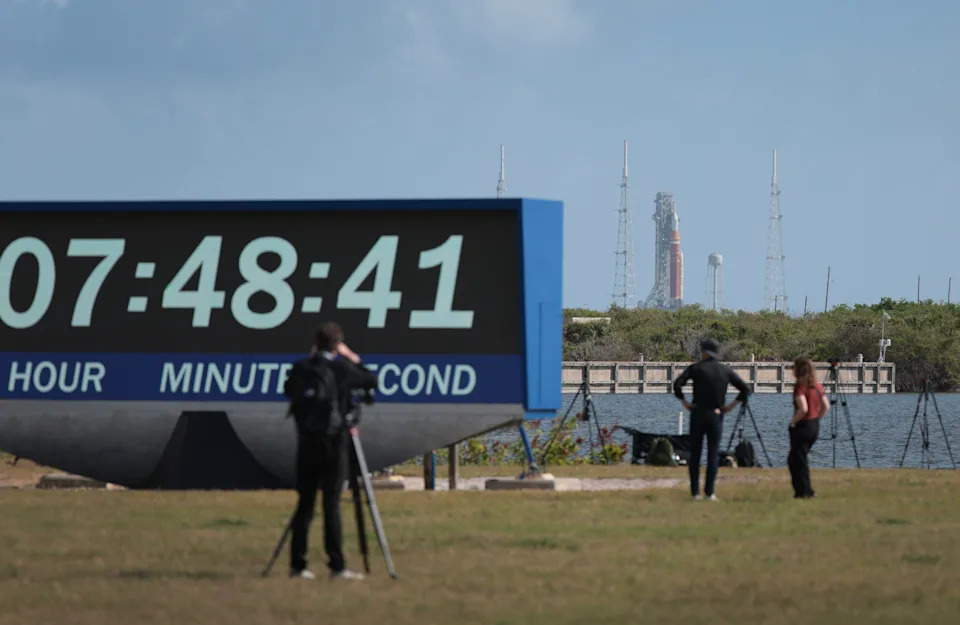
The countdown clock runs as NASA's Artemis II Space Launch System rocket and Orion spacecraft sit on Launch Pad 39B at the Kennedy Space Center on April 1, 2026 in Cape Canaveral, Fla.
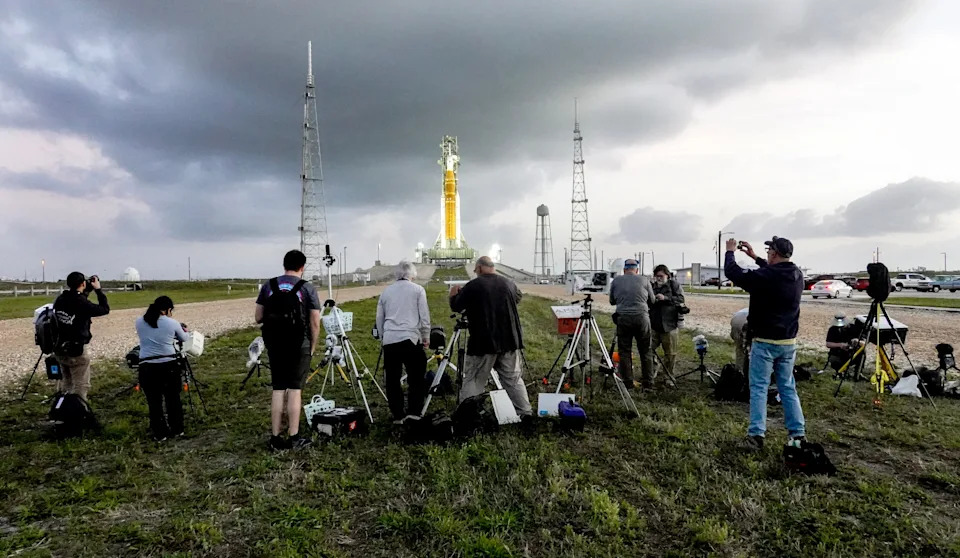
Photographers set up remote cameras inside Pad 39B March 31, 2026 in advance of the launch of Artemis II.

People gather ahead of the launch of the next-generation moon rocket, the Space Launch System (SLS) rocket and the Orion crew capsule, part of NASA's Artemis II lunar flyby mission, from NASA's Kennedy Space Center, in Titusville, Fla., April 1, 2026.
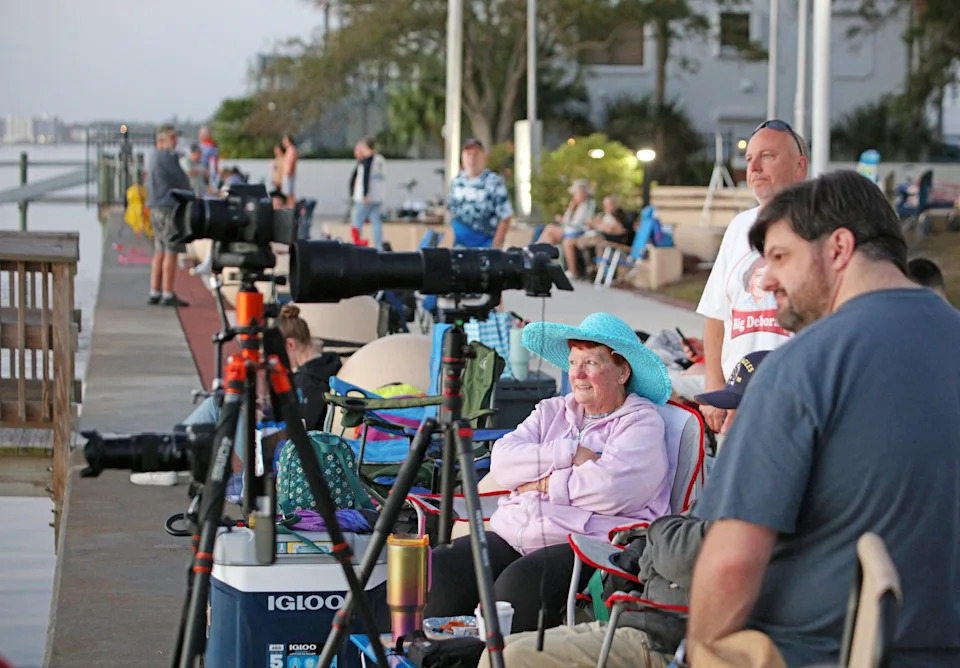
Space enthusiasts watch the sunrise from a park in Titusville, Fla. several hours before NASA's Artemis II Space Launch System (SLS) rocket is scheduled to launch from the Kennedy Space Center on April 1, 2026.
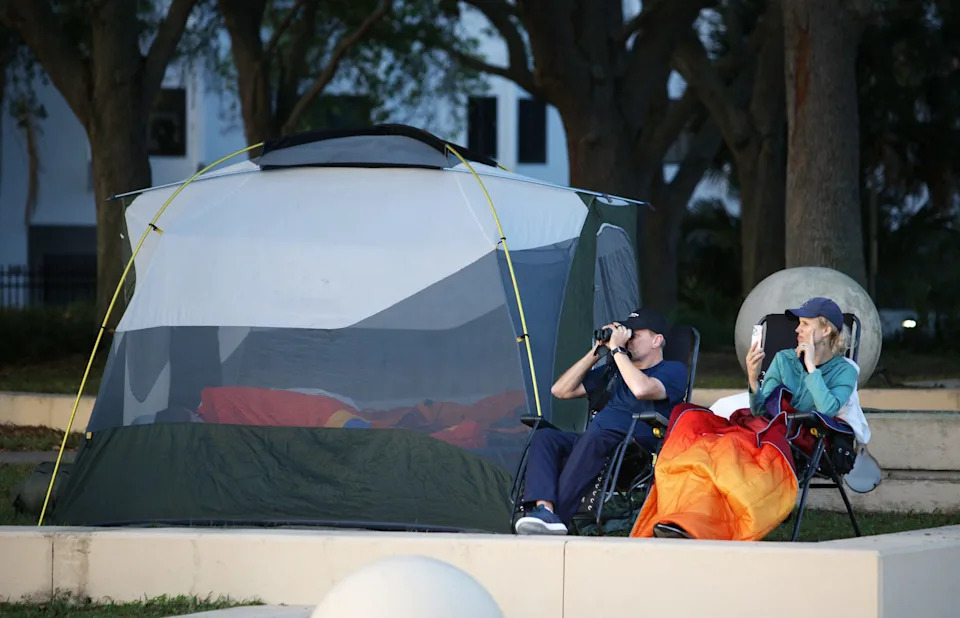
Space enthusiasts watch the sunrise from a park in Titusville, Florida several hours before NASA's Artemis II Space Launch System (SLS) rocket is scheduled to launch from the Kennedy Space Center on April 1, 2026.
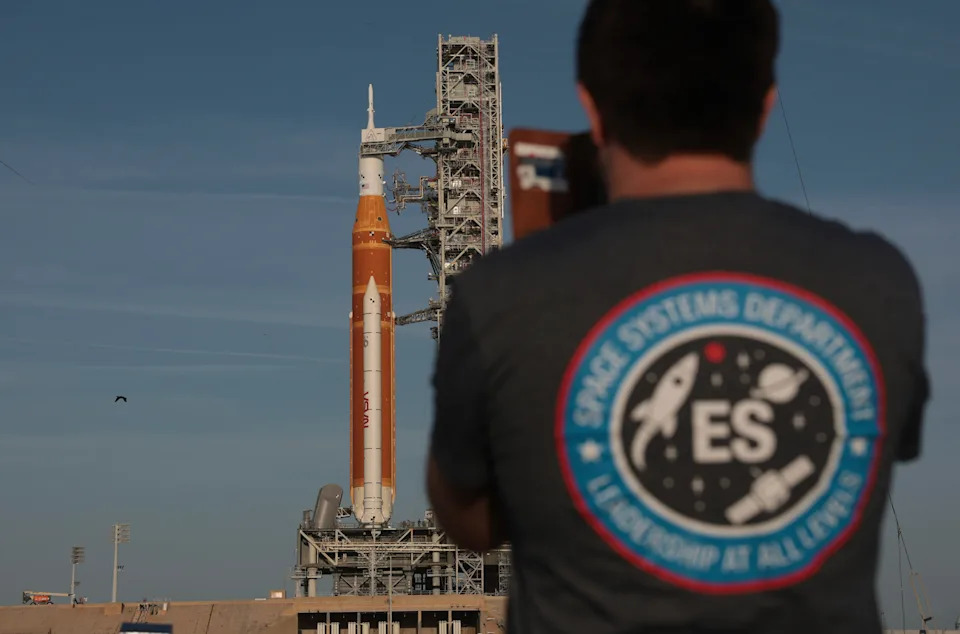
NASA's Artemis II Space Launch System rocket and Orion spacecraft sit on Launch Pad 39B at the Kennedy Space Center on March 31, 2026 in Cape Canaveral, Fla.

Brenda Mulberry, president of Pike Products and Space Shirts, holds up one of the thousands of Artemis II t-shirts she has printed in their north Merritt Island shop.
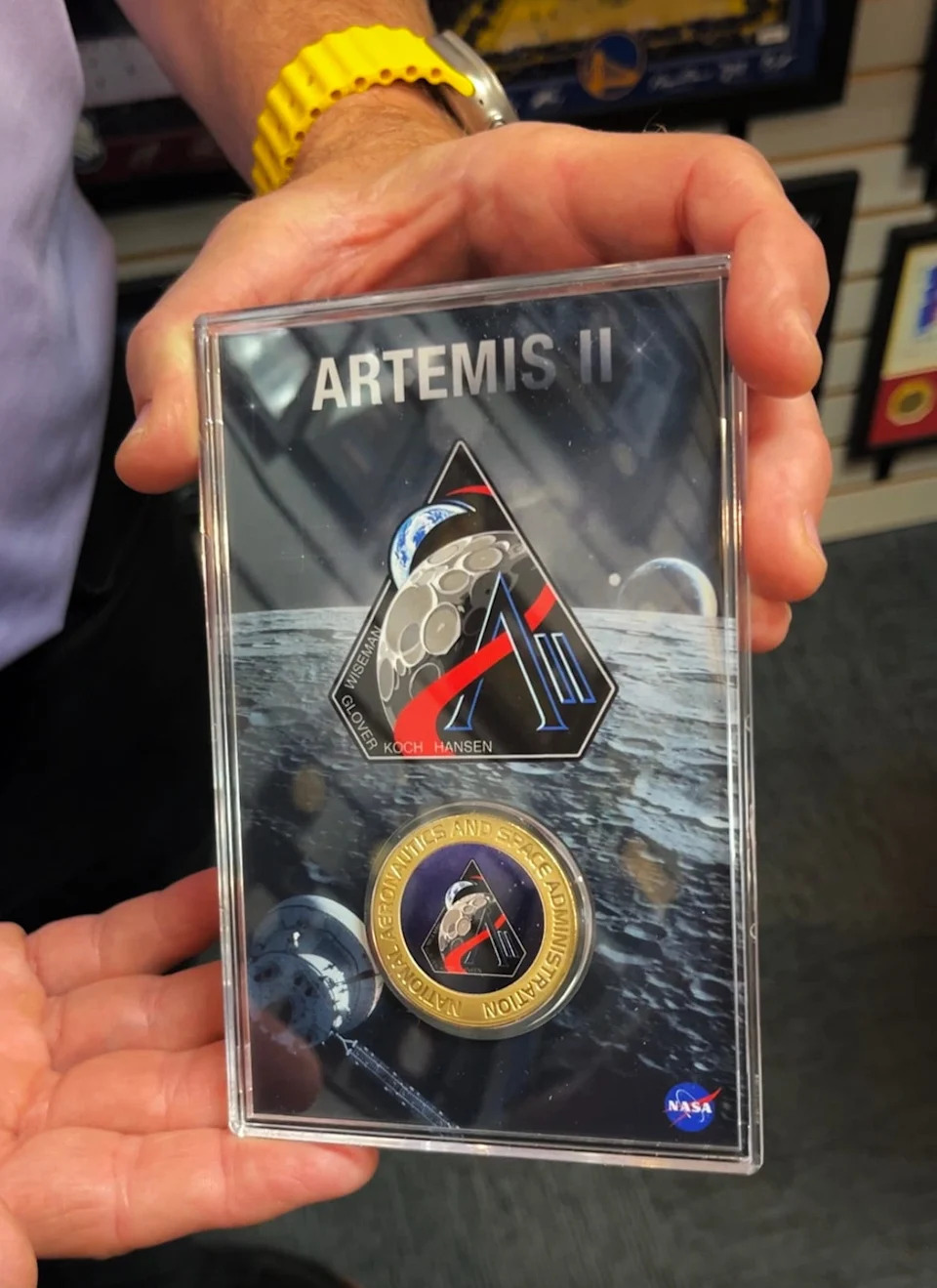
The Highland Mint in Melbourne, Fla. has minted an Artemis II collector coin.
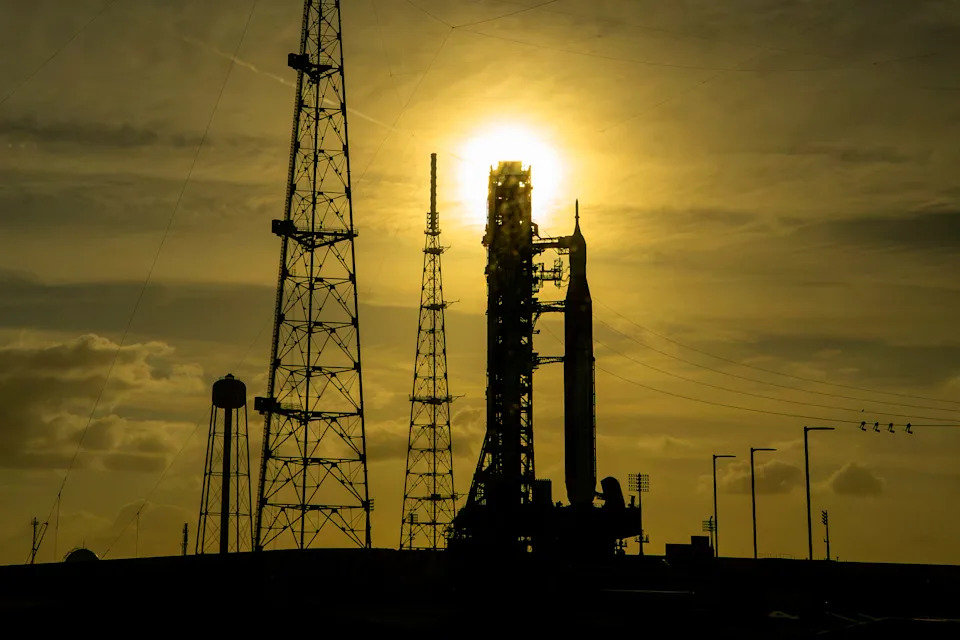
NASA's Artemis II Space Launch System rocket and Orion spacecraft rest on Launch Pad 39B at Kennedy Space Center in Cape Canaveral, Fla., on March 31, 2026, ahead of the crewed lunar mission.
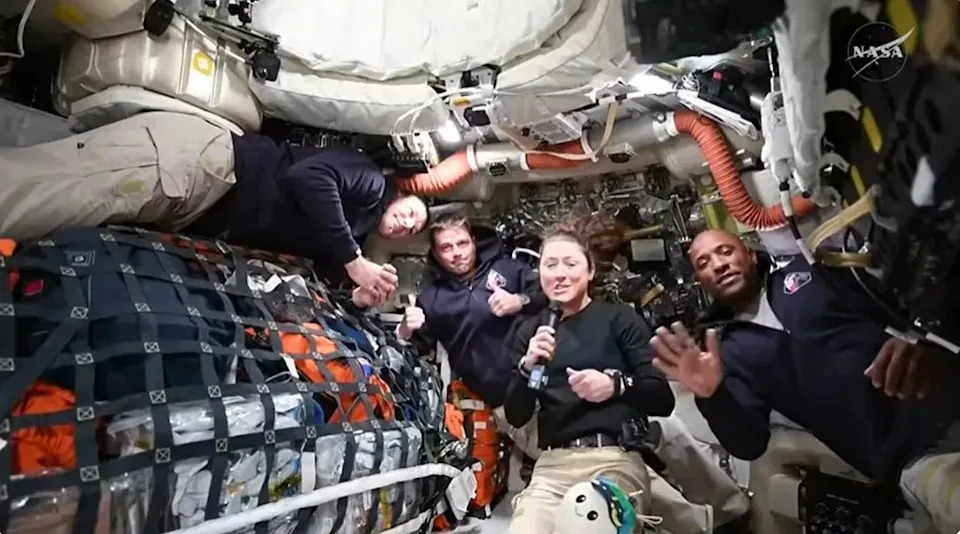
Artemis II crew members Jeremy Hansen, Reid Wiseman, Christina Koch, and Victor Glover answer questions from reporters during the first downlink event of their mission.
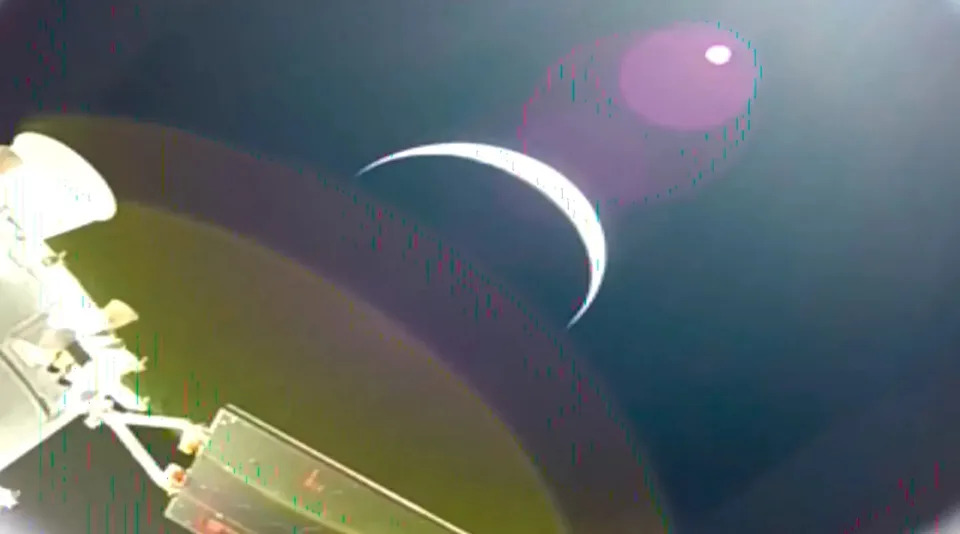
Earth’s crescent is seen from a solar array camera on the Orion spacecraft on the first flight day of the Artemis II mission.
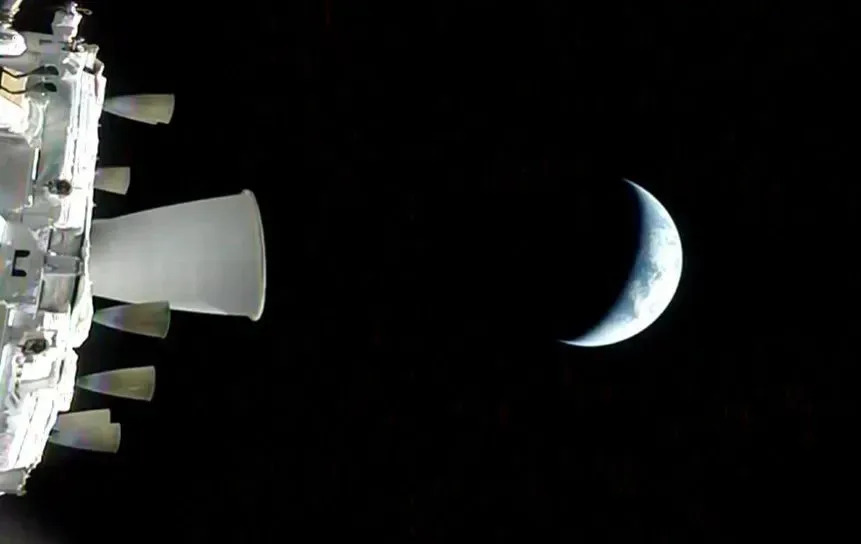
A view of the Earth from NASA’s Orion spacecraft as it orbits above the planet during the Artemis II test flight.
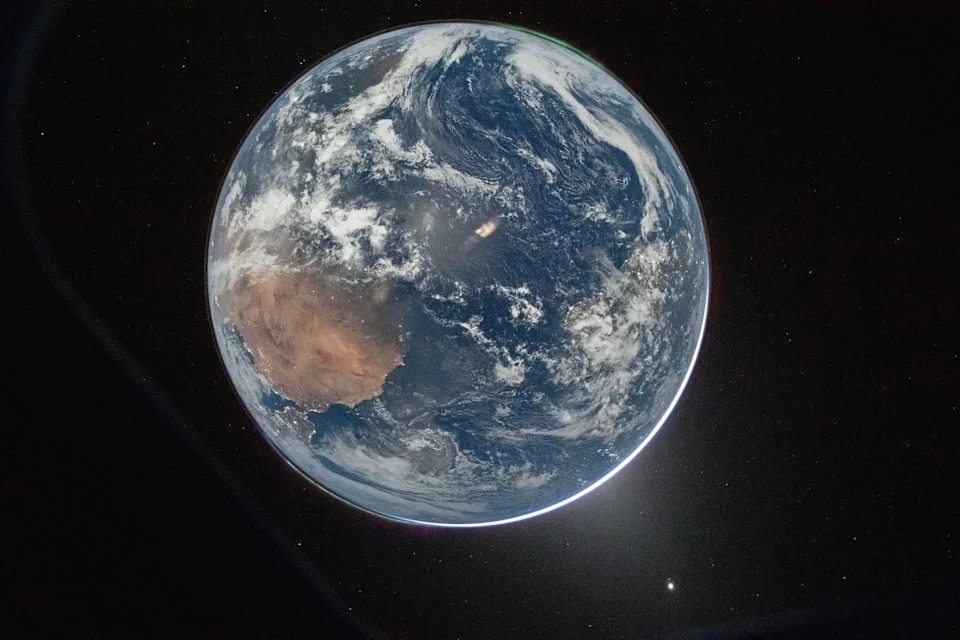
In an image posted by NASA on April 3, 2026, shows a full disk image of Earth, as seen from the Orion capsule. The planet is pale blue, swirling with white clouds and glowing slightly lighter blue in places from reflected light. From the lower left, a large brown landmass is Africa, with the Iberian peninsula twinkling with lights just where the planet curves. In the upper right, aurora glow in a thin green glow, just barely separated from the planet’s surface. Earth is set against the black of space.
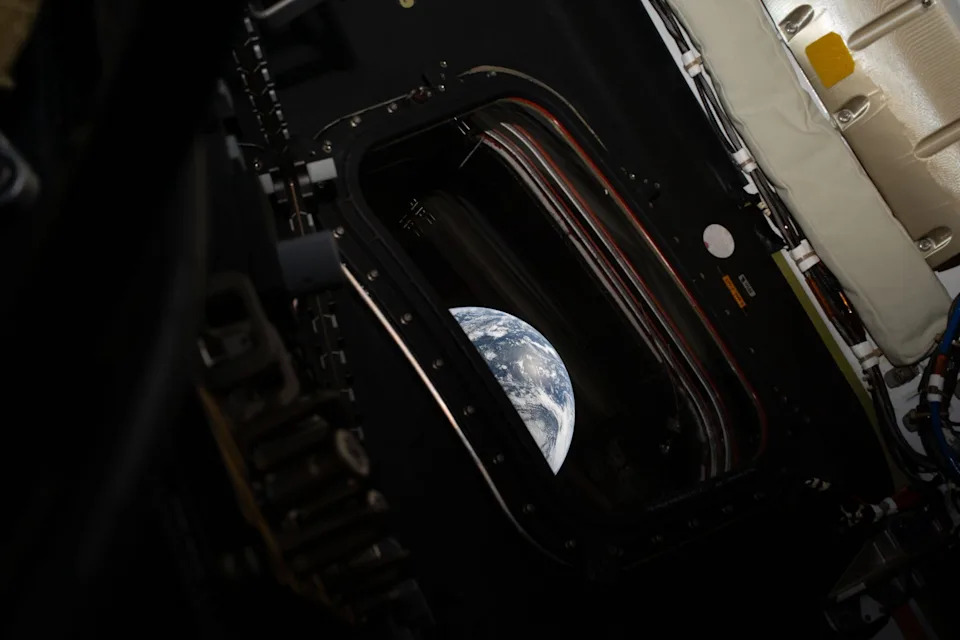
In an image posted by NASA on April 3, 2026, One-third of Earth is seen through the Orion capsule window as the NASA Artemis II mission continues towards the moon.
Although Earth only fills a fraction of the image it is the brightest object in the image. The capsule window is surrounded by a thick frame held in place with bolts. It is dark in the capsule, but the outlines of straps and various components of the capsule are visible.
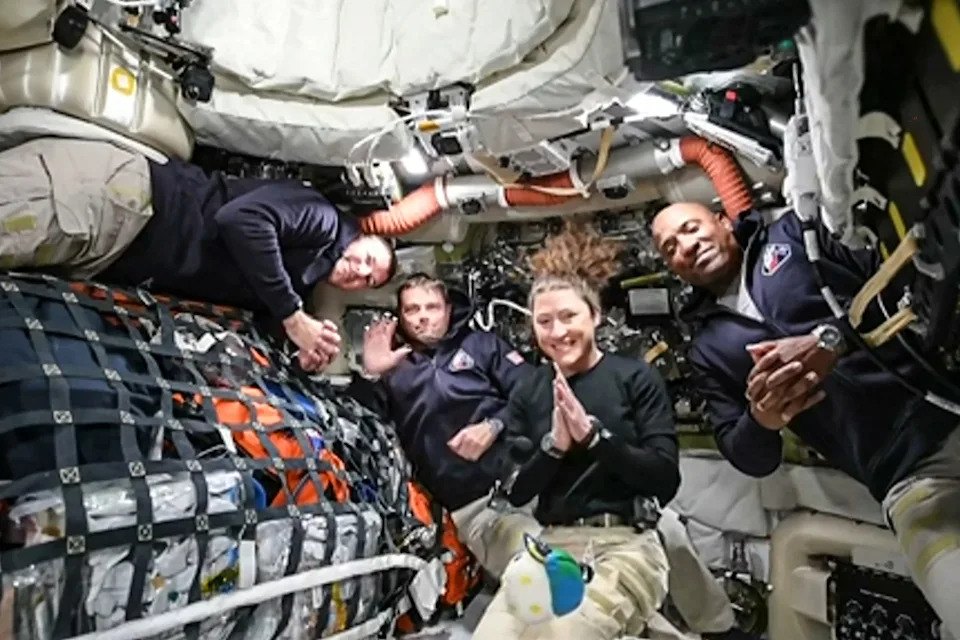
This screen grab from NASA's feed released on April 3, 2026, shows the four Artemis II crew members (L-R) Canadian Space Agency (CSA) astronaut Jeremy Hansen, Artemis II mission specialist, NASA astronauts Reid Wiseman, Artemis II commander, Christina Koch, Artemis II mission specialist and Victor Glover, Artemis II pilot as they head to orbit the Moon for the first time in more than half a century.
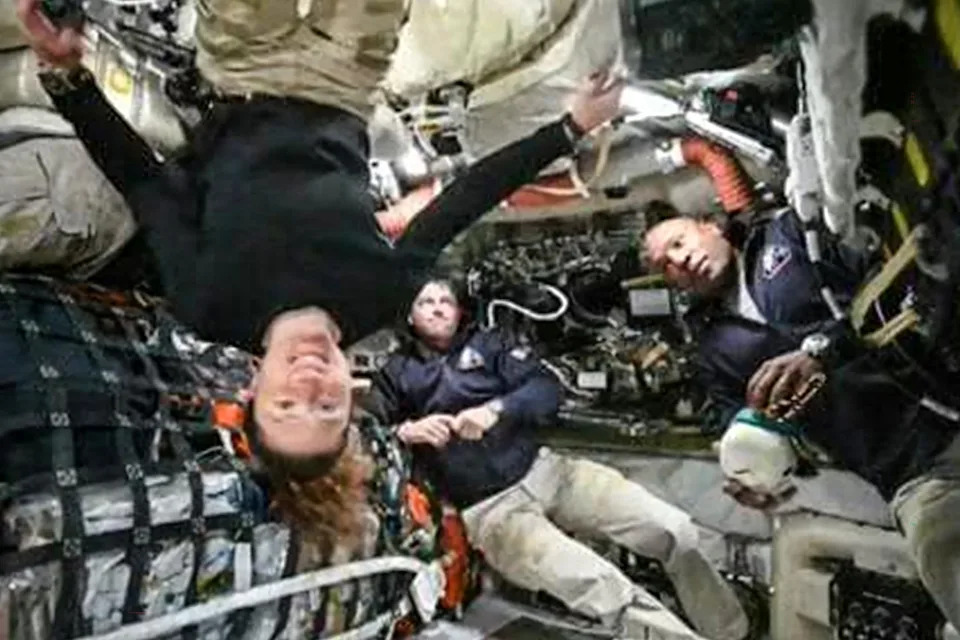
This screen grab from NASA's feed released on April 3, 2026, shows the four Artemis II crew members (L-R) Canadian Space Agency (CSA) astronaut Jeremy Hansen, Artemis II mission specialist (hidden), NASA astronauts Reid Wiseman, Artemis II commander, Christina Koch, Artemis II mission specialist and Victor Glover, Artemis II pilot as they head to orbit the Moon for the first time in more than half a century.
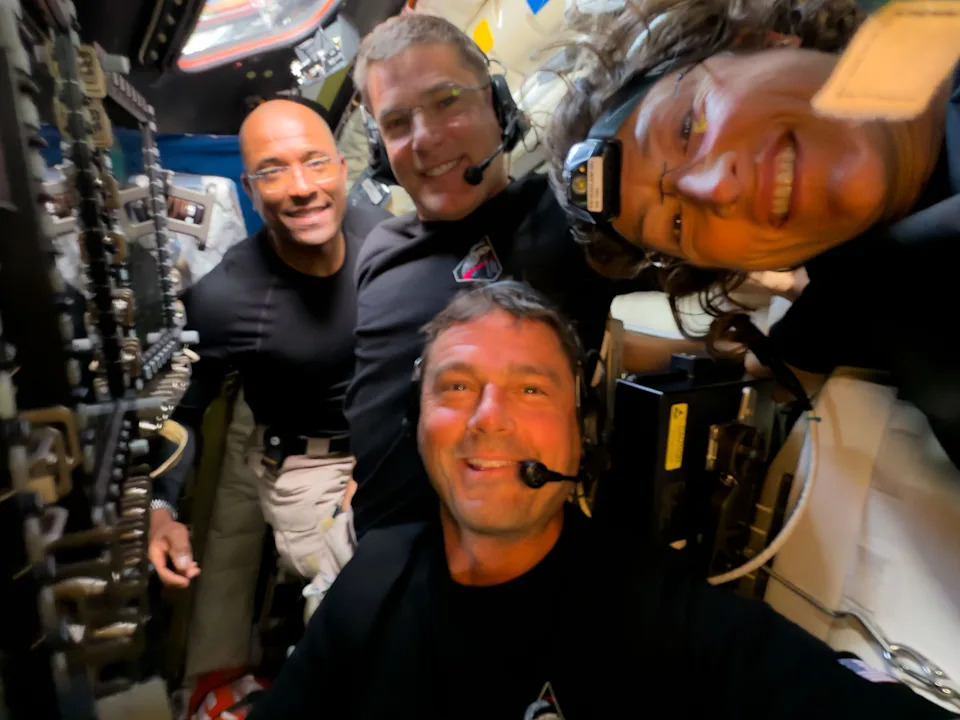
Lunar SelfieMidway through their lunar observation period, the Artemis II crew members, seen here (From left to right: Victor Glover, Jeremy Hansen, Reid Wiseman, and Christina Koch), pause to turn the camera around for a selfie inside the Orion spacecraft.NASA's Artemis II astronautsare among the first government spacefarers to bring personal smartphones to space.
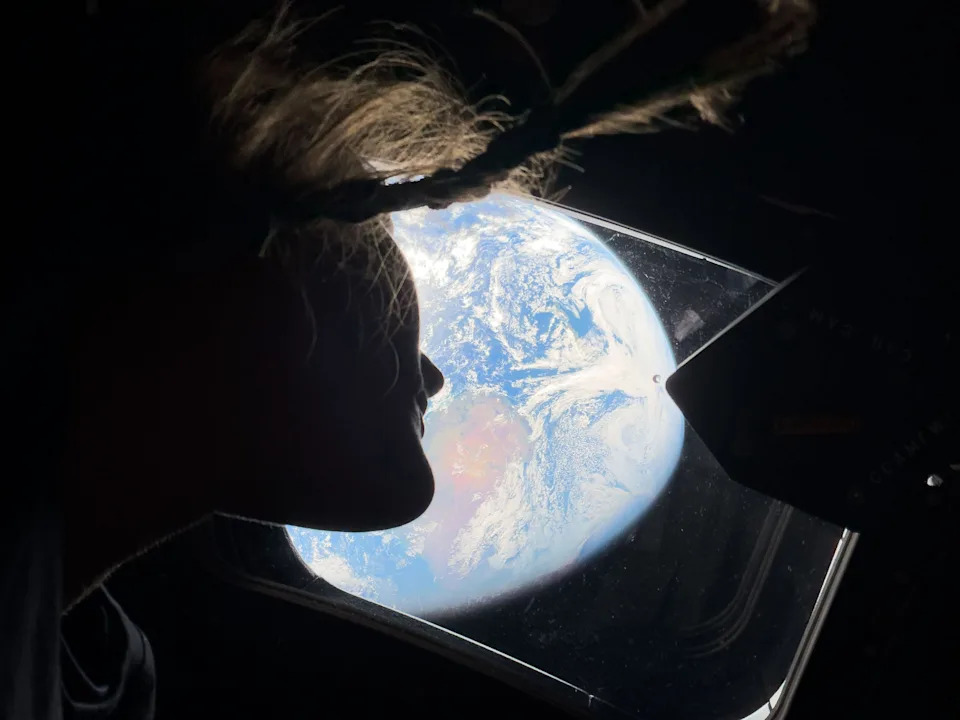
Spaceship EarthNASA astronaut and Artemis II mission specialist Christina Koch peers out of one of the Orion spacecraft's main cabin windows, looking back at Earth, as the crew travels towards the Moon.
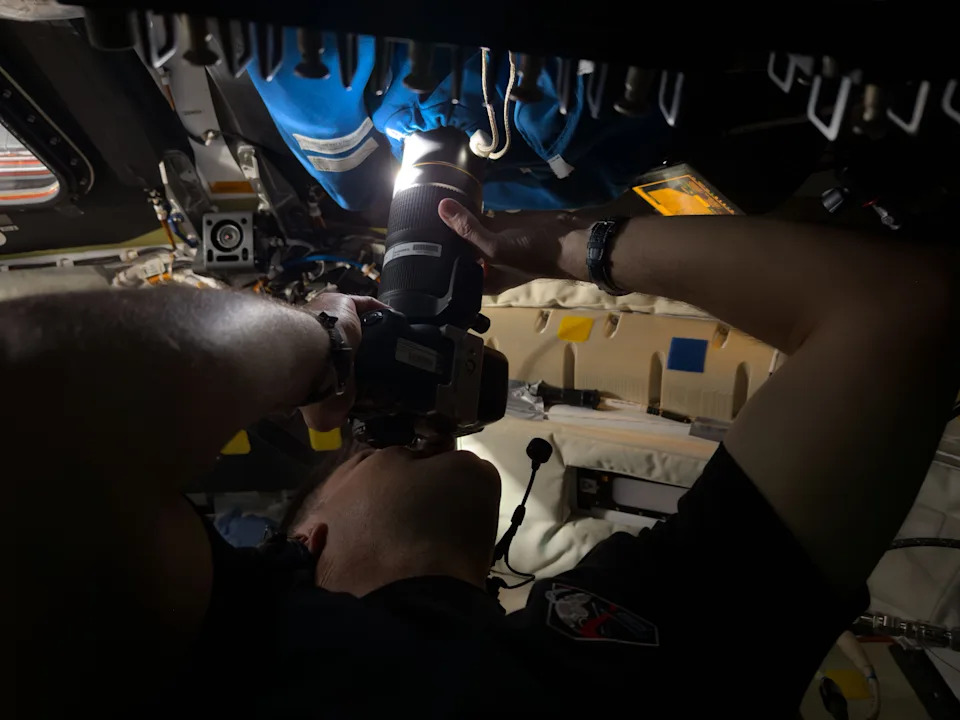
Photographer at WorkAstronaut Jeremy Hansen captures an image through the camera shroud covering window 2 of the Orion spacecraft. The camera shroud, essentially a curtain with a hole for the lens to pass through, is used to prevent light from the cabin from reflecting on the windowpanes.
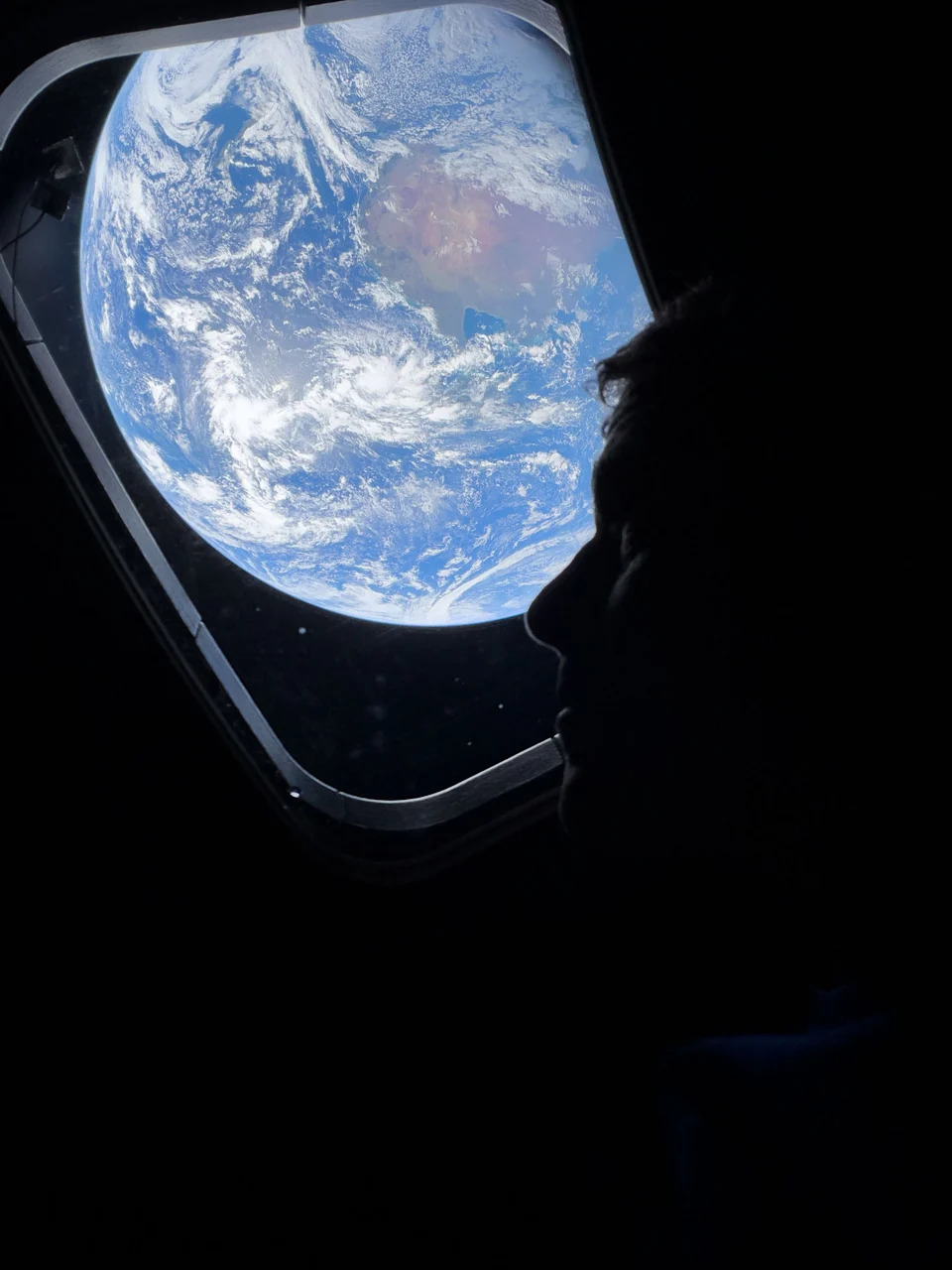
Home, Seen from OrionNASA astronaut and Artemis II Commander Reid Wiseman peers out of one of the Orion spacecraft's main cabin windows, looking back at Earth, as the crew travels towards the Moon.
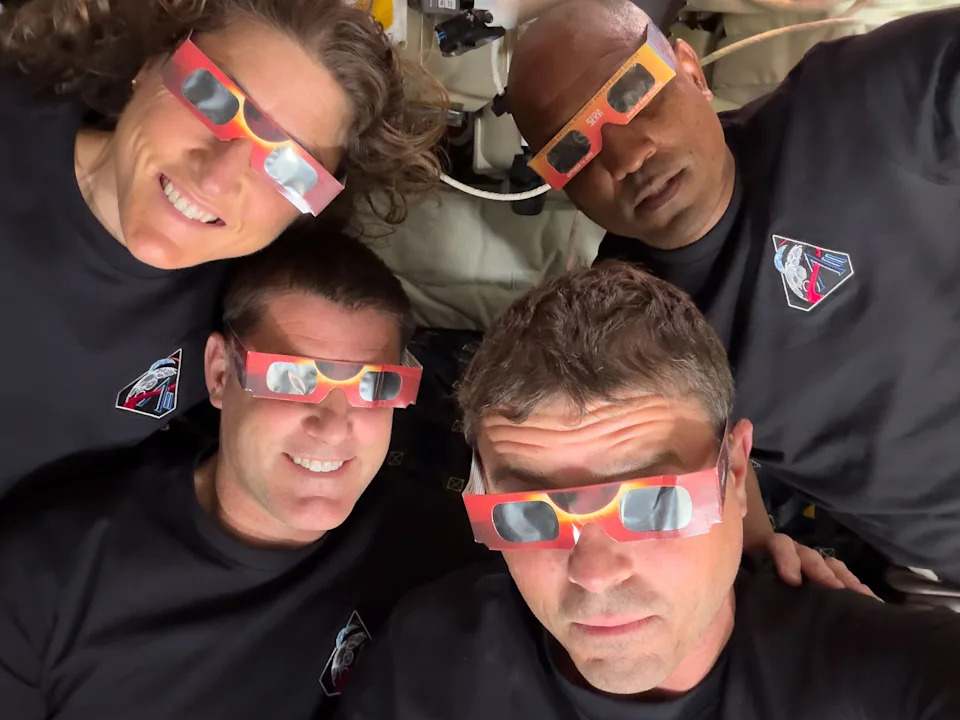
Eclipse SafetyFirst The Artemis II crew – Mission Specialist Christina Koch (top left), Mission Specialist Jeremy Hansen (bottom left), Commander Reid Wiseman (bottom right), and Pilot Victor Glover (top right) – uses eclipse viewers, identical to what NASA produced for the 2023 annular eclipse and 2024 total solar eclipse, to protect their eyes at key moments during the solar eclipse they experienced during their lunar flyby. This was the first use of eclipse glasses at the Moon to safely view a solar eclipse.
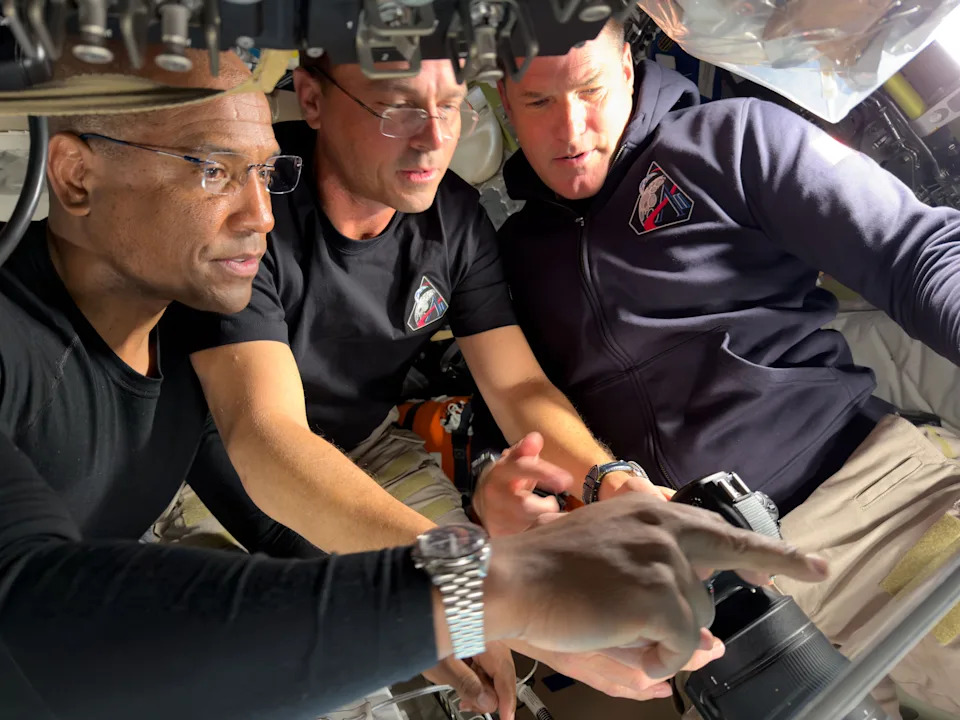
Final Flyby PreparationsArtemis II Pilot Victor Glover (Left), Commander Reid Wiseman (Center), and Mission Specialist Jeremy Hansen (Right) prepare for their journey around the far side of the Moon by configuring their camera equipment shortly before beginning their lunar flyby observations.
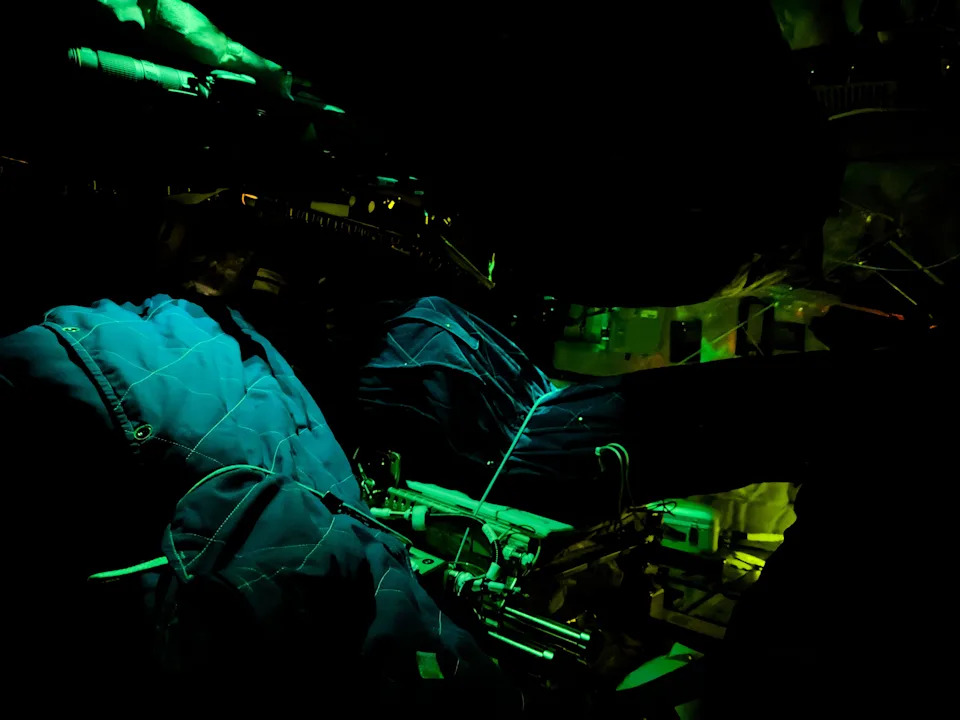
Rest Before Lunar FlybyArtemis II crewmember sleeping bags are illuminated inside the Orion spacecraft on Flight Day 5 of the mission and ahead of the crew's lunar flyby on April 6, 2026.
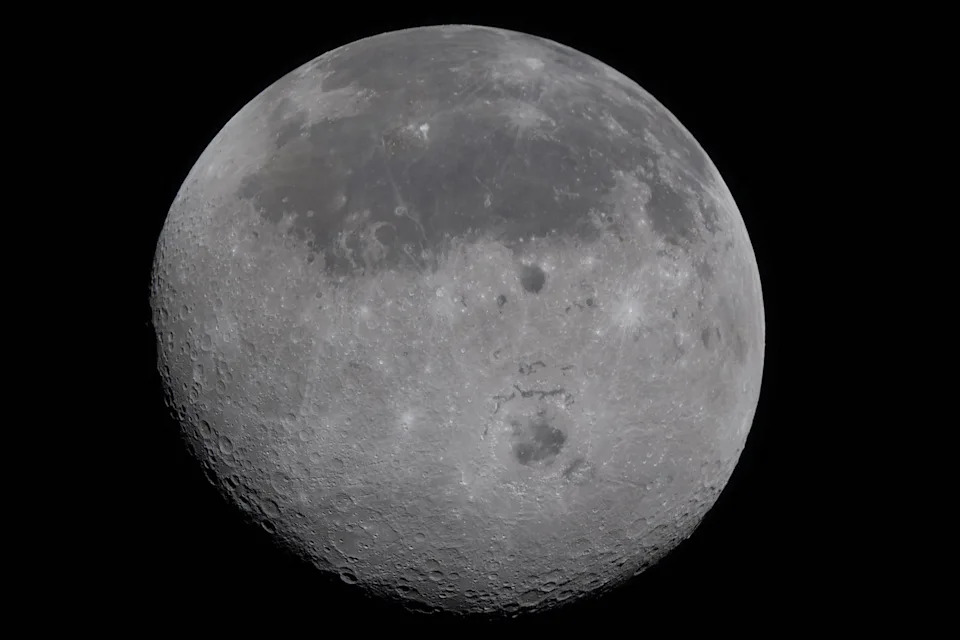
This handout image released byNASAshows a fully illuminated Moon, with the near side at top, dark lava plains, and the Orientale basin, with parts of the far side visible, on April 6, 2026. The four astronauts embarking on NASA's lunar flyby became on April 6 the humans to travel furthest from our planet, as they get set to view areas of the Moon never before seen by the naked eye. The Artemis II team broke the previous record set by 1970's Apollo 13 mission, which they are expected to surpass by approximately 4,105 miles (6,606 kilometers) when they reach this journey's anticipated furthest distance from Earth -- 252,760 miles -- later today.
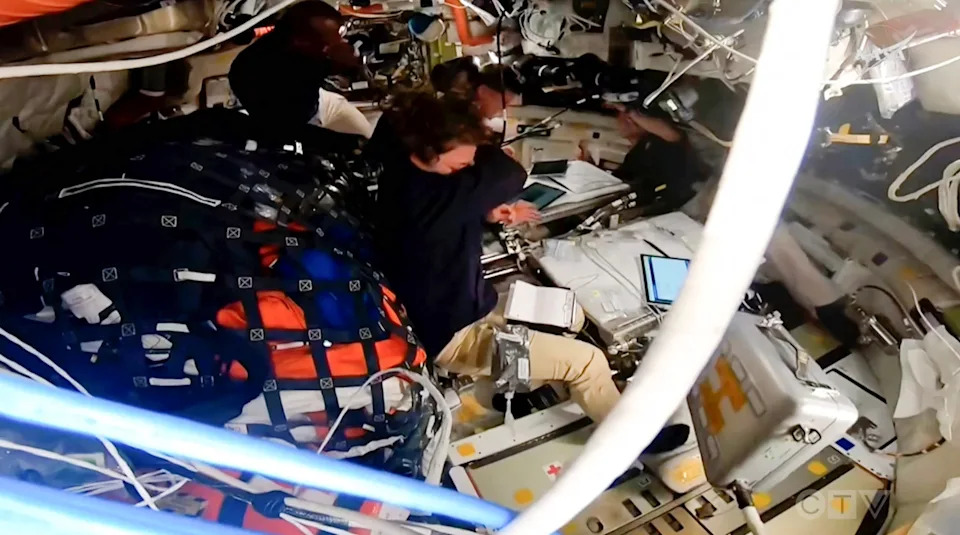
This screengrab from a NASA livestream shows Artemis II crew members Victor Glover, Reid Wiseman, Jeremy Hansen and Christina Koch wiping their tears after naming a lunar crater "Carroll" in honor of Wiseman's late wife, aboard the Orion spacecraft on April 6, 2026. Artemis astronauts at the outer edge of human space travel had an emotional moment April 6 as they named a crater in honor of the deceased wife of mission commander Reid Wiseman. "It's a bright spot on the Moon. And we would like to call it Carroll," Canadian astronaut Jeremy Hansen told a live broadcast. The crater can be seen "at certain times of the Moon's transit around Earth," he said.
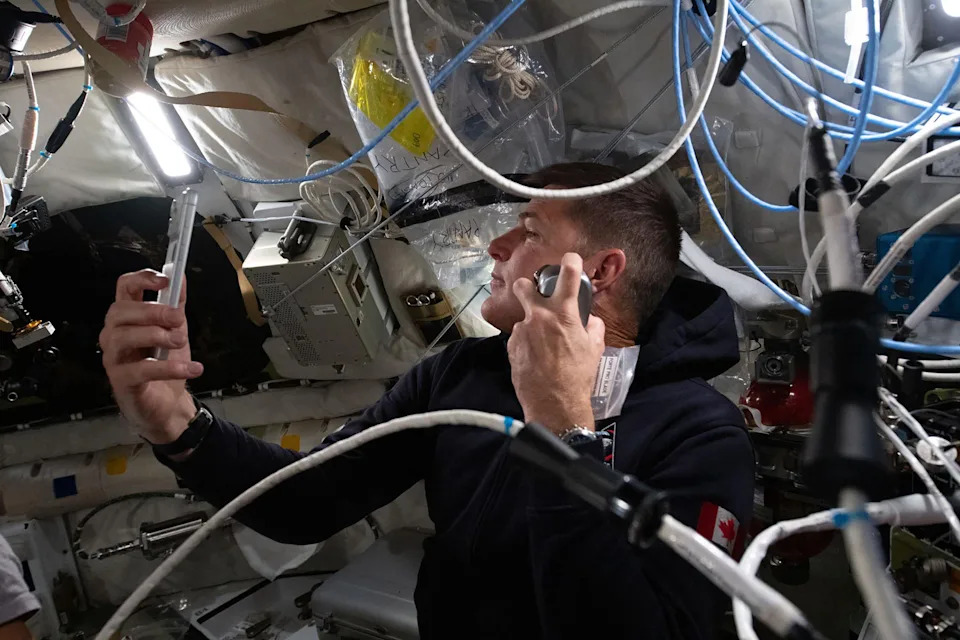
This handout image released by NASA shows Artemis II mission specialist and CSA (Canadian Space Agency) astronaut Jeremy Hansen shaving inside the Orion spacecraft during Flight Day 5 and ahead of the crew's lunar flyby on April 6, 2026. The Artemis astronauts entered the final phase of their run-up to a lunar loop on April 6, a tipping point of sorts that means the Moon's gravity is now having a stronger pull on the spacecraft than Earth's. The Orion capsule will now whip around the Moon, setting the crew up to travel farther from our home planet than any human before.
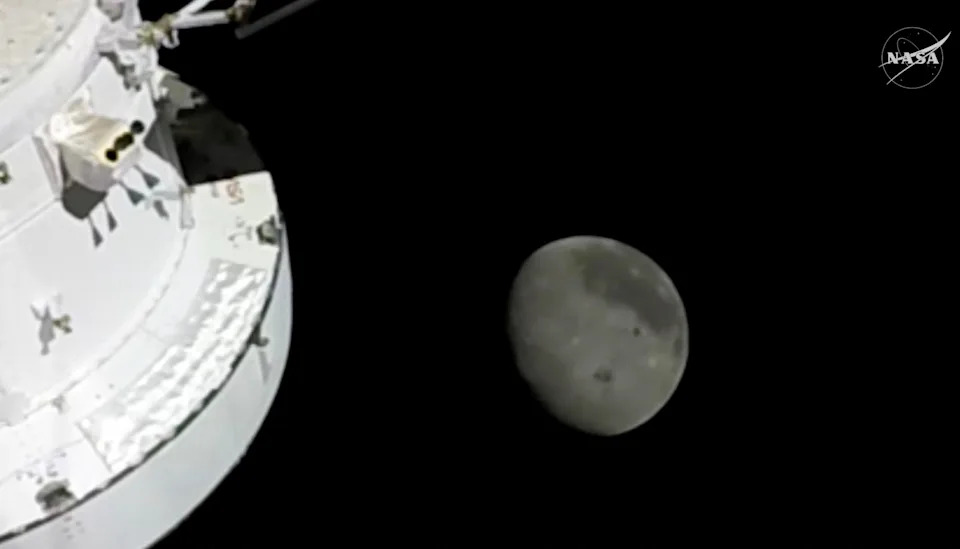
This screengrab from a NASA livestream shows the Orion spacecraft approaching the Moon on April 6, 2026. The four astronauts embarking on NASA's lunar flyby became on April 6 the humans to travel furthest from our planet, as they get set to view areas of the Moon never before seen by the naked eye. The Artemis II team broke the previous record set by 1970's Apollo 13 mission, which they are expected to surpass by approximately 4,105 miles (6,606 kilometers) when they reach this journey's anticipated furthest distance from Earth -- 252,760 miles (406,778 kilometers) -- later today.
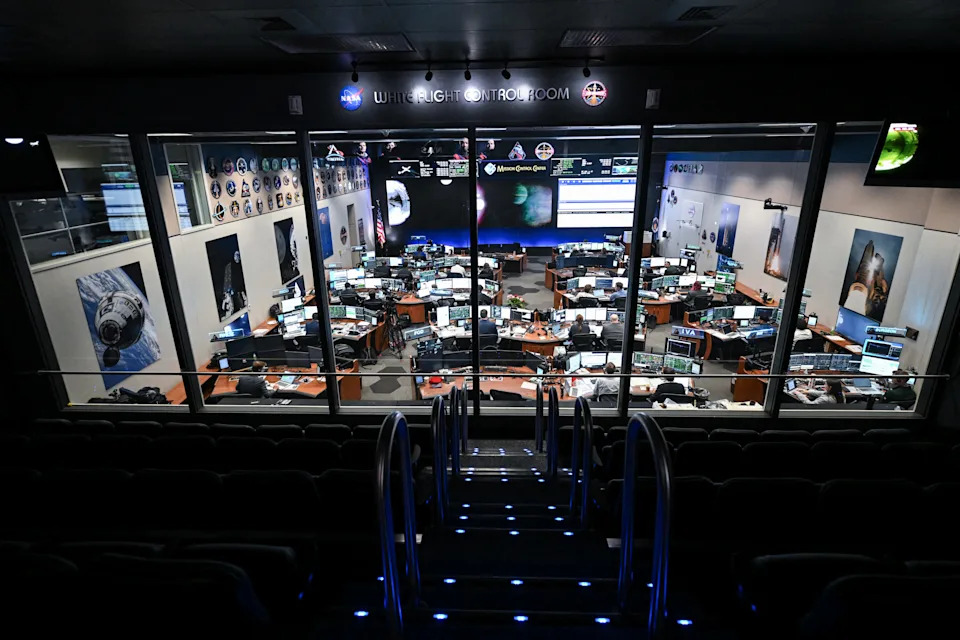
Artemis II flight controllers monitor the Orion spacecraft from the White Flight Control Room at Johnson Space Center in Houston, Texas, on April 6, 2026. The Artemis astronauts entered the final phase of their run-up to a lunar loop on Monday, a tipping point of sorts that means the Moon's gravity is now having a stronger pull on the spacecraft than Earth's. The Orion capsule will now whip around the Moon, setting the crew up to travel farther from our home planet than any human before.
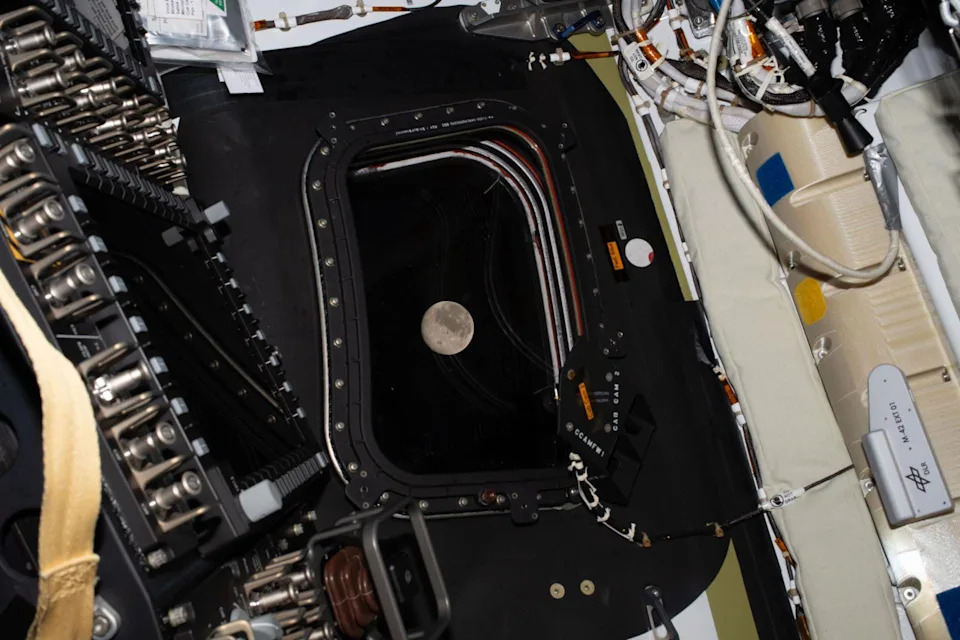
This handout picture by an Artemis II crew member provided by NASA shows the moon through a window of the Orion spacecraft on April 6, 2026. The Artemis astronauts entered the final phase of their run-up to a lunar loop on Monday, a tipping point of sorts that means the Moon's gravity is now having a stronger pull on the spacecraft than Earth's. The Orion capsule will now whip around the Moon, setting the crew up to travel farther from our home planet than any human before.
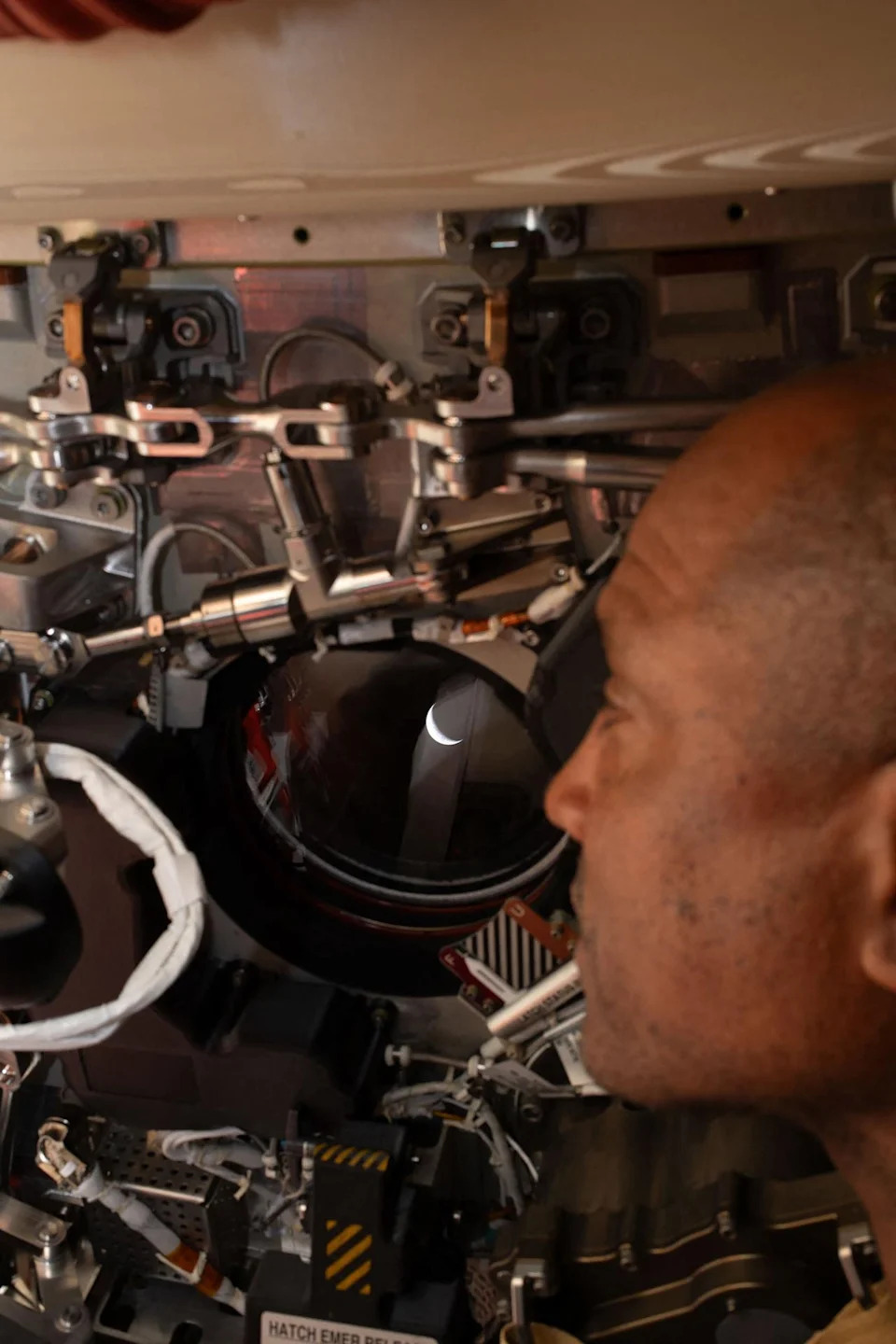
This handout image released by NASA shows Artemis II pilot and NASA astronaut Victor Glover peering out one of the Orion spacecraft's windows looking back at Earth ahead of the crew's lunar flyby on April 6, 2026. The Artemis astronauts entered the final phase of their run-up to a lunar loop on April 6, a tipping point of sorts that means the Moon's gravity is now having a stronger pull on the spacecraft than Earth's. The Orion capsule will now whip around the Moon, setting the crew up to travel farther from our home planet than any human before.
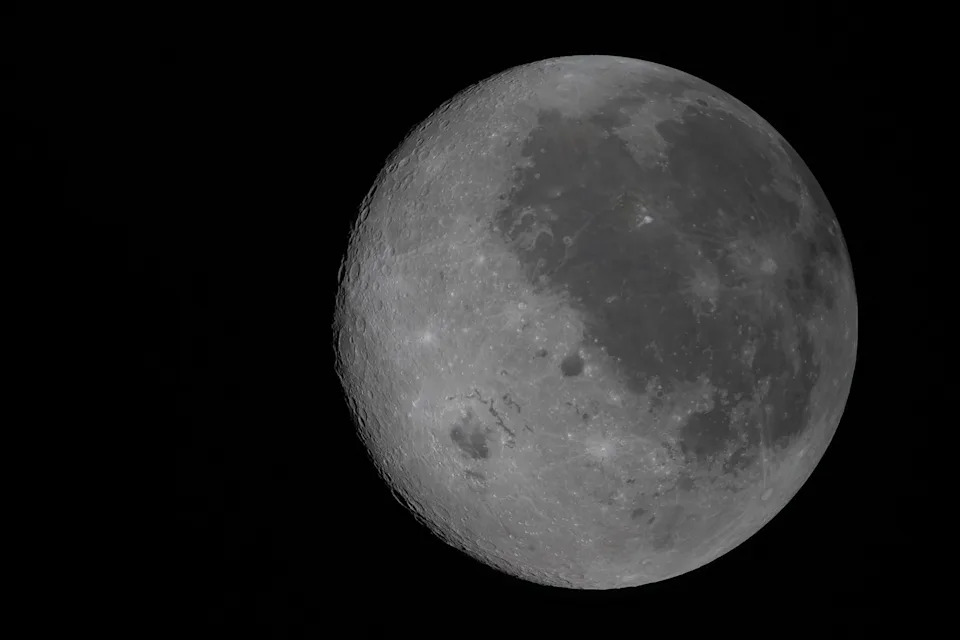
This handout image released by NASA shows a fully illuminated view of the Moon, including the Orientale basin and parts of the far side not visible from Earth, on April 6, 2026. The Artemis astronauts entered the final phase of their run-up to a lunar loop on April 6, a tipping point of sorts that means the Moon's gravity is now having a stronger pull on the spacecraft than Earth's. The Orion capsule will now whip around the Moon, setting the crew up to travel farther from our home planet than any human before.
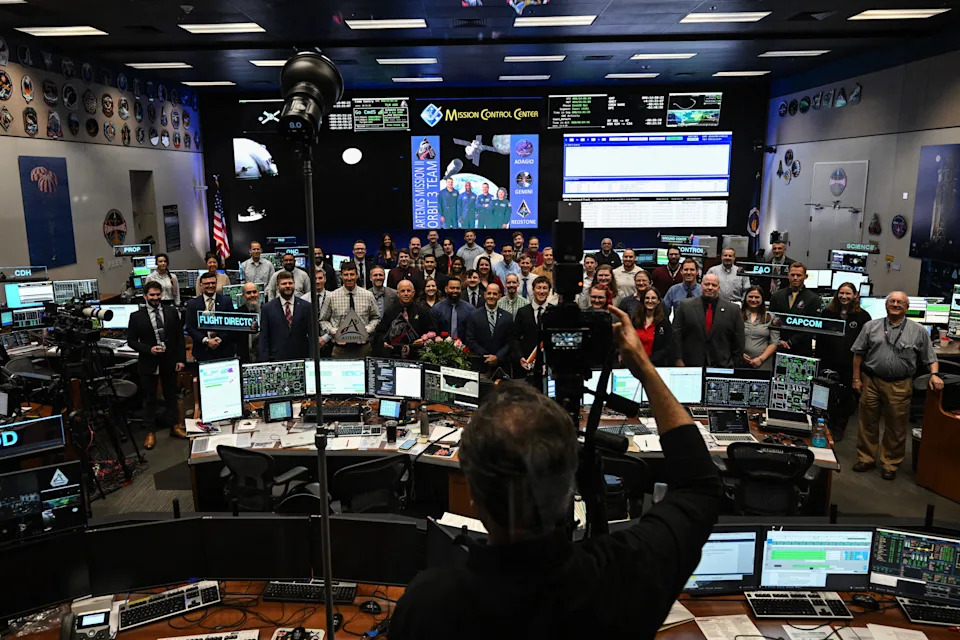
NASA staff pose for a group photo in the White Flight Control Room at Johnson Space Center in Houston, Texas, on April 6, 2026. The Artemis astronauts entered the final phase of their run-up to a lunar loop on Monday, a tipping point of sorts that means the Moon's gravity is now having a stronger pull on the spacecraft than Earth's. The Orion capsule will now whip around the Moon, setting the crew up to travel farther from our home planet than any human before.
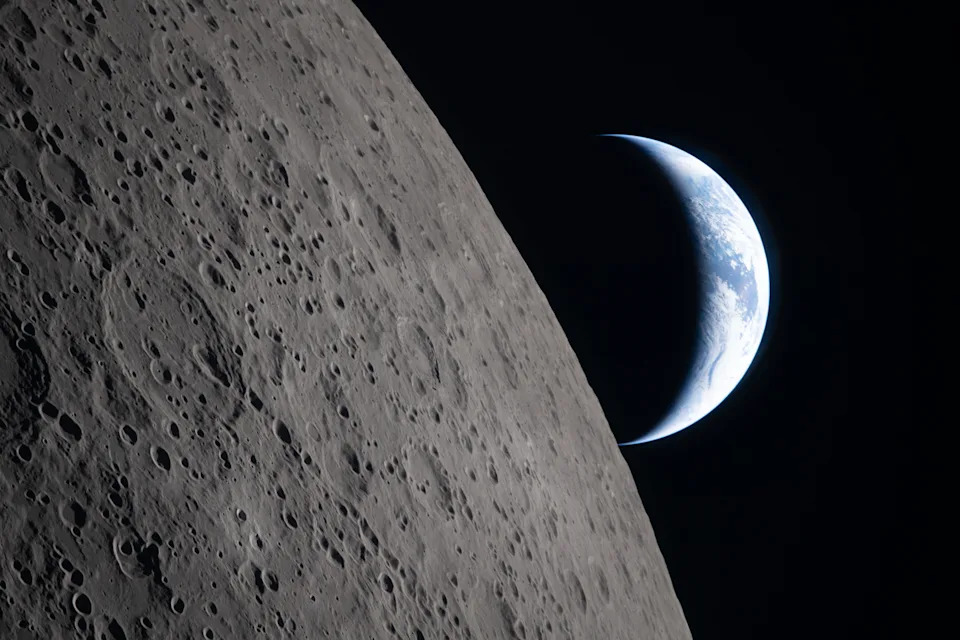
Peeking at the EarthAs the Artemis II crew came close to passing behind the Moon and experiencing a planned loss of signal on April 6, 2026, they captured this image of a crescent Earth setting on the Moon’s limb. The edge of the visible surface of the Moon is called the “lunar limb.”
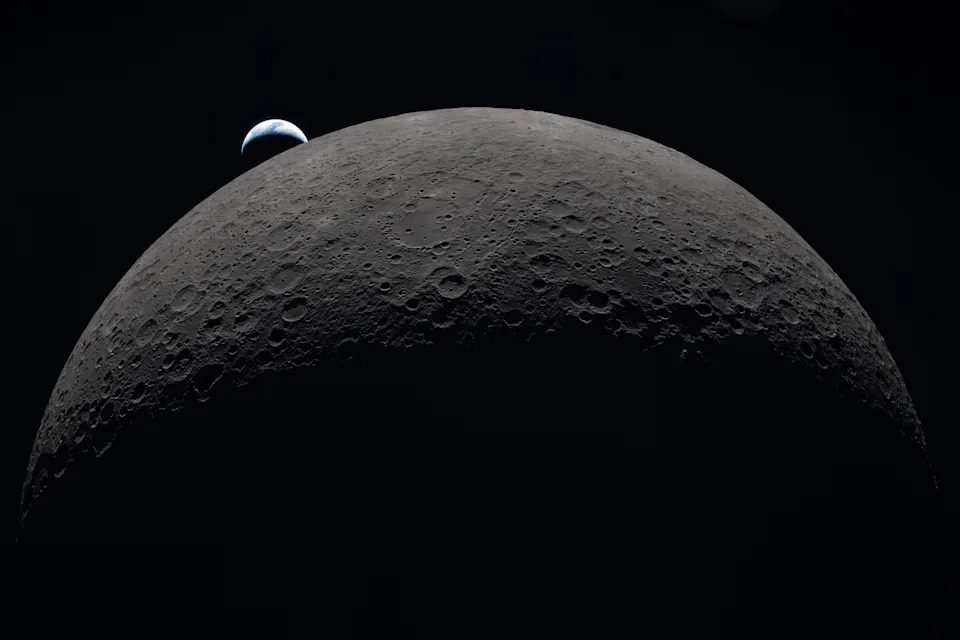
A New View of the MoonEarth sets at 6:41 p.m. EDT, April 6, 2026, over the Moon’s curved limb in this photo captured by the Artemis II crew during their journey around the far side of the Moon.
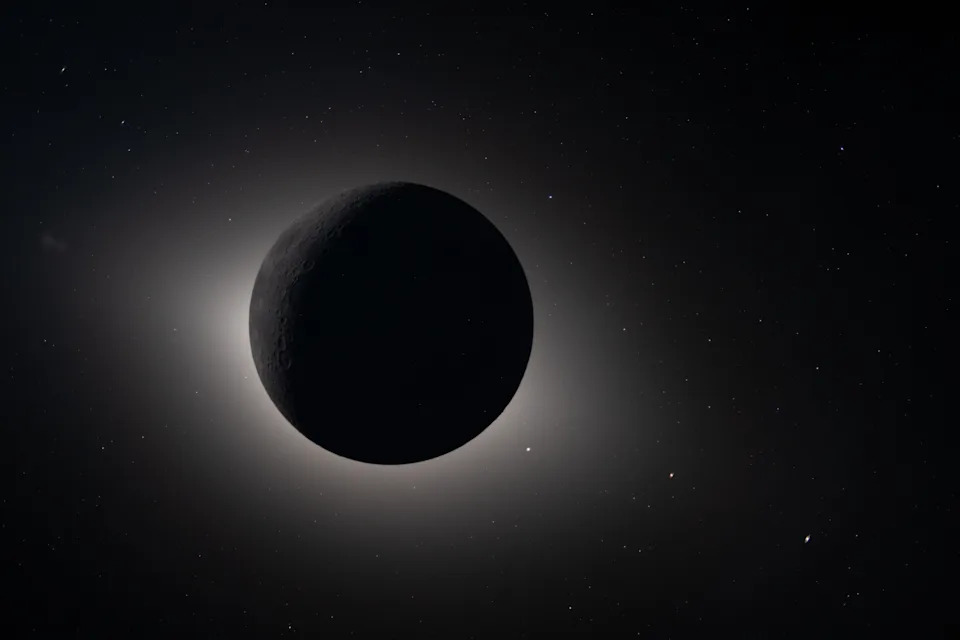
Artemis II in EclipseCaptured by the Artemis II crew during their lunar flyby on April 6, 2026, this image shows the Moon fully eclipsing the Sun. From the crew’s perspective, the Moon appears large enough to completely block the Sun, creating nearly 54 minutes of totality and extending the view far beyond what is possible from Earth. We see a glowing halo around the dark lunar disk.
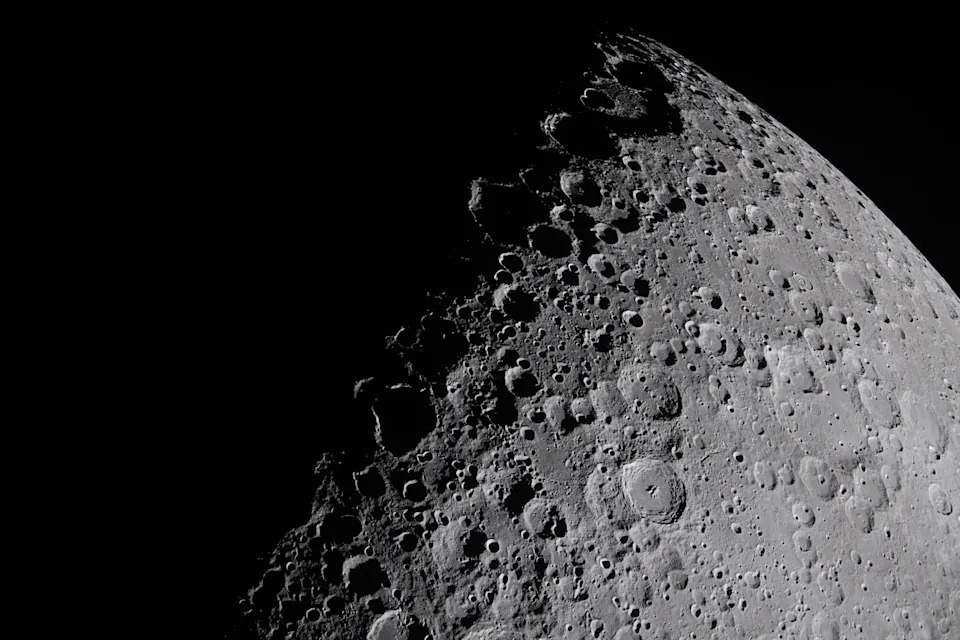
Shadows at the Edge of Lunar DayThe Artemis II crew captures a portion of the Moon coming into view along the terminator – the boundary between lunar day and night – where low-angle sunlight casts long, dramatic shadows across the surface on April 6, 2026. This grazing light accentuates the Moon’s rugged topography, revealing craters, ridges, and basin structures in striking detail. Features along the terminator such as Jule Crater, Birkhoff Crater, Stebbins Crater, and surrounding highlands stand out. From this perspective, the interplay of light and shadow highlights the complexity of the lunar surface in ways not visible under full illumination. The image was captured about three hours into the crew’s lunar observation period, as they flew around the far side of the Moon on the sixth day of the mission.
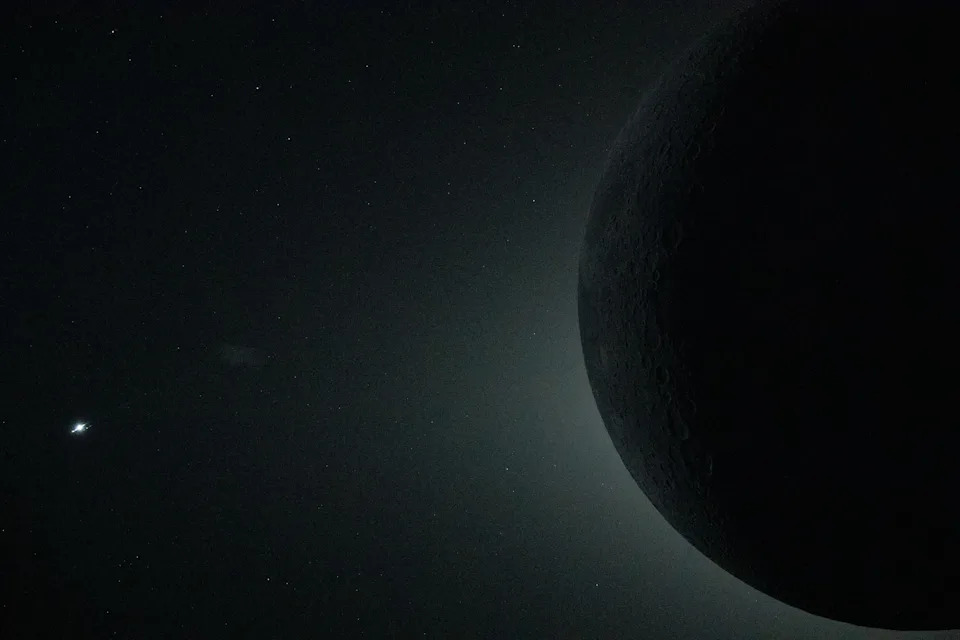
Artemis II Total Solar Eclipse, Partial FrameA close-up view from the Orion spacecraft during the Artemis II crew’s lunar flyby on April 6, 2026, captures a total solar eclipse, with only part of the Moon visible in the frame as it fully obscures the Sun.
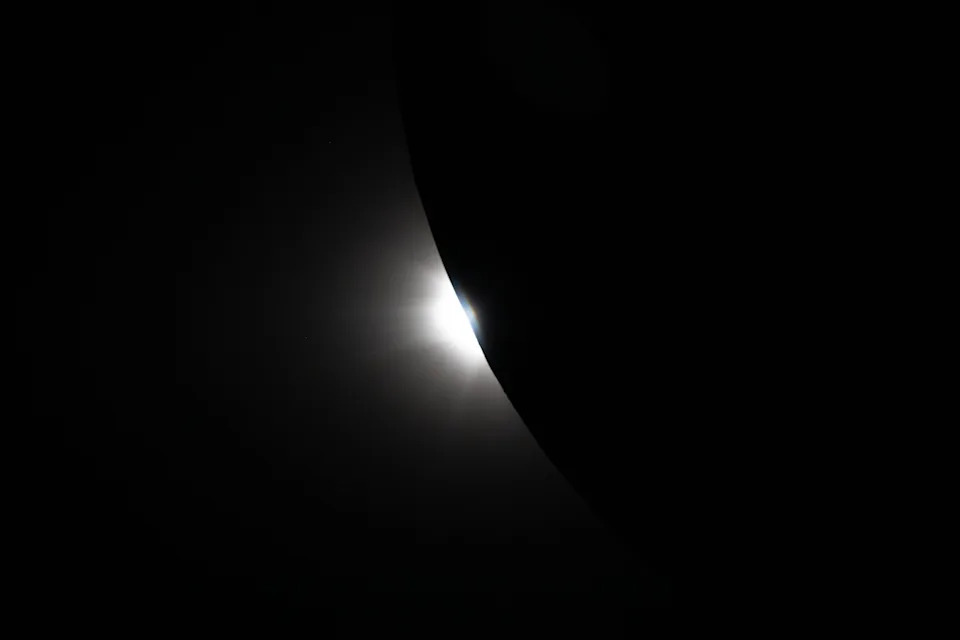
Solar Eclipse Emergence from OrionCaptured from the Orion spacecraft near the end of the Artemis II lunar flyby on April 6, this image shows the Sun beginning to peek out from behind the Moon as the eclipse transitions out of totality.
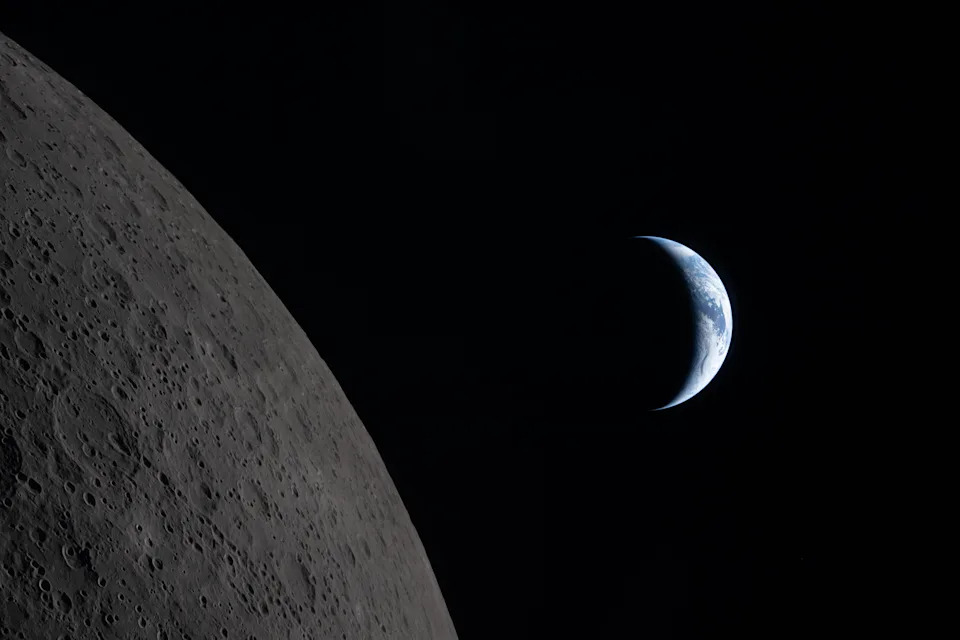
The Edge of Two WorldsEarth draws closer to passing behind the Moon in this image captured by the Artemis II crew during their lunar flyby, about six minutes before Earthset.
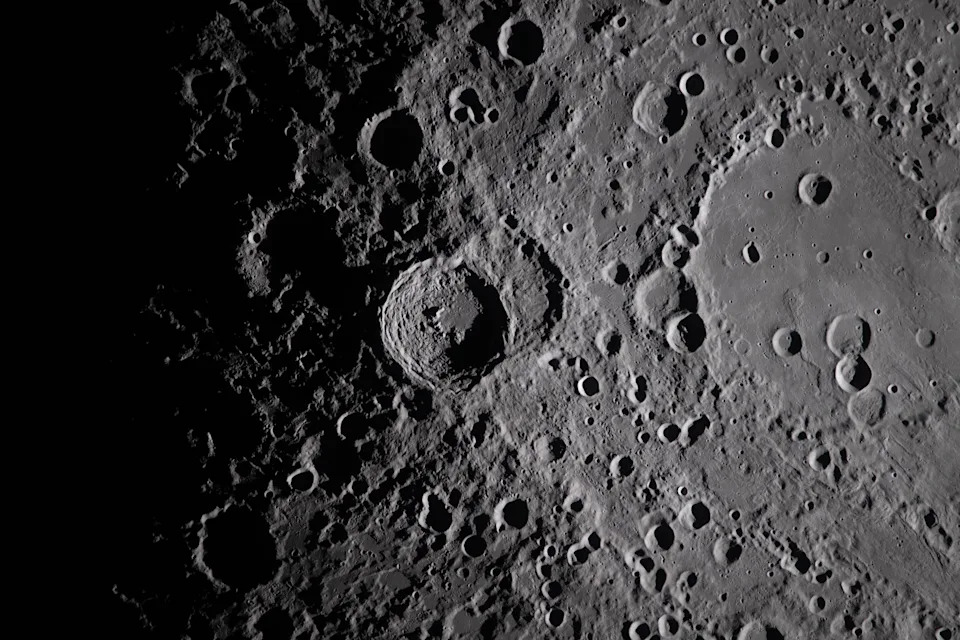
Shadows Across Vavilov CraterA close-up view taken by the Artemis II crew of Vavilov Crater on the rim of the older and larger Hertzsprung basin.
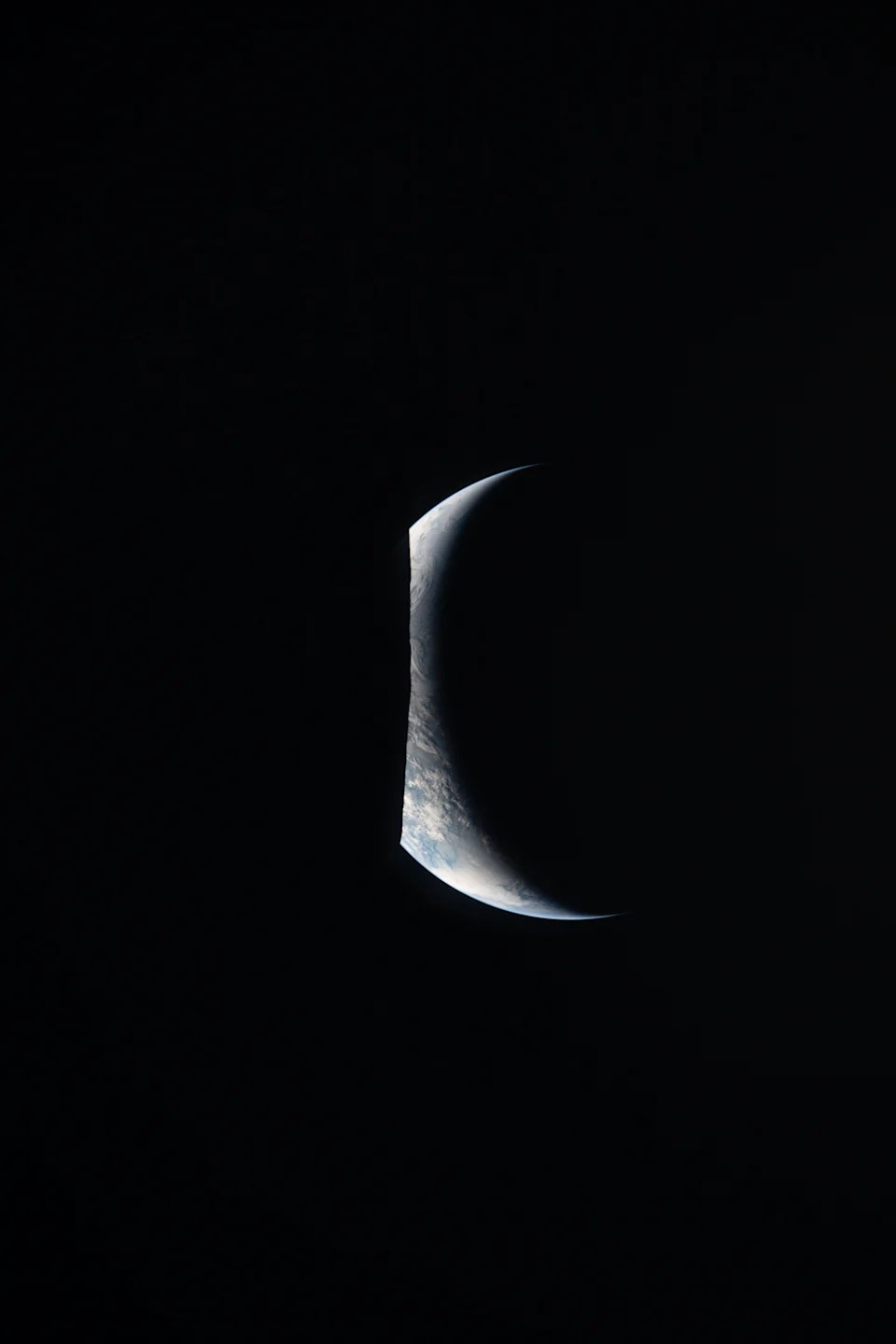
Artemis Era EarthriseEarthrise captured through the Orion spacecraft window at 7:22 p.m. ET during the Artemis II crew’s flyby of the Moon’s far side.
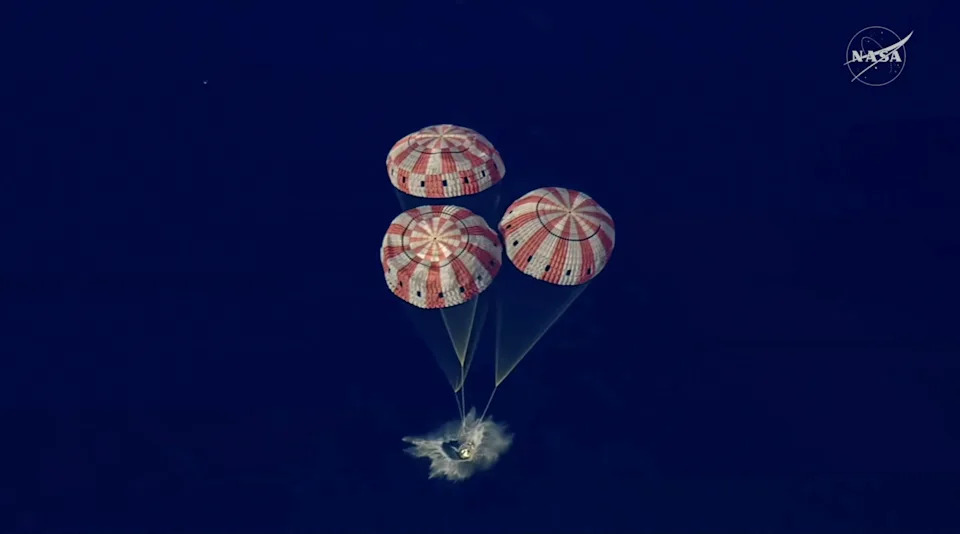
The Artemis II crew capsule splashes down in the Pacific Ocean in this screengrab from a livestream video after the Artemis II crew's flyby of the Moon, April 10, 2026.
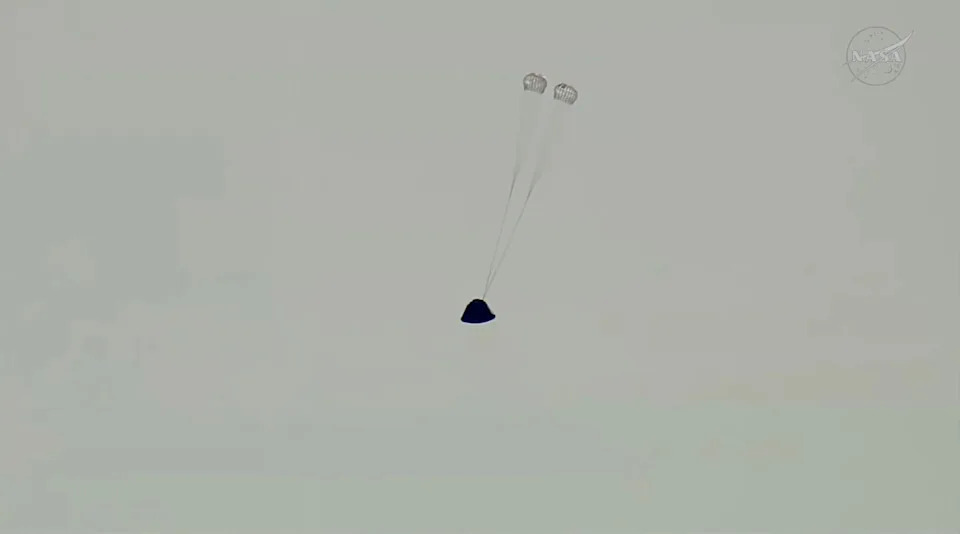
The first set of parachutes deploys on the Artemis II crew capsule in this screengrab from a livestream video as it descends toward splashdown following its re‑entry to Earth after the Artemis II crew’s flyby of the Moon, April 10, 2026.
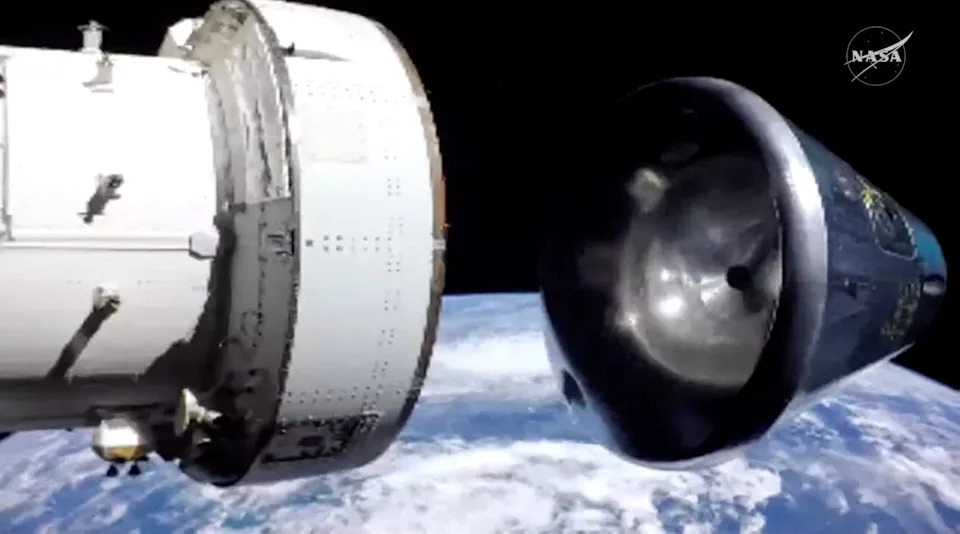
The Artemis II crew module separates from its service module in this screengrab from a livestream video as it prepares for re-entry to Earth following the Artemis II crew's flyby of the Moon, April 10, 2026.
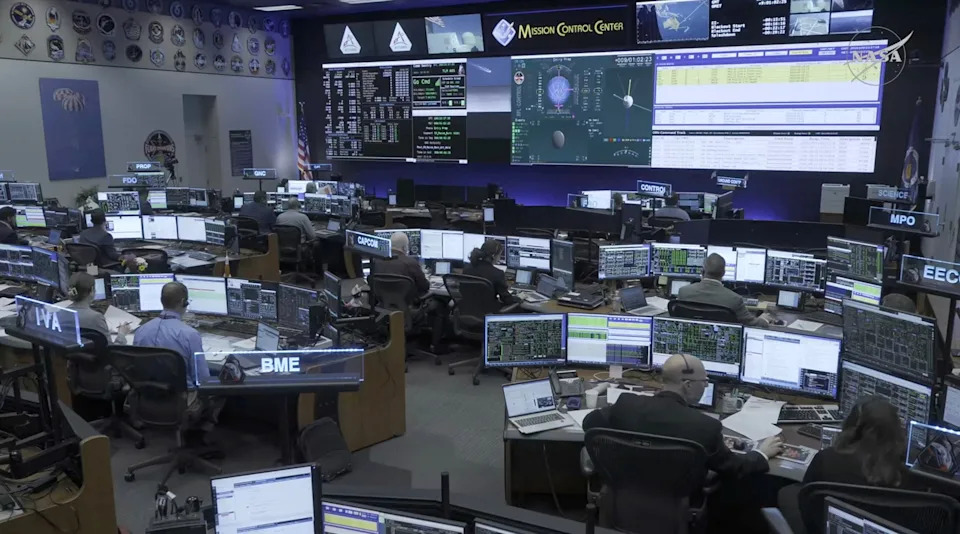
The Artemis II crew capsule is shown at NASA’s mission control center during a maneuver ahead of its re‑entry to Earth, following the Artemis II crew’s flyby of the Moon, April 10, 2026.
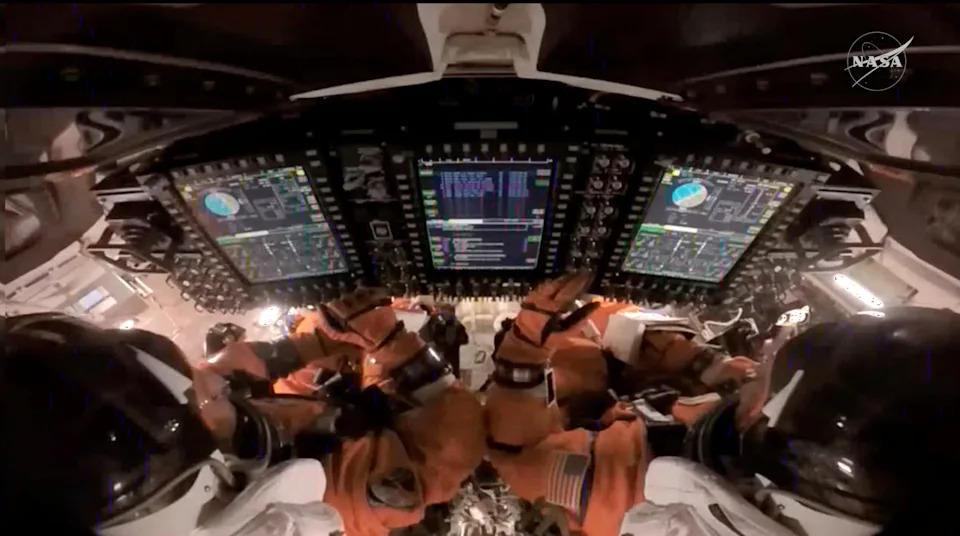
The Artemis II crew gets ready for the Orion spacecraft's Integrity module separation in this screengrab from a livestream video as it prepares for re-entry to Earth following the Artemis II crew's flyby of the Moon, April 10, 2026.
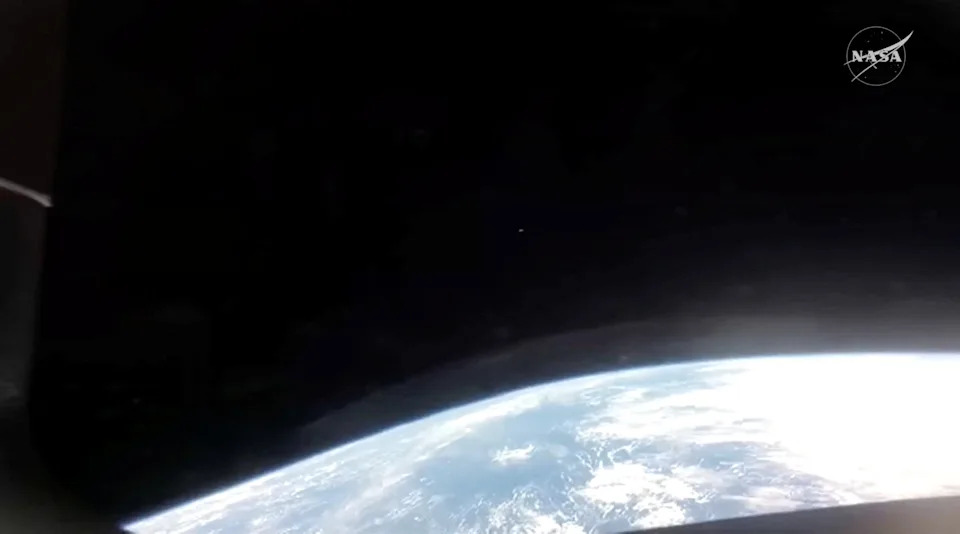
Earth is seen from a window of the Artemis II crew capsule in this screenshot from a livestream video minutes before its re-entry to Earth, following the Artemis II crew's flyby of the Moon, April 10, 2026.
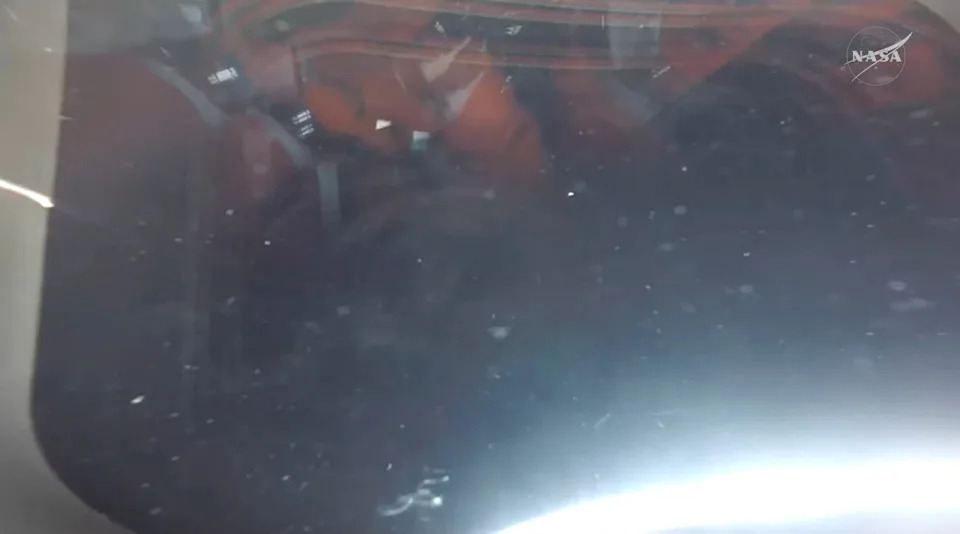
Artemis II crew members are reflected in the window of their capsule in this screenshot from a livestream video minutes before its re-entry to Earth, following the Artemis II crew's flyby of the Moon, April 10, 2026.
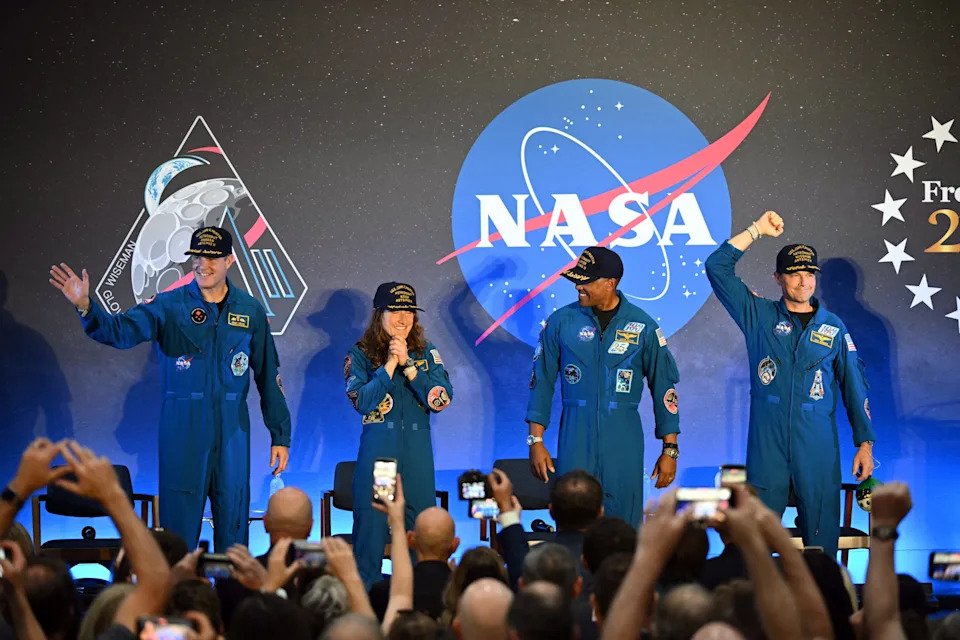
NASA celebrates the safe return of theArtemis II crewin Houston, Texas, on April 11, 2026, during a welcoming ceremony a day after splashdown from their moon mission.(L-R) NASA's Artemis II mission astronauts Canadian Space Agency's Jeremy Hansen, mission specialist Christina Koch, pilot Victor Glover and commander Reid Wiseman greet attendees to their welcoming ceremony at Ellington Field Joint Reserve Base.
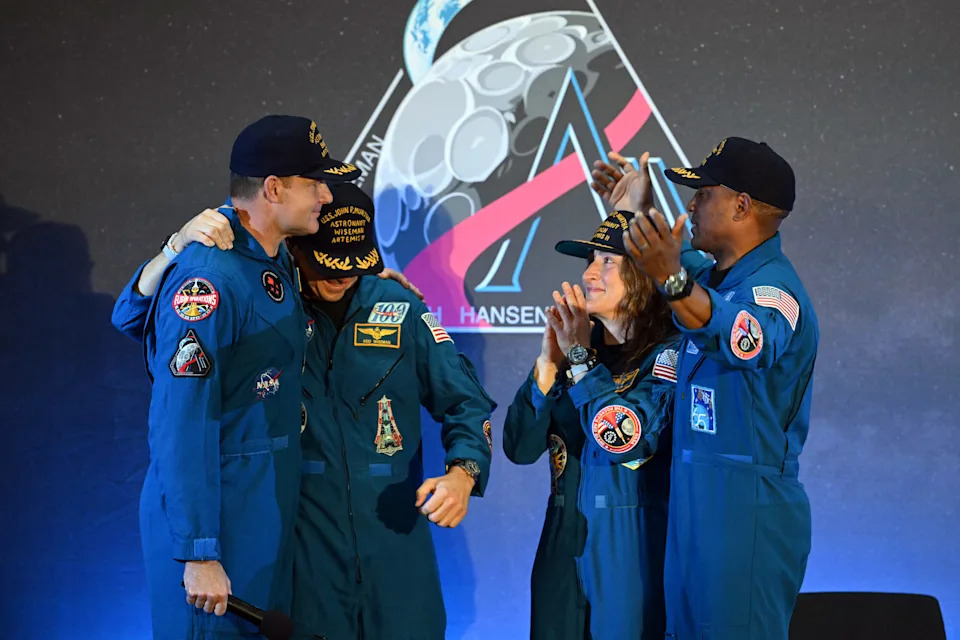
(L-R) NASA's Artemis II mission astronauts Canadian Space Agency's Jeremy Hansen, commander Reid Wiseman, mission specialist Christina Koch and pilot Victor Glover attend a welcoming ceremony at Ellington Field Joint Reserve Base in Houston, Texas, on April 11, 2026. An elated NASA late April 10 was celebrating its successful voyage around the Moon, after four astronauts safely returned to Earth having completed the first lunar flyby in more than 50 years. The NASA spacecraft carrying four astronauts -- three Americans and one Canadian -- splashed down without a hitch off the California coast, capping the US space agency's crewed test mission that returned with spectacular images of the Moon.
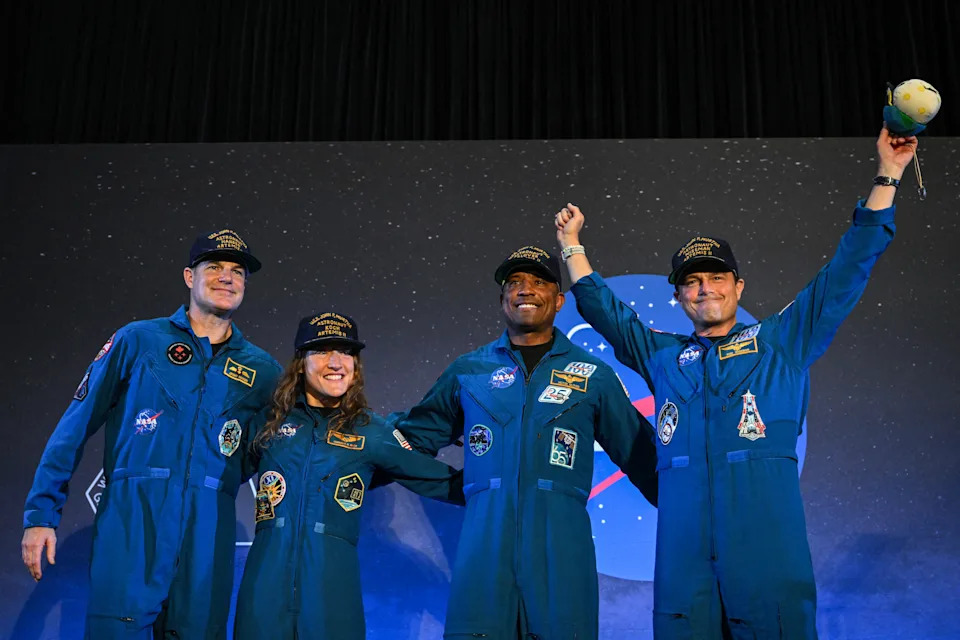
(L-R) NASA's Artemis II mission astronauts Canadian Space Agency's Jeremy Hansen, Christina Koch, Victor Glover and commander Reid Wiseman react during a welcoming ceremony at Ellington Field Joint Reserve Base in Houston, Texas, on April 11, 2026. An elated NASA late April 10 was celebrating its successful voyage around the Moon, after four astronauts safely returned to Earth having completed the first lunar flyby in more than 50 years. The NASA spacecraft carrying four astronauts -- three Americans and one Canadian -- splashed down without a hitch off the California coast, capping the US space agency's crewed test mission that returned with spectacular images of the Moon.
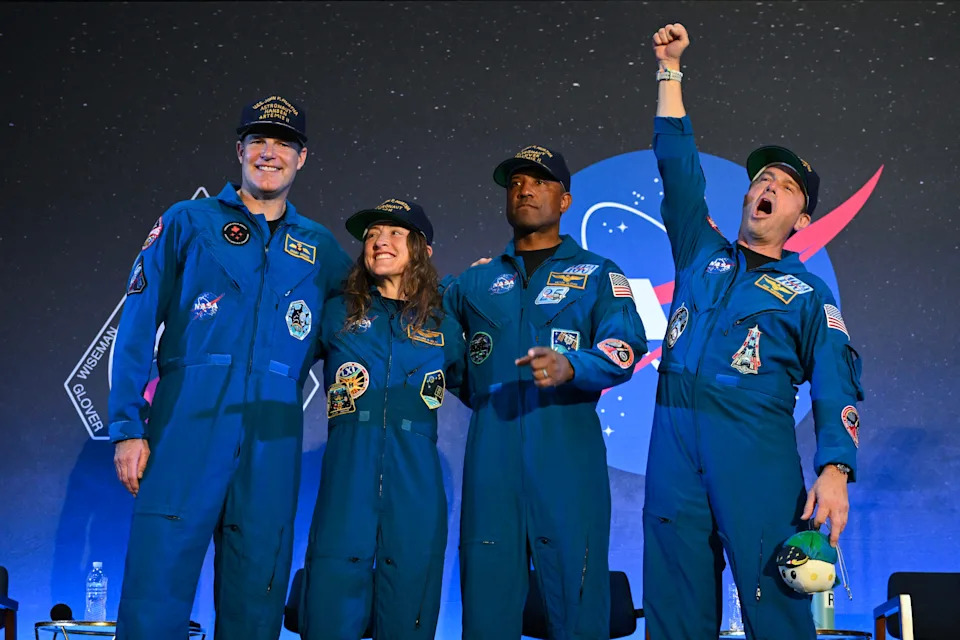
(L-R) NASA's Artemis II mission astronauts Canadian Space Agency's Jeremy Hansen, Christina Koch, Victor Glover and commander Reid Wiseman react during a welcoming ceremony at Ellington Field Joint Reserve Base in Houston, Texas, on April 11, 2026. An elated NASA late April 10 was celebrating its successful voyage around the Moon, after four astronauts safely returned to Earth having completed the first lunar flyby in more than 50 years. The NASA spacecraft carrying four astronauts -- three Americans and one Canadian -- splashed down without a hitch off the California coast, capping the US space agency's crewed test mission that returned with spectacular images of the Moon.
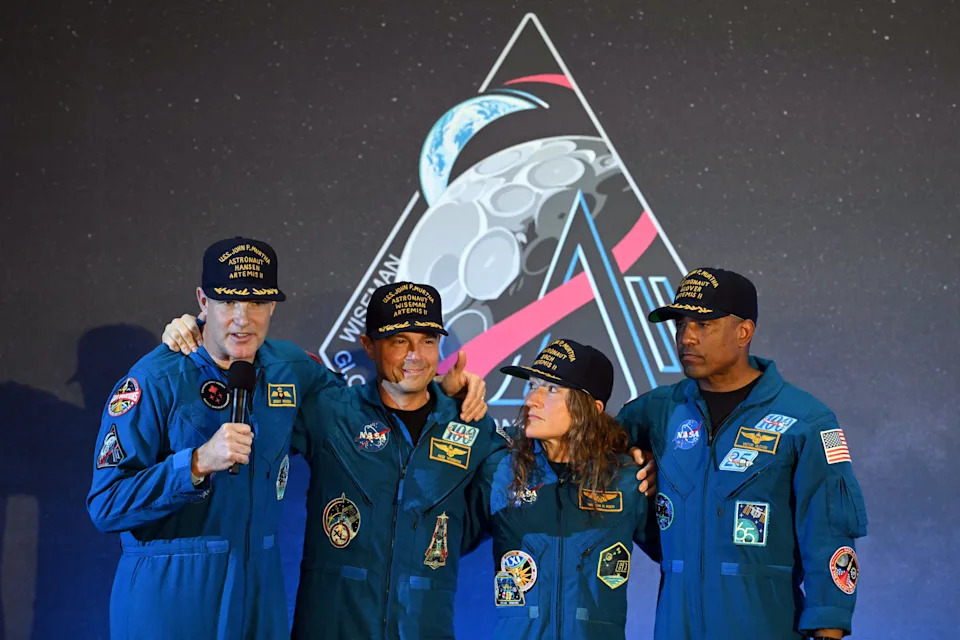
(L-R) NASA's Artemis II mission astronauts Canadian Space Agency's Jeremy Hansen, commander Reid Wiseman, mission specialist Christina Koch and pilot Victor Glover attend a welcoming ceremony at Ellington Field Joint Reserve Base in Houston, Texas, on April 11, 2026. An elated NASA late April 10 was celebrating its successful voyage around the Moon, after four astronauts safely returned to Earth having completed the first lunar flyby in more than 50 years. The NASA spacecraft carrying four astronauts -- three Americans and one Canadian -- splashed down without a hitch off the California coast, capping the US space agency's crewed test mission that returned with spectacular images of the Moon.
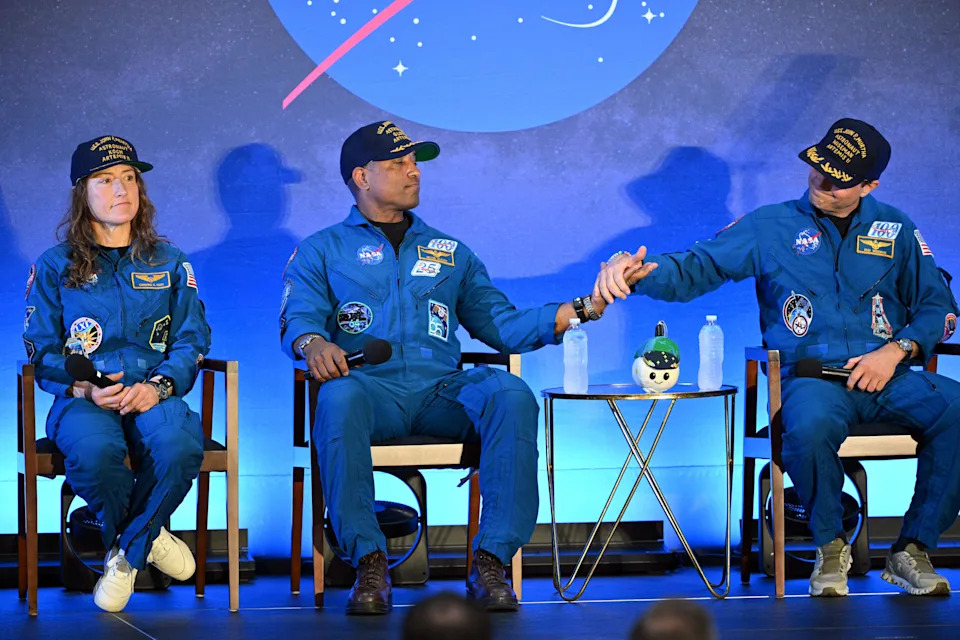
NASA's Artemis II mission commander Reid Wiseman (R) shakes hands with pilot Victor Glover as Christina Koch looks on during a welcoming ceremony at Ellington Field Joint Reserve Base in Houston, Texas, on April 11, 2026. An elated NASA late April 10 was celebrating its successful voyage around the Moon, after four astronauts safely returned to Earth having completed the first lunar flyby in more than 50 years. The NASA spacecraft carrying four astronauts -- three Americans and one Canadian -- splashed down without a hitch off the California coast, capping the US space agency's crewed test mission that returned with spectacular images of the Moon.
Help us improve.





















