
Jared Isaacman, the private astronaut who flew on a SpaceX mission, has urged reopening the debate on Pluto’s planetary status. The IAU reclassified Pluto as a dwarf planet in 2006 because it shares its orbital neighborhood with other Kuiper Belt objects. Scientists are divided: some favor a geophysical definition that would include Pluto, while others defend the IAU’s orbit-based rule. Any official change would need IAU consensus and currently seems unlikely.
Private Astronaut Jared Isaacman Wants Pluto Restored To Planet Status — Scientists Are Divided
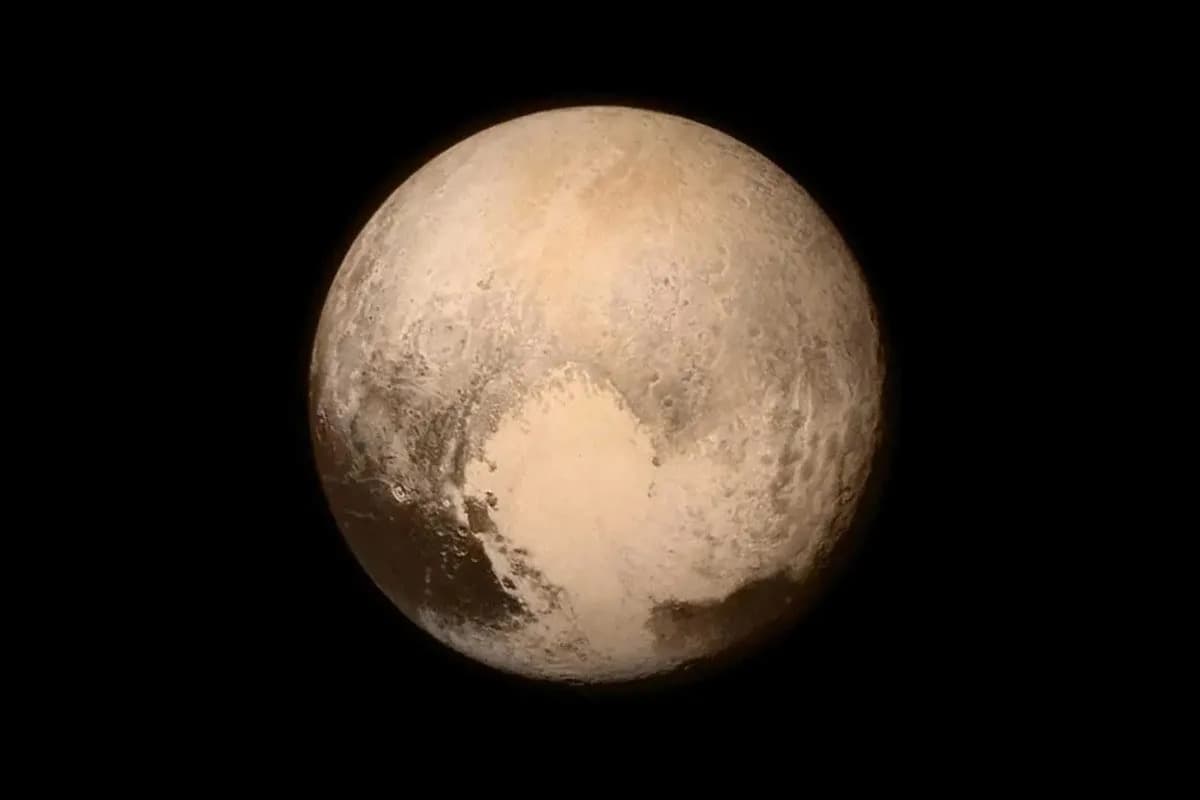
MAPA! Trump’s NASA Administrator wants to bring back Pluto as a planet in our solar system
Summary: Jared Isaacman, a billionaire private astronaut who flew on a SpaceX mission, has publicly urged a reconsideration of Pluto’s classification, prompting renewed debate among astronomers about what qualifies as a planet.
At a recent Capitol Hill hearing, Jared Isaacman said he was "very much in the camp of [making] Pluto a planet again" and that papers were being prepared to "revisit this discussion." Isaacman is not the head of NASA; he is a private astronaut and entrepreneur who has been vocal about space policy and public engagement with space science.

NASA Administrator Jared Isaacman said he was on the side of Pluto becoming a planet in our Solar System again. But experts remain at odds (Reuters)
Why Pluto Was Reclassified
In 2006 the International Astronomical Union (IAU) redefined the term "planet." Under that definition, a planet must orbit the Sun, be spherical because of its own gravity, and have cleared its orbital neighborhood of other debris. Pluto meets the first two criteria but was categorized as a "dwarf planet" because it shares its orbital zone with many icy bodies in the Kuiper Belt.
Arguments For Reinstating Pluto
Supporters of revisiting Pluto’s status cite newer research on Pluto’s geology and complexity. Spacecraft and telescopic observations show Pluto is geologically active: it has a layered atmosphere, an active heart-shaped region, towering ice mountains and signs that it may harbor a subsurface ocean. Advocates argue a geophysical definition — one that emphasizes internal activity and rounded shape — could reasonably include Pluto as a planet.
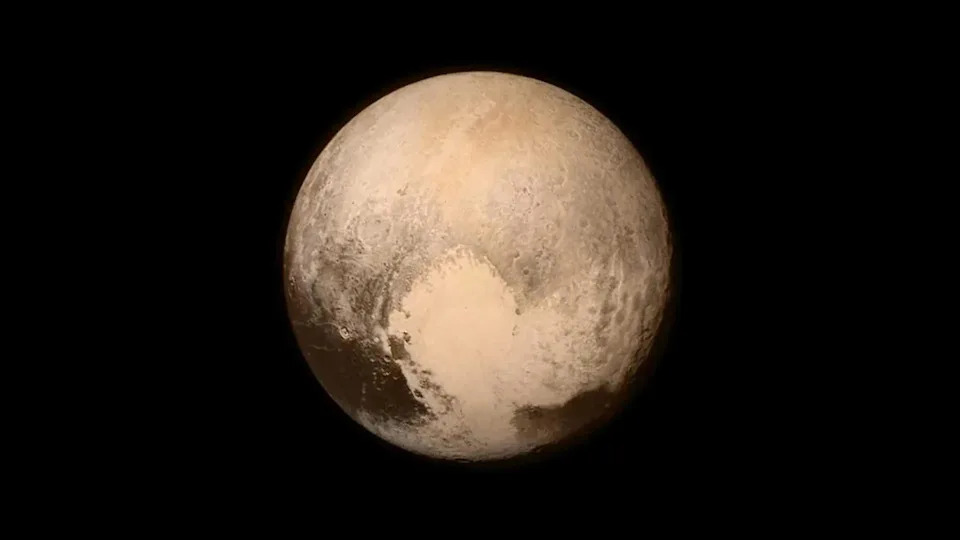
Pluto's 'heart' is captured by NASA’s New Horizons spacecraft in July 2015 (NASA/JHUAPL/SwRI)
Arguments Against Reinstatement
Many planetary scientists defend the IAU’s orbit-based definition because it helps differentiate true planets from the large numbers of Pluto-sized objects in the outer solar system. Reinstating Pluto could force the IAU to reclassify dozens (or more) of similar bodies as planets, complicating textbooks and planetary taxonomy.
Views From the Scientific Community
Experts remain split. Mike Brown of Caltech — a key figure in the discussion surrounding the 2006 definition — stresses that classifications should be evidence-based and internationally agreed. Adam Frank called the demotion scientifically important because it reflected new knowledge about the outer solar system. Others, like Bill McKinnon and Adeene Denton, emphasize Pluto’s clear geologic activity and argue for a broader, geophysics-based definition.
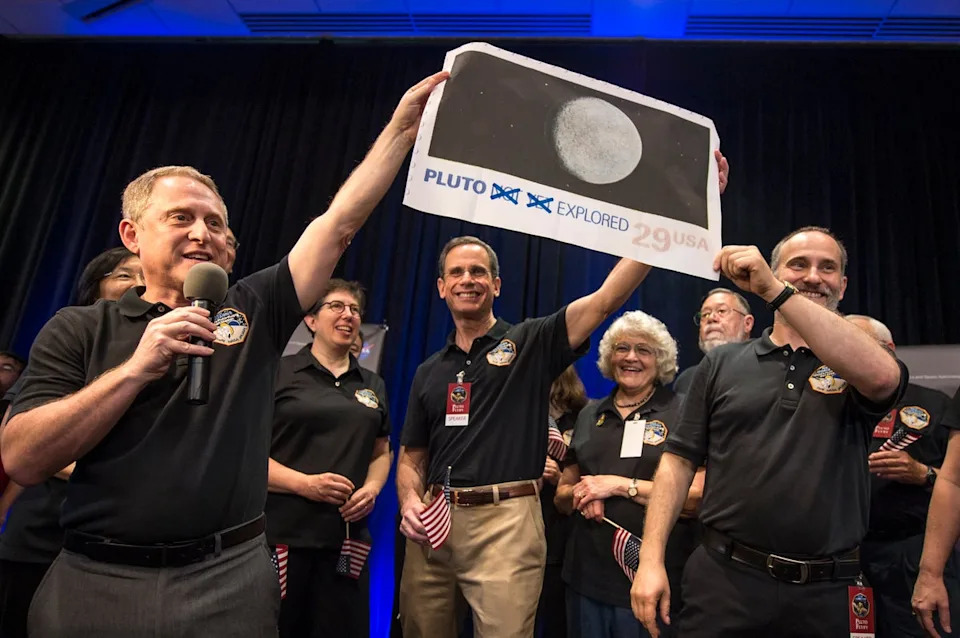
NASA scientists sent an unmanned spacecraft to fly by Pluto in 2015, capturing images of its icy mountains (Getty)
“Pluto Is Round, Has An Atmosphere And Active Geology,” said supporters who favor the geologic view, even as they acknowledge Pluto is not comparable in size to Earth or Mars.
Practical Consequences
Changing the official status of Pluto would require IAU approval through its consensus process — not a unilateral decision by any individual or organization. The IAU has said classifications can be amended if supporting evidence changes, but at present broad agreement to reinstate Pluto appears unlikely.
Background: Pluto was discovered in 1930 by Clyde Tombaugh and named by 11-year-old Venetia Burney after the Roman god of the underworld. Though only about 1,400 miles (2,400 km) across — roughly half the width of the continental United States — Pluto has complex geology, five known moons, and intriguing features that continue to interest scientists and the public alike.
Bottom line: The debate is as much about scientific classification and consensus as it is about public sentiment. Pluto remains beloved by many, but any official change requires international scientific agreement.
Help us improve.





















