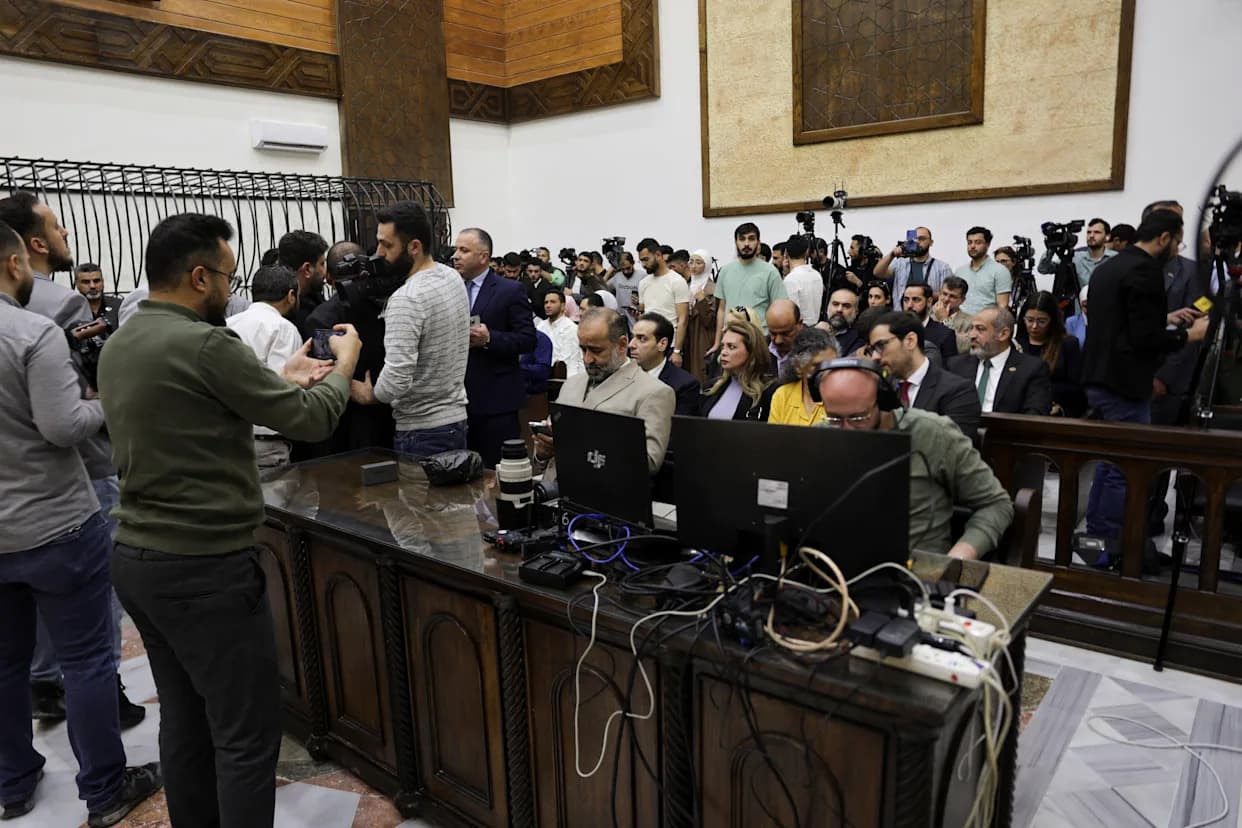
On March 13, 2013, Fakhr al-Din al-Aryan, then a judge at Idlib’s Civil Court of Appeal, publicly defected from the Syrian state — a move that led authorities to sentence him to death in absentia. More than a decade later, following the December 2024 overthrow of Bashar al-Assad’s government, al-Aryan returned to Syria’s judiciary and was appointed head of the Fourth Criminal Court in Damascus. On Sunday he presided over the opening of the trial of Atef Najib, a former political security chief in Deraa and a cousin of Bashar al-Assad.
Case and Charges
Atef Najib faces charges including premeditated murder, torture leading to death and crimes against humanity. Bashar al-Assad and his brother Maher — both accused of involvement in widespread abuses — are also listed as defendants and are being tried in absentia after departing for Russia following the 2024 collapse of the regime. Najib was arrested in January 2025 in the Latakia region, where some former loyalists had sought refuge.
Why This Trial Matters
The opening of this trial is heavily symbolic. A judge who once publicly renounced the regime and faced a death sentence has returned to the bench to oversee proceedings against a prominent former security official. Human rights advocates say the case matters not only for who stands accused but for how the process is being carried out.
Fadel Abdulghany, founder of the Syrian Network for Human Rights (SNHR), told Al Jazeera: "A judge once condemned to death by the Assad regime for defending the rule of law has returned to the bench to apply that same law to one of the regime’s most extensively documented perpetrators of violations. This reversal of power dynamics reflects the promise of the rule of law so rarely fulfilled in post-authoritarian transitions. The significance of this moment lies not in spectacle but in its adherence to due process."
Background And Context
Al-Aryan served as a judicial adviser during the early phase of Syria’s uprising, which began in March 2011. By 2013 he concluded that continuing within the state judiciary would violate his legal and moral responsibilities and publicly joined opposition judicial bodies. He helped build a parallel judicial track in opposition-held areas, working on alternative courts, legal files and documentation of alleged crimes by the former regime. In response, the state tried him in absentia, confiscated his property and sold some assets at public auction.
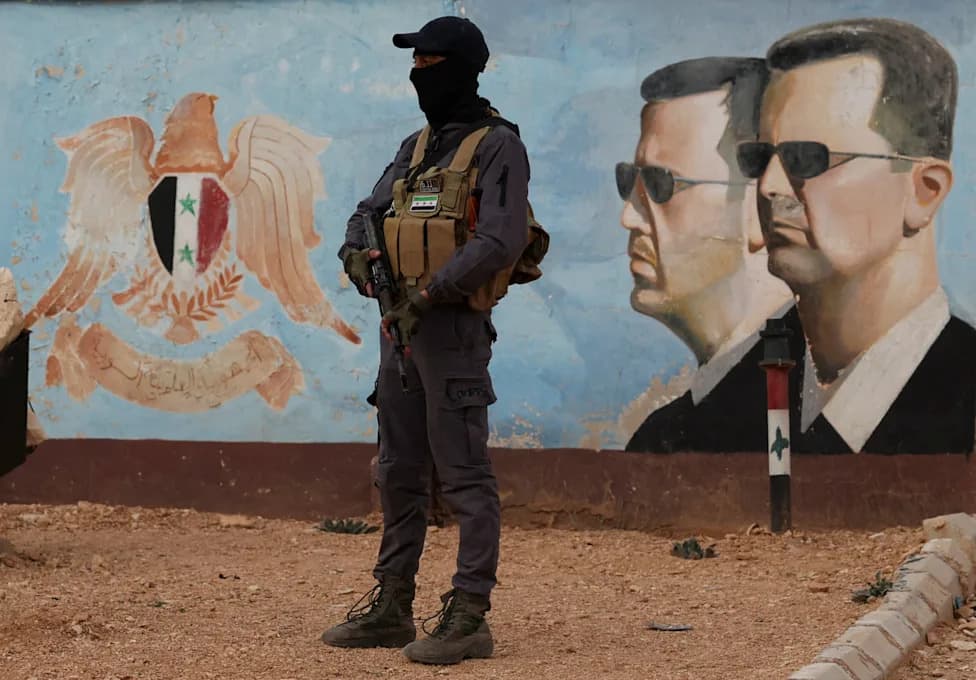
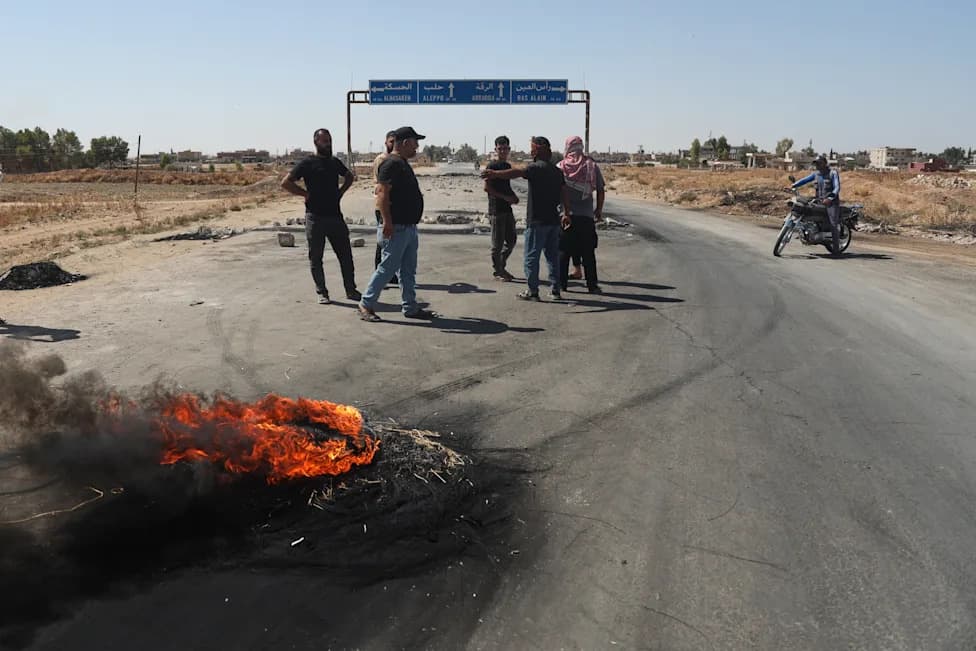
Deraa — often called the "cradle of the revolution" — was the site of some of the first large-scale confrontations between civilians and security forces. One of the most notorious incidents involved the arrest, reported torture and death of schoolchildren who had scrawled the slogan "The people want the fall of the regime," including 13-year-old Hamza al-Khateeb. Najib’s alleged links to that episode help explain the trial’s resonance.
Procedural Steps And Standards
SNHR and other observers emphasize that the case has moved through formal stages: arrest by the Ministry of Interior, investigation, prosecution and referral to a criminal court in Damascus. Framing charges as crimes against humanity deliberately places domestic proceedings within the norms of international criminal law — an approach advocates say is crucial to the credibility of any verdict.
"Physical absence does not amount to legal immunity," Abdulghany said, underlining why the former president and his brother are listed as defendants despite being outside Syria.
Transitional Justice: Beyond Trials
Abdulghany and human rights groups caution that criminal trials alone cannot address decades of repression and mass suffering. The SNHR has documented at least 177,000 cases of enforced disappearance since 2011, the majority attributed to the former government. True accountability, they argue, requires four interconnected pillars: criminal accountability, truth-seeking, reparations and institutional reform. Without transforming courts that were once instruments of state repression, they warn, trials risk being procedural rather than genuinely corrective.
"Families of victims have a right to know what happened to their relatives. They deserve answers," Abdulghany said, adding that truth, justice and reparations must be unconditional if any durable reconciliation is to be possible.
This opening session in Damascus may mark an early—and highly symbolic—step in Syria’s transitional justice process. Its ultimate significance will depend on whether proceedings are conducted transparently, meet international standards, and form part of a broader effort to reform institutions and address victims’ rights.